Madison Cole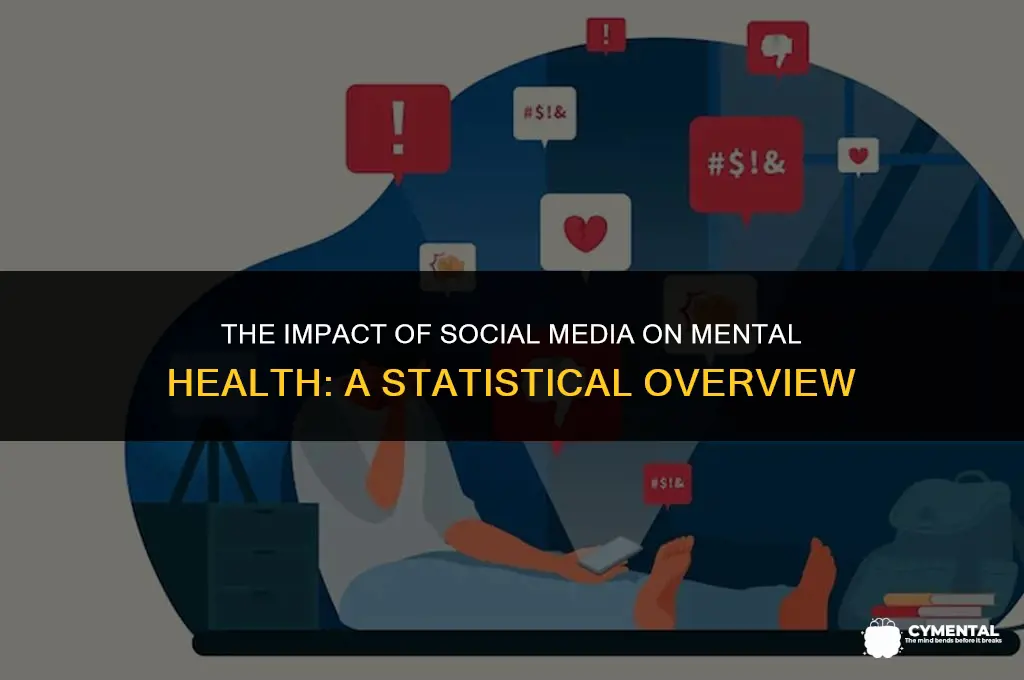
Social media's impact on mental health has become a pressing concern in recent years, with a growing body of research highlighting its potential negative effects. Statistics show that excessive social media use can lead to increased symptoms of anxiety, depression, and loneliness, particularly among young adults. The constant stream of curated content and the pressure to present a perfect online persona can contribute to feelings of inadequacy and low self-esteem. Furthermore, the addictive nature of social media platforms, designed to keep users engaged for extended periods, can disrupt sleep patterns and reduce physical activity, both of which are crucial for maintaining good mental health. As social media continues to play a significant role in our daily lives, it is essential to understand its implications on our psychological well-being and to develop strategies to mitigate its harmful effects.
Explore related products


What You'll Learn
- Social Media Usage and Depression: Studies show a correlation between excessive social media use and increased symptoms of depression
- Anxiety and Social Media: Constant connectivity can lead to heightened anxiety levels, especially in younger populations
- Sleep Disturbances: Exposure to screens and the blue light they emit can interfere with sleep patterns, impacting overall mental health
- Cyberbullying Impact: Online harassment and bullying can have severe psychological effects, including lowered self-esteem and suicidal ideation
- Social Comparison and Self-Esteem: Comparing oneself to others on social media can lead to feelings of inadequacy and decreased self-worth

Social Media Usage and Depression: Studies show a correlation between excessive social media use and increased symptoms of depression
Recent studies have revealed a concerning correlation between excessive social media use and increased symptoms of depression. This connection is particularly pronounced among younger demographics, with teenagers and young adults being the most vulnerable. Research indicates that the constant bombardment of curated, idealized images and the pressure to present a perfect online persona can lead to feelings of inadequacy and low self-esteem, which are significant contributors to depressive symptoms.
One study published in the Journal of Social and Clinical Psychology found that limiting social media use to 30 minutes per day resulted in significant reductions in levels of depression and loneliness among young adults. This suggests that the negative impact of social media on mental health is dose-dependent, meaning that the more time spent on these platforms, the greater the risk of developing depressive symptoms.
Furthermore, the nature of social media interactions can also play a role in exacerbating depression. For instance, the tendency to compare one's own life to the seemingly perfect lives of others online can lead to feelings of envy and dissatisfaction. Additionally, the lack of face-to-face interaction and the reliance on digital communication can hinder the development of meaningful social connections, which are crucial for maintaining good mental health.
It is also worth noting that the algorithms used by social media platforms can contribute to this issue. These algorithms are designed to keep users engaged by showing them content that is likely to elicit strong emotional responses, which can include negative emotions such as sadness and anxiety. This can create a vicious cycle where users are drawn to content that makes them feel worse, further exacerbating their depressive symptoms.
In light of these findings, it is important for individuals to be mindful of their social media usage and to take steps to mitigate its negative impact on their mental health. This can include setting limits on the amount of time spent on social media, unfollowing accounts that promote unrealistic standards, and engaging in offline activities that foster real-world connections and personal fulfillment.
The Silent Struggle: Sleep Deprivation's Impact on Mental Health
You may want to see also
Explore related products


Anxiety and Social Media: Constant connectivity can lead to heightened anxiety levels, especially in younger populations
The pervasive nature of social media has ushered in an era of constant connectivity, where individuals, particularly younger populations, are perpetually linked to digital platforms. This relentless connection can lead to heightened anxiety levels, as the pressure to maintain an online presence and respond promptly to messages and notifications can be overwhelming. Research indicates that the fear of missing out (FOMO) and the compulsion to seek validation through likes and comments can contribute significantly to anxiety disorders among social media users.
Moreover, the curated personas and highlight reels presented on social media can foster unrealistic comparisons and a sense of inadequacy, further exacerbating anxiety. Younger individuals, who are still developing their self-esteem and social skills, are particularly vulnerable to these negative effects. The constant bombardment of information and the inability to disconnect can also lead to a state of hyperarousal, making it difficult for individuals to relax and engage in meaningful offline activities.
To mitigate these anxiety-inducing effects, it is essential for individuals to establish healthy boundaries with social media. This may involve setting specific times for checking notifications, limiting the number of platforms used, and engaging in offline activities that promote relaxation and self-care. Additionally, promoting digital literacy and critical thinking skills can help younger populations navigate the online world more effectively, reducing the negative impact of social media on their mental health.
In conclusion, while social media offers numerous benefits, including connectivity and information sharing, its constant presence can lead to heightened anxiety levels, particularly among younger populations. By understanding the underlying causes of this anxiety and implementing strategies to maintain a healthy balance between online and offline activities, individuals can harness the positive aspects of social media while safeguarding their mental well-being.
The Ripple Effect: Mental Health's Impact on Society
You may want to see also
Explore related products

$44.07 $57.99


Sleep Disturbances: Exposure to screens and the blue light they emit can interfere with sleep patterns, impacting overall mental health
Exposure to screens and the blue light they emit can interfere with sleep patterns, impacting overall mental health. This is particularly concerning given the widespread use of social media platforms, which often encourage prolonged screen time. Research has shown that the blue light emitted by screens can suppress the production of melatonin, a hormone that regulates sleep-wake cycles. This can lead to difficulties falling asleep, staying asleep, and achieving restorative sleep, all of which are crucial for maintaining good mental health.
A study published in the Journal of Clinical Sleep Medicine found that individuals who used electronic devices within an hour of bedtime experienced poorer sleep quality and were more likely to experience sleep disturbances. Furthermore, a survey conducted by the National Sleep Foundation revealed that 60% of individuals who used electronic devices before bed reported experiencing sleep problems. These findings highlight the significant impact that screen time can have on sleep patterns and, by extension, mental health.
To mitigate the effects of screen time on sleep, it is recommended to establish a screen-free bedtime routine, ideally at least an hour before bed. This can involve engaging in relaxing activities such as reading, meditation, or gentle stretching. Additionally, using blue light filtering apps or wearing blue light blocking glasses can help to reduce the amount of blue light exposure. It is also important to create a sleep-conducive environment by ensuring that the bedroom is dark, quiet, and cool.
In conclusion, the impact of screen time on sleep patterns and mental health is a significant concern. By taking steps to reduce screen time before bed and creating a sleep-friendly environment, individuals can improve their sleep quality and overall mental well-being.
Digital Detox: Unraveling the Impact of Screen Time on Mental Health
You may want to see also
Explore related products


$54.95 $54.95


Cyberbullying Impact: Online harassment and bullying can have severe psychological effects, including lowered self-esteem and suicidal ideation
Cyberbullying has become a pervasive issue with the rise of social media, and its impact on mental health cannot be overstated. Research indicates that victims of online harassment and bullying often experience severe psychological effects, including lowered self-esteem and, in extreme cases, suicidal ideation. This is particularly concerning given the constant connectivity and visibility that social media platforms provide, allowing bullies to reach their victims at any time and from any place.
One of the unique aspects of cyberbullying is its ability to transcend physical boundaries, making it difficult for victims to escape the harassment. Unlike traditional bullying, which is often confined to school or social settings, cyberbullying can follow individuals into their homes and personal spaces, creating a sense of inescapable torment. This constant exposure can lead to heightened levels of anxiety and depression, as victims feel they are under perpetual scrutiny and attack.
Moreover, the anonymity afforded by social media platforms can embolden bullies, who may feel they can act with impunity. This lack of accountability can exacerbate the severity of the bullying, as perpetrators are less likely to face consequences for their actions. Victims may also struggle to seek help, as they may feel ashamed or embarrassed about the bullying, or fear that reporting it will only make the situation worse.
The impact of cyberbullying on mental health is further compounded by the fact that it often occurs during formative years, when individuals are still developing their sense of self and social skills. Being subjected to online harassment during this critical period can have long-lasting effects on a person's self-esteem, social anxiety, and overall mental well-being. It is essential, therefore, that parents, educators, and policymakers take proactive steps to address cyberbullying and provide support for its victims.
In conclusion, cyberbullying is a serious issue that can have profound psychological effects on its victims. By understanding the unique challenges posed by online harassment and taking steps to prevent and address it, we can help mitigate its harmful impact on mental health and create a safer online environment for all.
Unveiling the Gut-Brain Connection: How Microbiome Impacts Mental Health
You may want to see also
Explore related products



Social Comparison and Self-Esteem: Comparing oneself to others on social media can lead to feelings of inadequacy and decreased self-worth
The pervasive nature of social media has introduced a new dimension to the concept of social comparison. Platforms like Instagram, Facebook, and Twitter often present a curated version of people's lives, showcasing their achievements, relationships, and possessions in a way that can make others feel inadequate. This constant exposure to the highlight reels of others' lives can lead to a phenomenon known as "social comparison," where individuals evaluate their own worth based on the perceived success and happiness of those they see online.
Research has shown that social comparison on social media can have a significant impact on self-esteem. A study published in the Journal of Social and Clinical Psychology found that limiting social media use to 30 minutes per day can lead to significant improvements in self-reported depression, loneliness, and fear of missing out (FOMO). Another study by the Royal Society for Public Health (RSPH) ranked Instagram as the most detrimental social media platform for young people's mental health, citing issues such as anxiety, depression, and poor sleep quality.
The effects of social comparison are particularly pronounced among adolescents and young adults. This demographic is more likely to engage in frequent social media use and to base their self-worth on the validation they receive online. A survey by the Pew Research Center found that 59% of teens feel pressure to present an attractive and popular image on social media, while 45% report feeling overwhelmed by the amount of information they see.
To mitigate the negative effects of social comparison on social media, it is essential to develop a healthy perspective on online interactions. This can involve setting realistic expectations about what is achievable, focusing on personal growth rather than external validation, and taking regular breaks from social media to engage in offline activities. Additionally, fostering open conversations about the impact of social media on mental health can help reduce the stigma associated with seeking help and support.
In conclusion, social comparison on social media is a significant contributor to feelings of inadequacy and decreased self-worth, particularly among young people. By understanding the psychological mechanisms behind this phenomenon and adopting strategies to maintain a healthy online presence, individuals can better protect their mental health and well-being in the digital age.
The Unseen Game: Mental Health's Impact on Athletes' Performance
You may want to see also
Frequently asked questions
Social media can impact mental health in several ways, including increasing feelings of loneliness and isolation, promoting comparison and envy, and exposing users to cyberbullying and online harassment.
Studies have shown that excessive social media use is correlated with increased symptoms of depression and anxiety. This is likely due to the constant stream of information and the pressure to present a perfect online persona.
Adolescents and young adults are generally considered to be the most vulnerable to the negative effects of social media on mental health. This is because their brains are still developing, and they are more likely to experience peer pressure and low self-esteem.
Yes, social media can also have positive effects on mental health. For example, it can provide a platform for social support and connection, and can be used to raise awareness about mental health issues and resources.
Some strategies for mitigating the negative effects of social media on mental health include limiting screen time, taking breaks from social media, engaging in offline activities, and practicing mindfulness and self-compassion.