Madison Cole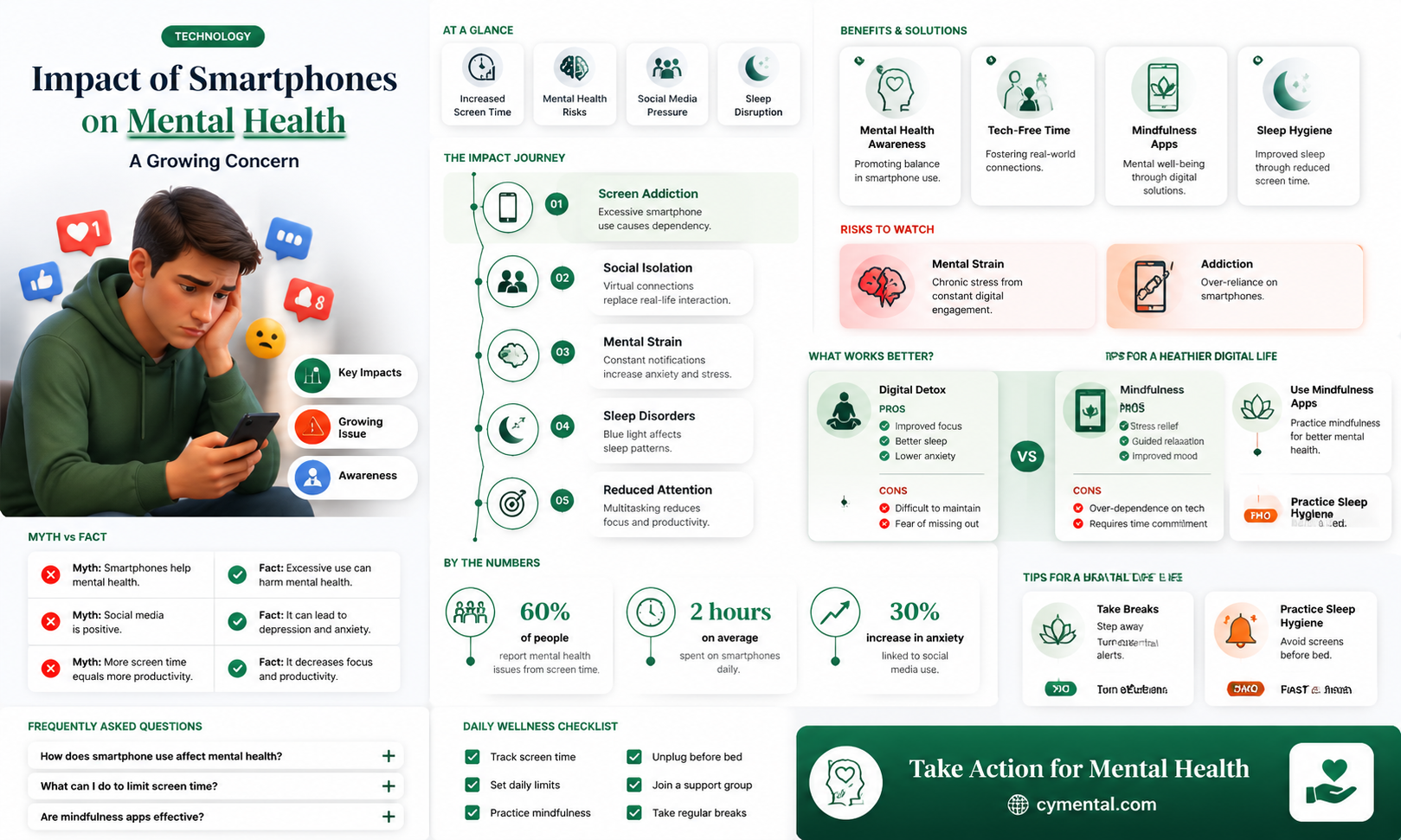
Smartphones have become an integral part of modern life, offering unprecedented connectivity and access to information. However, their pervasive use has raised concerns about their impact on mental health. Research suggests that excessive smartphone use can contribute to a range of mental health issues, including anxiety, depression, and sleep disturbances. The constant stream of notifications and the pressure to be constantly connected can lead to feelings of overwhelm and stress. Additionally, the blue light emitted by smartphone screens can interfere with the body's natural sleep-wake cycle, making it harder to fall asleep and stay asleep. While smartphones can also provide access to mental health resources and support, it is important to be aware of their potential negative effects and to use them in a balanced and mindful way.
Explore related products

$14.58 $14.58


$7.99 $9.99


What You'll Learn
- Social Media Addiction: Excessive usage leading to compulsive behavior and negative emotional states
- Sleep Disturbances: Blue light exposure and screen time before bed impacting sleep quality and duration
- Cyberbullying: Online harassment and its severe effects on mental well-being, especially among youth
- Information Overload: Constant notifications and data influx causing stress and anxiety
- Reduced Face-to-Face Interaction: Preference for digital communication over in-person interactions, potentially leading to isolation

Social Media Addiction: Excessive usage leading to compulsive behavior and negative emotional states
Social media addiction is a growing concern as excessive usage can lead to compulsive behavior and negative emotional states. This phenomenon is characterized by an overwhelming urge to constantly check social media platforms, often at the expense of other important activities. Individuals may experience anxiety or distress when unable to access their accounts, and may prioritize social media interactions over real-life relationships.
One of the key factors contributing to social media addiction is the design of these platforms themselves. Features such as infinite scrolling, notifications, and the fear of missing out (FOMO) can create a sense of urgency and compulsion to keep checking for updates. Additionally, the curated nature of social media content can lead to unrealistic comparisons and a distorted view of reality, further exacerbating negative emotional states.
The impact of social media addiction on mental health can be significant. Excessive usage has been linked to increased symptoms of depression, anxiety, and loneliness. Furthermore, the constant stream of information and the pressure to present a perfect online persona can contribute to feelings of overwhelm and inadequacy. It is essential to recognize the signs of social media addiction and take steps to mitigate its effects on mental wellbeing.
To combat social media addiction, individuals can implement strategies such as setting boundaries for usage, deleting unnecessary apps, and engaging in alternative activities that promote relaxation and self-care. Mindfulness practices and cognitive-behavioral techniques can also be helpful in breaking the cycle of compulsive checking and fostering a healthier relationship with technology. By taking proactive measures to address social media addiction, individuals can reclaim control over their digital habits and improve their overall mental health.
Revitalize Your Mind: The Power of Leisure in Boosting Mental Health
You may want to see also
Explore related products

$42.22 $64.95


Sleep Disturbances: Blue light exposure and screen time before bed impacting sleep quality and duration
The proliferation of smartphones has led to a significant increase in screen time, particularly before bedtime. This habit can have detrimental effects on sleep quality and duration due to the emission of blue light from screens. Blue light exposure in the evening can suppress the production of melatonin, the hormone responsible for regulating sleep-wake cycles, leading to difficulties falling asleep and staying asleep.
Research indicates that the impact of blue light on sleep is dose-dependent, meaning that the longer and more intense the exposure, the greater the disruption to sleep patterns. Furthermore, the use of smartphones before bed can lead to a phenomenon known as 'social jet lag,' where the brain is tricked into thinking it is still daytime due to the interaction with screens and the consumption of stimulating content.
To mitigate these effects, it is recommended to establish a 'screen-free' period before bedtime, typically ranging from 30 minutes to an hour. During this time, engaging in relaxing activities such as reading a physical book, practicing meditation, or taking a warm bath can help signal to the brain that it is time to wind down and prepare for sleep. Additionally, many smartphones now offer features such as 'night mode' or 'blue light filters,' which can reduce the amount of blue light emitted by the screen, potentially lessening the impact on sleep.
It is also important to consider the broader implications of excessive screen time on mental health. While smartphones can provide numerous benefits, including access to information, social connection, and entertainment, they can also contribute to feelings of anxiety, depression, and loneliness. Therefore, it is crucial to maintain a balanced approach to smartphone use, being mindful of both the positive and negative effects on overall well-being.
In conclusion, the relationship between smartphone use, blue light exposure, and sleep disturbances is complex and multifaceted. By understanding the mechanisms at play and implementing strategies to reduce screen time before bed, individuals can take steps to improve their sleep quality and overall mental health.
Digital Dilemma: The Impact of Technology on Mental Health
You may want to see also
Explore related products


Cyberbullying: Online harassment and its severe effects on mental well-being, especially among youth
Cyberbullying, a pervasive issue in the digital age, refers to the use of electronic communication to harass, intimidate, or humiliate others. This form of bullying has severe effects on mental well-being, particularly among youth who are more susceptible to its damaging impacts. Unlike traditional bullying, cyberbullying can occur 24/7, transcending the boundaries of school or home, and can be more difficult to detect and address.
One of the most alarming aspects of cyberbullying is its ability to reach a wide audience quickly. A single harmful message or image can be shared across various social media platforms, leading to widespread humiliation and social exclusion. This can result in profound psychological distress, including anxiety, depression, and even suicidal ideation. The constant fear of being targeted or the anticipation of the next attack can lead to heightened stress levels, affecting not only mental health but also physical well-being.
Moreover, cyberbullying often involves a level of anonymity that traditional bullying does not. Perpetrators can hide behind fake profiles or use messaging apps that offer end-to-end encryption, making it challenging for victims to identify their harassers or seek help. This anonymity can embolden bullies, leading to more aggressive and relentless behavior.
The impact of cyberbullying on youth is particularly concerning. Adolescents are at a critical stage of development, and their mental health is already vulnerable. The added stress of cyberbullying can disrupt their social and emotional growth, leading to long-term consequences such as decreased self-esteem, difficulty forming healthy relationships, and academic underachievement.
To combat cyberbullying, it is essential to educate youth about online safety and digital citizenship. Parents, educators, and policymakers must work together to create a safe online environment. This includes promoting respectful online interactions, teaching youth how to recognize and respond to cyberbullying, and implementing effective reporting mechanisms. Additionally, social media companies have a responsibility to monitor and remove harmful content, as well as provide support for victims of cyberbullying.
In conclusion, cyberbullying is a serious threat to the mental well-being of youth in the digital age. Its pervasive nature, the potential for widespread humiliation, and the challenges in detection and intervention make it a complex issue that requires a multifaceted approach. By raising awareness, educating youth, and holding perpetrators accountable, we can work towards creating a safer online environment for all.
Navigating Love and Mental Health: A Delicate Balance
You may want to see also
Explore related products





Information Overload: Constant notifications and data influx causing stress and anxiety
The relentless barrage of notifications and data can lead to a state of constant alertness, where the mind is never truly at rest. This perpetual stimulation can result in increased levels of cortisol, the body's primary stress hormone, contributing to feelings of anxiety and overwhelm. A study by the University of California, Irvine, found that people who received more notifications reported higher levels of stress and anxiety, as well as decreased productivity and focus.
One of the primary drivers of information overload is the fear of missing out (FOMO), which compels individuals to constantly check their devices for updates. This can lead to a vicious cycle of checking and rechecking, resulting in a significant portion of the day being spent on digital distractions. According to a survey by the Pew Research Center, 45% of Americans feel that they are constantly connected to the internet, and 35% believe that this constant connectivity is causing them stress.
To mitigate the effects of information overload, it is essential to establish boundaries and prioritize what information is truly important. This can be achieved by setting specific times for checking notifications, limiting the number of apps and social media platforms used, and implementing tools such as website blockers and focus modes. Additionally, practicing mindfulness and engaging in activities that promote relaxation, such as meditation or exercise, can help to reduce the negative impact of constant digital stimulation.
In conclusion, the constant influx of information and notifications from smartphones can have a significant impact on mental health, leading to increased stress and anxiety. By establishing boundaries and prioritizing what information is truly important, individuals can take steps to mitigate these effects and promote a healthier relationship with technology.
The Silent Menace: Noise Pollution's Impact on Mental and Physical Health
You may want to see also
Explore related products





Reduced Face-to-Face Interaction: Preference for digital communication over in-person interactions, potentially leading to isolation
The rise of smartphones has led to a significant shift in how people communicate, with many preferring digital interactions over face-to-face conversations. This trend is particularly pronounced among younger generations, who have grown up with smartphones as an integral part of their lives. While digital communication offers convenience and the ability to stay connected with others regardless of physical distance, it also raises concerns about the potential for increased social isolation and its impact on mental health.
Research has shown that face-to-face interactions are crucial for building and maintaining strong social relationships, which are essential for emotional well-being. In-person conversations allow for nonverbal cues, such as body language and facial expressions, which play a significant role in conveying emotions and intentions. When these cues are absent, as is often the case in digital communication, misunderstandings can occur, and relationships may suffer.
Furthermore, the constant availability of digital communication can lead to a sense of being always "on" and connected, which can contribute to feelings of anxiety and stress. The pressure to respond immediately to messages and the fear of missing out (FOMO) can create a cycle of compulsive checking and engagement with digital devices, further reducing the time spent on in-person interactions.
To mitigate the potential negative effects of reduced face-to-face interaction, it is important to strike a balance between digital and in-person communication. Setting aside time for face-to-face conversations, engaging in group activities, and participating in community events can help maintain social connections and promote emotional well-being. Additionally, being mindful of digital device usage and establishing boundaries around when and how to engage with technology can help reduce the risk of social isolation and its impact on mental health.
Unraveling the Impact: Anxiety's Influence on Mental Health
You may want to see also
Frequently asked questions
Yes, smartphones can affect mental health in various ways. Excessive use can lead to increased stress, anxiety, and depression. The constant connectivity and barrage of notifications can create a sense of being overwhelmed and unable to switch off.
Smartphones can negatively impact sleep quality due to the blue light emitted by their screens, which can interfere with the body's natural sleep-wake cycle. Additionally, the habit of checking phones before bed can stimulate the brain, making it harder to fall asleep.
Paradoxically, while smartphones are designed to connect people, excessive use can lead to social isolation. Spending too much time on digital interactions can reduce face-to-face communication, leading to feelings of loneliness and disconnection from others.
To mitigate the negative effects, it's important to set boundaries and practice mindful use. This can include limiting screen time, turning off unnecessary notifications, using apps that promote mental well-being, and ensuring a healthy balance between digital and real-world interactions.