Caleb Wright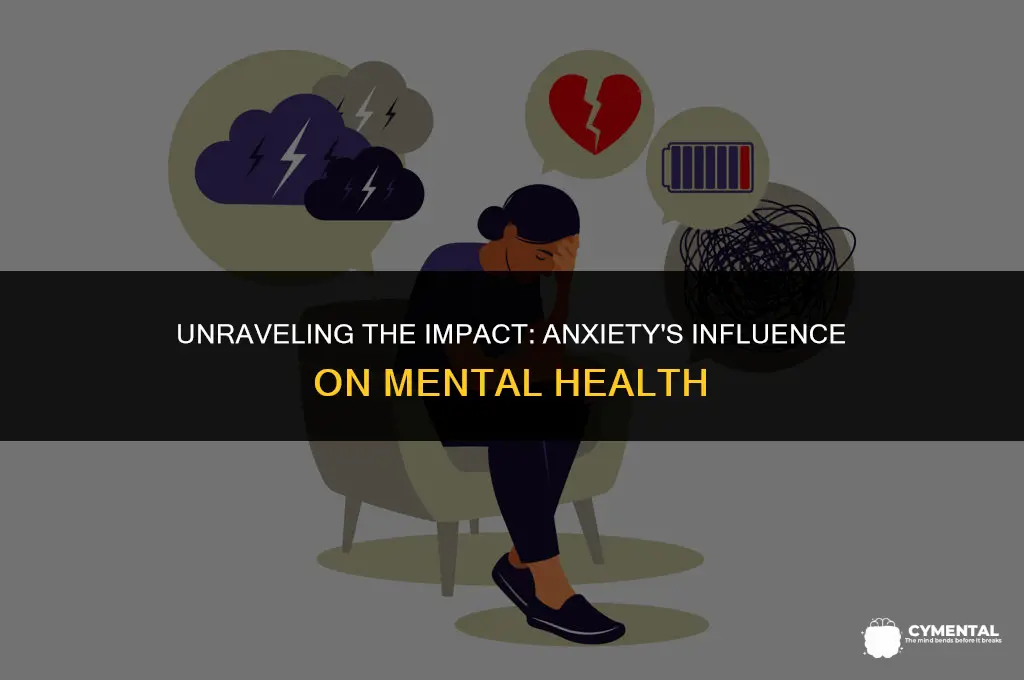
Anxiety is a pervasive and often debilitating condition that significantly impacts mental health. Characterized by persistent feelings of worry, fear, and apprehension, anxiety can manifest in various forms, including generalized anxiety disorder, panic disorder, and social anxiety disorder. When left untreated, anxiety can lead to a range of negative consequences, such as impaired cognitive function, reduced quality of life, and increased risk of developing other mental health disorders like depression. Understanding the effects of anxiety on mental health is crucial for developing effective treatment strategies and promoting overall well-being.
| Characteristics | Values |
|---|---|
| Definition | Anxiety is a common mental health condition characterized by feelings of worry, nervousness, and fear that are persistent and interfere with daily life. |
| Symptoms | Symptoms of anxiety include excessive worry, restlessness, fatigue, difficulty concentrating, irritability, and sleep disturbances. |
| Types | There are several types of anxiety disorders, including generalized anxiety disorder, social anxiety disorder, panic disorder, and phobias. |
| Causes | Anxiety can be caused by a combination of genetic, environmental, and psychological factors, such as a family history of anxiety, stressful life events, and imbalances in brain chemistry. |
| Diagnosis | Anxiety disorders are typically diagnosed by a mental health professional through a combination of physical exams, psychological evaluations, and diagnostic criteria outlined in the DSM-5. |
| Treatment | Treatment for anxiety often includes a combination of medication, such as selective serotonin reuptake inhibitors (SSRIs), and psychotherapy, such as cognitive-behavioral therapy (CBT). |
| Impact on daily life | Anxiety can significantly impact daily life by interfering with work, school, relationships, and overall well-being. |
| Comorbidities | Anxiety disorders often co-occur with other mental health conditions, such as depression, substance abuse, and eating disorders. |
| Prevention | While anxiety cannot be completely prevented, strategies such as stress management, exercise, and mindfulness practices can help reduce the risk of developing an anxiety disorder. |
| Prognosis | With proper treatment, many people with anxiety disorders can experience significant improvement in their symptoms and quality of life. |
| Support resources | There are various support resources available for individuals with anxiety, including online support groups, hotlines, and mental health organizations. |
| Research | Ongoing research is focused on better understanding the causes of anxiety, developing new treatments, and improving the effectiveness of existing interventions. |
Explore related products

$35.39 $54.99


$10.55 $18.99


What You'll Learn
- Increased Stress Levels: Anxiety amplifies stress, leading to heightened alertness and potential burnout
- Negative Thought Patterns: Anxious individuals often experience intrusive, negative thoughts that can spiral out of control
- Physical Symptoms: Anxiety manifests physically, causing symptoms like headaches, muscle tension, and sleep disturbances
- Social Withdrawal: High anxiety can lead to avoidance of social situations, impacting relationships and overall well-being
- Coping Mechanisms: Developing unhealthy coping strategies, such as substance abuse, can exacerbate anxiety's impact on mental health

Increased Stress Levels: Anxiety amplifies stress, leading to heightened alertness and potential burnout
Anxiety has a profound impact on mental health, particularly in the realm of stress management. When anxiety levels rise, the body's stress response is amplified, leading to a state of heightened alertness. This increased stress can manifest in various ways, including physical symptoms like headaches, muscle tension, and sleep disturbances. Over time, if left unchecked, this heightened state of stress can contribute to burnout, a condition characterized by emotional exhaustion, reduced productivity, and a sense of detachment from one's work or personal life.
One of the key mechanisms by which anxiety exacerbates stress is through the body's fight-or-flight response. When faced with a perceived threat, whether real or imagined, the body releases stress hormones like cortisol and adrenaline. These hormones prepare the body to either confront the threat or flee from it. However, in individuals with anxiety, this response can be triggered by everyday situations that are not actually threatening, leading to a chronic state of stress.
Chronic stress, in turn, can have a significant impact on mental health. It can lead to difficulties in concentrating, irritability, and a decreased ability to cope with life's challenges. Furthermore, prolonged exposure to stress hormones can affect the immune system, making individuals more susceptible to illnesses and infections.
To mitigate the effects of increased stress levels due to anxiety, it is essential to develop effective coping strategies. Techniques such as mindfulness meditation, deep breathing exercises, and progressive muscle relaxation can help individuals manage their stress response. Additionally, seeking support from mental health professionals can provide valuable guidance and resources for dealing with anxiety and stress.
In conclusion, the relationship between anxiety and stress is complex and can have far-reaching consequences for mental health. By understanding the mechanisms behind this relationship and developing appropriate coping strategies, individuals can take steps to reduce their stress levels and improve their overall well-being.
The Ripple Effect: Mental Health's Impact on Society
You may want to see also
Explore related products

$11.99


Negative Thought Patterns: Anxious individuals often experience intrusive, negative thoughts that can spiral out of control
Anxious individuals often find themselves trapped in a cycle of negative thought patterns. These intrusive thoughts can be relentless, spiraling out of control and dominating one's mental landscape. For example, a person with anxiety might constantly worry about making mistakes at work, leading to a cascade of thoughts about potential failures and the consequences that could follow. This pattern can be debilitating, making it difficult to focus on tasks and maintain productivity.
One of the key features of these negative thought patterns is their tendency to be automatic and involuntary. They can arise without warning, often triggered by specific situations or stimuli that the individual has come to associate with danger or stress. These thoughts can be vivid and distressing, making it challenging for the person to disengage from them. Over time, this can lead to a sense of being overwhelmed and powerless, further exacerbating the anxiety.
Cognitive distortions play a significant role in the development and maintenance of these negative thought patterns. These distortions are errors in thinking that can skew one's perception of reality, leading to an exaggerated sense of threat or danger. Common cognitive distortions include catastrophizing, where the individual assumes the worst-case scenario will occur; overgeneralization, where a single negative event is seen as indicative of a broader pattern of failure; and mind-reading, where the person assumes they know what others are thinking, often interpreting their thoughts as negative or critical.
Breaking free from these negative thought patterns requires a concerted effort to challenge and reframe distorted thinking. Techniques such as cognitive restructuring can be helpful in this process. This involves identifying and disputing irrational thoughts, and replacing them with more balanced and realistic ones. For instance, if an anxious individual finds themselves thinking, "I'm going to fail this exam," they could challenge this thought by considering evidence to the contrary, such as their past successes or the fact that they have studied thoroughly. By gradually shifting their thought patterns, individuals can learn to manage their anxiety more effectively and improve their overall mental health.
Revitalize Your Mind: The Impact of Interior Design on Mental Health
You may want to see also
Explore related products

$8.99 $13.99


$9.99


Physical Symptoms: Anxiety manifests physically, causing symptoms like headaches, muscle tension, and sleep disturbances
Anxiety's physical manifestations can be as debilitating as its mental effects. One of the most common physical symptoms is headaches. These can range from mild tension headaches to severe migraines, often occurring frequently and without warning. The exact cause of these headaches is not fully understood, but they are believed to be related to the body's stress response, which can cause blood vessels in the brain to constrict and then dilate, leading to pain.
Muscle tension is another prevalent physical symptom of anxiety. This can manifest as a constant feeling of tightness or stiffness in the muscles, particularly in the neck, shoulders, and back. Over time, this tension can lead to chronic pain and even musculoskeletal disorders. The body's fight-or-flight response, which is triggered by anxiety, causes muscles to tense up in preparation for action, but when this response is not followed by physical activity, the muscles remain tense without a release.
Sleep disturbances are also a significant physical symptom of anxiety. These can include difficulty falling asleep, staying asleep, or experiencing restful sleep. Anxiety can cause the mind to race, making it hard to wind down and relax before bed. Additionally, the body's stress hormones, such as cortisol, can interfere with the production of melatonin, the hormone responsible for regulating sleep. This can lead to a vicious cycle where lack of sleep exacerbates anxiety symptoms, which in turn can worsen sleep quality.
It's important to note that these physical symptoms can often be overlooked or misdiagnosed, as they are common and can be attributed to other conditions. However, recognizing the link between these symptoms and anxiety is crucial for effective treatment. Addressing the root cause of anxiety through therapy, medication, or lifestyle changes can help alleviate these physical symptoms and improve overall well-being.
The Silent Struggle: Loneliness and Its Impact on Mental Health
You may want to see also
Explore related products


Social Withdrawal: High anxiety can lead to avoidance of social situations, impacting relationships and overall well-being
Social withdrawal is a common consequence of high anxiety, where individuals may find themselves avoiding social situations due to overwhelming feelings of fear or discomfort. This avoidance can stem from a variety of anxiety-related concerns, such as fear of judgment, embarrassment, or panic attacks in public settings. Over time, this pattern of avoidance can lead to significant impacts on one's relationships and overall well-being.
One of the primary ways in which social withdrawal affects mental health is through the exacerbation of feelings of loneliness and isolation. When individuals avoid social interactions, they may miss out on opportunities for social support, companionship, and meaningful connections with others. This can lead to a downward spiral of negative emotions, including depression, low self-esteem, and increased anxiety.
Furthermore, social withdrawal can also impact one's ability to function effectively in daily life. Avoidance of social situations may lead to difficulties in maintaining employment, pursuing educational opportunities, or engaging in activities that require social interaction. This can result in a reduced quality of life and increased feelings of hopelessness or despair.
In addition to these direct impacts, social withdrawal can also have indirect effects on mental health. For example, individuals who avoid social situations may be less likely to engage in healthy behaviors, such as regular exercise or balanced eating, which can further contribute to negative mental health outcomes. Moreover, social withdrawal can lead to a lack of exposure to new experiences and perspectives, which can limit personal growth and development.
To address social withdrawal related to anxiety, it is important to seek professional help and develop strategies for gradually increasing social engagement. This may involve working with a therapist to develop coping mechanisms for managing anxiety in social situations, as well as setting small, achievable goals for increasing social interaction. Additionally, joining support groups or engaging in online communities can provide a sense of connection and support for individuals struggling with social anxiety.
In conclusion, social withdrawal is a significant concern for individuals experiencing high levels of anxiety. By understanding the impacts of social withdrawal on mental health and seeking appropriate support, individuals can take steps towards improving their well-being and quality of life.
The Impact of Beauty Standards on Mental Health: A Comprehensive Look
You may want to see also
Explore related products





Coping Mechanisms: Developing unhealthy coping strategies, such as substance abuse, can exacerbate anxiety's impact on mental health
Substance abuse as a coping mechanism for anxiety can lead to a vicious cycle of dependency and worsening mental health symptoms. Individuals may turn to drugs or alcohol as a means of self-medication, seeking temporary relief from the overwhelming feelings of anxiety. However, this approach can backfire as the body develops a tolerance to the substances, requiring higher doses to achieve the same effect. Over time, this can lead to addiction, which brings its own set of mental health challenges, including depression, paranoia, and increased anxiety.
The impact of substance abuse on mental health is multifaceted. Not only does it exacerbate existing anxiety symptoms, but it can also lead to the development of new mental health issues. For example, prolonged alcohol abuse can result in Wernicke-Korsakoff syndrome, a condition characterized by memory loss and confusion. Similarly, the use of certain drugs, such as cocaine or methamphetamine, can trigger psychotic episodes in individuals with a predisposition to such conditions.
Breaking the cycle of substance abuse and anxiety requires a comprehensive approach that addresses both the addiction and the underlying mental health issues. Cognitive-behavioral therapy (CBT) can be an effective tool in this process, helping individuals to identify and challenge negative thought patterns that contribute to their anxiety. Medication-assisted treatment (MAT) may also be necessary, providing individuals with a safer, controlled means of managing their symptoms as they work towards recovery.
In addition to professional treatment, there are several practical steps that individuals can take to support their recovery and improve their mental health. These include:
- Building a strong support network of friends and family who can offer encouragement and accountability.
- Engaging in regular physical activity, which can help to reduce anxiety symptoms and improve overall well-being.
- Practicing stress management techniques, such as meditation or deep breathing exercises, to better cope with anxiety triggers.
- Avoiding triggers, such as certain social situations or substances, that can exacerbate anxiety symptoms.
- Setting realistic goals and prioritizing self-care to avoid feelings of overwhelm and burnout.
By taking a proactive approach to managing anxiety and substance abuse, individuals can break the cycle of dependency and improve their overall mental health and well-being.
The Impact of Homelessness on Mental Health: A Comprehensive Look
You may want to see also
Frequently asked questions
Common symptoms of anxiety include excessive worry, restlessness, fatigue, difficulty concentrating, irritability, and sleep disturbances. Physical symptoms can also manifest, such as headaches, muscle tension, and gastrointestinal issues.
Anxiety can significantly impact daily life by interfering with work, school, and social activities. It may lead to avoidance behaviors, making it challenging to maintain relationships with friends and family. Additionally, anxiety can contribute to feelings of isolation and hinder one's ability to engage in enjoyable activities.
Effective strategies for managing anxiety include practicing relaxation techniques like deep breathing and meditation, engaging in regular physical activity, maintaining a balanced diet, getting adequate sleep, and seeking support from mental health professionals. Cognitive-behavioral therapy (CBT) and medication are also commonly used treatments for anxiety disorders.