Madison Cole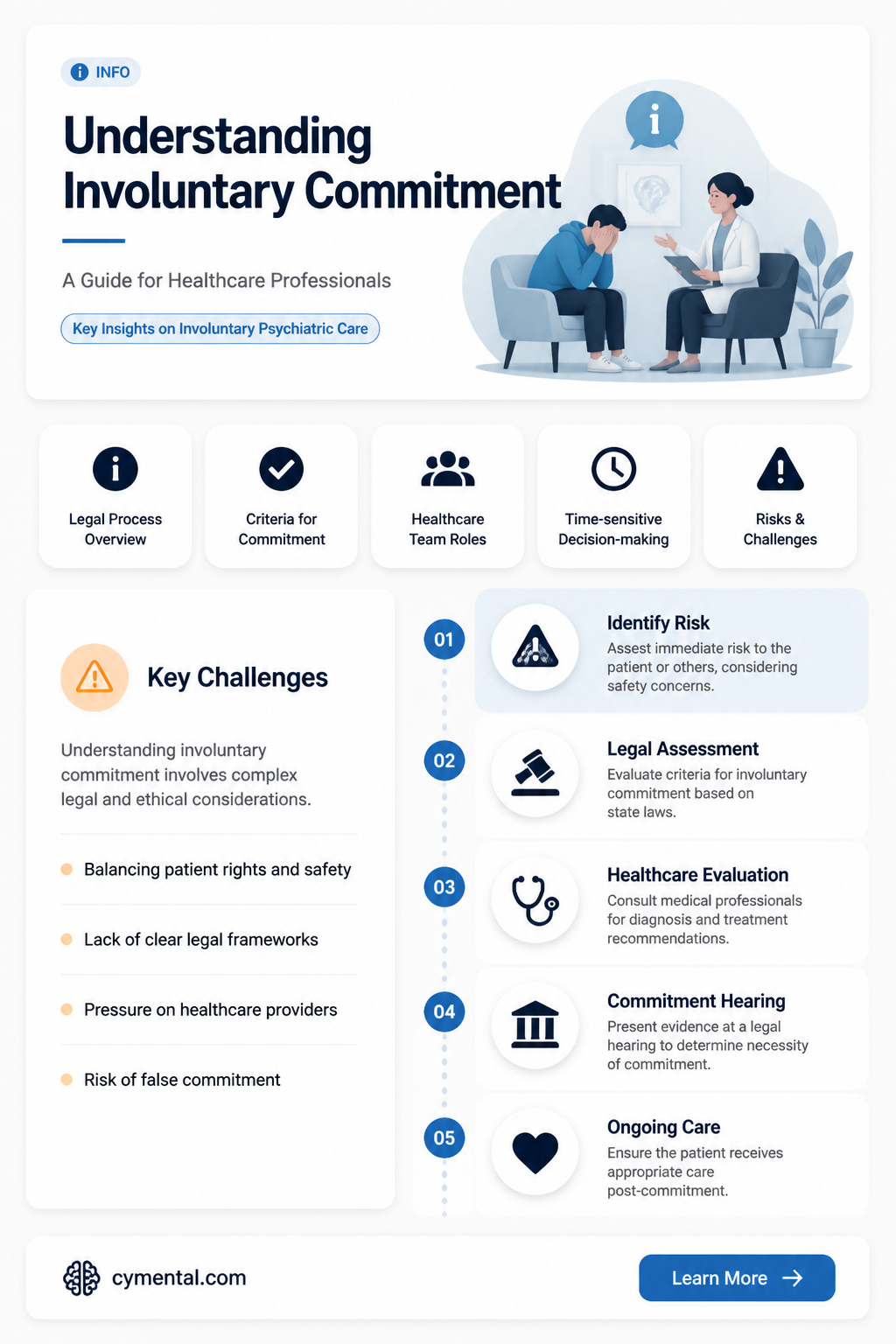
The question of whether a doctor can have a person committed for mental illness is a complex and sensitive topic that intersects medical, legal, and ethical considerations. In many jurisdictions, mental health professionals, including doctors, have the authority to involuntarily commit individuals to psychiatric facilities if they are deemed to be a danger to themselves or others due to their mental state. This process is typically governed by specific laws and regulations that aim to balance the need for public safety with the protection of individual rights. However, the criteria for involuntary commitment can vary widely, and the decision often involves a nuanced assessment of the patient's condition, behavior, and potential risks. Furthermore, the involvement of legal professionals and the court system may be necessary to ensure that the individual's rights are upheld and that the commitment is justified and appropriate.
Explore related products


What You'll Learn
- Legal Criteria for Commitment: Understanding the legal standards and processes for involuntary psychiatric commitment
- Medical Evaluation: The role of a doctor in assessing a patient's mental state and determining the need for commitment
- Patient Rights: Exploring the rights of individuals facing potential commitment, including the right to legal counsel
- Types of Commitment: Differentiating between various forms of commitment, such as emergency holds and long-term placements
- Support Systems: The importance of support networks for individuals with mental illness, including family, friends, and community resources

Legal Criteria for Commitment: Understanding the legal standards and processes for involuntary psychiatric commitment
Involuntary psychiatric commitment is a legal process that allows a person to be admitted to a mental health facility against their will. The legal criteria for commitment vary by jurisdiction, but generally, a person must be deemed a danger to themselves or others, or be unable to care for themselves due to a mental illness. The process typically involves a petition filed by a family member, friend, or mental health professional, followed by a hearing before a judge or magistrate.
During the hearing, the petitioner must present evidence to support the claim that the person meets the legal criteria for commitment. This may include testimony from mental health professionals, family members, or friends, as well as any relevant medical records or documentation. The person being considered for commitment also has the right to present evidence and argue against the petition.
If the judge or magistrate finds that the person meets the legal criteria for commitment, they will issue an order authorizing the person to be admitted to a mental health facility. The facility must then conduct an evaluation to determine the appropriate level of care and treatment for the person. Involuntary commitment can be a complex and emotionally charged process, and it is important to understand the legal standards and procedures involved to ensure that the rights of the person being considered for commitment are protected.
Prioritizing Your Well-being: How to Get Time Off Work for Mental Health
You may want to see also
Explore related products


Medical Evaluation: The role of a doctor in assessing a patient's mental state and determining the need for commitment
A doctor plays a crucial role in assessing a patient's mental state and determining the need for commitment. This process involves a thorough medical evaluation, which includes a physical examination, a review of the patient's medical history, and a mental status examination. During the mental status examination, the doctor will assess the patient's mood, thought processes, and behavior to identify any signs of mental illness that may require commitment.
The doctor will also consider the patient's ability to care for themselves and make decisions about their own treatment. If the doctor determines that the patient is unable to make informed decisions about their care or is a danger to themselves or others, they may recommend commitment to a mental health facility. This decision is not taken lightly and is typically made only after all other treatment options have been exhausted.
In some cases, a doctor may also consult with other mental health professionals, such as psychiatrists or psychologists, to get a more comprehensive understanding of the patient's mental state. This collaborative approach ensures that the patient receives the most appropriate care and that all possible treatment options are considered before making a decision about commitment.
It is important to note that the laws and regulations surrounding mental health commitment vary by jurisdiction. In some areas, a doctor may be required to obtain a court order before committing a patient, while in others, they may have the authority to make this decision on their own. Regardless of the specific legal requirements, the doctor's primary responsibility is to ensure the safety and well-being of the patient.
In conclusion, a doctor's role in assessing a patient's mental state and determining the need for commitment is complex and multifaceted. It requires a thorough understanding of the patient's medical history, a careful evaluation of their mental status, and consideration of all available treatment options. By taking a comprehensive and collaborative approach, doctors can ensure that patients receive the care they need to manage their mental health conditions effectively.
Navigating the Legal Process for a Court-Ordered Mental Health Evaluation
You may want to see also
Explore related products


Patient Rights: Exploring the rights of individuals facing potential commitment, including the right to legal counsel
Individuals facing potential commitment for mental illness are entitled to several rights, including the right to legal counsel. This right is fundamental to ensuring that the commitment process is fair and that the individual's interests are protected. Legal counsel can help the individual understand the commitment process, challenge the commitment if necessary, and advocate for their rights throughout the proceedings.
In addition to the right to legal counsel, individuals facing potential commitment are also entitled to the right to a fair hearing. This means that they have the opportunity to present evidence and testimony in their defense, and to cross-examine witnesses presented by the opposing party. The hearing should be conducted by an impartial decision-maker, such as a judge or a mental health professional, who will make a determination based on the evidence presented.
Another important right for individuals facing potential commitment is the right to be informed of the reasons for the commitment. This includes being provided with a written statement outlining the specific allegations against them, as well as any supporting evidence. This information is crucial for the individual to be able to mount an effective defense and to understand the basis for the commitment.
Individuals facing potential commitment are also entitled to the right to privacy. This means that their personal information, including their medical records, should be kept confidential and only shared with those who have a legitimate need to know. This right is important to protect the individual's dignity and to prevent discrimination or stigma based on their mental health status.
Finally, individuals facing potential commitment are entitled to the right to appeal the commitment decision. This means that if they are unhappy with the outcome of the hearing, they can request that the decision be reviewed by a higher authority. This right is important to ensure that the commitment process is fair and that individuals are not unjustly deprived of their liberty.
Exploring the Minds of Our Furry Friends: Do Animals Experience Mental Illness?
You may want to see also
Types of Commitment: Differentiating between various forms of commitment, such as emergency holds and long-term placements
In the realm of mental health care, commitment refers to the legal process of placing an individual in a psychiatric facility or program without their consent. This process is typically initiated by a mental health professional, such as a psychiatrist or psychologist, who believes the person poses a significant risk to themselves or others due to their mental illness. Commitment can take various forms, each with its own specific criteria, procedures, and durations.
Emergency holds, also known as involuntary hospitalizations, are short-term commitments that allow for the immediate detention of an individual in a psychiatric facility. These holds are typically used in situations where there is an imminent risk of harm, such as suicidal ideation or homicidal threats. The duration of an emergency hold varies by jurisdiction but generally lasts for a few days to a week, during which time the individual is assessed and stabilized.
Long-term placements, on the other hand, involve the commitment of an individual to a psychiatric facility or program for an extended period, often ranging from several weeks to several months or even years. These placements are typically reserved for individuals with severe and persistent mental illnesses who require intensive treatment and support. Long-term placements may be voluntary or involuntary, depending on the individual's capacity to make informed decisions about their care.
Another form of commitment is outpatient commitment, which requires an individual to attend regular therapy sessions or psychiatric appointments while living in the community. This type of commitment is often used as an alternative to inpatient hospitalization for individuals who do not pose an immediate risk of harm but still require ongoing treatment and support.
The process of committing an individual to a psychiatric facility or program is governed by state and federal laws, which vary significantly across jurisdictions. In general, the process involves a mental health professional filing a petition with the court, which then holds a hearing to determine whether the individual meets the criteria for commitment. If the court finds that the individual is a danger to themselves or others and is unable to care for themselves, it may issue an order of commitment.
In conclusion, commitment is a complex and multifaceted process that involves various forms of psychiatric care and legal procedures. Understanding the different types of commitment and their specific criteria is essential for mental health professionals, policymakers, and individuals affected by mental illness.
Unleashing Your Mind: Strategies to Overcome Mental Blocks
You may want to see also
Support Systems: The importance of support networks for individuals with mental illness, including family, friends, and community resources
Individuals with mental illness often face significant challenges in their daily lives, and having a strong support system can be crucial to their well-being and recovery. Family members, friends, and community resources can provide emotional support, practical assistance, and a sense of belonging that can help individuals manage their symptoms and improve their overall quality of life.
One important aspect of support systems is the ability to provide emotional support. This can include listening to the individual, offering words of encouragement, and being present during difficult times. Emotional support can help individuals feel less isolated and more understood, which can be particularly important for those experiencing mental health challenges.
In addition to emotional support, practical assistance can also be a vital component of a support system. This can include help with daily tasks, such as grocery shopping or household chores, as well as assistance with navigating the mental health system, including finding treatment providers and accessing resources.
Community resources can also play a significant role in supporting individuals with mental illness. These resources can include support groups, mental health clinics, and other organizations that provide services and assistance to those in need. Community resources can offer a sense of connection and belonging, as well as access to professional help and advice.
It is important to note that support systems can vary greatly in their effectiveness, depending on the individual's specific needs and circumstances. Some individuals may find that they benefit more from formal support systems, such as therapy or medication, while others may find that informal support systems, such as family and friends, are more helpful.
In conclusion, support systems can be a critical component of recovery for individuals with mental illness. By providing emotional support, practical assistance, and a sense of belonging, support systems can help individuals manage their symptoms, improve their overall quality of life, and feel more connected to their community.
Navigating Mental Health Medical Leave: A Comprehensive Guide
You may want to see also
Frequently asked questions
Yes, a doctor can involuntarily commit a person for mental illness if they believe the person is a danger to themselves or others, or is unable to care for themselves due to their mental condition.
The process for involuntarily committing someone for mental illness typically involves a doctor or other qualified mental health professional filing a petition with the court, followed by a hearing to determine if the person meets the criteria for involuntary commitment.
The length of time a person can be involuntarily committed for mental illness varies depending on the jurisdiction and the individual's specific circumstances. In some cases, a person may be committed for a short period of time for evaluation and treatment, while in other cases, they may be committed for a longer period of time if they are deemed to be a persistent danger to themselves or others.
The criteria for involuntary commitment for mental illness typically include a determination that the person is suffering from a mental illness, that they are a danger to themselves or others, or that they are unable to care for themselves due to their mental condition.
Yes, a person can be involuntarily committed for mental illness without their consent if a doctor or other qualified mental health professional believes they meet the criteria for involuntary commitment.