Madison Cole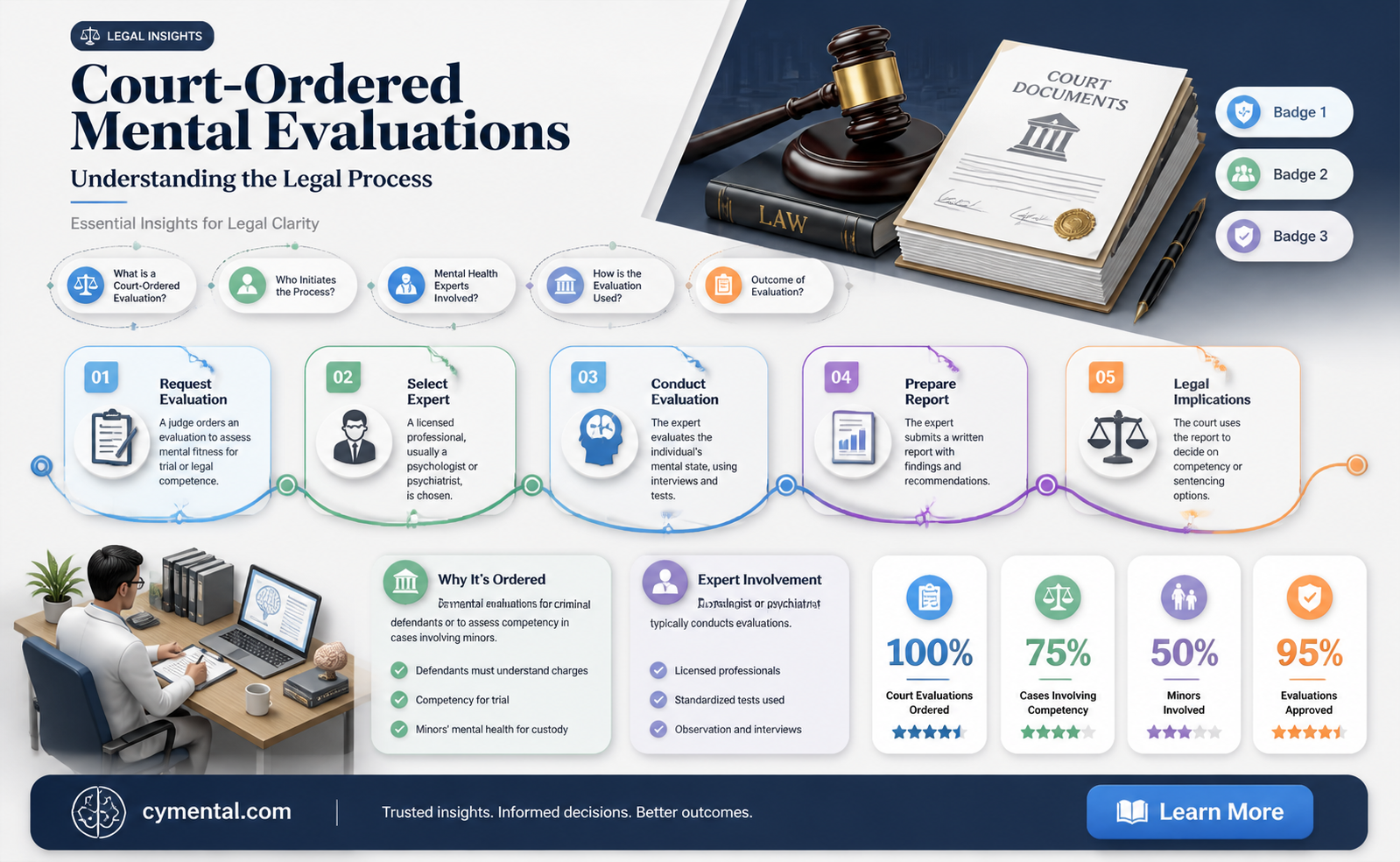
Yes, a court can order a person to undergo a mental evaluation under certain circumstances. This typically occurs when there are concerns about an individual's mental state and its potential impact on their ability to participate in legal proceedings or pose a risk to themselves or others. The process and criteria for ordering a mental evaluation vary by jurisdiction, but it often involves a formal request by a legal party, such as a prosecutor or defense attorney, and a hearing where evidence is presented to support the need for the evaluation. The court may then appoint a qualified mental health professional to conduct the evaluation and provide a report on the individual's mental status. This report can be used to inform the court's decisions regarding the person's competency to stand trial, potential defenses, or sentencing. It's important to note that the specific laws and procedures governing court-ordered mental evaluations differ significantly across countries and even within different regions of the same country.
| Characteristics | Values |
|---|---|
| Legal Authority | Courts of law |
| Purpose | To assess mental capacity or stability |
| Grounds for Order | Reasonable suspicion of mental illness affecting decision-making or behavior |
| Evaluation Process | Conducted by qualified mental health professionals |
| Types of Evaluations | Psychiatric evaluations, psychological assessments, neurological examinations |
| Confidentiality | Evaluation results are typically confidential, but may be shared with legal parties involved |
| Consequences of Refusal | Refusal may result in legal penalties or adverse legal outcomes |
| Duration of Evaluation | Varies, typically several hours to multiple days |
| Cost | Costs can be covered by insurance, legal aid, or out-of-pocket expenses |
| Legal Implications | Results may influence legal proceedings, custody arrangements, or guardianship decisions |
| Frequency of Orders | Relatively uncommon, but varies by jurisdiction and case type |
| Controversial Aspects | Raises concerns about privacy, stigma, and potential misuse of mental health information |
| Alternatives to Court Order | Voluntary evaluations, referrals from healthcare providers, or community mental health services |
| Documentation Requirements | Detailed reports outlining evaluation methods, findings, and recommendations |
| Expert Testimony | Mental health professionals may be required to testify in court about their findings |
Explore related products


What You'll Learn
- Legal Grounds: When can a court mandate a mental evaluation
- Procedures: What steps are involved in ordering an evaluation
- Rights: What are the individual's rights during this process
- Types of Evaluations: What kinds of mental evaluations can be ordered
- Consequences: What happens after the evaluation is completed

Legal Grounds: When can a court mandate a mental evaluation?
In the realm of legal proceedings, the court's authority to mandate a mental evaluation is a critical aspect of ensuring justice and public safety. This power is typically exercised when there is a reasonable suspicion that a defendant's mental state may be relevant to the case at hand. For instance, if a defendant exhibits behavior that suggests they may not be competent to stand trial, the court may order a mental evaluation to assess their ability to understand the proceedings and assist in their own defense.
The legal grounds for mandating a mental evaluation can vary depending on the jurisdiction, but generally, it requires a showing of probable cause that the defendant's mental state is in question. This can be demonstrated through evidence of the defendant's behavior, statements, or actions that indicate a potential mental health issue. In some cases, the court may also consider the defendant's criminal history, particularly if it includes previous instances of mental health-related offenses or hospitalizations.
Once the court has determined that there is sufficient cause for a mental evaluation, it will typically appoint a qualified mental health professional to conduct the assessment. This professional will evaluate the defendant's mental state and provide a report to the court, which will then be used to inform the legal proceedings. If the evaluation reveals that the defendant is not competent to stand trial, the court may order them to undergo treatment or hospitalization until they are deemed fit to proceed.
It is important to note that the court's power to mandate a mental evaluation is not absolute and is subject to legal challenges. Defendants have the right to contest the court's order and may request a hearing to present evidence in support of their claim that they are competent to stand trial. Additionally, the court must ensure that the mental evaluation is conducted in a manner that respects the defendant's rights and dignity, and that the results are used solely for the purpose of determining their competence to stand trial.
In conclusion, the court's authority to mandate a mental evaluation is a complex and nuanced aspect of the legal system. It is a power that must be exercised with caution and respect for the rights of the defendant, while also ensuring the safety and integrity of the legal proceedings. By understanding the legal grounds for mandating a mental evaluation and the procedures involved, we can better appreciate the delicate balance between justice and compassion in our legal system.
Breaking Free: A Guide to Overcoming Life's Challenges
You may want to see also
Explore related products


Procedures: What steps are involved in ordering an evaluation?
A court can indeed order a person to undergo a mental evaluation under certain circumstances. This process typically involves several key steps. First, a petition must be filed with the court, usually by a concerned family member, healthcare provider, or legal representative. This petition should detail the reasons why a mental evaluation is necessary, providing evidence of the individual's mental state and any potential risks to themselves or others.
Once the petition is filed, the court will review the information and determine whether there is sufficient cause to order an evaluation. If the court deems it necessary, they will issue an order for the individual to undergo a mental health assessment. This order will typically specify the type of evaluation required, the timeframe within which it must be completed, and the qualifications of the evaluator.
The individual subject to the evaluation will then be notified of the court's order and provided with information about the evaluation process. They may be required to attend the evaluation at a designated facility or meet with a court-appointed evaluator. During the evaluation, the individual will be assessed for their mental health status, cognitive functioning, and any potential risks they may pose.
Following the evaluation, the evaluator will prepare a report detailing their findings and recommendations. This report will be submitted to the court, which will then review the information and make a determination about the individual's mental health status and any necessary next steps. These steps may include ordering treatment, hospitalization, or other interventions aimed at addressing the individual's mental health needs.
Throughout this process, it is important to ensure that the individual's rights are protected and that they are treated with dignity and respect. Legal representation can be crucial in navigating the complexities of court-ordered mental evaluations and ensuring that the individual's best interests are served.
Exploring Options: Where to Obtain Brain Scans for Mental Health Assessments
You may want to see also
Explore related products

$22.24 $34.99


Rights: What are the individual's rights during this process?
Individuals undergoing a court-ordered mental evaluation have several rights that are crucial to ensuring the process is fair and respectful. Firstly, they have the right to be informed about the nature and purpose of the evaluation. This includes understanding the specific reasons why the court has ordered the evaluation and what the potential outcomes might be.
Secondly, individuals have the right to legal representation. This means they can have a lawyer present to advise them throughout the process and to challenge any aspects of the evaluation that they believe are unjust or unlawful. The lawyer can also help ensure that the individual's rights are protected and that they are not coerced into providing information that could be self-incriminating.
Thirdly, individuals have the right to privacy and confidentiality. The information obtained during the mental evaluation should be kept confidential and only shared with authorized parties, such as the court and the individual's legal representatives. This right helps protect the individual from potential stigma and discrimination that could arise from the disclosure of sensitive personal information.
Fourthly, individuals have the right to refuse to participate in certain aspects of the evaluation if they believe it will cause them undue stress or harm. However, it is important to note that refusing to cooperate may have legal consequences, such as the court ordering a more invasive evaluation or drawing negative inferences about the individual's mental state.
Lastly, individuals have the right to appeal the court's decision to order a mental evaluation. This means they can challenge the necessity and appropriateness of the evaluation and present evidence to support their claim. If successful, the court may reverse its decision or modify the terms of the evaluation to better protect the individual's rights.
In summary, individuals undergoing a court-ordered mental evaluation have the rights to be informed, to legal representation, to privacy and confidentiality, to refuse certain aspects of the evaluation, and to appeal the court's decision. These rights are essential to ensuring that the process is fair, respectful, and protective of the individual's well-being.
Navigating Disability Benefits for Mental Health Conditions: A Comprehensive Guide
You may want to see also
Explore related products


Types of Evaluations: What kinds of mental evaluations can be ordered?
Mental evaluations ordered by a court can vary widely depending on the specific circumstances of the case and the questions the court seeks to answer. These evaluations are typically conducted by qualified mental health professionals and can include a range of assessments and tests.
- Competency Evaluation: This type of evaluation is often ordered to determine whether a defendant is competent to stand trial. It assesses the individual's ability to understand the legal proceedings and assist in their own defense. The evaluation may involve interviews, psychological testing, and a review of the defendant's legal and medical history.
- Sanity Evaluation: Also known as a sanity board evaluation, this assessment is used to determine whether a defendant was sane at the time of the alleged offense. It focuses on the individual's mental state and ability to distinguish right from wrong. This evaluation can include interviews, psychological testing, and a review of the defendant's mental health history.
- Risk Assessment: This evaluation is designed to assess the likelihood that an individual will engage in future violent or criminal behavior. It may be ordered in cases where the court is considering releasing a defendant on bail or determining the appropriate level of supervision for a convicted offender. Risk assessments often involve actuarial tools and clinical judgment to estimate the probability of future offending.
- Psychosexual Evaluation: This type of evaluation is typically ordered in cases involving sexual offenses to assess the individual's sexual behavior, preferences, and potential for reoffending. It may include interviews, psychological testing, and a review of the defendant's sexual history.
- Neuropsychological Evaluation: This evaluation is used to assess the impact of brain injury or neurological conditions on an individual's cognitive and behavioral functioning. It may be ordered in cases where there is a question about the defendant's mental capacity or where a brain injury is suspected to have played a role in the alleged offense.
- Substance Abuse Evaluation: This evaluation is designed to assess an individual's use of drugs and alcohol and determine whether substance abuse is a contributing factor to their criminal behavior. It may include interviews, drug testing, and a review of the defendant's substance abuse history.
Each type of evaluation serves a specific purpose and is tailored to address the unique questions and concerns of the court. The results of these evaluations can have a significant impact on the outcome of a case, influencing decisions on bail, sentencing, and treatment.
Recognizing Mental Abuse: A Guide for Teens and Young Adults
You may want to see also
Explore related products


Consequences: What happens after the evaluation is completed?
Following a court-ordered mental evaluation, several potential consequences may arise, each contingent on the findings and recommendations of the evaluating mental health professional. If the evaluation determines that the individual poses a significant risk to themselves or others, the court may mandate further psychiatric treatment, which could include inpatient hospitalization or outpatient therapy. In some cases, the court might also impose restrictions on the person's freedom, such as limiting their ability to own firearms or requiring them to maintain a certain distance from specific individuals or locations.
Conversely, if the evaluation concludes that the individual does not present a substantial risk and is deemed mentally fit, the court may dismiss the case or modify any existing legal orders. This could result in the restoration of certain rights or privileges that were previously suspended. However, it is crucial to note that the court's decision is not solely based on the evaluator's findings but also considers other legal factors and the overall context of the case.
In addition to these direct legal consequences, the evaluation process itself can have significant psychological and social impacts on the individual. Being subjected to a mental evaluation can be a stressful and potentially stigmatizing experience, which may affect the person's self-esteem, relationships, and overall well-being. Furthermore, the evaluation's outcome can influence how the individual is perceived by others, including family members, friends, and potential employers.
From a legal standpoint, the evaluation's results can also have broader implications for the individual's future interactions with the legal system. For instance, if the evaluation identifies underlying mental health issues that contributed to the person's legal troubles, this information may be used to inform future sentencing decisions or to advocate for alternative forms of punishment, such as treatment programs instead of incarceration.
Ultimately, the consequences of a court-ordered mental evaluation are multifaceted and can extend far beyond the immediate legal ramifications. They can impact various aspects of the individual's life, including their mental health, social standing, and future legal proceedings. As such, it is essential for all parties involved to approach the evaluation process with a comprehensive understanding of its potential outcomes and to consider the long-term effects on the individual's well-being and societal reintegration.
Navigating SSDI for Mental Illness: Challenges and Strategies
You may want to see also
Frequently asked questions
Yes, a court can order a person to undergo a mental evaluation under certain circumstances. This typically occurs when there are concerns about the individual's mental state and its potential impact on their ability to participate in legal proceedings or pose a risk to themselves or others.
Courts may order mental evaluations for various reasons, including:
- To determine if a defendant is competent to stand trial
- To assess if an individual is a danger to themselves or others
- To evaluate the mental state of a witness or party involved in a case
- To determine if a person is capable of managing their own affairs or requires guardianship
During a court-ordered mental evaluation, the individual is typically examined by a qualified mental health professional. The evaluation may include:
- A thorough interview with the individual
- Review of their medical and psychiatric history
- Observation of their behavior and interactions
- Administration of psychological tests or assessments
- Consultation with other mental health professionals or experts
The results of the evaluation are then reported back to the court, which will use the information to make decisions about the individual's case or circumstances.