Noah Parker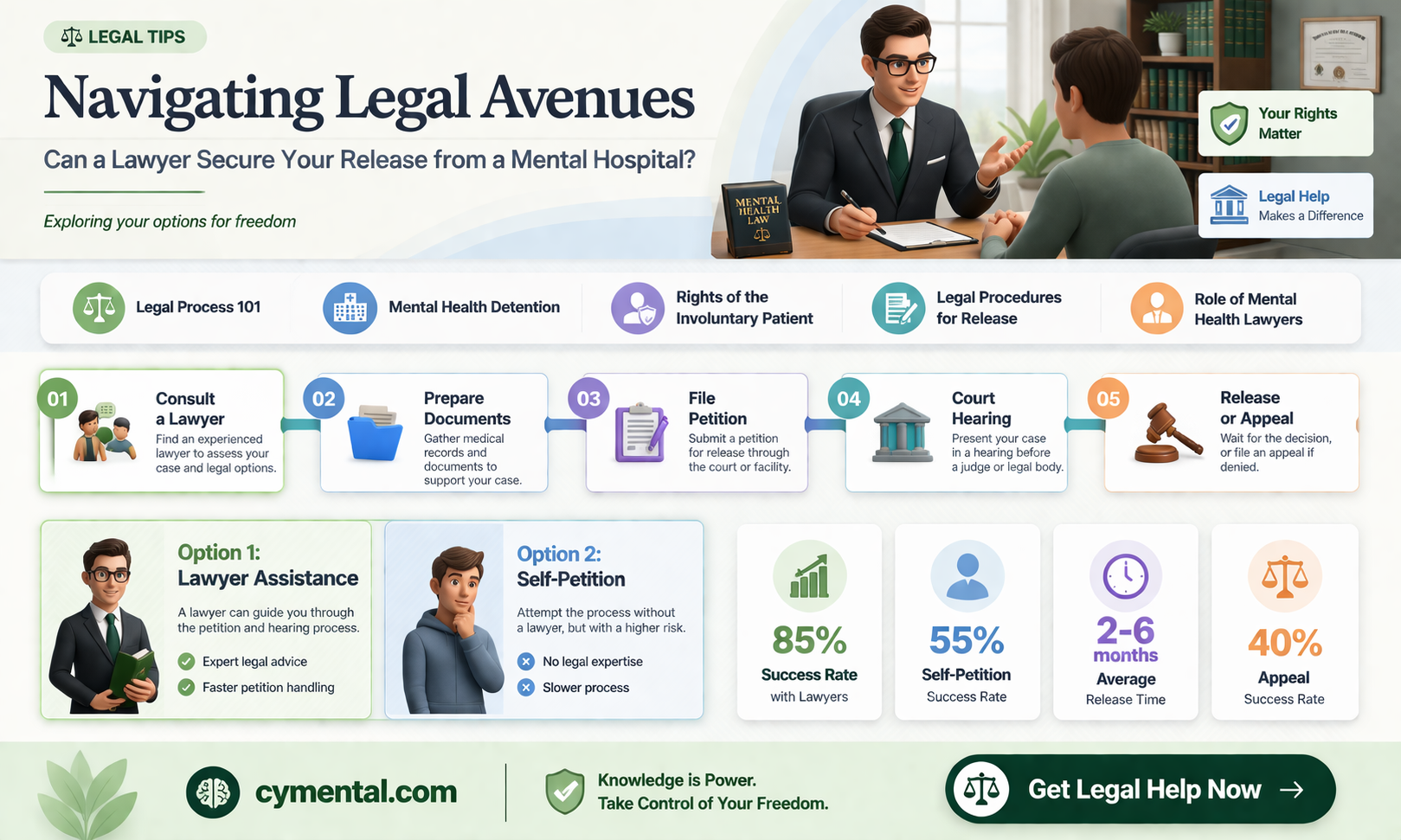
The question of whether a lawyer can secure a patient's release from a mental hospital is complex and multifaceted. While legal representation can play a crucial role in advocating for a patient's rights and challenging the basis of their detention, the process is often subject to stringent legal standards and medical evaluations. Lawyers must navigate a delicate balance between protecting their client's autonomy and ensuring their safety and well-being. This involves understanding the intricacies of mental health law, including involuntary commitment statutes, due process rights, and the criteria for determining a patient's capacity to make decisions about their own care. Ultimately, the outcome depends on a variety of factors, including the patient's specific circumstances, the quality of legal representation, and the applicable laws and regulations governing mental health treatment and hospitalization.
Explore related products


$52.25 $58.99


What You'll Learn

Legal criteria for involuntary commitment
Involuntary commitment to a mental health facility is a serious legal process that requires specific criteria to be met. The legal standards for involuntary commitment vary by jurisdiction, but generally, they involve a determination that an individual poses a significant risk to themselves or others due to a mental health condition. This risk must be substantial and imminent, meaning that there is a high likelihood of harm occurring in the near future if the individual is not committed.
One of the key legal criteria for involuntary commitment is the presence of a mental health disorder that impairs the individual's ability to make informed decisions about their own care. This impairment must be severe enough to prevent the person from understanding the nature and consequences of their actions or from making rational judgments about their own safety and well-being. In some cases, this may involve a diagnosis of a specific mental health condition, such as schizophrenia, bipolar disorder, or major depressive disorder, but the diagnosis alone is not sufficient to justify involuntary commitment.
Another important criterion is the demonstration of dangerous behavior or threats of harm. This can include actions such as self-harm, suicide attempts, or aggressive behavior towards others. The behavior must be recent and relevant to the current situation, and it must be clear that the individual's mental health condition is the primary cause of the dangerous behavior. In some jurisdictions, the law may also require that less restrictive alternatives, such as outpatient treatment or voluntary hospitalization, have been attempted and have failed to address the individual's needs.
The legal process for involuntary commitment typically involves a petition filed by a mental health professional, a law enforcement officer, or a concerned family member or friend. The petition must be supported by evidence that demonstrates the individual's mental health condition and the risk they pose to themselves or others. A hearing is then held, at which the individual has the right to present evidence and argue against the commitment. The decision to commit the individual is made by a judge or a mental health tribunal, based on the evidence presented and the legal criteria for involuntary commitment.
In summary, the legal criteria for involuntary commitment are designed to ensure that individuals who pose a significant risk to themselves or others due to a mental health condition receive the necessary treatment and care. The process involves a careful evaluation of the individual's mental health status, their behavior, and the potential risks they pose, and it is subject to legal safeguards to protect the individual's rights.
Navigating Short-Term Disability Benefits for Mental Health Conditions
You may want to see also
Explore related products




Lawyer's role in challenging confinement
Lawyers play a crucial role in challenging confinement in mental health facilities. They are often the advocates who help ensure that individuals' rights are protected and that they are not unlawfully detained. The process of challenging confinement can be complex and daunting, but with the right legal representation, it can be navigated effectively. Lawyers who specialize in mental health law are well-versed in the relevant statutes, regulations, and case law that govern these matters. They can help individuals understand their rights, assess the legality of their confinement, and take appropriate legal action if necessary.
One of the key ways in which lawyers can assist in challenging confinement is by filing a writ of habeas corpus. This legal document is used to challenge the legality of a person's detention and can be an effective tool in securing their release. Lawyers can also represent individuals in court hearings related to their confinement, advocating for their rights and presenting evidence to support their case. Additionally, lawyers can work with mental health professionals to ensure that individuals receive appropriate treatment and care while in confinement, and can help facilitate their transition back into the community when they are released.
In some cases, lawyers may also be able to help individuals who have been confined due to mental health issues access alternative treatments or services that can support their recovery. This can include connecting them with outpatient programs, therapy services, or other community-based resources that can provide them with the help they need without the need for confinement. Overall, the role of lawyers in challenging confinement is multifaceted and can have a significant impact on the lives of individuals who are struggling with mental health issues.
Navigating Disability Benefits for Mental Health Conditions: A Comprehensive Guide
You may want to see also
Explore related products





Mental health evaluations in court
In the context of mental health evaluations in court, it is crucial to understand the role of a lawyer in navigating the complex intersection of law and mental health. When an individual is involuntarily committed to a mental hospital, a lawyer can play a pivotal role in advocating for their rights and potentially securing their release. The process begins with a thorough evaluation of the individual's mental state by qualified professionals, which is then presented to the court.
The lawyer's primary objective in this scenario is to challenge the findings of the mental health evaluation if they believe it is inaccurate or unjust. This involves presenting alternative evidence, such as testimony from other mental health experts or witnesses, to demonstrate that the individual does not meet the legal criteria for involuntary commitment. The lawyer must also ensure that the individual's due process rights are protected throughout the proceedings, including the right to a fair hearing and the right to cross-examine witnesses.
One of the key strategies employed by lawyers in these cases is to highlight any inconsistencies or flaws in the mental health evaluation. This may include pointing out biases in the evaluation process, challenging the qualifications of the evaluators, or presenting evidence that contradicts the evaluation's findings. Additionally, the lawyer may argue that the individual's mental state has improved since the initial evaluation, making continued hospitalization unnecessary.
In some cases, the lawyer may also seek to negotiate a settlement with the opposing party, which could involve agreeing to certain conditions in exchange for the individual's release. These conditions might include outpatient treatment, regular check-ins with a mental health professional, or compliance with a medication regimen. By negotiating a settlement, the lawyer can often secure a more favorable outcome for their client while avoiding the need for a lengthy and potentially contentious trial.
Ultimately, the goal of a lawyer in the context of mental health evaluations in court is to ensure that their client receives fair and just treatment under the law. This involves advocating for their rights, presenting compelling evidence, and navigating the complex legal system to achieve the best possible outcome. Whether through negotiation, litigation, or a combination of both, a skilled lawyer can make a significant difference in the life of an individual facing involuntary commitment to a mental hospital.
Breaking Free: Strategies to Escape a Mental Rut
You may want to see also
Explore related products


Patient rights during hospitalization
During hospitalization, patients are entitled to certain fundamental rights that safeguard their dignity, autonomy, and well-being. These rights are crucial in ensuring that individuals receive appropriate care and are protected from potential harm or abuse. One key right is the ability to make informed decisions about their treatment, including the right to refuse medication or procedures if they are deemed competent to do so. This empowers patients to actively participate in their care plan and ensures that their preferences and values are respected.
Another important right is the freedom from restraints and seclusion, unless absolutely necessary for the patient's safety or the safety of others. Restraints should only be used as a last resort and must be carefully monitored to prevent physical or psychological harm. Patients also have the right to privacy and confidentiality, which means that their personal information and medical records should be kept secure and only shared with authorized individuals. This protects patients from potential discrimination or stigma and fosters a trusting relationship between the patient and healthcare providers.
In addition, patients have the right to access their medical records and receive a copy of their treatment plan. This transparency allows patients to review their care and ensures that they are fully informed about their condition and the steps being taken to address it. Furthermore, patients have the right to communicate with their loved ones and receive visitors, which can provide emotional support and help alleviate feelings of isolation during hospitalization.
It is also essential that patients are protected from exploitation and abuse, including financial exploitation, sexual abuse, and neglect. Healthcare facilities must have policies and procedures in place to prevent such incidents and to promptly investigate and address any allegations of misconduct. Finally, patients have the right to file grievances or complaints about their care and to seek legal recourse if their rights have been violated. This accountability ensures that healthcare providers are held to high standards and that patients are able to seek redress for any harm or injustice they may have experienced.
Liberating Yourself: A Guide to Overcoming Mental Pain
You may want to see also
Alternatives to hospitalization
In the realm of mental health care, alternatives to hospitalization can play a crucial role in providing support and treatment to individuals in need. These alternatives can include outpatient therapy, medication management, support groups, and crisis intervention services. Outpatient therapy allows individuals to receive counseling and treatment on a regular basis without the need for an extended stay in a hospital. Medication management can help individuals find the right balance of medications to manage their symptoms effectively. Support groups provide a community of individuals who can relate to each other's experiences and offer emotional support. Crisis intervention services can help individuals in immediate need of assistance, providing short-term support and resources to help them through a difficult time.
One alternative to hospitalization that has gained popularity in recent years is the use of telemedicine. Telemedicine allows individuals to receive mental health care remotely, through video conferencing or phone calls. This can be particularly beneficial for individuals who live in rural areas or have limited access to mental health care providers. Another alternative is the use of mobile apps and online platforms that provide mental health resources and support. These tools can offer individuals access to therapy, meditation, and other mental health resources at their fingertips.
It's important to note that while these alternatives can be effective, they may not be suitable for everyone. In some cases, hospitalization may be necessary to provide the level of care and support that an individual needs. However, by exploring these alternatives, individuals can find the right balance of care and support that works best for them.
When considering alternatives to hospitalization, it's also important to involve a lawyer if necessary. A lawyer can help individuals understand their rights and options, and can advocate for them to ensure that they receive the appropriate level of care. In some cases, a lawyer may be able to help an individual avoid hospitalization altogether by negotiating with mental health care providers or advocating for alternative treatment options.
In conclusion, alternatives to hospitalization can provide individuals with a range of options for mental health care and support. By exploring these alternatives and involving a lawyer if necessary, individuals can find the right balance of care and support that works best for them.
Exploring Canine Mental Health: Do Dogs Experience Mental Illness?
You may want to see also
Frequently asked questions
Yes, a lawyer can help you get out of a mental hospital. They can challenge the legality of your detention, represent you in court, and advocate for your rights.
A lawyer can challenge your detention on several grounds, including:
- Lack of probable cause for your arrest
- Insufficient evidence to support the claim that you are a danger to yourself or others
- Violation of your due process rights
- Inadequate conditions of confinement
You can find a lawyer to represent you by:
- Contacting your local bar association for a referral
- Reaching out to legal aid organizations that specialize in mental health law
- Asking friends or family members for recommendations
- Searching online for lawyers who have experience in mental hospital cases