Ava Ramirez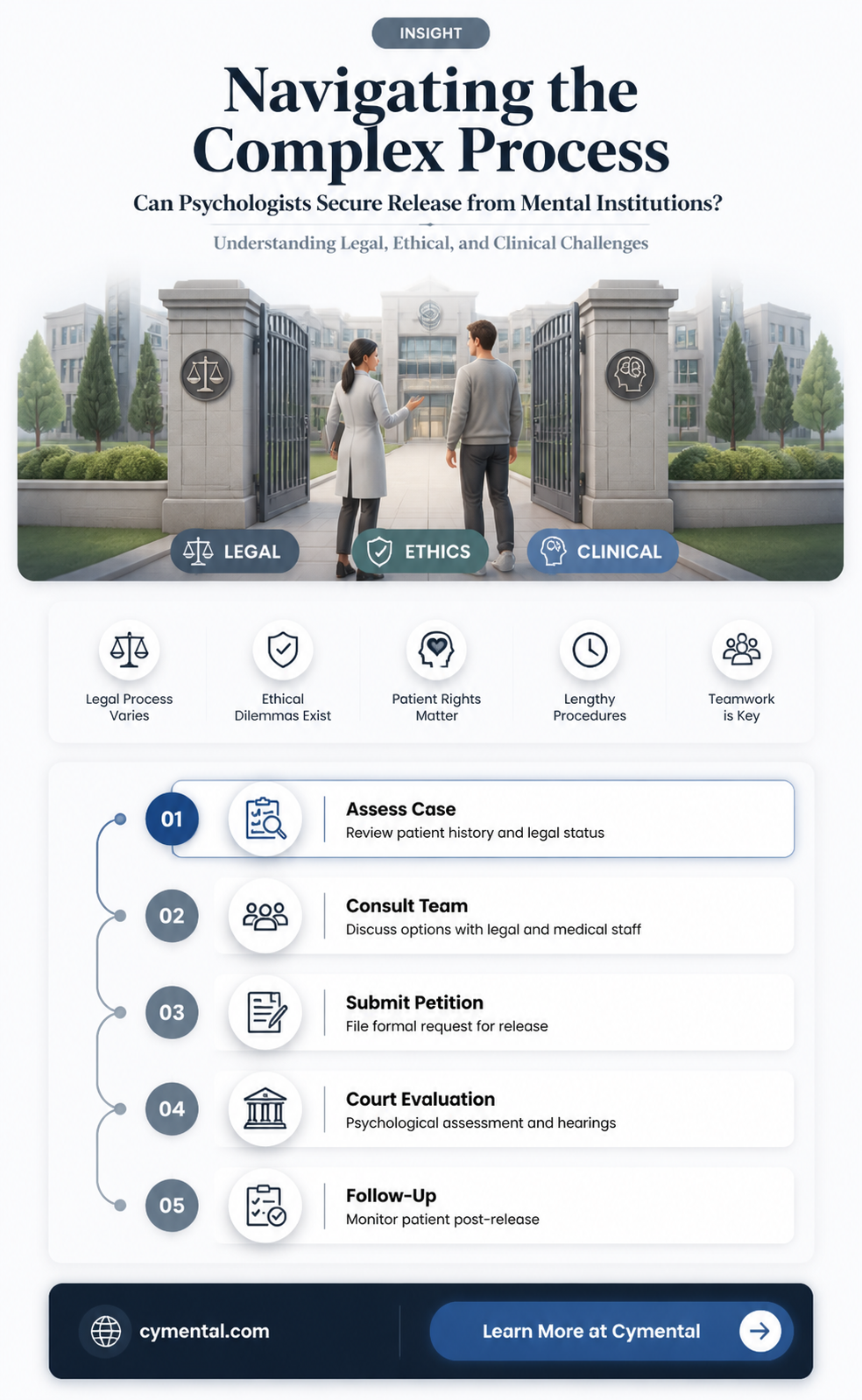
The question of whether a psychologist can get someone out of a mental institution is complex and multifaceted. It involves understanding the legal and clinical frameworks that govern involuntary hospitalization and the role of mental health professionals in the discharge process. Generally, a psychologist can play a crucial role in advocating for a patient's release by providing assessments, developing treatment plans, and collaborating with other healthcare providers and legal professionals. However, the final decision often rests with a multidisciplinary team and may require legal proceedings, especially if the patient was admitted involuntarily. Ethical considerations and the principle of least restrictive environment also play significant roles in these decisions.
Explore related products


What You'll Learn

Legal procedures for involuntary commitment
In the realm of mental health law, involuntary commitment procedures are a critical aspect that psychologists and other mental health professionals must navigate carefully. These legal processes are designed to ensure that individuals who may pose a danger to themselves or others due to their mental state receive the necessary treatment and care. However, the complexities of these procedures can often create challenges for professionals seeking to advocate for their patients' rights and well-being.
The first step in the involuntary commitment process typically involves a petition filed by a qualified individual, such as a psychologist, psychiatrist, or social worker, with the court. This petition must provide detailed information about the individual's mental state, including any diagnoses, symptoms, and behaviors that indicate a need for involuntary treatment. The petitioner must also demonstrate that the individual is unable to make informed decisions about their own care and that there is a significant risk of harm if they are not committed.
Once the petition is filed, the court will schedule a hearing to determine whether the individual meets the criteria for involuntary commitment. During this hearing, the petitioner and other witnesses, such as family members or additional mental health professionals, may be called to testify about the individual's condition and the need for commitment. The individual in question also has the right to present evidence and argue against the commitment.
If the court determines that the individual meets the criteria for involuntary commitment, they will issue an order authorizing the individual's detention in a mental health facility. The duration of this commitment will vary depending on the specific circumstances of the case and the laws of the jurisdiction. In some cases, the individual may be committed for a short period of time for evaluation and treatment, while in others, they may be committed for an indefinite period.
Throughout the involuntary commitment process, it is essential for mental health professionals to balance their duty to protect their patients' rights with their responsibility to ensure public safety. This can be a delicate and challenging task, requiring a thorough understanding of both mental health law and clinical practice. By navigating these legal procedures with care and expertise, psychologists and other professionals can help to ensure that individuals receive the treatment they need while also respecting their autonomy and dignity.
Breaking Free: A Guide to Overcoming Life's Challenges
You may want to see also
Explore related products


Evaluation of mental capacity and risk
In the context of determining whether a psychologist can facilitate the release of a patient from a mental institution, the evaluation of mental capacity and risk is a critical component. This process involves a thorough assessment of the individual's cognitive abilities, emotional stability, and potential for self-harm or harm to others. Psychologists must employ a variety of standardized tests and clinical interviews to gather comprehensive data on the patient's current mental state.
One key aspect of this evaluation is the determination of the patient's decision-making capacity. This involves assessing their ability to understand relevant information, appreciate the consequences of their decisions, and communicate their choices effectively. Psychologists may use tools such as the MacArthur Competence Assessment Tool for Treatment (MacCAT) to evaluate these competencies. Additionally, they must consider the patient's risk factors, including any history of violent behavior, substance abuse, or suicidal ideation.
The evaluation process also requires psychologists to consider the potential risks associated with releasing the patient into the community. This may involve consulting with other mental health professionals, reviewing the patient's medical history, and conducting risk assessments using actuarial tools such as the Violence Risk Appraisal Guide (VRAG) or the Structured Assessment of Violence Risk in Youth (SAVRY). By synthesizing this information, psychologists can make informed recommendations regarding the patient's readiness for discharge and the necessary support services to ensure a successful transition.
Ultimately, the decision to release a patient from a mental institution is a complex one that involves balancing the individual's rights with the need to protect public safety. Psychologists play a crucial role in this process by providing objective, evidence-based evaluations that inform the decision-making of mental health professionals, legal authorities, and other stakeholders. By adhering to rigorous assessment protocols and considering the full spectrum of risks and benefits, psychologists can help ensure that patients are released only when they are truly ready to reintegrate into society.
Unlocking Mental Health Certification: Your Guide to Getting Started
You may want to see also
Explore related products


$19.99 $34.95


Patient rights and advocacy
Individuals undergoing mental health treatment possess a variety of rights that are protected by law. These rights include the ability to make decisions about their own treatment, the right to privacy and confidentiality, and the freedom from discrimination based on their mental health status. Psychologists and other mental health professionals have an ethical obligation to respect and uphold these rights in their practice.
One of the key aspects of patient rights is the concept of informed consent. This means that patients must be fully informed about the nature of their treatment, including the potential risks and benefits, before they can give their consent to proceed. Psychologists must ensure that patients understand their treatment options and are not coerced into making decisions that they are not comfortable with.
Another important aspect of patient rights is the right to advocacy. Patients may need support in navigating the mental health system and ensuring that their rights are being respected. Psychologists can play a crucial role in advocating for their patients, helping them to access the resources and services they need, and ensuring that their voices are heard in the decision-making process.
In the context of involuntary hospitalization, patient rights become particularly important. While involuntary hospitalization can be necessary in some cases to protect individuals from harm, it is essential that patients' rights are not violated in the process. Psychologists must work to ensure that patients are treated with dignity and respect, and that their rights to due process and fair treatment are upheld.
Overall, patient rights and advocacy are essential components of ethical mental health practice. Psychologists have a responsibility to respect and protect the rights of their patients, and to advocate for their needs and interests. By doing so, they can help to ensure that patients receive the best possible care and are able to make informed decisions about their own treatment.
Navigating Mental Health Treatment: Can Individuals Be Forced to Seek Help?
You may want to see also
Explore related products


Treatment plans and progress reviews
A critical component in the process of discharging a patient from a mental institution is the development and regular review of a comprehensive treatment plan. This plan serves as a roadmap for the patient's recovery, outlining specific goals, interventions, and timelines. It is collaboratively created by the patient, their psychologist, and other relevant healthcare professionals to ensure that all aspects of the patient's mental health needs are addressed.
The treatment plan typically includes a detailed assessment of the patient's current mental status, a diagnosis, and a series of measurable objectives that the patient aims to achieve. These objectives might relate to symptom reduction, improvement in daily functioning, or the development of coping strategies. The plan also specifies the therapeutic approaches and interventions that will be used, such as cognitive-behavioral therapy, medication management, or group therapy sessions.
Regular progress reviews are essential to monitor the patient's advancement towards the goals set out in the treatment plan. These reviews involve evaluating the effectiveness of the interventions, identifying any barriers to progress, and making necessary adjustments to the plan. Progress reviews are typically conducted at regular intervals, such as weekly or monthly, and involve input from the patient, their psychologist, and other members of the treatment team.
During these reviews, it is important to consider not only the patient's mental health status but also their overall well-being, including physical health, social relationships, and daily activities. This holistic approach ensures that the patient's recovery is comprehensive and sustainable. If progress is not being made as expected, the treatment team may need to reassess the patient's needs and modify the treatment plan accordingly.
In some cases, the treatment plan may include a gradual transition from the mental institution to community-based care. This might involve step-down programs, such as partial hospitalization or intensive outpatient services, which provide a structured environment for the patient to continue their recovery while gradually increasing their independence. The psychologist plays a crucial role in facilitating this transition, ensuring that the patient has the necessary support and resources to maintain their progress once they leave the institution.
Ultimately, the goal of the treatment plan and progress reviews is to empower the patient to achieve a stable and fulfilling life outside of the mental institution. By providing a structured and collaborative approach to recovery, these processes can help patients overcome mental health challenges and regain control over their lives.
Unlocking Mental Focus: A Guide for the First Descendant
You may want to see also
Explore related products


Discharge criteria and aftercare support
Discharge from a mental institution is a critical phase that requires careful planning and consideration to ensure the individual's continued well-being. Psychologists play a pivotal role in this process, as they are responsible for assessing the patient's readiness for discharge and developing an aftercare plan that addresses their unique needs. The discharge criteria typically involve evaluating the patient's symptom management, their ability to function independently, and their engagement with ongoing treatment.
One of the primary considerations in discharge planning is the establishment of a robust aftercare support system. This may include regular outpatient therapy sessions, medication management, and the involvement of community resources such as support groups or vocational training programs. The psychologist must also ensure that the patient has a stable living environment and a strong social support network to help them navigate the challenges of reintegration into the community.
In addition to these practical considerations, the psychologist must also address any legal or ethical issues that may arise during the discharge process. For example, they may need to communicate with the patient's legal guardian or advocate to ensure that the discharge plan is in the patient's best interest. They must also be mindful of any potential risks to the patient or others, and take steps to mitigate these risks through appropriate referrals or safety planning.
The discharge process can be complex and multifaceted, and it is essential that the psychologist maintains a collaborative approach, working closely with the patient, their family, and other healthcare providers to ensure a smooth transition. By doing so, they can help to promote the patient's recovery and improve their overall quality of life.
Navigating Mental Health Medication Access Without Insurance Coverage
You may want to see also
Frequently asked questions
A psychologist can play a crucial role in the discharge process from a mental institution. They can evaluate the patient's condition, provide treatment, and make recommendations to the treatment team regarding the patient's readiness for discharge. However, the final decision often involves a multidisciplinary team and depends on various factors, including the patient's progress, safety, and the availability of appropriate aftercare.
The discharge process from a mental institution typically involves several steps. First, the patient's treatment team, including psychologists, psychiatrists, and social workers, assess the patient's condition and readiness for discharge. They develop a discharge plan that outlines the patient's aftercare, including therapy, medication, and support services. The plan is then reviewed and approved by the institution's discharge committee. Once approved, the patient is gradually transitioned to outpatient care, with ongoing monitoring and adjustments as needed.
Criteria for discharge from a mental institution vary depending on the institution and the patient's specific circumstances. Generally, key criteria include the patient's demonstrated ability to manage their symptoms, participate in treatment, and function safely in the community. The patient must also have a stable living situation, access to necessary support services, and a plan for ongoing care. The treatment team evaluates these factors to ensure the patient's successful reintegration into the community.
The length of time it takes to discharge a patient from a mental institution can vary significantly. It depends on factors such as the patient's diagnosis, the severity of their symptoms, their response to treatment, and the availability of appropriate aftercare. Some patients may be discharged within a few days, while others may require several weeks or even months of treatment before they are ready for discharge.
The patient plays an active role in the discharge process from a mental institution. They are encouraged to participate in their treatment planning and to express their preferences and concerns regarding their care. The patient's input is valuable in developing an effective discharge plan that meets their individual needs and promotes their successful reintegration into the community. Additionally, the patient must demonstrate their commitment to their recovery and their ability to manage their symptoms and responsibilities outside the institution.