Lucas Bennett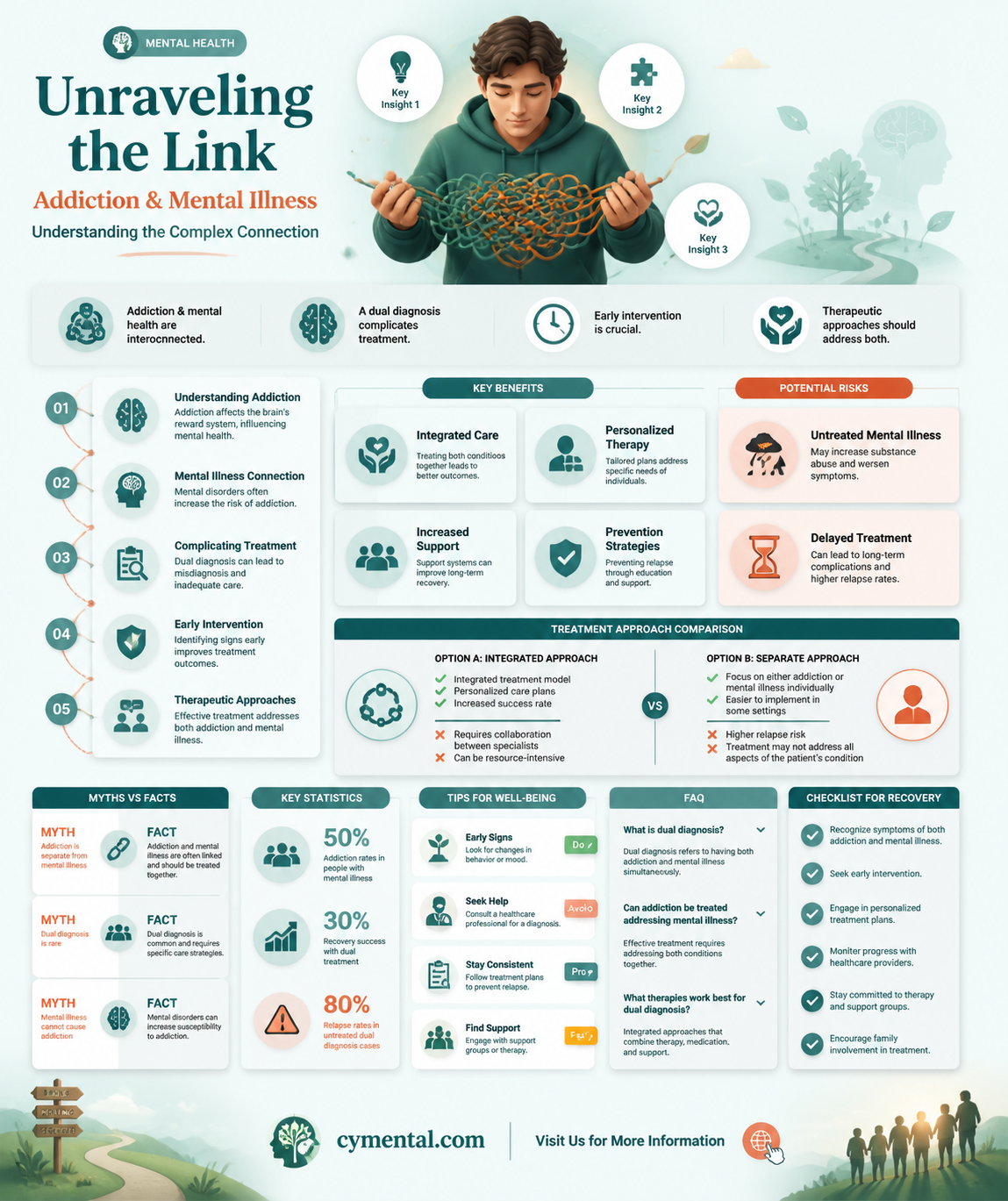
Addiction and mental illness are two complex health issues that often intersect, with each condition potentially exacerbating the other. While addiction is commonly understood as a chronic disorder characterized by compulsive substance use or behaviors despite harmful consequences, mental illness encompasses a broad range of conditions that affect mood, thinking, and behavior. Research has shown that individuals struggling with addiction are at a higher risk of developing mental health disorders, and vice versa. This interplay can be attributed to various factors, including genetic predispositions, environmental stressors, and the impact of substance abuse on brain chemistry. Understanding the relationship between addiction and mental illness is crucial for developing effective treatment strategies that address both conditions simultaneously, promoting better health outcomes for those affected.
Explore related products

$46.29 $93




What You'll Learn
- Neurological Changes: Addiction alters brain chemistry, potentially leading to mental health disorders like depression and anxiety
- Dual Diagnosis: Many individuals with addiction also suffer from pre-existing mental illnesses, complicating treatment and recovery
- Psychological Impact: Addiction can exacerbate mental health issues by increasing stress, guilt, and feelings of isolation
- Behavioral Patterns: Addictive behaviors may contribute to the development of mental illnesses such as obsessive-compulsive disorder
- Treatment Approaches: Addressing addiction and mental illness concurrently is crucial for effective recovery and long-term health

Neurological Changes: Addiction alters brain chemistry, potentially leading to mental health disorders like depression and anxiety
Addiction's impact on the brain is profound and multifaceted. One of the most significant neurological changes associated with addiction is the alteration of brain chemistry. This change can have far-reaching consequences, potentially leading to the development of mental health disorders such as depression and anxiety.
The brain's reward system, which is heavily involved in addiction, is primarily regulated by the neurotransmitter dopamine. When an individual engages in an addictive behavior, such as substance abuse, the brain releases an excessive amount of dopamine, creating a sense of pleasure and reward. Over time, this repeated surge of dopamine can lead to a decrease in the brain's natural dopamine production, resulting in a state of hypo-dopaminergia. This condition can manifest as symptoms of depression, including feelings of sadness, hopelessness, and a lack of motivation.
Furthermore, addiction can also affect the brain's stress response system, which is regulated by the hypothalamic-pituitary-adrenal (HPA) axis. Chronic stress, often associated with addiction, can lead to an overactive HPA axis, resulting in increased cortisol levels. Prolonged exposure to high cortisol levels can contribute to the development of anxiety disorders, characterized by feelings of worry, fear, and restlessness.
In addition to these chemical changes, addiction can also lead to structural alterations in the brain. For instance, studies have shown that individuals with addiction may have reduced gray matter volume in areas of the brain associated with emotional regulation and decision-making. These structural changes can further exacerbate the development of mental health disorders, as they can impair an individual's ability to cope with stress and make healthy choices.
It is important to note that the relationship between addiction and mental health disorders is complex and bidirectional. While addiction can contribute to the development of mental health issues, individuals with pre-existing mental health disorders may also be more susceptible to addiction. This highlights the need for a comprehensive approach to treatment that addresses both the addictive behavior and any underlying mental health conditions.
In conclusion, the neurological changes associated with addiction can have significant implications for an individual's mental health. By understanding these changes, we can better appreciate the complex interplay between addiction and mental illness, and develop more effective strategies for prevention and treatment.
Unraveling the Mind: Mental Illnesses Behind Paranoia
You may want to see also
Explore related products


Dual Diagnosis: Many individuals with addiction also suffer from pre-existing mental illnesses, complicating treatment and recovery
Individuals struggling with addiction often face a complex interplay between their substance use disorder and pre-existing mental health conditions. This phenomenon, known as dual diagnosis, presents significant challenges in treatment and recovery. Research indicates that approximately 60% of individuals with a substance use disorder also suffer from a mental illness, highlighting the need for integrated treatment approaches.
One of the primary complications of dual diagnosis is the difficulty in determining the causal relationship between addiction and mental illness. In some cases, substance abuse may exacerbate or even trigger mental health symptoms, while in others, pre-existing mental illness may contribute to the development of addiction as a form of self-medication. This chicken-and-egg dilemma underscores the importance of comprehensive assessments and individualized treatment plans that address both conditions simultaneously.
Effective treatment for dual diagnosis typically involves a combination of pharmacotherapy and psychotherapy. Medications may be used to manage symptoms of mental illness, such as antidepressants for depression or antipsychotics for schizophrenia, while behavioral therapies like cognitive-behavioral therapy (CBT) and motivational interviewing can help individuals address the underlying issues contributing to their addiction. Additionally, support groups and peer-led interventions can provide valuable social support and encouragement for those navigating the challenges of dual diagnosis.
Despite the availability of effective treatments, individuals with dual diagnosis often face barriers to accessing care. Stigma surrounding mental illness and addiction can lead to reluctance in seeking help, and fragmented healthcare systems may result in inadequate coordination between mental health and addiction services. Furthermore, the high cost of treatment and limited insurance coverage can create financial obstacles for those in need of care.
In conclusion, dual diagnosis represents a significant challenge in the field of addiction treatment, requiring a nuanced understanding of the complex interplay between substance use disorder and mental illness. By adopting integrated treatment approaches and addressing the barriers to care, we can improve outcomes for individuals struggling with dual diagnosis and support their journey towards recovery.
The Unseen Impact: How Furniture Can Influence Mental Health
You may want to see also
Explore related products


$104.85 $129.99


Psychological Impact: Addiction can exacerbate mental health issues by increasing stress, guilt, and feelings of isolation
Addiction can significantly worsen mental health issues by amplifying feelings of stress, guilt, and isolation. This exacerbation occurs as the individual becomes increasingly dependent on the substance or behavior, leading to a cycle of compulsive use despite negative consequences. The psychological impact is multifaceted, affecting various aspects of a person's emotional and cognitive well-being.
Stress is a common byproduct of addiction, as the individual may experience anxiety related to obtaining the substance, fear of withdrawal symptoms, or worry about the secrecy of their addiction. This chronic stress can lead to physiological changes, such as increased cortisol levels, which in turn can contribute to the development or worsening of mental health disorders like depression and anxiety.
Guilt is another significant psychological burden associated with addiction. Individuals often feel ashamed of their behavior, particularly if it conflicts with their personal values or societal norms. This guilt can lead to self-loathing and a diminished sense of self-worth, further complicating mental health issues. The cycle of guilt and shame can be particularly damaging, as it may prevent individuals from seeking help due to fear of judgment or rejection.
Feelings of isolation are also commonly experienced by those struggling with addiction. As the addiction progresses, individuals may withdraw from social interactions, leading to a sense of loneliness and disconnection. This isolation can exacerbate mental health issues by depriving the individual of support networks and opportunities for positive social engagement. The lack of social support can further contribute to the development of depression, anxiety, and other mental health disorders.
In conclusion, the psychological impact of addiction on mental health is profound and multifaceted. By increasing stress, guilt, and feelings of isolation, addiction can significantly worsen existing mental health issues and contribute to the development of new ones. It is crucial for individuals struggling with addiction to seek professional help, as addressing both the addiction and its psychological consequences is essential for long-term recovery and well-being.
Unraveling the Link: Mental Illness and Pathological Lying Explored
You may want to see also
Explore related products


Behavioral Patterns: Addictive behaviors may contribute to the development of mental illnesses such as obsessive-compulsive disorder
Addictive behaviors can significantly contribute to the development of mental illnesses, particularly obsessive-compulsive disorder (OCD). This relationship is rooted in the brain's reward system, where addictive substances or behaviors activate the release of dopamine, a neurotransmitter associated with pleasure and reward. Over time, this can lead to changes in brain structure and function, impairing the individual's ability to control their impulses and behaviors.
One of the key ways in which addiction can contribute to OCD is through the reinforcement of compulsive behaviors. In OCD, individuals often engage in repetitive behaviors or mental acts in response to intrusive thoughts or urges. These behaviors can become addictive, as they provide a temporary sense of relief or control. However, this relief is short-lived, and the compulsive behaviors can actually exacerbate the underlying anxiety and distress.
Furthermore, addiction can worsen the symptoms of OCD by increasing the frequency and intensity of intrusive thoughts. This is because addictive substances and behaviors can disrupt the brain's normal functioning, leading to heightened states of arousal and anxiety. In turn, this can make it more difficult for individuals with OCD to resist their compulsive urges, perpetuating the cycle of addiction and mental illness.
Breaking this cycle requires a comprehensive treatment approach that addresses both the addiction and the underlying mental health issues. Cognitive-behavioral therapy (CBT) is often used to help individuals with OCD identify and challenge their distorted thought patterns, while also developing healthier coping mechanisms. Medications, such as selective serotonin reuptake inhibitors (SSRIs), may also be prescribed to help manage the symptoms of OCD and reduce the compulsive behaviors associated with addiction.
In conclusion, the relationship between addiction and OCD is complex and multifaceted. Addictive behaviors can contribute to the development and worsening of OCD symptoms, while also reinforcing the compulsive behaviors that characterize the disorder. Effective treatment must address both the addiction and the underlying mental health issues, using a combination of therapy, medication, and lifestyle changes to promote recovery and improve overall well-being.
Exploring the Mind-Body Connection: Can Thoughts Trigger Palpitations?
You may want to see also
Explore related products


Treatment Approaches: Addressing addiction and mental illness concurrently is crucial for effective recovery and long-term health
Concurrent treatment for addiction and mental illness is a multifaceted approach that requires careful planning and execution. One effective method is the integration of cognitive-behavioral therapy (CBT) with motivational interviewing (MI). CBT helps individuals identify and change negative thought patterns and behaviors, while MI enhances motivation to change and engage in treatment. This combination has been shown to improve outcomes for those with co-occurring disorders.
Another crucial aspect of treatment is medication management. For individuals with mental health conditions such as depression or anxiety, selective serotonin reuptake inhibitors (SSRIs) or other psychotropic medications may be prescribed. These medications can help stabilize mood and reduce symptoms, making it easier for individuals to engage in therapy and recovery activities. However, it is essential to monitor for potential interactions between these medications and substances of abuse.
In addition to individual therapy and medication, group therapy and support groups play a vital role in concurrent treatment. Group settings provide opportunities for social support, skill-building, and relapse prevention. Programs like Alcoholics Anonymous (AA) and Narcotics Anonymous (NA) offer peer support and a sense of community, which can be particularly beneficial for those struggling with co-occurring disorders.
Family therapy is also an important component of concurrent treatment. Addiction and mental illness can have a significant impact on family dynamics, and involving family members in the treatment process can help address these issues. Family therapy can improve communication, resolve conflicts, and provide education about addiction and mental health.
Finally, it is essential to address the physical health needs of individuals with co-occurring disorders. Regular medical check-ups, nutritional counseling, and exercise programs can help improve overall health and well-being, which in turn can support recovery efforts.
In conclusion, addressing addiction and mental illness concurrently requires a comprehensive treatment approach that includes individual and group therapy, medication management, family therapy, and attention to physical health. By providing a holistic and integrated approach to treatment, individuals with co-occurring disorders can achieve effective recovery and long-term health.
Exploring the Link: Mental Breakdown and Dementia Risk
You may want to see also
Frequently asked questions
Yes, addiction can cause mental illness. Substance abuse can lead to changes in brain chemistry and function, which can result in the development of mental health disorders such as depression, anxiety, and psychosis.
Some common mental illnesses associated with addiction include depression, anxiety disorders, bipolar disorder, schizophrenia, and personality disorders.
Addiction affects the brain by altering its chemistry and function. Drugs and alcohol can interfere with the normal functioning of neurotransmitters, leading to changes in mood, behavior, and cognition. Long-term substance abuse can also cause structural changes in the brain, which can contribute to the development of mental health disorders.
Yes, mental illness can lead to addiction. People with mental health disorders may turn to drugs or alcohol as a way to cope with their symptoms, which can lead to the development of an addiction. Additionally, some mental illnesses, such as bipolar disorder and schizophrenia, can increase the risk of developing an addiction.