Harper Lewis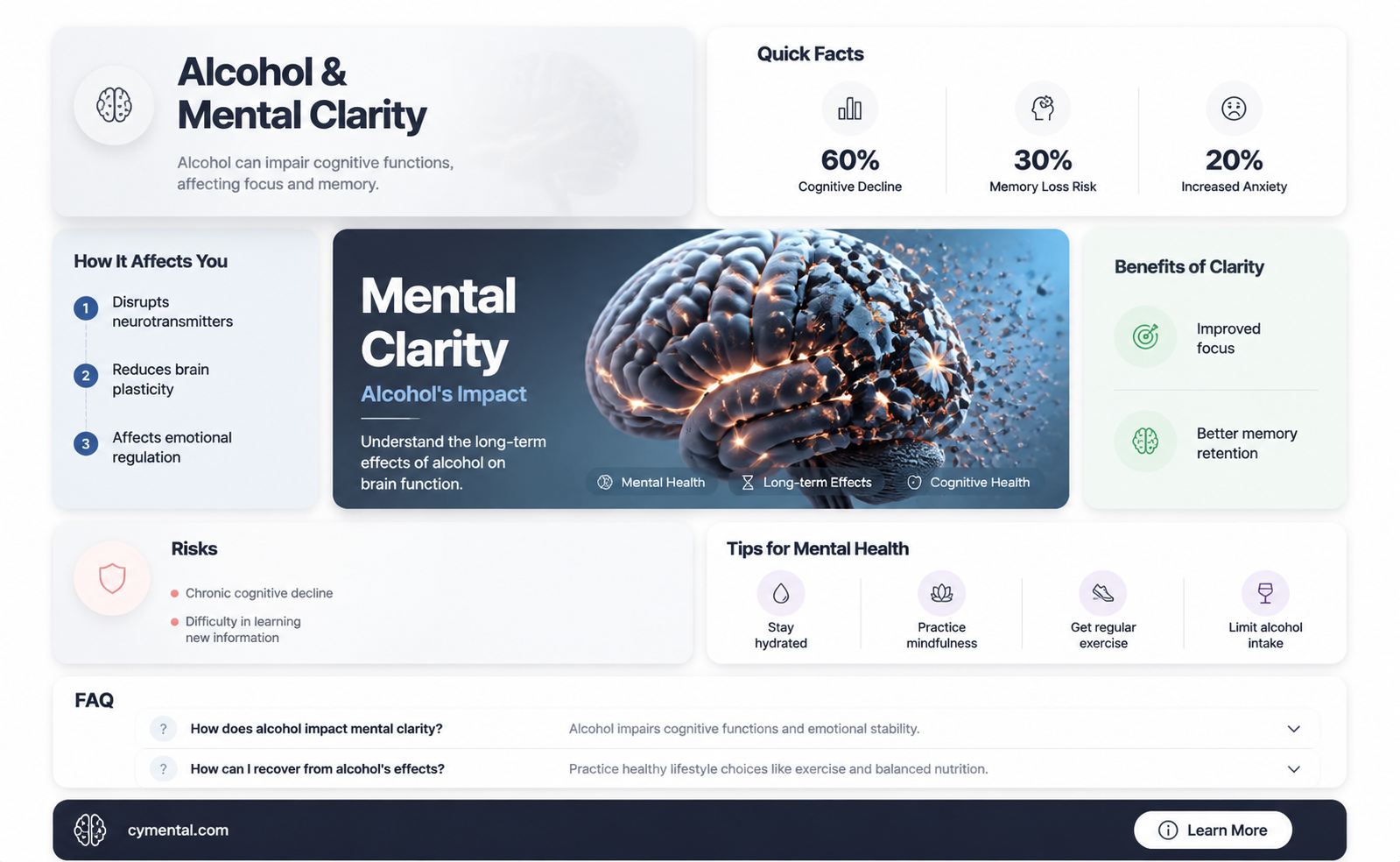
Alcohol consumption has been widely linked to a variety of health effects, both physical and mental. One common concern is the potential for alcohol to cause mental fog, a term often used to describe feelings of confusion, forgetfulness, and difficulty concentrating. This cognitive impairment can significantly impact daily functioning and overall quality of life. While moderate alcohol intake may have some cognitive benefits, excessive or chronic consumption can lead to more severe and lasting mental health issues. Understanding the relationship between alcohol and mental fog is crucial for making informed decisions about alcohol use and maintaining optimal brain health.
| Characteristics | Values |
|---|---|
| Definition | Mental fog, also known as brain fog, is a term used to describe a state of mental confusion, lack of focus, and difficulty in thinking clearly. |
| Causes | Alcohol consumption can lead to mental fog due to its effects on the brain's cognitive functions. |
| Short-term Effects | Impaired judgment, reduced reaction time, difficulty in concentrating, and memory lapses. |
| Long-term Effects | Chronic alcohol consumption can result in persistent mental fog, along with other cognitive impairments such as dementia and Wernicke-Korsakoff syndrome. |
| Mechanism | Alcohol interferes with the brain's neurotransmitters, particularly glutamate and GABA, which are essential for cognitive functions. |
| Risk Factors | Heavy drinking, binge drinking, and long-term alcohol abuse increase the risk of experiencing mental fog. |
| Prevention | Limiting alcohol intake, maintaining a balanced diet, staying hydrated, and engaging in regular physical and mental exercise can help prevent mental fog. |
| Treatment | In cases of chronic alcohol-induced mental fog, medical intervention, including detoxification, medication, and therapy, may be necessary. |
| Prognosis | The prognosis for recovery from alcohol-induced mental fog varies depending on the severity and duration of alcohol abuse. Early intervention and lifestyle changes can improve cognitive function. |
| Research | Studies have shown a correlation between alcohol consumption and cognitive decline, highlighting the importance of moderation in alcohol intake to maintain mental clarity. |
Explore related products



What You'll Learn
- Short-term Effects: Alcohol's immediate impact on cognitive functions and memory
- Long-term Consequences: Chronic alcohol use and its effects on brain health
- Blood Alcohol Concentration: How different BAC levels influence mental clarity
- Individual Differences: Factors like age, health, and genetics affecting alcohol's impact
- Recovery and Sobriety: Strategies and support for overcoming alcohol-related mental fog

Short-term Effects: Alcohol's immediate impact on cognitive functions and memory
Alcohol's immediate impact on cognitive functions and memory is multifaceted and can manifest in various ways. One of the primary short-term effects is the impairment of working memory, which is crucial for tasks requiring attention and the temporary storage of information. Studies have shown that even moderate alcohol consumption can significantly reduce the capacity of working memory, leading to difficulties in concentrating and processing new information.
Another significant effect is the disruption of executive functions, which include decision-making, problem-solving, and planning. Alcohol can impair these functions by affecting the prefrontal cortex, a region of the brain responsible for these higher-order cognitive processes. This impairment can lead to poor judgment, impulsivity, and an inability to effectively manage complex tasks.
Furthermore, alcohol can also impact visual and spatial memory. Research indicates that alcohol consumption can impair the ability to recognize faces and navigate spatial environments. This can be particularly problematic in situations requiring quick recognition of people or places, such as driving or social interactions.
The effects of alcohol on cognitive functions and memory can also be influenced by factors such as age, gender, and individual differences in metabolism and brain chemistry. For example, older adults may be more susceptible to the cognitive impairing effects of alcohol due to age-related changes in brain function. Similarly, women may experience these effects more acutely than men due to differences in body composition and alcohol metabolism.
In conclusion, the short-term effects of alcohol on cognitive functions and memory are complex and can vary depending on individual factors. However, it is clear that even moderate alcohol consumption can have a significant impact on these critical cognitive processes, leading to impairments in working memory, executive functions, and visual and spatial memory. Understanding these effects is essential for making informed decisions about alcohol consumption and its potential impact on mental clarity and cognitive performance.
The Impact of Toxic Relationships on Mental Health
You may want to see also
Explore related products


Long-term Consequences: Chronic alcohol use and its effects on brain health
Chronic alcohol use has been linked to a range of long-term consequences on brain health, including cognitive decline, memory impairment, and an increased risk of neurodegenerative diseases such as Alzheimer's and Parkinson's. Prolonged exposure to alcohol can lead to the death of brain cells, particularly in the hippocampus, which is responsible for memory formation. This can result in difficulties with learning and memory, as well as problems with executive functioning, such as decision-making and problem-solving.
In addition to these cognitive effects, chronic alcohol use can also lead to changes in brain structure. Studies have shown that long-term alcoholics often have a smaller brain volume, particularly in the frontal lobe, which is responsible for impulse control and emotional regulation. This can contribute to the development of mental health disorders, such as depression and anxiety, as well as increase the risk of suicide.
Furthermore, chronic alcohol use can lead to the development of Wernicke-Korsakoff syndrome, a neurological disorder characterized by confusion, memory loss, and difficulty with coordination. This condition is caused by a deficiency in thiamine, a vitamin that is important for brain function, and can be exacerbated by alcohol's interference with the absorption and utilization of this nutrient.
It is important to note that the effects of chronic alcohol use on brain health can be long-lasting, even after an individual has stopped drinking. However, early intervention and treatment can help to mitigate some of these effects and improve cognitive function. This may involve a combination of medication, therapy, and lifestyle changes, such as a healthy diet and regular exercise.
In conclusion, chronic alcohol use can have a significant impact on brain health, leading to cognitive decline, memory impairment, and an increased risk of neurodegenerative diseases. It is essential to address alcohol use disorders early on to prevent these long-term consequences and improve overall brain function and mental health.
Exploring the Link: Acidosis and Altered Mental Status
You may want to see also
Explore related products


Blood Alcohol Concentration: How different BAC levels influence mental clarity
Blood Alcohol Concentration (BAC) is a critical factor in understanding how alcohol affects mental clarity. BAC is the measure of alcohol in the bloodstream, and it directly influences cognitive functions. Even small amounts of alcohol can impair mental processes, leading to what is commonly referred to as "mental fog."
At a BAC of 0.02%, which is often reached after consuming one standard drink, individuals may experience a slight decline in motor skills and reaction time. This level of intoxication can also lead to a decrease in inhibitions, which might result in impaired judgment and decision-making. The mental fog at this stage can manifest as difficulty focusing and processing information quickly.
As BAC increases to 0.05%, the effects on mental clarity become more pronounced. This level of intoxication can lead to significant impairments in coordination, balance, and reaction time. The mental fog intensifies, making it challenging to concentrate, remember information, and engage in complex tasks. Individuals may also experience mood swings and reduced impulse control.
At a BAC of 0.08%, which is the legal limit for driving in many countries, the impact on mental clarity is severe. Cognitive functions are markedly impaired, leading to poor judgment, reduced reaction time, and difficulty with coordination. The mental fog at this level can make it nearly impossible to perform tasks that require attention and precision. Additionally, individuals may experience nausea, dizziness, and slurred speech.
Higher BAC levels, such as 0.1% and above, can lead to even more significant impairments in mental clarity. At these levels, individuals may experience blackout episodes, where they are unable to remember events that occurred while intoxicated. The mental fog becomes so dense that basic cognitive functions are severely compromised, and individuals may be at risk of alcohol poisoning.
In conclusion, understanding how different BAC levels influence mental clarity is crucial for making informed decisions about alcohol consumption. Even low levels of alcohol can lead to mental fog, impairing cognitive functions and increasing the risk of accidents and poor decision-making. It is essential to be aware of these effects and to drink responsibly to maintain mental clarity and overall safety.
Exploring the Link Between Mental Illnesses and Chemical Imbalances
You may want to see also
Explore related products


Individual Differences: Factors like age, health, and genetics affecting alcohol's impact
Age is a critical factor in determining how alcohol affects an individual's cognitive function. Younger adults may experience more pronounced mental fog due to alcohol's interference with brain development, particularly in areas responsible for memory and decision-making. Conversely, older adults may have a lower tolerance for alcohol, leading to more immediate and severe cognitive impairment. Understanding these age-related differences is essential for tailoring alcohol consumption guidelines and educational programs to specific demographics.
Health status also plays a significant role in alcohol's impact on mental clarity. Individuals with pre-existing health conditions, such as liver disease or neurological disorders, may be more susceptible to alcohol-induced mental fog. Alcohol can exacerbate these conditions, leading to a decline in cognitive function. Furthermore, alcohol's dehydrating effects can be particularly detrimental to those with kidney issues or other conditions that affect fluid balance. Healthcare professionals should consider these factors when advising patients on alcohol consumption.
Genetics can influence an individual's response to alcohol, including the likelihood and severity of mental fog. Certain genetic variations can affect alcohol metabolism, leading to differences in how quickly alcohol is broken down and eliminated from the body. This can result in varying levels of cognitive impairment among individuals who consume the same amount of alcohol. Additionally, genetic predispositions to certain health conditions may interact with alcohol consumption to increase the risk of mental fog. Research into the genetic factors underlying alcohol's effects on cognition could lead to more personalized approaches to managing alcohol consumption and its potential cognitive consequences.
The Hidden Toll: How a Messy Home Can Impact Mental Health
You may want to see also
Explore related products


Recovery and Sobriety: Strategies and support for overcoming alcohol-related mental fog
One effective strategy for overcoming alcohol-related mental fog is cognitive behavioral therapy (CBT). CBT helps individuals identify and challenge negative thought patterns and beliefs that may contribute to their mental fog. By working with a therapist, individuals can develop healthier coping mechanisms and improve their cognitive functioning.
Another important aspect of recovery is building a strong support network. Surrounding oneself with friends and family who are supportive of sobriety can help individuals stay motivated and accountable. Additionally, joining a support group, such as Alcoholics Anonymous, can provide a sense of community and connection with others who are going through similar experiences.
Nutrition and exercise also play a crucial role in recovery. Consuming a balanced diet rich in vitamins and minerals can help improve cognitive function, while regular exercise can boost mood and reduce stress. It's important for individuals in recovery to prioritize self-care and make healthy lifestyle choices.
Mindfulness practices, such as meditation and yoga, can also be beneficial for overcoming mental fog. These practices help individuals become more aware of their thoughts and emotions, and can improve focus and concentration. By incorporating mindfulness into their daily routine, individuals can better manage their mental fog and maintain their sobriety.
Finally, it's important for individuals in recovery to be patient with themselves. Overcoming alcohol-related mental fog takes time and effort, and setbacks are a normal part of the process. By staying committed to their recovery and seeking support when needed, individuals can successfully overcome mental fog and maintain their sobriety.
Exploring the Complex Link: Drugs and Mental Illness
You may want to see also
Frequently asked questions
Yes, alcohol consumption can lead to mental fog. Alcohol affects the brain's cognitive functions, including memory, attention, and decision-making, which can result in a feeling of mental fogginess or confusion.
Alcohol interferes with the brain's neurotransmitters and disrupts the normal functioning of brain cells. This interference can impair cognitive processes, leading to symptoms such as difficulty concentrating, memory lapses, and slowed reaction times, commonly referred to as mental fog.
Mental fog can be both a short-term and long-term effect of alcohol consumption. In the short term, mental fog can occur after a single episode of heavy drinking. In the long term, chronic alcohol consumption can lead to persistent cognitive impairment and an increased risk of developing conditions such as dementia.
To avoid mental fog and other negative health effects, it is recommended to consume alcohol in moderation. For adults, this typically means up to one drink per day for women and up to two drinks per day for men. However, individual tolerance and health factors can vary, so it's important to consult with a healthcare professional for personalized advice.
Yes, there are strategies to mitigate mental fog caused by alcohol consumption. These include staying hydrated, eating a balanced diet, getting regular exercise, and ensuring adequate sleep. Additionally, reducing or abstaining from alcohol consumption can help improve cognitive function and reduce mental fog.