Ava Ramirez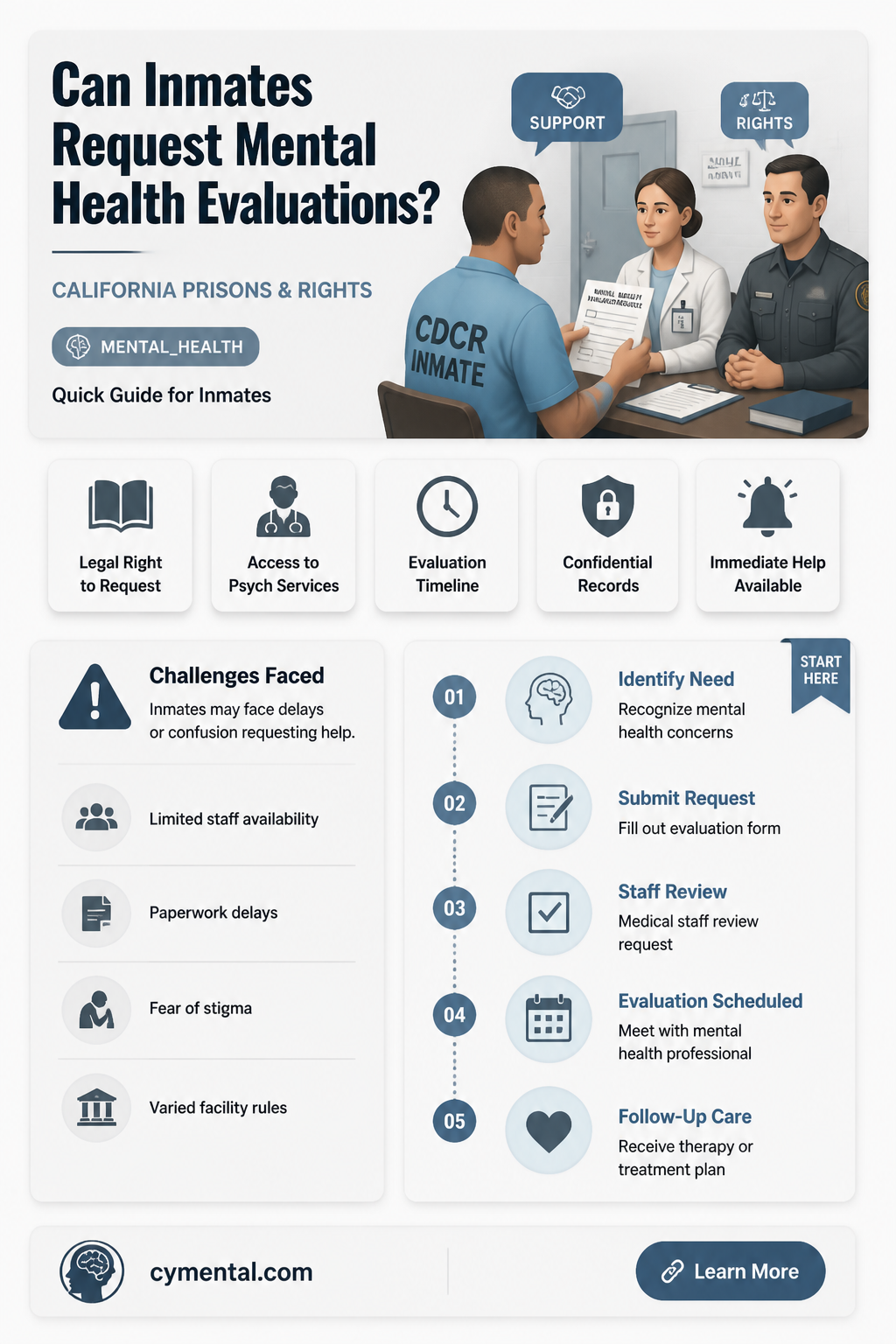
In the state of California, inmates have the right to request a mental evaluation if they believe they are suffering from a mental health issue. This process is governed by specific legal guidelines and protocols designed to ensure that inmates receive appropriate mental health care. A mental evaluation can be requested by the inmate themselves, their legal representative, or by prison staff if they observe signs of mental distress. The evaluation is typically conducted by a licensed mental health professional and may involve a series of assessments and interviews to determine the inmate's mental health status. If the evaluation finds that the inmate is suffering from a mental health condition, they may be entitled to receive treatment and support while incarcerated.
Explore related products


What You'll Learn
- Requesting Evaluation: Inmates can request mental evaluations through prison medical staff or legal counsel
- Court-Ordered Evaluations: Judges may order evaluations to assess competency or mental state for legal proceedings
- Evaluation Process: Mental health professionals conduct assessments using standardized tools and interviews
- Confidentiality: Evaluation results are confidential and protected under medical and legal privacy laws
- Treatment Options: Based on evaluation, inmates may receive therapy, medication, or other mental health treatments

Requesting Evaluation: Inmates can request mental evaluations through prison medical staff or legal counsel
Inmates in California have the right to request mental evaluations, and this process can be initiated through two primary channels: prison medical staff or legal counsel. This right is fundamental to ensuring that inmates receive appropriate mental health care and that their psychological well-being is monitored and addressed while they are incarcerated.
Requesting a mental evaluation through prison medical staff typically involves the inmate expressing their concern or need for psychological assessment to a healthcare professional within the correctional facility. This could be during a routine medical check-up or by specifically scheduling an appointment with a mental health specialist. The medical staff is trained to recognize signs of mental health issues and can refer the inmate for a more comprehensive evaluation if necessary.
Alternatively, inmates can request a mental evaluation through their legal counsel. This approach may be particularly relevant if the inmate believes that their mental health issues are impacting their legal case or if they require a formal evaluation to support a legal motion or appeal. Legal counsel can advocate on behalf of the inmate to ensure that they receive a thorough and timely mental health assessment.
It is important to note that the process of requesting and receiving a mental evaluation can vary depending on the specific policies and procedures of the correctional facility. Inmates should be aware of the protocols in place at their institution and should not hesitate to seek assistance if they are experiencing mental health challenges.
In conclusion, inmates in California have the right to request mental evaluations through prison medical staff or legal counsel. This process is crucial for ensuring that inmates receive appropriate mental health care and that their psychological needs are addressed during their incarceration. By understanding the available channels for requesting an evaluation and the potential benefits of doing so, inmates can take proactive steps to protect their mental well-being while in prison.
Breaking Free from All-or-Nothing Thinking: A Guide to Balance
You may want to see also
Explore related products

Court-Ordered Evaluations: Judges may order evaluations to assess competency or mental state for legal proceedings
In the realm of criminal justice, court-ordered evaluations play a crucial role in determining an individual's competency to stand trial or their mental state at the time of the alleged offense. These evaluations are typically conducted by mental health professionals and can include a range of assessments, from psychological interviews to neuropsychological testing. The results of these evaluations can significantly impact the course of legal proceedings, potentially leading to a defendant being found incompetent to stand trial or not guilty by reason of insanity.
The process of obtaining a court-ordered evaluation in California begins with a motion filed by the defense attorney or the prosecutor. This motion must be supported by a declaration from a mental health professional stating that there is a doubt about the defendant's competency or mental state. Once the motion is filed, the court will appoint a mental health professional to conduct the evaluation. The evaluator will then meet with the defendant to assess their competency or mental state, and the results of the evaluation will be submitted to the court in a written report.
It is important to note that court-ordered evaluations are not the same as mental health evaluations conducted in a clinical setting. While both types of evaluations are conducted by mental health professionals, court-ordered evaluations are specifically designed to address legal questions related to competency and mental state. As such, they follow a different set of guidelines and procedures than clinical evaluations.
One unique aspect of court-ordered evaluations in California is the use of the California Mental Health and Safety Code. This code outlines the procedures for conducting court-ordered evaluations and provides guidelines for determining competency and mental state. Under this code, evaluators are required to consider a range of factors when assessing competency, including the defendant's ability to understand the nature of the proceedings, their ability to assist their attorney, and their ability to make decisions about their case.
In conclusion, court-ordered evaluations are a critical component of the criminal justice system in California. They provide a mechanism for assessing the competency and mental state of defendants, which can have a significant impact on the outcome of legal proceedings. By understanding the process and purpose of these evaluations, legal professionals and mental health practitioners can work together to ensure that defendants receive fair and appropriate treatment under the law.
Navigating the VA Disability Claims Process for Depression: A Comprehensive Guide
You may want to see also
Evaluation Process: Mental health professionals conduct assessments using standardized tools and interviews
Mental health evaluations for inmates in California are typically conducted by licensed professionals using a combination of standardized assessment tools and clinical interviews. These evaluations are crucial for identifying mental health issues, determining the level of care required, and developing appropriate treatment plans. The process begins with a referral from correctional staff, which may be initiated due to observed behavioral concerns, self-reported symptoms by the inmate, or as part of a routine screening protocol.
Upon referral, the mental health professional will usually start by reviewing the inmate's medical and psychiatric history, as well as any relevant documentation from the correctional facility. This information helps to provide context and identify any pre-existing conditions that may impact the evaluation. The professional will then conduct a series of assessments, which may include psychological tests, cognitive evaluations, and structured interviews. These tools are designed to measure various aspects of mental health, such as mood, cognition, personality, and behavioral tendencies.
In addition to standardized assessments, the mental health professional will also engage in clinical interviews with the inmate. These interviews allow for a more in-depth exploration of the inmate's symptoms, experiences, and concerns. The professional will ask open-ended questions to encourage the inmate to share their thoughts and feelings, while also observing non-verbal cues and behaviors that may provide additional insight into their mental state.
Following the completion of the assessments and interviews, the mental health professional will analyze the results and develop a comprehensive diagnostic report. This report will outline the inmate's mental health status, including any identified disorders or conditions, and recommend appropriate treatment options. The recommendations may include individual therapy, group therapy, medication management, or other interventions tailored to the inmate's specific needs.
The evaluation process is not only critical for the inmate's well-being but also for the safety and security of the correctional facility. By identifying and addressing mental health issues, the facility can reduce the risk of self-harm, violence, and other disruptive behaviors. Moreover, providing appropriate mental health care can help inmates to better cope with the challenges of incarceration and prepare them for successful reintegration into society upon release.
Understanding the Process of Involuntary Psychiatric Hospitalization
You may want to see also
Confidentiality: Evaluation results are confidential and protected under medical and legal privacy laws
The confidentiality of mental evaluation results for inmates in California is a critical aspect of the assessment process. Protected under both medical and legal privacy laws, these results are considered sensitive information and are handled with strict protocols to ensure they remain private. This is primarily governed by the Health Insurance Portability and Accountability Act (HIPAA), which sets national standards for the protection of individually identifiable health information. In the context of inmates, additional legal frameworks, such as the California Penal Code and the California Code of Regulations, further reinforce these confidentiality measures.
In practical terms, this means that the results of a mental evaluation conducted on an inmate cannot be disclosed without their consent, except in very specific circumstances. For instance, if the information is necessary to provide appropriate medical or mental health care, or if it is required by law enforcement or judicial authorities in the course of their official duties. Even in these cases, the disclosure is tightly controlled and limited to the relevant parties.
The importance of maintaining confidentiality cannot be overstated. It helps to build trust between the inmate and the evaluating professionals, ensuring that the inmate feels safe to provide honest and accurate information about their mental health. This trust is essential for an effective evaluation, as it allows for a more comprehensive understanding of the inmate's psychological state. Furthermore, protecting the confidentiality of these results helps to prevent stigma and discrimination, which can be significant barriers to mental health treatment and rehabilitation.
For inmates, understanding their rights regarding the confidentiality of their mental evaluation results is crucial. They should be informed about how their information will be used, who will have access to it, and under what circumstances it might be disclosed. This transparency is not only a legal requirement but also an ethical one, as it empowers inmates to make informed decisions about their participation in the evaluation process.
In conclusion, the confidentiality of mental evaluation results for inmates in California is a multifaceted issue that involves a complex interplay of legal, medical, and ethical considerations. By ensuring that these results are kept private and secure, the criminal justice system can help to promote the mental well-being of inmates, facilitate their rehabilitation, and uphold their fundamental rights to privacy and dignity.
Unlocking Your Potential: A Guide to Continuous Improvement
You may want to see also
Treatment Options: Based on evaluation, inmates may receive therapy, medication, or other mental health treatments
Inmates in California who undergo mental evaluations may be prescribed a range of treatments depending on their specific needs. Therapy is a common intervention, often involving cognitive-behavioral techniques to address underlying issues contributing to their mental health conditions. This type of therapy can help inmates develop coping mechanisms and improve their overall well-being.
Medication is another treatment option that may be recommended for inmates with mental health disorders. Psychiatric medications such as antidepressants, antipsychotics, and mood stabilizers can be prescribed to manage symptoms and improve mental health outcomes. In some cases, inmates may be required to take medication as part of their treatment plan while incarcerated.
In addition to therapy and medication, inmates may also receive other mental health treatments such as group therapy, substance abuse counseling, and stress management programs. These interventions can help inmates address specific issues related to their mental health and provide them with tools to better manage their conditions.
It is important to note that the treatment options available to inmates in California may vary depending on the specific facility and the resources available. Some inmates may have access to more comprehensive mental health services, while others may have limited options.
Overall, the goal of mental health treatment for inmates is to improve their well-being and reduce the risk of reoffending. By addressing mental health issues while incarcerated, inmates can better prepare themselves for successful reintegration into society upon release.
Unlocking Mental Focus: A Guide for the First Descendant
You may want to see also
Frequently asked questions
Yes, an inmate in California can request a mental evaluation. The process typically involves submitting a written request to the prison's medical staff or mental health department, detailing the reasons for the evaluation.
Common reasons for an inmate to seek a mental evaluation in California include concerns about their mental health, such as depression, anxiety, or other psychological issues. Inmates may also request an evaluation if they believe it could help with their rehabilitation or if they are experiencing difficulties adjusting to prison life.
The time it takes for an inmate to receive a mental evaluation in California can vary depending on the prison's policies and the availability of mental health professionals. Generally, the process can take several weeks to a few months.
After an inmate receives a mental evaluation in California, the mental health professional will review the results and make recommendations. These recommendations may include treatment options, such as therapy or medication, or they may suggest that the inmate be transferred to a different facility that can better meet their mental health needs.
In California, an inmate's mental evaluation results are typically confidential and cannot be used against them in disciplinary proceedings or to deny them parole. However, the results may be shared with prison staff who need to know the information to provide appropriate care and support to the inmate.