Caleb Wright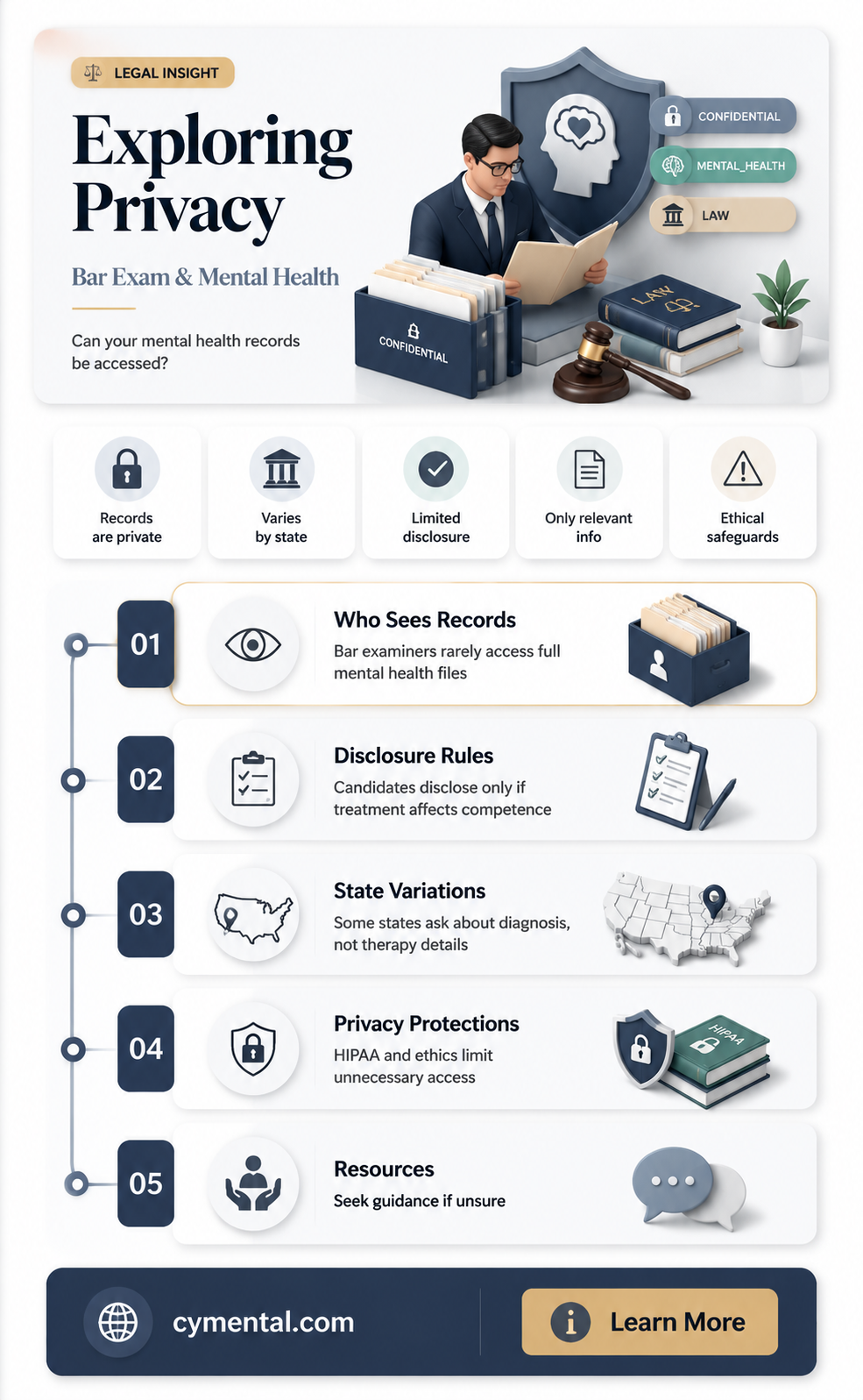
The question of whether bar examiners can access mental health records is a complex and sensitive issue that intersects with privacy laws, professional ethics, and the need to ensure the mental fitness of legal professionals. Generally, mental health records are protected by confidentiality laws, and bar examiners would need a valid reason and proper authorization to access such information. This topic raises important considerations about the balance between safeguarding personal privacy and upholding the integrity of the legal profession. It's crucial to understand the specific regulations and guidelines that govern this area to provide a comprehensive answer.
Explore related products

$10.99 $18.99


What You'll Learn
- Legal Protections: Explore HIPAA and other laws safeguarding mental health records from unauthorized access
- Examiner Authority: Discuss the extent of bar examiners' powers to subpoena or access mental health records
- Candidate Rights: Examine the rights of bar candidates regarding the privacy of their mental health information
- State Variations: Compare how different states handle mental health records in the context of bar admissions
- Ethical Considerations: Debate the ethical implications of bar examiners accessing mental health records, balancing public safety with privacy

Legal Protections: Explore HIPAA and other laws safeguarding mental health records from unauthorized access
The Health Insurance Portability and Accountability Act (HIPAA) is a federal law that provides significant protections for mental health records. Under HIPAA, mental health information is considered protected health information (PHI), and strict regulations govern its use and disclosure. Mental health professionals and healthcare providers are required to obtain written consent from patients before sharing their records with third parties, including bar examiners. This consent must be specific, detailing the information to be disclosed, the purpose of the disclosure, and the entity receiving the information.
In addition to HIPAA, several state laws offer further protections for mental health records. For example, California's Confidentiality of Medical Information Act (CMIA) and New York's Mental Hygiene Law provide additional safeguards against unauthorized access to mental health information. These laws often impose more stringent requirements on mental health professionals and healthcare providers, ensuring that patients' records are kept confidential and secure.
Bar examiners, as part of the legal profession, are subject to these laws and regulations. They must adhere to strict ethical guidelines and legal standards when requesting access to mental health records. In most cases, bar examiners would need to obtain a subpoena or court order to access these records, and even then, they would be required to demonstrate a compelling need for the information.
It is important to note that while these legal protections are in place, there may be exceptions and nuances depending on the specific circumstances. For example, if a mental health professional believes that a patient poses a threat to themselves or others, they may be required to disclose certain information to authorities, including bar examiners, without the patient's consent.
In conclusion, HIPAA and other laws provide robust protections for mental health records, safeguarding them from unauthorized access by bar examiners and other third parties. These legal frameworks ensure that patients' mental health information remains confidential and secure, while also allowing for necessary disclosures in specific situations. Mental health professionals and healthcare providers must be well-versed in these laws and regulations to ensure that they are upholding their patients' rights and protecting their sensitive information.
Understanding Mental Health Days for Illinois Students: A Guide
You may want to see also
Explore related products

$16.95 $8.99


Examiner Authority: Discuss the extent of bar examiners' powers to subpoena or access mental health records
Bar examiners possess significant authority in the admissions process, including the power to subpoena or access mental health records under certain circumstances. This authority is typically granted to ensure that candidates are fit to practice law and do not pose a risk to clients or the public. However, the extent of these powers varies by jurisdiction and is often subject to strict regulations and guidelines.
In some cases, bar examiners may require candidates to disclose mental health information as part of the application process. This can include details about past diagnoses, treatments, and any current mental health conditions. Failure to disclose such information can result in disciplinary action, including denial of admission or revocation of a law license.
The process of accessing mental health records usually involves a formal request or subpoena, which must be justified by a legitimate need for the information. Bar examiners are generally required to maintain confidentiality and use the information only for the purpose of evaluating a candidate's fitness to practice law. However, there are concerns that this process can be invasive and potentially discriminatory, particularly for candidates with mental health conditions that are well-managed and do not impact their ability to practice law.
To address these concerns, some jurisdictions have implemented reforms aimed at limiting the scope of mental health inquiries and ensuring that candidates are not unfairly penalized for seeking treatment. For example, some bar associations have adopted policies that prohibit inquiries about mental health conditions unless there is a specific reason to believe that the condition may impact a candidate's ability to practice law.
In conclusion, while bar examiners do have the authority to access mental health records, this power is not absolute and is subject to various limitations and safeguards. Candidates should be aware of their rights and obligations in this area and seek guidance from legal professionals if they have concerns about disclosing mental health information as part of the bar admissions process.
Navigating Insurance Options for Mental Health Coverage
You may want to see also
Explore related products


Candidate Rights: Examine the rights of bar candidates regarding the privacy of their mental health information
Bar candidates have a reasonable expectation of privacy regarding their mental health information. This expectation is grounded in both ethical considerations and legal protections. The American Bar Association (ABA) has established guidelines that emphasize the importance of protecting the privacy and confidentiality of individuals seeking admission to the bar. These guidelines recognize that mental health information is sensitive and should be handled with care to avoid stigmatization or discrimination against candidates.
In practice, this means that bar examiners and admissions committees are generally prohibited from accessing or inquiring about a candidate's mental health records without explicit consent. Candidates are not required to disclose their mental health history unless it is directly relevant to their ability to practice law. Even in cases where disclosure is necessary, the information should be kept confidential and used solely for the purpose of evaluating the candidate's fitness to practice.
However, there are some exceptions to these privacy protections. For example, if a candidate has a history of mental illness that could potentially impact their ability to practice law, they may be required to provide additional information or undergo a mental health evaluation. Additionally, if a candidate poses a significant risk to themselves or others, bar examiners may have a duty to intervene and seek access to their mental health records.
To ensure that their rights are protected, bar candidates should be aware of their privacy protections and understand the circumstances under which their mental health information may be disclosed. They should also be prepared to provide consent for the release of their mental health records if necessary, and to work with bar examiners to address any concerns that may arise during the admissions process.
Ultimately, the goal of these privacy protections is to create a fair and inclusive environment for all bar candidates, regardless of their mental health history. By safeguarding the privacy of mental health information, bar examiners can help to reduce stigma and ensure that candidates are evaluated based on their qualifications and abilities, rather than their mental health status.
Navigating Mental Health Excuses for School Teachers: A Comprehensive Guide
You may want to see also
Explore related products




State Variations: Compare how different states handle mental health records in the context of bar admissions
In the realm of bar admissions, the handling of mental health records varies significantly from state to state. While some jurisdictions have stringent protocols in place to protect the confidentiality of such records, others may have more lenient policies. For instance, the California Bar Association requires applicants to disclose any mental health treatment or hospitalizations within the past five years, but assures that this information will be kept confidential and not shared with the admissions committee.
On the other hand, states like New York and Texas have more invasive policies. In New York, applicants are required to authorize the release of their mental health records to the bar association, which may then be reviewed by the admissions committee. Similarly, in Texas, applicants must provide a detailed history of any mental health treatment, including diagnoses and medications, which may be subject to further inquiry by the bar association.
These variations in policy raise important questions about the balance between protecting the privacy of individuals and ensuring the fitness of future attorneys. While some argue that mental health records are irrelevant to an individual's ability to practice law, others contend that certain mental health conditions may impact an attorney's judgment and decision-making abilities.
The American Bar Association has issued guidelines recommending that bar associations only inquire about mental health conditions that are relevant to an applicant's ability to practice law, and that they ensure the confidentiality of such information. However, the implementation of these guidelines varies widely among states, leading to a patchwork of policies that can be confusing and inconsistent for applicants.
Ultimately, the handling of mental health records in the context of bar admissions is a complex issue that requires careful consideration of the competing interests of privacy, public safety, and professional fitness. As the legal profession continues to evolve, it is likely that these policies will be subject to further scrutiny and debate.
Securing Your Future: Life Insurance Options for Those with Mental Illness
You may want to see also
Ethical Considerations: Debate the ethical implications of bar examiners accessing mental health records, balancing public safety with privacy
The ethical implications of bar examiners accessing mental health records are complex and multifaceted. On one hand, there is a compelling public safety interest in ensuring that individuals who are admitted to the bar are fit to practice law. Mental health issues can potentially impair an individual's ability to represent clients effectively and ethically, and therefore, it is reasonable to argue that bar examiners should have access to relevant mental health information.
On the other hand, there are significant privacy concerns associated with the disclosure of mental health records. Mental health information is highly sensitive and personal, and individuals have a reasonable expectation of privacy when it comes to their mental health treatment. The unauthorized disclosure of such information could lead to stigma, discrimination, and other forms of harm.
One potential solution to this ethical dilemma is to establish clear guidelines and protocols for the collection and use of mental health information by bar examiners. Such guidelines could ensure that only relevant information is collected, that it is kept confidential, and that it is used solely for the purpose of assessing an individual's fitness to practice law.
Another approach could be to require individuals seeking admission to the bar to undergo a mental health evaluation by a qualified professional. This evaluation could be conducted independently of the bar examination process, and the results could be provided to the bar examiners in a summary form that does not disclose specific mental health information.
Ultimately, the ethical implications of bar examiners accessing mental health records require careful consideration and balancing of competing interests. While public safety is a paramount concern, it is essential to ensure that individuals' privacy rights are respected and protected. By establishing clear guidelines and protocols, and by exploring alternative approaches such as independent mental health evaluations, it may be possible to strike an appropriate balance between these competing interests.
Understanding Inmate Rights: Can They Request a Mental Evaluation?
You may want to see also
Frequently asked questions
Generally, bar examiners do not have direct access to mental health records unless the individual has specifically provided consent or there is a legal requirement to disclose such information. Mental health records are typically protected by privacy laws and ethical guidelines.
Mental health records might be disclosed to bar examiners if the individual has given explicit consent, if there is a legal mandate, or if the information is deemed relevant to the individual's fitness to practice law. In some cases, a court order might also compel the release of such records.
Yes, there are significant ethical considerations. Mental health professionals are bound by confidentiality and privacy standards, and releasing records without consent can be a breach of these ethics. Additionally, the stigma surrounding mental health issues in the legal profession can be a concern, as it might discourage individuals from seeking help.
Individuals can protect their mental health records by understanding their rights under privacy laws, ensuring they have not provided consent for the release of such records, and being aware of any legal requirements or court orders that might compel disclosure. Seeking legal advice and consulting with mental health professionals can also help in navigating these issues.
Accessing mental health records without proper authorization can lead to legal repercussions, including lawsuits for breach of privacy and confidentiality. It can also damage the reputation of the bar examiners and the legal institution involved, erode trust in the legal system, and potentially harm the mental health and well-being of the individuals whose records were accessed.