Ava Ramirez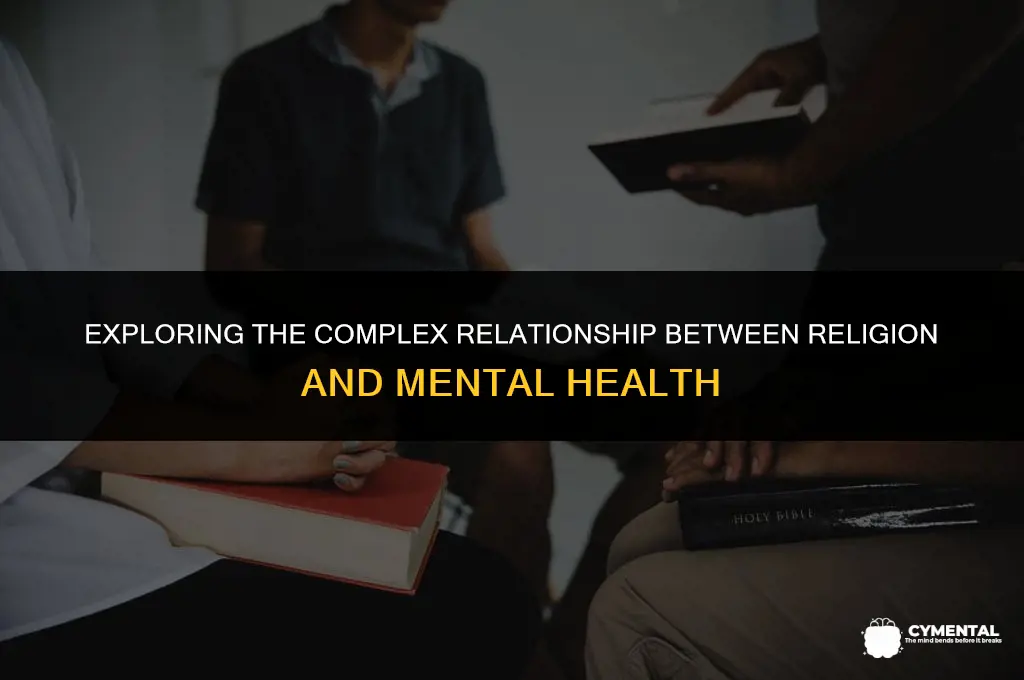
The question of whether religion can be classified as a mental disorder is a complex and contentious issue that has been debated by scholars, clinicians, and theologians for centuries. While some argue that religious beliefs and practices can provide comfort, community, and moral guidance, others contend that they can also lead to harmful behaviors, irrational thinking, and psychological distress. This discussion is further complicated by the need to distinguish between religious beliefs themselves and the actions of individuals or groups in the name of religion. Additionally, the diagnostic criteria for mental disorders are continually evolving, and there is ongoing disagreement about how to define and measure mental health. As such, any exploration of this topic must be approached with sensitivity, nuance, and a willingness to consider multiple perspectives.
| Characteristics | Values |
|---|---|
| Religion | A set of beliefs and practices concerning the nature of existence, often involving a higher power or powers. |
| Mental Disorder | A condition characterized by symptoms that affect a person's thoughts, feelings, and behaviors, causing significant distress or impairment. |
| Comparison | Religion and mental disorders are distinct concepts; one is a belief system, and the other is a psychological condition. |
| Controversy | There is ongoing debate about whether religious beliefs can be considered a form of mental disorder, with some arguing that extreme beliefs may be symptomatic of underlying psychological issues. |
| Scientific View | The scientific community generally views religion as a cultural and social phenomenon rather than a mental disorder, though research continues to explore the relationship between religious beliefs and mental health. |
| Societal Impact | Both religion and mental disorders can have significant impacts on individuals and society, influencing behavior, social interactions, and overall well-being. |
| Treatment | Mental disorders are typically treated with therapy, medication, or a combination of both, while religious beliefs are often addressed through spiritual or religious practices and counseling. |
| Stigma | Both mental disorders and certain religious beliefs can be stigmatized, leading to discrimination and marginalization of affected individuals. |
| Personal Belief | An individual's religious beliefs are a personal matter, while mental disorders are clinical diagnoses made by healthcare professionals. |
| Legal Status | Mental disorders are recognized in legal contexts, often affecting an individual's rights and responsibilities, while religious beliefs are generally protected under freedom of religion laws. |
Explore related products

$22.98 $29.99

$14.8 $16.99


What You'll Learn
- Historical Context: Examining how religious beliefs have been viewed in psychological and medical contexts over time
- Diagnostic Criteria: Discussing whether religious beliefs meet the criteria for mental disorders as defined by DSM-5 or ICD-11
- Psychological Impact: Exploring the potential positive and negative effects of religious beliefs on mental health and well-being
- Neurological Studies: Reviewing brain imaging studies that investigate the neural correlates of religious experiences and beliefs
- Cultural Perspectives: Analyzing how different cultures and societies perceive and treat religious beliefs in relation to mental health

Historical Context: Examining how religious beliefs have been viewed in psychological and medical contexts over time
Throughout history, religious beliefs have been subject to scrutiny and debate within psychological and medical contexts. In the early 20th century, prominent psychologists such as Sigmund Freud and Carl Jung explored the relationship between religion and mental health, often viewing religious beliefs as a manifestation of underlying psychological conflicts or neuroses. Freud, for example, famously described religion as a form of "mass delusion" and argued that it served as a coping mechanism for individuals struggling with anxiety and mortality.
In contrast, Jung took a more nuanced approach, recognizing the potential therapeutic benefits of religious beliefs while also acknowledging their potential to contribute to psychological distress. He believed that religion could provide individuals with a sense of meaning and purpose, but also warned against the dangers of religious fanaticism and the suppression of individual autonomy.
In the mid-20th century, the rise of behaviorism and the cognitive revolution led to a shift in focus away from the psychological underpinnings of religious beliefs and towards their observable effects on behavior and cognition. Researchers such as B.F. Skinner and Albert Bandura explored the ways in which religious beliefs could influence behavior, often emphasizing the role of reinforcement and social learning in the development and maintenance of religious practices.
More recently, advances in neuroscience and neuroimaging have enabled researchers to investigate the neural correlates of religious beliefs and experiences. Studies have shown that religious beliefs can activate specific brain regions associated with emotion, memory, and social cognition, suggesting that religion may have a profound impact on the brain's structure and function.
Despite these advances, the question of whether religion is a mental disorder remains a contentious and complex issue. While some argue that religious beliefs can be a source of psychological distress and impairment, others contend that they can provide individuals with a sense of comfort, meaning, and community. Ultimately, the relationship between religion and mental health is likely to be multifaceted and influenced by a variety of factors, including individual differences, cultural context, and the specific nature of religious beliefs and practices.
Exploring Feline Psychology: Do Cats Experience Mental Disorders?
You may want to see also
Explore related products


Diagnostic Criteria: Discussing whether religious beliefs meet the criteria for mental disorders as defined by DSM-5 or ICD-11
The Diagnostic and Statistical Manual of Mental Disorders (DSM-5) and the International Classification of Diseases (ICD-11) are the primary tools used by mental health professionals to diagnose mental disorders. Both manuals provide detailed criteria for various conditions, but neither specifically addresses religious beliefs as a potential disorder. This omission is significant, as it suggests that religious beliefs, in and of themselves, are not considered pathological.
However, this does not mean that religious beliefs cannot contribute to mental health issues. For instance, if an individual's religious beliefs lead to extreme behaviors, such as self-harm or harm to others, these behaviors could be indicative of an underlying mental disorder. Similarly, if religious beliefs cause significant distress or impairment in daily functioning, they might be considered a symptom of a broader psychological condition.
In determining whether religious beliefs meet the criteria for a mental disorder, it is crucial to consider the context and the individual's overall mental health profile. A thorough evaluation would involve assessing the individual's thoughts, feelings, and behaviors related to their religious beliefs, as well as their social and cultural environment. This comprehensive approach ensures that any diagnosis is made within the full context of the individual's life and experiences.
Ultimately, the question of whether religious beliefs can be considered a mental disorder is complex and multifaceted. While religious beliefs themselves are not classified as disorders in the DSM-5 or ICD-11, they can contribute to mental health issues in certain circumstances. A nuanced understanding of this relationship is essential for mental health professionals, who must approach each case with sensitivity and an open mind.
Understanding Dyslexia: A Neurological Perspective on Reading Challenges
You may want to see also
Explore related products


Psychological Impact: Exploring the potential positive and negative effects of religious beliefs on mental health and well-being
Religious beliefs can have a profound impact on an individual's mental health and well-being. While some may argue that religion can be a source of comfort and support, others contend that it can lead to psychological distress and disorder. The relationship between religion and mental health is complex and multifaceted, with both positive and negative effects observed in various studies.
On the positive side, religious beliefs can provide a sense of purpose, meaning, and community, which can be beneficial for mental health. Religious practices such as prayer, meditation, and attendance at religious services can also promote relaxation, stress reduction, and a sense of connection to something greater than oneself. Furthermore, religious beliefs can foster resilience and coping mechanisms in the face of adversity, helping individuals to navigate difficult life events and challenges.
However, religious beliefs can also have negative effects on mental health. For example, rigid or dogmatic beliefs can lead to cognitive dissonance, anxiety, and guilt, particularly when individuals struggle to reconcile their beliefs with their experiences or desires. Religious beliefs can also contribute to social isolation, discrimination, and marginalization, which can have detrimental effects on mental health and well-being. Additionally, some religious practices, such as fasting or self-mortification, can lead to physical harm and psychological distress.
It is important to note that the impact of religious beliefs on mental health is highly individualized and depends on a variety of factors, including the specific beliefs, practices, and cultural context. While some individuals may find comfort and support in their religious beliefs, others may experience psychological distress or disorder as a result. Therefore, it is crucial to approach the topic of religion and mental health with sensitivity, nuance, and an understanding of the complex interplay between these two domains.
In conclusion, the psychological impact of religious beliefs on mental health and well-being is a complex and multifaceted issue. While religious beliefs can provide comfort, support, and a sense of purpose, they can also lead to psychological distress, social isolation, and physical harm. It is essential to consider the individual's specific beliefs, practices, and cultural context when assessing the impact of religion on mental health, and to approach the topic with sensitivity and nuance.
Understanding Epilepsy: Dispelling Myths About Its Classification
You may want to see also
Neurological Studies: Reviewing brain imaging studies that investigate the neural correlates of religious experiences and beliefs
Recent advancements in neuroimaging techniques have allowed researchers to explore the neural underpinnings of religious experiences and beliefs. Studies utilizing functional magnetic resonance imaging (fMRI), electroencephalography (EEG), and positron emission tomography (PET) have identified specific brain regions and networks that are activated during religious practices such as prayer, meditation, and worship. These findings have shed light on the complex interplay between brain function and religious behavior, challenging the simplistic notion that religion is merely a product of delusional thinking.
One notable study published in the journal *Neuropsychologia* found that individuals with a strong sense of spirituality exhibited increased activity in the anterior cingulate cortex (ACC), a region associated with self-regulation, error detection, and anticipation. This suggests that religious beliefs may be linked to enhanced cognitive control and emotional processing. Another study in the *Journal of Neuroscience* revealed that Buddhist monks practicing meditation showed heightened activation in the prefrontal cortex, an area involved in executive functions, decision-making, and social behavior. These results imply that religious practices can have a profound impact on brain structure and function, potentially leading to improved mental well-being and social cognition.
Furthermore, research has also explored the neural correlates of religious experiences such as mystical visions and feelings of divine presence. A study in the *Journal of Neuropsychiatry and Clinical Neurosciences* found that individuals reporting mystical experiences showed increased activity in the temporal lobes, particularly in the left hemisphere. This region is known to be involved in processing auditory information, memory, and language, which may explain the often vivid and symbolic nature of mystical experiences. Additionally, studies have shown that religious experiences can lead to changes in brain chemistry, such as increased levels of serotonin and dopamine, which are associated with feelings of happiness, relaxation, and reward.
While these findings do not necessarily prove or disprove the existence of a higher power, they do suggest that religious experiences and beliefs are complex phenomena that involve multiple brain regions and networks. The study of these neural correlates can provide valuable insights into the nature of religious experiences and their potential benefits for mental health and well-being. However, it is important to note that the relationship between brain function and religion is still not fully understood, and further research is needed to unravel the intricate mechanisms underlying these phenomena.
Exploring the Intricacies: Is Love a Mental Disorder?
You may want to see also
Cultural Perspectives: Analyzing how different cultures and societies perceive and treat religious beliefs in relation to mental health
In many Eastern cultures, such as those in Asia and the Middle East, religious beliefs are often deeply intertwined with traditional medicine and mental health practices. For example, in China, traditional Chinese medicine (TCM) frequently incorporates spiritual and religious elements, such as the concept of "qi" or life force, which is believed to be influenced by one's spiritual state. Similarly, in Japan, the Shinto religion emphasizes the importance of ritual purity and spiritual cleansing, which can be seen as a form of mental and emotional purification.
In contrast, Western cultures have historically been more likely to separate religious beliefs from mental health practices, often viewing them as distinct domains. However, this is not to say that religious beliefs do not play a role in mental health in Western societies. Many people in the West turn to religious communities for support and guidance during times of mental health struggles, and some mental health professionals incorporate spiritual or religious elements into their treatment approaches.
One interesting area of research is the role of religious beliefs in protecting against mental health disorders. Some studies have found that people who hold strong religious beliefs may be less likely to experience depression, anxiety, and other mental health issues. This may be due to the sense of community and support that religious beliefs can provide, as well as the coping mechanisms and stress-reduction techniques that many religious practices offer.
However, it is also important to note that religious beliefs can sometimes contribute to mental health struggles. For example, some individuals may experience religious trauma, which can occur when their religious beliefs are challenged or when they feel disconnected from their spiritual community. Additionally, some religious practices may promote harmful behaviors or beliefs that can negatively impact mental health, such as the stigmatization of mental illness or the promotion of harmful rituals.
Ultimately, the relationship between religious beliefs and mental health is complex and multifaceted, and it is influenced by a variety of cultural, social, and individual factors. By understanding these nuances, mental health professionals can better support individuals from diverse cultural backgrounds and provide more effective and culturally sensitive care.
Exploring Holden Caulfield's Mental Health: A Deep Dive into his Struggles
You may want to see also
Frequently asked questions
No, religion is not considered a mental disorder by any mainstream medical or psychological authorities. It is recognized as a cultural and spiritual aspect of human life.
Yes, in some cases, religious beliefs or practices can be harmful to an individual's mental health if they lead to extreme behaviors, social isolation, or internal conflict. However, this is not a reflection on religion itself but rather on how it is practiced or interpreted by individuals.
While there is no direct link between religious extremism and mental illness, some studies suggest that individuals who engage in religious extremism may have underlying psychological issues. It is important to note that this is a complex issue and not all individuals who are religiously extreme are mentally ill.
Religious beliefs and practices can positively impact mental health by providing a sense of community, purpose, and meaning. They can also offer coping mechanisms for stress and adversity, and promote positive behaviors such as forgiveness and compassion.
Yes, religious beliefs should be considered when diagnosing or treating mental health disorders as they can play a significant role in an individual's worldview and coping mechanisms. Mental health professionals should be sensitive to the religious and cultural backgrounds of their clients and incorporate these factors into their treatment plans when appropriate.