Ava Ramirez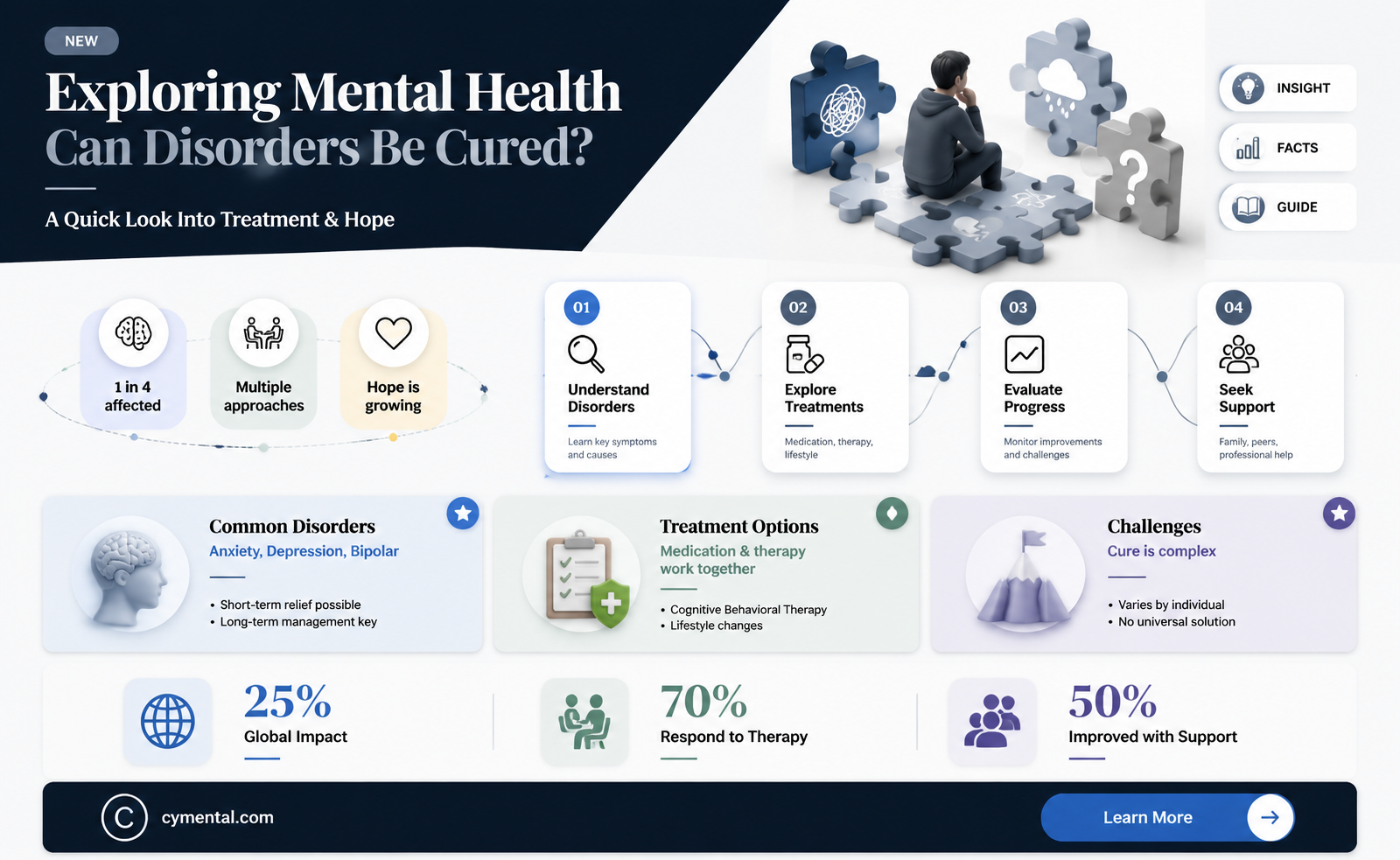
Mental disorders, also known as mental illnesses, are conditions that affect a person's thinking, feeling, mood, and behavior. They can be caused by a combination of genetic, environmental, and psychological factors. While some mental disorders can be cured, others may be chronic and require ongoing treatment and management. The possibility of a cure depends on various factors, including the type and severity of the disorder, the individual's response to treatment, and the availability of effective interventions. In many cases, a multidisciplinary approach involving medication, psychotherapy, and lifestyle changes can lead to significant improvements and even remission of symptoms. However, it is essential to recognize that each person's journey with a mental disorder is unique, and what works for one individual may not work for another.
| Characteristics | Values |
|---|---|
| Definition | Mental disorders are health conditions that affect a person's thinking, feeling, and behavior. They can be cured through various treatments. |
| Types of Disorders | Anxiety disorders, mood disorders, personality disorders, psychotic disorders, eating disorders, and others. |
| Treatments | Psychotherapy, medication, lifestyle changes, and alternative therapies. |
| Cure Rate | Varies depending on the disorder and individual circumstances. Many people can recover and lead fulfilling lives with proper treatment. |
| Relapse Prevention | Ongoing treatment and support may be necessary to prevent relapse. |
| Impact on Daily Life | Can significantly affect daily functioning, relationships, and overall well-being. |
| Seeking Help | Early diagnosis and treatment can improve outcomes. Seeking help from a mental health professional is crucial. |
Explore related products


What You'll Learn
- Definition of Cure: Exploring what it means to be cured of a mental disorder
- Types of Disorders: Discussing which mental disorders are considered curable
- Treatment Approaches: Overviewing various methods used to treat mental disorders
- Success Rates: Examining the effectiveness of treatments for different disorders
- Ongoing Research: Highlighting current studies and advancements in curing mental disorders

Definition of Cure: Exploring what it means to be cured of a mental disorder
The concept of a "cure" in the context of mental disorders is complex and multifaceted. Unlike physical ailments, where a cure often implies the complete eradication of symptoms and the restoration of normal bodily function, the idea of curing a mental disorder is more nuanced. It involves not just the alleviation of symptoms but also the improvement of overall mental health and well-being. A cure might mean different things to different people: for some, it could be the ability to manage symptoms effectively, while for others, it might imply a complete transformation in their mental state.
One of the challenges in defining a cure for mental disorders is the subjective nature of mental health. Unlike physical health, which can be measured using objective criteria such as lab tests and medical imaging, mental health is often assessed based on self-reported symptoms and the judgment of mental health professionals. This subjectivity makes it difficult to establish a universal definition of what it means to be cured. Furthermore, mental disorders often have a chronic nature, meaning that symptoms may persist over time, even with effective treatment. In such cases, the goal of treatment may shift from achieving a complete cure to managing symptoms and improving quality of life.
Another important consideration is the role of societal and cultural factors in shaping our understanding of mental health and illness. Different cultures may have varying definitions of what constitutes a mental disorder and what it means to be cured. For example, in some cultures, mental illness may be viewed as a spiritual or moral issue rather than a medical one, and the concept of a cure may be tied to religious or traditional practices. These cultural differences highlight the need for a nuanced and culturally sensitive approach to understanding and treating mental disorders.
In recent years, there has been a growing emphasis on recovery-oriented mental health care, which focuses on helping individuals with mental disorders to achieve their personal goals and improve their overall well-being, rather than simply alleviating symptoms. This approach recognizes that recovery is a personal and unique journey for each individual and that it involves more than just the absence of symptoms. It encompasses the development of coping skills, the building of supportive relationships, and the enhancement of one's sense of purpose and meaning in life.
In conclusion, the definition of a cure for mental disorders is not straightforward and is influenced by a variety of factors, including the subjective nature of mental health, the chronic nature of many mental disorders, and cultural differences in understanding mental illness. A recovery-oriented approach that emphasizes personal growth and well-being may offer a more holistic and effective way of addressing mental health issues than traditional notions of a cure.
Navigating the Labyrinth: Understanding the Challenges of Complex Mental Disorders
You may want to see also
Explore related products


Types of Disorders: Discussing which mental disorders are considered curable
While many mental disorders can be effectively managed with treatment, the concept of a "cure" is complex and varies depending on the specific disorder. Some disorders, such as anxiety and depression, often respond well to a combination of medication and psychotherapy, leading to significant symptom reduction and improved quality of life. However, the idea of a permanent cure is less clear-cut.
For instance, anxiety disorders can be treated with cognitive-behavioral therapy (CBT) and medications like selective serotonin reuptake inhibitors (SSRIs). With consistent treatment, many individuals experience a substantial decrease in symptoms. However, anxiety can be a chronic condition, and some people may need ongoing treatment to maintain their progress.
Depression, similarly, can be managed with antidepressant medications and various forms of psychotherapy. While many people experience significant improvement, depression can also be a recurring condition. Research suggests that mindfulness-based cognitive therapy (MBCT) can be effective in preventing relapse, but the long-term outlook varies from person to person.
In contrast, disorders like schizophrenia and bipolar disorder are typically considered chronic conditions that require ongoing management rather than a cure. Treatment focuses on symptom control and improving overall functioning. While some individuals may experience periods of remission, the disorders themselves are generally not considered curable in the traditional sense.
Personality disorders, such as borderline personality disorder, also present unique challenges. These disorders are characterized by long-standing patterns of thinking and behavior that are deeply ingrained. While therapy, particularly dialectical behavior therapy (DBT), can help individuals manage symptoms and improve relationships, the underlying personality structure is often resistant to change.
In conclusion, the question of whether mental disorders can be cured is nuanced and depends on the specific disorder and individual circumstances. While many disorders can be effectively treated, leading to significant symptom reduction and improved quality of life, the concept of a permanent cure is less applicable to mental health conditions. Ongoing management and support are often necessary to maintain progress and prevent relapse.
Unraveling the Link: Alcohol Consumption and Mental Health Disorders
You may want to see also
Explore related products

$20.49 $36.99


Treatment Approaches: Overviewing various methods used to treat mental disorders
Cognitive Behavioral Therapy (CBT) is a widely recognized treatment approach for mental disorders. It focuses on identifying and changing negative thought patterns and behaviors that contribute to a person's mental health issues. CBT is typically a short-term treatment that involves weekly sessions with a therapist. During these sessions, patients learn to recognize their distorted thinking, challenge it, and replace it with more rational thoughts. This approach has been shown to be effective in treating a variety of mental disorders, including depression, anxiety, and post-traumatic stress disorder (PTSD).
Medication is another common treatment method for mental disorders. Psychiatric medications can help manage symptoms and improve the overall quality of life for individuals with mental health conditions. For example, antidepressants are often prescribed to treat depression, while antipsychotics may be used to manage symptoms of schizophrenia. It's important to note that medication should be used in conjunction with other treatment methods, such as therapy, for the best results. Additionally, medication management should be closely monitored by a healthcare professional to ensure the correct dosage and to minimize potential side effects.
Alternative therapies, such as mindfulness-based interventions and art therapy, are also gaining popularity in the treatment of mental disorders. Mindfulness-based interventions, like Mindfulness-Based Stress Reduction (MBSR), teach individuals how to cultivate mindfulness and awareness to reduce stress and improve mental well-being. Art therapy, on the other hand, uses creative expression to help individuals process and express their emotions. These alternative approaches can be particularly beneficial for those who may not respond well to traditional talk therapy or medication.
In some cases, a combination of treatment methods may be necessary to effectively manage mental health conditions. For instance, a person with severe depression may benefit from both CBT and medication. It's also important to consider the individual's unique circumstances, such as their age, cultural background, and personal preferences, when developing a treatment plan. A comprehensive approach that addresses the biological, psychological, and social aspects of a person's life is often the most effective in treating mental disorders.
While there is no one-size-fits-all approach to treating mental disorders, the good news is that there are a variety of effective treatment methods available. With the right combination of therapies and support, many individuals with mental health conditions can lead fulfilling and productive lives. It's crucial for those struggling with mental health issues to seek professional help and to work collaboratively with their healthcare providers to find the treatment approach that works best for them.
Understanding Dyslexia: A Neurological Perspective on Reading Challenges
You may want to see also
Explore related products


Success Rates: Examining the effectiveness of treatments for different disorders
The effectiveness of treatments for mental disorders varies widely depending on the specific condition, the individual's circumstances, and the type of treatment provided. Success rates can be influenced by factors such as the severity of symptoms, the duration of the disorder, the presence of co-occurring conditions, and the patient's engagement with the treatment process. For example, cognitive-behavioral therapy (CBT) has been shown to be highly effective for treating anxiety disorders, with success rates ranging from 50% to 80% in reducing symptoms. In contrast, treatment-resistant depression may require more intensive interventions, such as electroconvulsive therapy (ECT), which has a success rate of around 50% for severe cases.
When examining success rates, it's essential to consider the definition of "success" in the context of mental health treatment. While some treatments may aim for complete symptom remission, others may focus on improving quality of life, enhancing coping mechanisms, or reducing the frequency and intensity of symptoms. For instance, dialectical behavior therapy (DBT) for borderline personality disorder may not eliminate all symptoms but can significantly improve emotional regulation and interpersonal functioning.
Another critical factor in determining success rates is the patient's adherence to the treatment plan. Non-adherence can significantly impact the effectiveness of even the most evidence-based treatments. For example, a study on the treatment of schizophrenia found that patients who adhered to their medication regimen had a 50% lower risk of relapse compared to those who did not.
In recent years, there has been a growing interest in personalized medicine approaches to mental health treatment, which aim to tailor interventions to the individual's unique biological, psychological, and social characteristics. This approach has shown promise in improving success rates, particularly for conditions that have not responded well to traditional treatments. For instance, genetic testing can help identify patients who are more likely to respond to certain antidepressants, allowing clinicians to prescribe the most effective medication for each individual.
In conclusion, while there is no one-size-fits-all approach to treating mental disorders, understanding the factors that influence success rates can help clinicians and patients make informed decisions about the most appropriate treatment options. By considering the specific condition, the individual's circumstances, and the type of treatment provided, it is possible to improve outcomes and enhance the overall effectiveness of mental health interventions.
Exploring the Intricacies: Is Love a Mental Disorder?
You may want to see also
Explore related products

$13.99 $17.95


Ongoing Research: Highlighting current studies and advancements in curing mental disorders
Recent studies have shown promising results in the treatment of mental disorders, with a particular focus on innovative therapies and technologies. One such advancement is the use of transcranial magnetic stimulation (TMS) for depression, which has been found to be effective in reducing symptoms in patients who have not responded to traditional antidepressants. TMS works by using magnetic fields to stimulate nerve cells in the brain, and has been shown to improve mood and reduce suicidal thoughts.
Another area of ongoing research is the use of psychedelics in treating mental health conditions. Substances like psilocybin, the active ingredient in magic mushrooms, have been shown to have potential in treating depression, anxiety, and PTSD. Researchers are exploring the use of these substances in controlled settings, combined with therapy, to help patients achieve remission from their symptoms.
Advancements in genetic research are also providing new insights into the causes of mental disorders, and potential avenues for treatment. For example, a recent study identified a gene variant that is associated with an increased risk of schizophrenia. This finding could lead to the development of new targeted therapies that address the underlying genetic causes of the disorder.
In addition to these specific advancements, there is a growing focus on the importance of early intervention and prevention in mental health. Researchers are exploring ways to identify individuals at risk of developing mental disorders, and to provide them with support and treatment before symptoms become severe. This approach has the potential to significantly improve outcomes for patients, and to reduce the overall burden of mental illness on society.
Overall, the ongoing research into curing mental disorders is yielding promising results, with a range of innovative therapies and technologies showing potential for improving patient outcomes. While there is still much work to be done, these advancements offer hope for the future of mental health treatment.
Exploring Organic Disorders: A Dive into Mental Health Classifications
You may want to see also
Frequently asked questions
Mental disorders can often be effectively treated, but the concept of a "cure" is complex and varies depending on the specific disorder. Treatment typically involves a combination of medication, therapy, and lifestyle changes, which can help manage symptoms and improve quality of life.
Common treatments for mental disorders include psychotherapy (such as cognitive-behavioral therapy or talk therapy), medications (like antidepressants or antipsychotics), support groups, and lifestyle changes (such as exercise, diet, and stress management techniques). In some cases, a combination of these treatments may be used.
The duration of treatment for a mental disorder varies widely depending on the individual and the specific disorder. Some people may see improvement within a few weeks or months, while others may require ongoing treatment for several years or even indefinitely to manage their symptoms effectively.
Medication can play a crucial role in treating mental disorders by helping to balance chemicals in the brain that affect mood and behavior. For example, antidepressants can help alleviate symptoms of depression, while antipsychotics can help manage symptoms of schizophrenia. Medication is often used in conjunction with other forms of treatment, such as therapy.
Yes, there are several alternative and complementary treatments that some people find helpful in managing mental disorders. These can include practices like mindfulness meditation, yoga, acupuncture, and herbal supplements. However, it's important to note that the effectiveness of these treatments can vary, and they should be used in conjunction with conventional treatments under the guidance of a healthcare professional.