Caleb Wright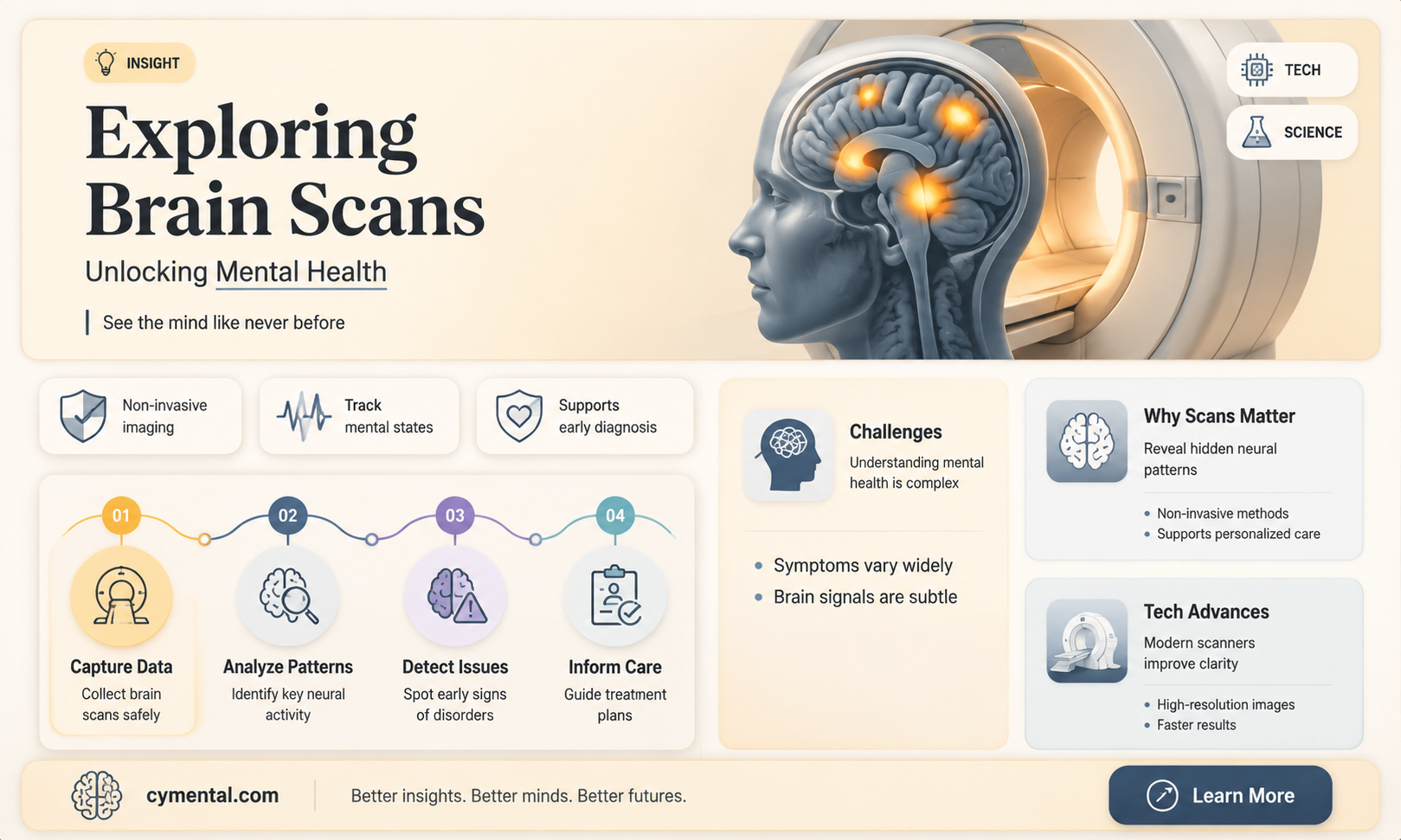
Brain scans, such as MRI or CT scans, are typically used to detect physical abnormalities in the brain. While they can be helpful in diagnosing certain neurological conditions, their role in diagnosing mental disorders is more complex. Mental disorders are often diagnosed based on symptoms and psychological evaluations rather than physical brain scans. However, in some cases, brain scans may be used to rule out underlying neurological conditions that could be contributing to mental health symptoms. It's important to consult with a healthcare professional to determine if a brain scan is necessary for diagnosing a mental disorder.
Explore related products


What You'll Learn
- Types of Brain Scans: Overview of common scans like MRI, CT, PET, and SPECT used for diagnosing mental disorders
- Conditions Diagnosed: List of mental disorders that can be identified or supported by brain imaging, such as depression, anxiety, and ADHD
- Procedure and Preparation: General steps involved in preparing for and undergoing a brain scan, including safety precautions
- Interpreting Results: Explanation of how brain scan results are analyzed and what they can reveal about mental health
- Access and Cost: Information on how to access brain scanning services, potential costs, and insurance coverage

Types of Brain Scans: Overview of common scans like MRI, CT, PET, and SPECT used for diagnosing mental disorders
Brain scans are essential tools in the diagnosis and treatment of mental disorders. They provide detailed images of the brain's structure and function, allowing healthcare professionals to identify abnormalities and develop effective treatment plans. Here's an overview of the most common types of brain scans used for diagnosing mental disorders:
MRI (Magnetic Resonance Imaging): MRI scans use powerful magnets and radio waves to create detailed images of the brain's structure. They are particularly useful for detecting abnormalities in the brain's anatomy, such as tumors, lesions, and structural changes associated with mental disorders like schizophrenia and depression. MRI scans are non-invasive and do not use ionizing radiation, making them a safe option for patients.
CT (Computed Tomography): CT scans use X-rays and computer technology to create cross-sectional images of the brain. They are often used in emergency situations to quickly detect acute brain injuries, such as hemorrhages and skull fractures. CT scans can also be used to identify structural changes associated with mental disorders, but they are less sensitive than MRI scans.
PET (Positron Emission Tomography): PET scans use radioactive tracers to visualize the brain's metabolic activity. They are particularly useful for detecting changes in brain function associated with mental disorders like Alzheimer's disease, depression, and anxiety. PET scans can also be used to monitor the effectiveness of treatment and to identify areas of the brain that are responding to medication.
SPECT (Single Photon Emission Computed Tomography): SPECT scans use radioactive tracers to visualize blood flow in the brain. They are often used to detect changes in brain function associated with mental disorders like schizophrenia, depression, and anxiety. SPECT scans can also be used to monitor the effectiveness of treatment and to identify areas of the brain that are responding to medication.
Each type of brain scan has its own advantages and limitations, and the choice of scan will depend on the specific needs of the patient. Healthcare professionals will consider factors such as the patient's symptoms, medical history, and the suspected mental disorder when selecting the most appropriate brain scan.
Finding Hope: Where to Seek Help for Depression
You may want to see also
Explore related products


Conditions Diagnosed: List of mental disorders that can be identified or supported by brain imaging, such as depression, anxiety, and ADHD
Brain imaging techniques have revolutionized the field of mental health by providing objective measures to support the diagnosis of various mental disorders. Conditions such as depression, anxiety, and ADHD can often be identified or corroborated through these advanced technologies. For instance, functional magnetic resonance imaging (fMRI) can detect abnormal brain activity patterns associated with depression, such as decreased activity in the prefrontal cortex and increased activity in the amygdala. Similarly, anxiety disorders may show heightened activity in the brain's fear-processing regions, like the amygdala and hippocampus. ADHD is often characterized by differences in brain structure and function, particularly in areas responsible for attention and impulse control.
The process of getting a brain scan for mental disorders typically involves a referral from a mental health professional or a primary care physician. The individual will then undergo a comprehensive evaluation to determine the most appropriate type of brain imaging. This could include structural MRI, functional MRI, positron emission tomography (PET), or single-photon emission computed tomography (SPECT), among others. The choice of imaging technique depends on the specific disorder being investigated and the clinical questions that need to be answered.
It's important to note that brain imaging is not always necessary for diagnosing mental disorders. Many conditions can be effectively diagnosed through clinical interviews, psychological assessments, and observation of symptoms. However, brain imaging can be a valuable tool in cases where the diagnosis is unclear or when there is a need to rule out other potential causes of symptoms, such as brain tumors or neurological disorders.
The results of a brain scan can provide valuable insights into the underlying neural mechanisms of a mental disorder, which can inform treatment decisions. For example, if a scan reveals abnormal activity in certain brain regions, this information can be used to guide the selection of medications or psychotherapies that target those specific areas. Additionally, brain imaging can help monitor the effectiveness of treatment over time by tracking changes in brain activity or structure.
While brain imaging can be a powerful diagnostic tool, it's essential to approach it with a clear understanding of its limitations. Brain scans are not infallible and can sometimes produce false positives or false negatives. Furthermore, the interpretation of brain imaging results requires specialized expertise, and it's crucial to have a qualified professional analyze the data in the context of the individual's overall clinical picture.
In conclusion, brain imaging can be a valuable asset in the diagnosis and treatment of mental disorders such as depression, anxiety, and ADHD. By providing objective measures of brain activity and structure, these techniques can help clinicians make more accurate diagnoses and develop more effective treatment plans. However, it's important to recognize the limitations of brain imaging and to use it in conjunction with other diagnostic methods to ensure the best possible outcomes for patients.
Empowering Education: Degrees for Mentally Handicapped Individuals
You may want to see also
Explore related products


Procedure and Preparation: General steps involved in preparing for and undergoing a brain scan, including safety precautions
Preparing for a brain scan involves several key steps to ensure both the safety of the patient and the accuracy of the results. Initially, patients are required to fill out a detailed medical history form, which includes information about any medications they are currently taking, allergies, and previous medical conditions. This is crucial as certain medications and medical conditions can interfere with the scan results or pose risks during the procedure.
On the day of the scan, patients are typically instructed to arrive early to allow time for preparation. They may be asked to change into a hospital gown and remove any metal objects, such as jewelry or glasses, which can interfere with the imaging equipment. In some cases, patients may need to undergo a physical examination or additional tests to ensure they are fit for the scan.
During the scan itself, patients are required to remain still and follow the instructions of the technician. This may involve holding their breath for short periods or performing specific tasks, such as squeezing a ball, to activate different areas of the brain. The scan can take anywhere from 15 minutes to several hours, depending on the type of scan and the area of the brain being examined.
Safety precautions are paramount during brain scans. For MRI scans, patients must be screened for any metal implants or foreign objects in their body, as the strong magnetic field can cause these objects to move or heat up, potentially causing injury. For CT scans, patients may be required to wear a lead apron to protect their reproductive organs from the radiation. Additionally, patients with claustrophobia may be given a sedative to help them relax during the scan.
After the scan, patients are usually able to resume their normal activities immediately. However, they may be advised to avoid strenuous exercise or activities that could cause injury to the head for a short period. The results of the scan will be analyzed by a radiologist and sent to the patient's doctor, who will then discuss the findings and any necessary treatment options with the patient.
Overcoming Financial Hesitation: Strategies to Break Through Your Mental Money Block
You may want to see also
Explore related products


Interpreting Results: Explanation of how brain scan results are analyzed and what they can reveal about mental health
Brain scan results are analyzed by trained professionals who interpret the images to identify any abnormalities or patterns associated with mental health conditions. This process involves comparing the individual's brain scan to a database of normal and abnormal scans, taking into account factors such as age, gender, and medical history. The analysis can reveal structural changes, such as differences in brain volume or the presence of lesions, as well as functional changes, like altered blood flow or metabolic activity. These findings can help diagnose mental disorders, monitor treatment progress, and even predict potential outcomes.
One of the key aspects of interpreting brain scan results is understanding the limitations of the technology. While brain scans can provide valuable insights, they are not infallible and can sometimes produce false positives or negatives. Additionally, the interpretation of brain scan results is subjective and can vary depending on the expertise and experience of the professional analyzing the images. It is also important to consider the context in which the brain scan was conducted, as factors such as stress, fatigue, or medication use can affect the results.
To ensure accurate interpretation, brain scan results are often reviewed by a team of specialists, including radiologists, neurologists, and psychiatrists. This multidisciplinary approach helps to minimize errors and provides a more comprehensive understanding of the individual's mental health. In some cases, additional testing or follow-up scans may be necessary to confirm a diagnosis or monitor changes over time.
In conclusion, interpreting brain scan results is a complex process that requires specialized knowledge and expertise. While brain scans can provide valuable information about mental health, it is important to understand their limitations and to approach the interpretation of results with caution. By working with a team of professionals and considering the broader context, individuals can gain a better understanding of their mental health and make informed decisions about their care.
Can Hospitals Mandate Mental Evaluations? Understanding Your Rights
You may want to see also
Explore related products


Access and Cost: Information on how to access brain scanning services, potential costs, and insurance coverage
Accessing brain scanning services for mental disorders involves navigating both logistical and financial hurdles. While the technology is advanced, it's not universally available, and the cost can be prohibitive for many individuals. Insurance coverage varies widely depending on the type of scan, the reason for the scan, and the specific insurance policy. Some insurance plans may cover brain scans if they are deemed medically necessary, while others may not cover them at all or may require a high deductible or copay.
To access brain scanning services, individuals typically need a referral from a healthcare provider. This referral should include a detailed explanation of why the scan is necessary and what specific type of scan is being requested. Once a referral is obtained, the individual can contact a facility that offers brain scanning services to schedule an appointment. It's important to note that wait times for appointments can vary significantly depending on the facility and the type of scan being requested.
The cost of a brain scan can range from a few hundred to several thousand dollars, depending on the type of scan and the facility performing the scan. For example, an MRI scan may cost less than a PET scan or a functional MRI (fMRI). Additionally, the cost may be higher if the scan is performed at a hospital rather than an outpatient imaging center. Individuals should contact their insurance provider to determine their coverage and estimated out-of-pocket costs before scheduling a scan.
In some cases, financial assistance may be available for individuals who cannot afford the cost of a brain scan. Many hospitals and imaging centers offer financial assistance programs or payment plans to help make the cost more manageable. Additionally, some non-profit organizations and research institutions may offer free or low-cost brain scans as part of clinical trials or research studies.
When considering brain scanning for mental disorders, it's essential to weigh the potential benefits against the costs and accessibility challenges. While brain scans can provide valuable insights into brain function and structure, they are not always necessary for diagnosing or treating mental disorders. In many cases, a thorough clinical evaluation and psychological testing may be sufficient to make a diagnosis and develop an effective treatment plan.
Exploring the Complex Relationship Between Substance Use and Mental Health
You may want to see also
Frequently asked questions
Yes, brain scans such as MRI, CT, and PET scans can be used to help diagnose mental disorders by identifying structural and functional abnormalities in the brain.
Brain scans can help detect a variety of mental disorders including depression, anxiety, schizophrenia, bipolar disorder, and ADHD.
Brain scans can be highly accurate in diagnosing mental disorders, but they are not always definitive. Results should be interpreted by a qualified healthcare professional in conjunction with other diagnostic information.