Madison Cole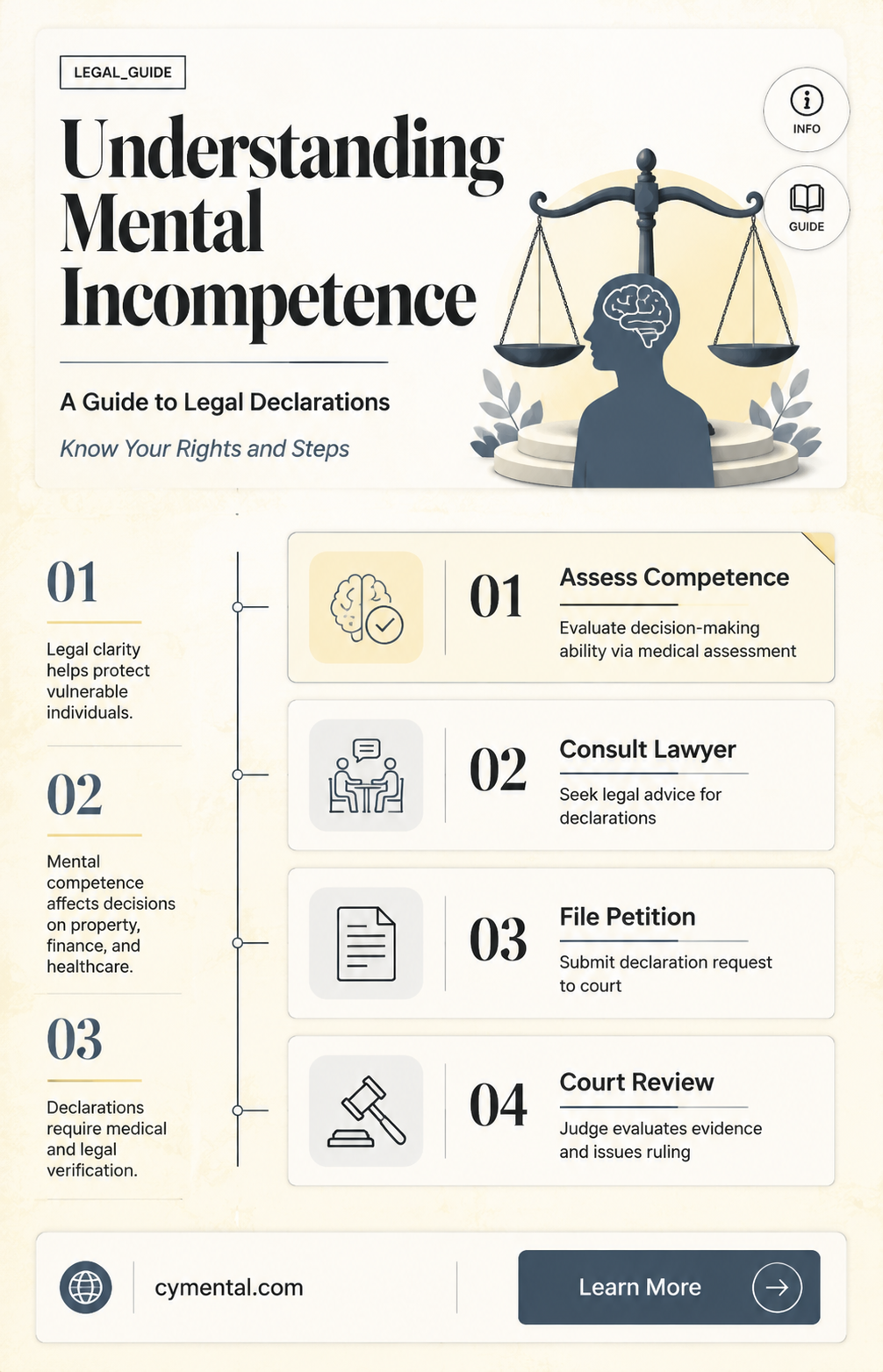
Declaring someone mentally incompetent is a serious legal and medical process that involves determining an individual's inability to make decisions or manage their own affairs due to mental illness or cognitive impairment. This process typically requires a thorough evaluation by mental health professionals and a court ruling. The criteria for mental incompetence vary by jurisdiction but generally include an assessment of the person's ability to understand and appreciate their situation, make informed decisions, and communicate their wishes effectively. It's important to approach this topic with sensitivity and respect for the individual's rights and dignity.
Explore related products


What You'll Learn

Legal Process for Declaring Mental Incompetence
The legal process for declaring mental incompetence is a complex and sensitive matter, often requiring a thorough understanding of both medical and legal frameworks. It begins with a formal petition filed with the court, typically by a concerned family member, healthcare provider, or legal representative. This petition must outline the reasons for seeking a declaration of incompetence, supported by medical evaluations and evidence demonstrating the individual's inability to manage their personal affairs or make informed decisions.
Once the petition is filed, the court will appoint a guardian ad litem to represent the interests of the allegedly incompetent person. This guardian will conduct an independent investigation, gathering additional medical opinions and assessing the individual's capacity to understand the proceedings and communicate their wishes. The guardian's findings are then submitted to the court in a detailed report.
The court will subsequently hold a hearing to review the evidence and determine whether to declare the individual mentally incompetent. During this hearing, the person in question has the right to present their own case, cross-examine witnesses, and provide any additional evidence that may support their claim of competence. The court's decision is based on a preponderance of evidence, and if incompetence is declared, a guardian or conservator will be appointed to manage the individual's affairs.
It is crucial to note that the legal process for declaring mental incompetence varies by jurisdiction, and specific procedures may differ depending on local laws and regulations. Additionally, the process is designed to protect the rights and dignity of the individual, ensuring that any declaration of incompetence is made only after a thorough and fair evaluation of all available evidence.
Liberating Yourself: The Art of Mental Detachment in Relationships
You may want to see also
Explore related products



Medical Evaluation and Diagnosis
A medical evaluation and diagnosis are critical steps in determining whether an individual can be declared mentally incompetent. This process involves a thorough assessment of the person's mental and physical health, often conducted by a qualified psychiatrist or psychologist. The evaluation may include a review of the individual's medical history, a physical examination, and a series of psychological tests and interviews. The goal is to identify any underlying conditions that may be affecting the person's ability to make sound decisions or manage their daily affairs.
During the evaluation, the healthcare professional will look for signs of mental illness, such as schizophrenia, bipolar disorder, or severe depression, which could impair the individual's judgment and decision-making abilities. They will also assess the person's cognitive functioning, including their memory, attention, and problem-solving skills. Additionally, the evaluator may consider the individual's social and environmental circumstances, such as their living situation, financial status, and support system, to determine the extent to which these factors may be contributing to their current state.
The diagnosis is based on the results of the evaluation and is typically made using the Diagnostic and Statistical Manual of Mental Disorders (DSM), which provides a standardized set of criteria for diagnosing mental health conditions. If the evaluation reveals that the individual meets the criteria for a mental illness or cognitive impairment that significantly affects their ability to function, the healthcare professional may recommend that they be declared mentally incompetent.
It is important to note that the process of declaring someone mentally incompetent is complex and varies by jurisdiction. In most cases, a court order is required, and the individual must be provided with legal representation and an opportunity to contest the declaration. The decision to declare someone mentally incompetent should only be made after a thorough and impartial evaluation, and it should be based on clear and compelling evidence that the individual is unable to make decisions in their own best interest.
In conclusion, a medical evaluation and diagnosis are essential components of the process of declaring someone mentally incompetent. These steps help to ensure that the individual's rights are protected and that any decision regarding their competency is based on a comprehensive and objective assessment of their mental and physical health.
Concealing Struggles: The Hidden Reality of Mental Illness
You may want to see also
Explore related products


Evidence of Inability to Manage Affairs
Evidence of an individual's inability to manage their affairs can manifest in various ways, often requiring careful observation and documentation. One key indicator is a consistent pattern of poor decision-making that negatively impacts their personal or financial well-being. For instance, an elderly person who repeatedly falls victim to financial scams or makes reckless investments despite warnings may demonstrate a lack of capacity to handle their financial affairs.
Another critical sign is neglect of personal care or living conditions. If an individual is unable to maintain basic hygiene, nutrition, or a safe living environment, it may indicate a diminished ability to care for themselves. This can include instances where a person is found living in unsanitary conditions, with unaddressed medical issues, or without adequate food and water.
Furthermore, an inability to manage daily tasks and responsibilities can also point to mental incompetence. This might involve failing to pay bills on time, missing important appointments, or being unable to follow through with necessary tasks such as grocery shopping or household chores. Such behaviors can suggest that the individual is struggling with cognitive or psychological impairments that hinder their ability to function independently.
In legal contexts, evidence of mental incompetence must be substantial and well-documented. It often requires assessments by mental health professionals, who can provide expert opinions on the individual's capacity to manage their affairs. Additionally, input from family members, caregivers, and other relevant parties can be crucial in building a comprehensive picture of the person's abilities and limitations.
Ultimately, the process of declaring someone mentally incompetent is complex and multifaceted, involving both medical and legal considerations. It is essential to approach such matters with sensitivity and a thorough understanding of the individual's unique circumstances.
Unraveling the Mind: Understanding the Mental Breakdown Process
You may want to see also
Explore related products


Involuntary Commitment Procedures
In the realm of mental health law, involuntary commitment procedures represent a critical and complex process. These procedures are designed to ensure that individuals who are deemed to be a danger to themselves or others due to mental illness receive the necessary treatment and care. However, they also raise significant ethical and legal questions about personal autonomy and the state's role in mental health intervention.
The process of involuntary commitment typically begins with a petition filed by a concerned party, such as a family member, healthcare provider, or law enforcement officer. This petition must allege that the individual in question is mentally ill and poses a substantial risk of harm to themselves or others. In many jurisdictions, the petitioner must provide specific examples of behavior that demonstrate this risk, such as suicidal ideation, violent outbursts, or neglect of basic self-care needs.
Once a petition is filed, a hearing is usually scheduled to determine whether the individual should be involuntarily committed. At this hearing, the individual has the right to legal representation and to present evidence in their defense. The burden of proof typically falls on the petitioner to demonstrate by clear and convincing evidence that the individual meets the criteria for involuntary commitment.
If the court finds that the individual should be involuntarily committed, they are then placed in a psychiatric facility for treatment. The duration of this commitment can vary depending on the jurisdiction and the individual's specific circumstances. In some cases, the individual may be required to undergo periodic evaluations to determine whether they are still a risk to themselves or others and whether they can be safely discharged.
Throughout the involuntary commitment process, there are numerous safeguards in place to protect the individual's rights. These may include the right to appeal the commitment order, the right to refuse certain treatments, and the right to be treated with dignity and respect. However, these safeguards can sometimes be difficult to enforce, and there is ongoing debate about whether they are sufficient to protect the individual's autonomy.
In conclusion, involuntary commitment procedures are a necessary but controversial tool in the mental health system. They provide a means of ensuring that individuals who are a danger to themselves or others receive the treatment they need, but they also raise important questions about personal freedom and the limits of state intervention in mental health matters. As such, it is crucial that these procedures are carefully crafted and implemented to balance the need for public safety with the protection of individual rights.
Legal Recourse for Mental Stress: Understanding Your Rights and Options
You may want to see also
Explore related products


Rights and Protections of the Individual
Individuals possess inherent rights and protections under the law, which safeguard their autonomy and dignity. In the context of mental incompetency, these rights are paramount. The legal system recognizes the importance of preserving an individual's liberty and decision-making capacity, even when their mental state is in question. Due process is a fundamental right, ensuring that any proceedings to declare someone mentally incompetent are conducted fairly and with proper safeguards. This includes the right to legal representation, the right to be informed of the proceedings, and the right to present evidence on their behalf.
Moreover, individuals have the right to privacy and confidentiality. Medical and psychological evaluations, which are often necessary in determining mental competency, must be conducted with the utmost respect for the individual's privacy. Information obtained during these evaluations should be kept confidential and only shared with authorized parties. This protects the individual from potential stigma and discrimination that may arise from the disclosure of sensitive personal information.
In addition to these rights, individuals are protected against discrimination based on their mental health status. Laws such as the Americans with Disabilities Act (ADA) prohibit discrimination against individuals with mental disabilities in various aspects of life, including employment, education, and public accommodations. This ensures that individuals are not unfairly treated or excluded from opportunities solely because of their mental health condition.
Furthermore, the principle of least restrictive alternatives guides the treatment and care of individuals with mental health issues. This means that any interventions or treatments should be the least restrictive necessary to achieve the desired outcome. For example, if an individual can be treated effectively in a community setting, they should not be involuntarily committed to a more restrictive institutional environment. This principle respects the individual's autonomy and promotes their integration into society.
Lastly, individuals have the right to appeal decisions regarding their mental competency. If an individual disagrees with a court's determination of their mental status, they have the right to seek a review of that decision. This ensures that the process is fair and that individuals are not unjustly deprived of their rights. Appeals can be complex, and it is crucial for individuals to have access to legal assistance to navigate this process effectively.
In conclusion, the rights and protections of individuals in the context of mental incompetency are multifaceted. These rights encompass due process, privacy, protection against discrimination, the principle of least restrictive alternatives, and the right to appeal. Upholding these rights is essential to ensuring that individuals are treated with dignity and respect, even when their mental capacity is in question.
Navigating the Complex Process of Declaring Mental Incompetence
You may want to see also
Frequently asked questions
Declaring someone mentally incompetent means that a court has determined the individual lacks the capacity to make informed decisions about their own affairs, often due to a mental illness or cognitive impairment. This legal determination can result in the appointment of a guardian or conservator to manage the person's financial, medical, and personal matters.
Typically, a family member, close friend, or healthcare professional can petition the court to have someone declared mentally incompetent. The petitioner must provide evidence that the individual in question is unable to manage their own affairs due to mental incapacity.
Being declared mentally incompetent can have significant legal implications, including the loss of the right to make decisions about one's own finances, healthcare, and living arrangements. The appointed guardian or conservator will have the authority to make these decisions on behalf of the incompetent individual. Additionally, the individual may lose the right to vote, enter into contracts, or make other legal decisions.