Caleb Wright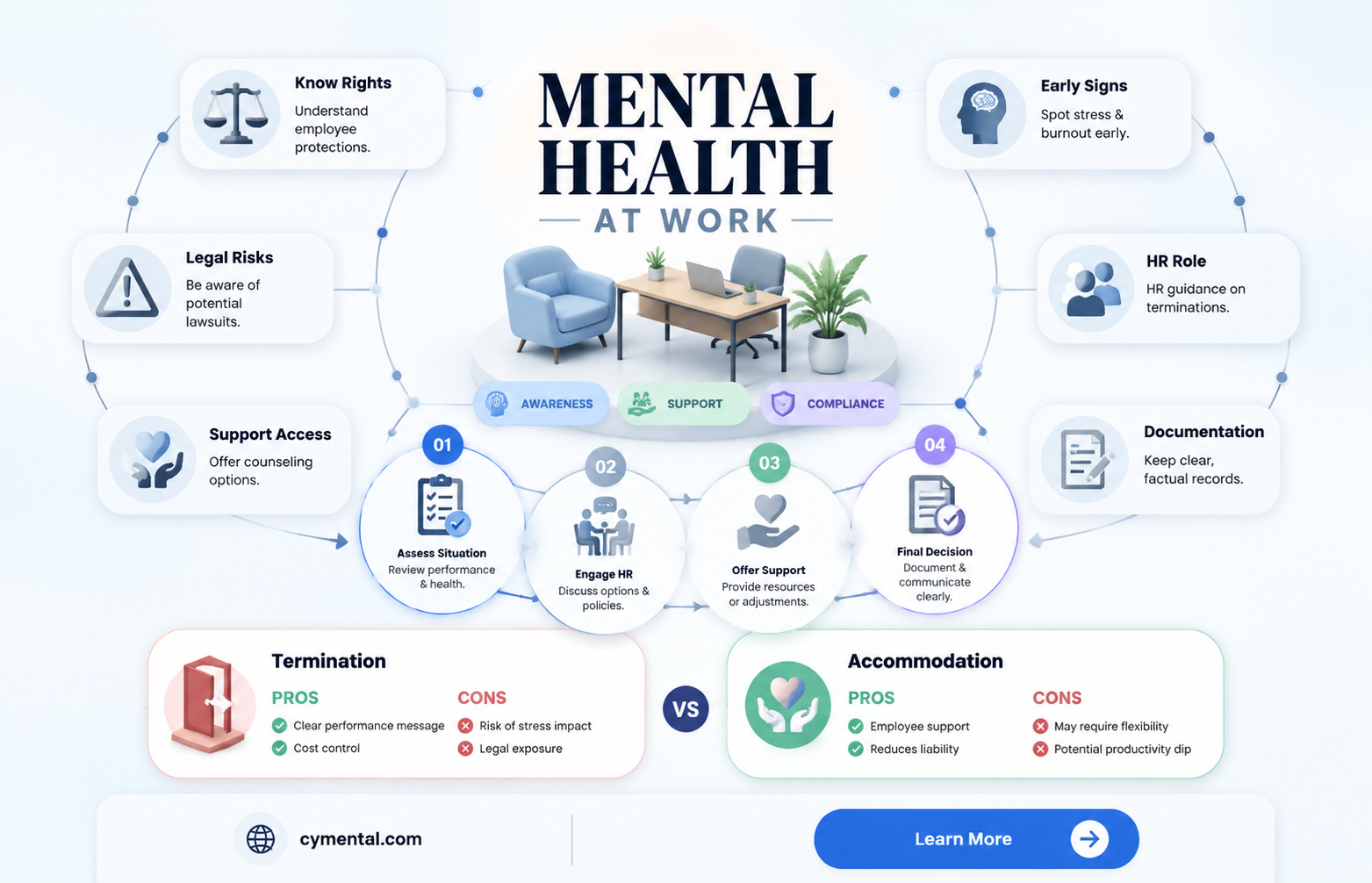
The question of whether an employer can terminate an employee due to mental illness is a complex and sensitive issue, intersecting with legal, ethical, and human rights considerations. In many jurisdictions, mental illness is considered a protected characteristic under anti-discrimination laws, meaning that firing someone solely because of their mental health condition could be unlawful. However, the specifics can vary greatly depending on the country, state, or province, and the circumstances of the case. Employers must navigate these nuances carefully, balancing their business needs with their legal obligations and ethical responsibilities towards their employees.
| Characteristics | Values |
|---|---|
| Legal Framework | Varies by country and jurisdiction; in many places, firing someone solely because of mental illness is illegal if it constitutes discrimination under employment laws. |
| Medical Condition | Mental illness encompasses a wide range of conditions, including but not limited to depression, anxiety, schizophrenia, and bipolar disorder. |
| Impact on Employment | Employees with mental illness may require accommodations or time off for treatment, which employers must consider in accordance with disability rights laws. |
| Performance Evaluation | An employer must assess the employee's ability to perform job duties; mental illness may affect performance, but it cannot be the sole reason for termination. |
| Reasonable Accommodation | Employers are often required to provide reasonable accommodations to employees with mental illness, such as modified work schedules or tasks. |
| Discrimination Protection | Many laws protect employees from discrimination based on mental health status, ensuring equal opportunities in the workplace. |
| Employer Obligations | Employers must maintain a safe and inclusive work environment, free from harassment and discrimination related to mental health. |
| Employee Rights | Employees have the right to privacy regarding their mental health and to be treated fairly and without discrimination. |
| Termination Process | If an employer decides to terminate an employee with a mental illness, they must follow a fair and transparent process, documenting the reasons for termination. |
| Legal Recourse | Employees who feel they have been unfairly terminated due to mental illness may seek legal recourse, including filing a lawsuit for discrimination. |
| Support Resources | Many organizations offer support and resources for employees with mental illness, including counseling services and advocacy groups. |
| Stigma and Awareness | There is an ongoing effort to reduce the stigma associated with mental illness in the workplace and to promote awareness and understanding. |
| Case Law Precedents | Previous legal cases can set precedents that influence how current cases are handled, providing guidance on the rights of employees with mental illness. |
| Industry Standards | Some industries may have specific standards or guidelines for handling mental health issues in the workplace. |
| Employee Assistance Programs | Many companies offer Employee Assistance Programs (EAPs) that provide confidential support and resources for employees dealing with mental health issues. |
Explore related products


$21.77 $24.95

$17.66 $18.95


What You'll Learn
- Legal Protections: Understanding the Americans with Disabilities Act (ADA) and its implications for mental health in the workplace
- Reasonable Accommodations: Exploring the employer's duty to provide reasonable accommodations for employees with mental health conditions
- Performance vs. Disability: Differentiating between performance-related issues and disability-related challenges in employee management
- Stigma and Discrimination: Addressing the stigma surrounding mental illness and preventing discrimination in hiring and firing practices
- Employee Assistance Programs: Discussing the role of Employee Assistance Programs (EAPs) in supporting employees with mental health concerns

Legal Protections: Understanding the Americans with Disabilities Act (ADA) and its implications for mental health in the workplace
The Americans with Disabilities Act (ADA) is a federal law that prohibits discrimination against individuals with disabilities in various aspects of life, including employment. In the context of mental health in the workplace, the ADA provides important legal protections for employees who may be struggling with mental illness. Employers are required to provide reasonable accommodations to employees with disabilities, unless doing so would cause undue hardship. This means that if an employee has a mental health condition that qualifies as a disability under the ADA, their employer must make adjustments to the work environment or job duties to enable them to perform their job effectively.
One of the key implications of the ADA for mental health in the workplace is that employers cannot discriminate against employees based on their mental health status. This includes making hiring, promotion, or termination decisions based solely on an employee's mental health condition. Additionally, employers are required to keep all medical information related to an employee's disability confidential, unless the employee gives permission to disclose the information or if disclosure is necessary to provide the requested accommodation.
To comply with the ADA, employers should have a clear understanding of what constitutes a disability under the law. The ADA defines a disability as a physical or mental impairment that substantially limits one or more major life activities, such as thinking, concentrating, or interacting with others. Employers should also be aware of the types of reasonable accommodations that may be required for employees with mental health conditions. These accommodations can vary widely depending on the individual's needs, but may include adjustments to work schedules, job duties, or the physical work environment.
Employees who believe they have been discriminated against based on their mental health status can file a complaint with the Equal Employment Opportunity Commission (EEOC). The EEOC is responsible for enforcing the ADA and can investigate complaints, mediate disputes, and take legal action against employers who violate the law. It is important for employees to understand their rights under the ADA and to seek assistance if they believe they have been subjected to discrimination.
In conclusion, the ADA provides important legal protections for employees with mental health conditions in the workplace. Employers are required to provide reasonable accommodations and cannot discriminate against employees based on their mental health status. By understanding the requirements of the ADA and taking steps to comply with the law, employers can create a more inclusive and supportive work environment for all employees.
Emergency Contacts: Who to Call During a Mental Health Crisis
You may want to see also
Explore related products


$10.63 $21.99


Reasonable Accommodations: Exploring the employer's duty to provide reasonable accommodations for employees with mental health conditions
Under the Americans with Disabilities Act (ADA), employers have a legal obligation to provide reasonable accommodations to employees with mental health conditions, unless doing so would cause undue hardship. This means that if an employee discloses a mental health condition and requests an accommodation, the employer must engage in an interactive process to determine what accommodations might be necessary. Reasonable accommodations can include modifications to the work environment, adjustments to work schedules, or providing additional support or resources.
One common misconception is that reasonable accommodations always require significant changes to the workplace. In reality, many accommodations can be relatively simple and low-cost. For example, an employer might allow an employee with anxiety to work from home one day a week, or provide a quiet space for an employee with PTSD to take breaks. Other accommodations might include providing additional training or support, or adjusting performance expectations to account for an employee's limitations.
Employers may also need to consider providing accommodations during the hiring process. This could include providing alternative formats for job applications or interviews, or allowing applicants to request accommodations in advance. Employers should also be aware that they cannot ask about an applicant's mental health history unless it is directly related to the job.
It's important to note that employers are not required to provide accommodations that would cause undue hardship. This means that if an accommodation would significantly impact the employer's operations or finances, they may be able to deny the request. However, employers should carefully consider the potential impact of denying an accommodation, as this could lead to legal consequences or damage to their reputation.
In conclusion, providing reasonable accommodations for employees with mental health conditions is not only a legal requirement, but it can also be a valuable investment in the workplace. By creating a supportive and inclusive environment, employers can improve employee morale, productivity, and retention.
Can Dogs Sense Mental Illness? Exploring the Canine-Human Connection
You may want to see also
Explore related products


Performance vs. Disability: Differentiating between performance-related issues and disability-related challenges in employee management
Navigating the intersection of performance and disability in the workplace requires a nuanced understanding of both legal and practical considerations. While performance-related issues are typically addressed through standard HR processes, disability-related challenges necessitate a more sensitive and individualized approach. It's crucial for employers to recognize the distinction between these two areas to ensure fair treatment and compliance with relevant laws.
One key aspect of differentiating between performance and disability is understanding the impact of disability on an employee's ability to perform their job. Disabilities can manifest in various ways, from physical limitations to mental health conditions, and may affect an employee's productivity, attendance, or ability to complete certain tasks. Employers must be aware of these potential impacts and consider reasonable accommodations that could enable the employee to perform their job effectively.
Performance-related issues, on the other hand, are generally evaluated based on objective criteria such as productivity metrics, quality of work, and adherence to company policies. In these cases, the focus is on the outcomes and behaviors that are not meeting expectations, rather than on any underlying medical conditions. Employers should maintain clear performance standards and communicate them effectively to all employees to avoid confusion and ensure consistency in evaluation.
A critical point of consideration is the potential for disability-related challenges to be misinterpreted as performance issues. This can occur when an employee's disability is not immediately apparent or when there is a lack of understanding about how the disability affects their work. Employers must be vigilant in recognizing signs that an employee may be struggling due to a disability and take steps to engage in a supportive and constructive dialogue.
In situations where an employee's performance is being impacted by a disability, it's essential to explore all possible solutions before considering termination. This may include providing additional training, modifying job duties, or offering flexible work arrangements. Employers should also be aware of their obligations under disability discrimination laws, which often require them to make reasonable accommodations unless doing so would cause undue hardship.
Ultimately, the key to effectively managing performance and disability in the workplace is to approach each situation with empathy, understanding, and a commitment to finding mutually beneficial solutions. By recognizing the unique challenges faced by employees with disabilities and providing the necessary support, employers can foster a more inclusive and productive work environment.
Empowering Support: A Compassionate Guide to Mental Health Advocacy
You may want to see also
Explore related products


Stigma and Discrimination: Addressing the stigma surrounding mental illness and preventing discrimination in hiring and firing practices
Mental illness stigma remains a pervasive issue in society, often leading to discrimination in various aspects of life, including employment. Addressing this stigma is crucial to creating a more inclusive and supportive environment for individuals with mental health conditions. One way to combat stigma is through education and awareness campaigns that highlight the realities of mental illness and challenge harmful stereotypes. By fostering a better understanding of mental health issues, we can reduce the fear and misconceptions that contribute to stigma and discrimination.
In the context of employment, preventing discrimination in hiring and firing practices is essential. Employers should be educated on the legal protections afforded to individuals with mental illnesses under laws such as the Americans with Disabilities Act (ADA). This includes understanding the requirements for providing reasonable accommodations and ensuring that hiring decisions are based on qualifications and performance rather than mental health status. Additionally, implementing policies that promote diversity and inclusion can help create a workplace culture that values and supports employees with mental health conditions.
It is also important to address the stigma surrounding mental illness within the workplace itself. This can be done by providing training for managers and employees on how to recognize and respond to mental health issues, as well as by promoting open communication and reducing the fear of seeking help. By creating a supportive work environment, employers can help reduce the impact of stigma and discrimination on employees with mental illnesses.
Furthermore, individuals with mental health conditions should be empowered to advocate for themselves and seek support when needed. This includes knowing their rights under the law, understanding how to request accommodations, and being aware of resources available to them, such as employee assistance programs (EAPs) and mental health professionals. By taking an active role in their own well-being, individuals can help challenge stigma and discrimination in the workplace.
In conclusion, addressing the stigma surrounding mental illness and preventing discrimination in hiring and firing practices requires a multifaceted approach that involves education, awareness, policy changes, and individual advocacy. By working together to create a more inclusive and supportive environment, we can help ensure that individuals with mental health conditions are treated with dignity and respect in the workplace.
Navigating the Complex Process of Declaring Mental Incompetence
You may want to see also
Explore related products


Employee Assistance Programs: Discussing the role of Employee Assistance Programs (EAPs) in supporting employees with mental health concerns
Employee Assistance Programs (EAPs) play a crucial role in supporting employees with mental health concerns. These programs are designed to provide confidential counseling and support services to employees who may be struggling with personal or work-related issues. EAPs can offer a range of services, including mental health counseling, substance abuse treatment, and financial planning assistance. By providing these resources, employers can help employees address their mental health concerns before they escalate, potentially reducing absenteeism, improving productivity, and enhancing overall workplace morale.
One of the key benefits of EAPs is their ability to provide early intervention and support. When employees are struggling with mental health issues, it's often difficult for them to seek help on their own. EAPs can help bridge this gap by offering accessible and confidential services. This early intervention can be critical in preventing more serious mental health issues from developing, which can ultimately lead to improved employee well-being and reduced healthcare costs for employers.
EAPs can also play a role in reducing the stigma associated with mental health issues in the workplace. By providing these services, employers are sending a message that they value their employees' mental health and are committed to supporting them. This can help create a more open and supportive work environment, where employees feel more comfortable discussing their mental health concerns and seeking help when needed.
In addition to providing direct support to employees, EAPs can also offer training and education to managers and supervisors. This training can help managers recognize the signs of mental health issues in their employees and provide them with the skills and resources needed to support them effectively. By equipping managers with this knowledge, employers can create a more supportive and understanding workplace culture.
Overall, Employee Assistance Programs are a valuable resource for supporting employees with mental health concerns. By providing confidential counseling and support services, EAPs can help employees address their mental health issues before they escalate, reduce the stigma associated with mental health in the workplace, and create a more supportive and understanding work environment. Employers who invest in EAPs are not only supporting their employees' well-being but also potentially improving their bottom line through reduced absenteeism and healthcare costs.
Approaching the Conversation: Discussing Mental Health with Empathy
You may want to see also
Frequently asked questions
Generally, no. Under the Americans with Disabilities Act (ADA), employers are prohibited from discriminating against employees with mental health conditions. This includes firing someone solely because of their mental illness.
Exceptions may include situations where the employee's mental illness poses a direct threat to the safety of themselves or others, or if the illness significantly impacts their ability to perform essential job functions, even with reasonable accommodations.
Employers should engage in an interactive process with the employee to determine if any reasonable accommodations are needed to help them perform their job effectively. This may involve discussing the employee's specific needs and limitations, and exploring possible solutions together.
Employers should generally avoid asking employees about their mental health status unless it is directly related to the job or there is a legitimate concern for the employee's well-being. If an employer has a reasonable suspicion that an employee's mental health may be impacting their job performance, they should approach the situation with sensitivity and consider referring the employee to an Employee Assistance Program (EAP) or other resources.
There are several resources available to support employees with mental health conditions, including Employee Assistance Programs (EAPs), mental health professionals, support groups, and online resources. Employers can also provide accommodations such as flexible work schedules, modified job duties, or access to mental health services as part of their benefits package.