Harper Lewis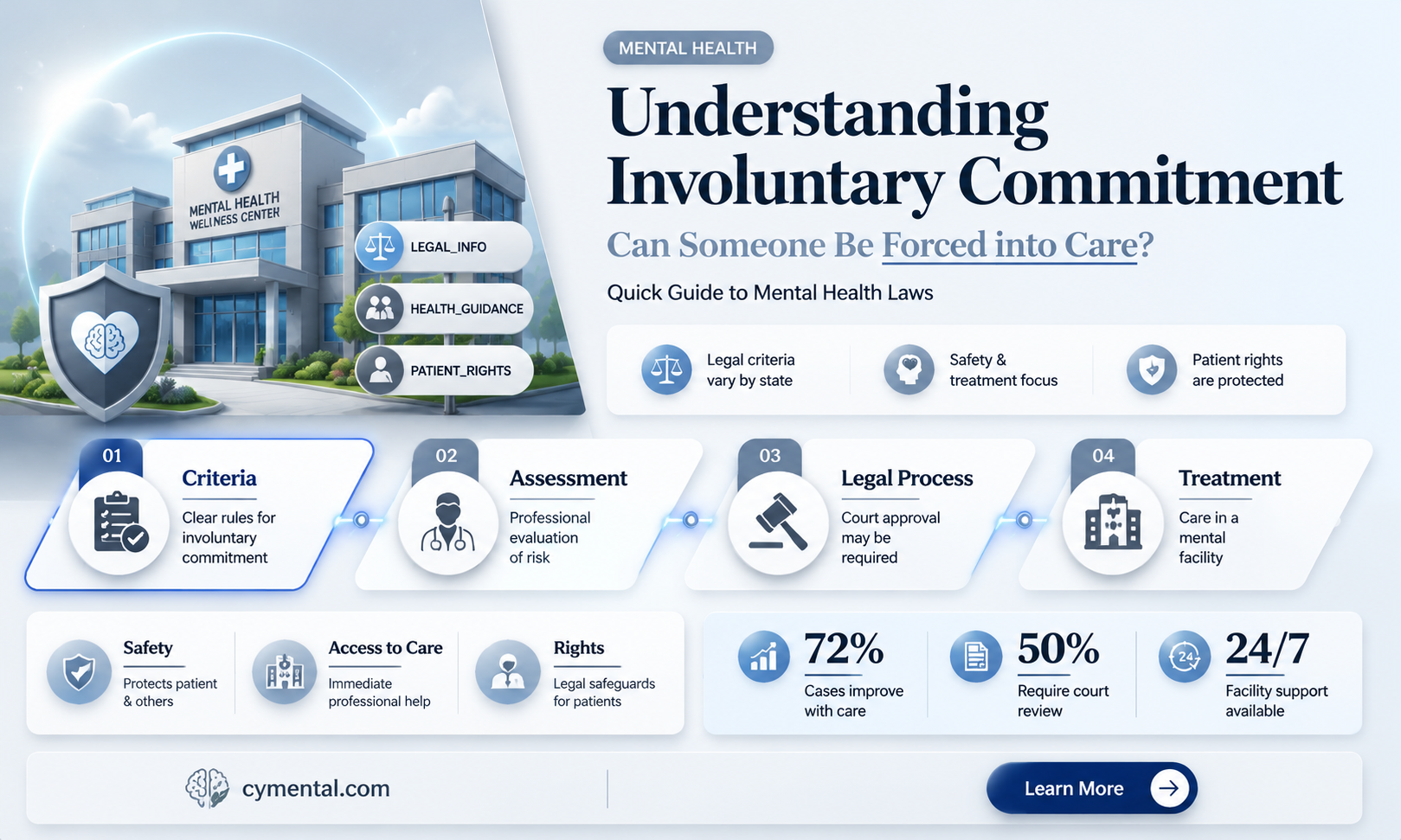
The question of whether someone can be forced into a mental facility is a complex and sensitive topic that intersects with legal, ethical, and medical considerations. In many jurisdictions, involuntary commitment laws allow for individuals to be admitted to psychiatric facilities against their will under certain circumstances, typically when they are deemed a danger to themselves or others due to a mental health condition. However, the specifics of these laws vary widely by location, and the process usually involves a thorough evaluation by mental health professionals and legal safeguards to protect the individual's rights. It's important to approach this topic with a nuanced understanding of the potential benefits and drawbacks of involuntary treatment, as well as the broader societal implications for mental health care and civil liberties.
What You'll Learn

Legal requirements for involuntary commitment
Involuntary commitment to a mental health facility is a legal process that varies significantly by jurisdiction. Generally, it requires a court order based on a petition filed by a concerned party, such as a family member, healthcare provider, or law enforcement officer. The petitioner must demonstrate that the individual in question poses a substantial risk of harm to themselves or others due to a mental health condition. This often involves presenting evidence of recent behaviors or statements that indicate a potential for violence or self-harm.
The legal criteria for involuntary commitment typically include a determination that the individual is unable to care for themselves or make informed decisions about their treatment. This may be evidenced by a lack of insight into their condition, refusal to take necessary medications, or an inability to manage daily living activities. In some cases, a mental health professional may be required to evaluate the individual and provide a report to the court regarding their condition and the necessity of involuntary treatment.
Due process rights are a critical aspect of involuntary commitment proceedings. The individual has the right to be informed of the petition, to attend the hearing, and to be represented by legal counsel. They may also have the right to present evidence on their own behalf and to cross-examine witnesses. If the court orders involuntary commitment, the individual may have the right to appeal the decision.
The duration of involuntary commitment can vary widely depending on the jurisdiction and the individual's condition. Some commitments may be short-term, lasting only a few days or weeks, while others may be long-term or even indefinite. In many cases, the individual will be required to participate in treatment programs and may be subject to regular reviews by mental health professionals to assess their progress and determine if they can be released.
It is important to note that involuntary commitment is a serious legal action that should only be pursued when all other options have been exhausted. It can have significant consequences for the individual's rights, freedom, and mental health. As such, it is essential to carefully consider the potential benefits and risks before initiating the process.
Pursuing Legal Action for Mental Anguish: What You Need to Know
You may want to see also
Process of initiating involuntary hospitalization
In the context of mental health care, involuntary hospitalization is a legal process that allows for the admission of an individual into a psychiatric facility without their consent. This process is typically initiated when a person is deemed to be a danger to themselves or others due to a mental health condition. The specific procedures for involuntary hospitalization vary by jurisdiction, but generally involve a series of steps that must be followed to ensure the individual's rights are protected while also addressing their mental health needs.
The first step in the process usually involves an assessment by a mental health professional or a law enforcement officer. This assessment is conducted to determine if the individual meets the criteria for involuntary hospitalization, which often includes being a danger to oneself or others, being unable to care for oneself, or experiencing a severe mental health crisis. If the assessment indicates that the individual meets these criteria, a petition for involuntary hospitalization may be filed with the appropriate legal authorities.
Once a petition has been filed, a hearing is typically scheduled to determine whether the individual should be involuntarily hospitalized. At this hearing, the individual has the right to legal representation and may present evidence to support their case. The hearing officer or judge will then make a decision based on the evidence presented and the applicable laws. If the decision is made to involuntarily hospitalize the individual, they will be transported to a psychiatric facility for treatment.
During the hospitalization, the individual will receive psychiatric care and treatment. The length of the hospitalization will depend on the individual's condition and the treatment plan developed by the mental health professionals. In some cases, the individual may be required to undergo a period of stabilization before being transferred to a less restrictive treatment setting or released back into the community.
It is important to note that involuntary hospitalization is a serious intervention that should only be used when necessary to protect the individual or others from harm. The process is designed to balance the individual's rights with the need to provide appropriate mental health care. As such, it is crucial that all parties involved in the process act in good faith and prioritize the well-being of the individual.
Legal Recourse for Mental Abuse: Understanding Your Rights and Options
You may want to see also
Criteria for determining mental incapacity
Determining mental incapacity is a complex process that involves assessing an individual's ability to make informed decisions about their own care and well-being. This assessment is typically conducted by a qualified mental health professional, such as a psychiatrist or psychologist, who will evaluate the person's cognitive functioning, emotional stability, and overall mental health. The criteria for determining mental incapacity may vary depending on the jurisdiction, but generally include factors such as the ability to understand and appreciate the nature and consequences of one's actions, the capacity to communicate effectively, and the presence of any mental disorders that impair judgment or decision-making.
In some cases, a person may be deemed mentally incapacitated if they are unable to meet their own basic needs, such as food, shelter, and hygiene, or if they pose a significant risk to themselves or others. The assessment process may involve interviews with the individual, as well as observations of their behavior and interactions with others. It is important to note that a determination of mental incapacity is not a permanent diagnosis, and individuals may regain their capacity over time with appropriate treatment and support.
When determining mental incapacity, it is crucial to consider the individual's cultural background, personal values, and preferences, as these factors can significantly impact their decision-making abilities and overall mental health. Additionally, it is important to involve the person's family members or caregivers in the assessment process, as they can provide valuable insights into the individual's behavior and needs.
In conclusion, determining mental incapacity is a multifaceted process that requires careful consideration of a person's cognitive, emotional, and social functioning. By taking a comprehensive approach to this assessment, mental health professionals can ensure that individuals receive the appropriate level of care and support to meet their unique needs and circumstances.
Finding Words of Comfort: How to Support Someone Struggling Mentally
You may want to see also
Patient rights during involuntary treatment
In the context of involuntary treatment, patient rights are a critical aspect that must be carefully considered. Involuntary treatment refers to the administration of medical or psychiatric care without the patient's consent. This can occur in situations where a person is deemed a danger to themselves or others, or when they are unable to make informed decisions about their care due to a mental health condition.
One of the primary rights of patients during involuntary treatment is the right to be informed about their condition and the proposed treatment plan. This includes being told about the potential risks and benefits of the treatment, as well as any alternative options that may be available. Patients also have the right to ask questions and seek clarification about their treatment, and to have their concerns addressed by their healthcare providers.
Another important right is the right to refuse treatment, even if it is deemed necessary by healthcare professionals. However, this right is not absolute and may be overridden in certain circumstances, such as when the patient is a danger to themselves or others. In such cases, the decision to override the patient's refusal must be made by a qualified healthcare professional and must be based on a thorough assessment of the patient's condition.
Patients also have the right to be treated with dignity and respect during involuntary treatment. This includes being addressed by their preferred name, being allowed to maintain personal hygiene and grooming, and being provided with appropriate clothing and living conditions. Additionally, patients have the right to privacy and confidentiality, and their personal information must be protected in accordance with applicable laws and regulations.
Finally, patients have the right to appeal the decision to involuntarily treat them. This typically involves a hearing before a judge or a panel of healthcare professionals, who will review the evidence and make a determination about whether the involuntary treatment is justified. If the patient is found to be competent to make decisions about their care, they may be released from involuntary treatment.
In conclusion, patient rights during involuntary treatment are a complex and multifaceted issue. While the primary goal of involuntary treatment is to provide necessary care to individuals who are unable to make informed decisions about their health, it is essential to balance this goal with the patient's fundamental rights to autonomy, dignity, and respect. By carefully considering and upholding these rights, healthcare professionals can ensure that involuntary treatment is administered in a way that is both effective and ethical.
Journey to Recovery: Overcoming Mental Illness Through Resilience and Support
You may want to see also
Ethical considerations in forced psychiatric care
In the realm of mental health care, the concept of forced psychiatric care raises profound ethical dilemmas. This practice, which involves involuntarily admitting individuals to mental health facilities, often without their consent, is a contentious issue that pits the rights of the individual against the perceived need for treatment. The ethical considerations are multifaceted, involving questions of autonomy, beneficence, non-maleficence, and justice.
One of the primary ethical concerns is the violation of personal autonomy. Forced psychiatric care can be seen as an infringement on an individual's right to make decisions about their own health and well-being. This is particularly problematic when the individual is deemed capable of making informed decisions but chooses not to seek treatment. In such cases, the conflict between the individual's autonomy and the state's duty to protect and provide care becomes acute.
Another significant ethical issue is the potential for harm. While the intention behind forced psychiatric care is often to provide necessary treatment and prevent further deterioration of the individual's mental health, the process itself can be traumatic. Involuntary commitment can lead to feelings of fear, anger, and helplessness, which may exacerbate the individual's mental health issues. Additionally, the use of physical restraints or seclusion in some cases can cause physical and psychological harm.
The principle of beneficence, which requires that health care providers act in the best interests of their patients, also comes into play. In the context of forced psychiatric care, this principle can be interpreted in different ways. On one hand, it can be argued that involuntary treatment is necessary to prevent harm to the individual or others. On the other hand, it can be contended that respecting the individual's autonomy and allowing them to make their own decisions about treatment is in their best interest.
Finally, the ethical consideration of justice is crucial. Forced psychiatric care raises questions about the equitable distribution of resources and the fair treatment of individuals with mental health issues. It is important to ensure that such practices are not disproportionately applied to certain groups, such as the poor, the elderly, or ethnic minorities, and that they are not used as a means of social control.
In conclusion, the ethical considerations surrounding forced psychiatric care are complex and multifaceted. Balancing the rights of the individual with the need to provide care and protect society is a challenging task that requires careful consideration of the principles of autonomy, beneficence, non-maleficence, and justice.
Unraveling Mental Stability: A Guide for Legal Proceedings
You may want to see also
Frequently asked questions
Generally, you cannot force someone into a mental facility unless there are specific legal circumstances that allow for involuntary commitment. This typically requires a court order or a determination by a mental health professional that the individual is a danger to themselves or others.
The legal requirements for involuntary commitment vary by jurisdiction but usually involve a court order based on a mental health evaluation. The individual must be deemed a danger to themselves or others, or in some cases, unable to care for themselves due to a mental health condition.
The process of involuntary commitment typically begins with a mental health evaluation by a qualified professional. If the evaluation determines that the individual meets the criteria for involuntary commitment, a petition is filed with the court. The court then reviews the petition and may issue an order for the individual to be committed to a mental facility.
Involuntary commitment raises several ethical considerations, including the balance between individual rights and public safety, the potential for abuse of power, and the stigma associated with mental illness. It is a complex issue that involves careful consideration of the individual's autonomy and the need to protect them and others from harm.
Yes, there are alternatives to involuntary commitment, such as voluntary treatment, outpatient services, and crisis intervention programs. These options aim to provide support and treatment to individuals in a less restrictive environment, promoting their autonomy and involvement in their own care.