Ava Ramirez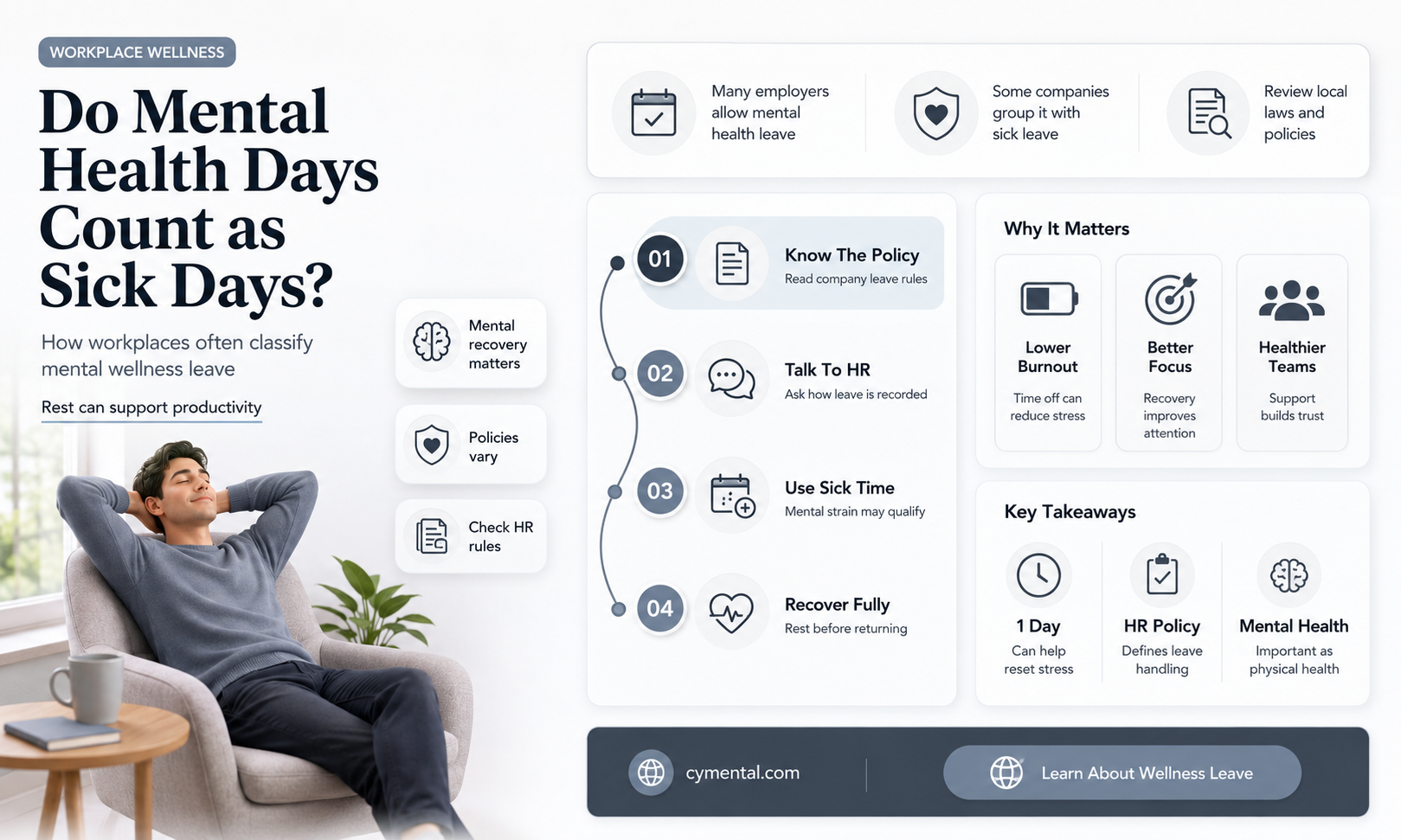
Mental health days are a crucial aspect of overall well-being, and their recognition in the workplace is becoming increasingly important. The question of whether mental health days count as sick days is a complex one, involving considerations of employee health, workplace policies, and societal attitudes towards mental illness. In many jurisdictions, mental health days are protected under disability laws and are considered a legitimate reason for absence from work. However, the specific policies and entitlements can vary greatly depending on the employer, the industry, and the country. It is essential for both employees and employers to understand their rights and responsibilities regarding mental health days and to work together to create a supportive and inclusive work environment that prioritizes the well-being of all individuals.
Explore related products


What You'll Learn
- Definition of Mental Health Days: Understanding what constitutes a mental health day versus a traditional sick day
- Legal and Policy Framework: Exploring laws and company policies that govern the use of mental health days
- Employee Rights and Entitlements: Discussing the rights of employees to take mental health days without repercussions
- Impact on Work Environment: Analyzing how recognizing mental health days can affect workplace culture and productivity
- Stigma and Perception: Addressing the potential stigma associated with taking mental health days and strategies to combat it

Definition of Mental Health Days: Understanding what constitutes a mental health day versus a traditional sick day
A mental health day is a day taken off work or school to focus on one's mental well-being. It is not necessarily a day spent in bed or away from responsibilities, but rather a day dedicated to self-care and stress reduction. This can include activities such as exercise, meditation, spending time in nature, or engaging in hobbies that bring joy and relaxation.
In contrast, a traditional sick day is typically taken when one is physically ill or injured and unable to perform their usual duties. It is often characterized by symptoms such as fever, pain, or nausea, and may require medical attention or rest to recover.
The distinction between mental health days and traditional sick days is important because it highlights the need to prioritize mental well-being alongside physical health. Taking a mental health day can help prevent burnout, reduce stress, and improve overall mental health outcomes. It is not a sign of weakness or laziness, but rather a proactive step towards maintaining a healthy work-life balance.
Employers and educational institutions are increasingly recognizing the importance of mental health days and may offer them as part of their wellness programs. However, there is still a stigma surrounding mental health issues, and some individuals may feel hesitant to take a mental health day for fear of being judged or penalized.
To combat this stigma, it is important to educate people about the benefits of mental health days and to promote a culture of openness and understanding. By doing so, we can help ensure that individuals feel comfortable taking the time they need to prioritize their mental well-being, without fear of repercussions or judgment.
Navigating Mental Health Conversations with Parents: A Guide
You may want to see also
Explore related products


Legal and Policy Framework: Exploring laws and company policies that govern the use of mental health days
The legal and policy framework surrounding mental health days varies significantly across different jurisdictions and organizations. In some countries, mental health days are explicitly recognized under labor laws as a legitimate reason for absence, similar to traditional sick days. For example, in Canada, employees are entitled to mental health days under the Canada Labour Code, which mandates that employers provide a certain number of paid sick days that can be used for mental health reasons.
In contrast, other countries may not have specific laws governing mental health days, leaving it up to individual employers to establish their own policies. In the United States, while there is no federal law mandating mental health days, some states have enacted legislation that requires employers to provide paid sick leave, which can be used for mental health purposes. Additionally, many large corporations have implemented their own mental health day policies as part of their employee wellness programs, recognizing the importance of mental health in maintaining a productive and healthy workforce.
Company policies regarding mental health days can also vary widely. Some organizations may offer a specific number of mental health days per year, separate from traditional sick days, while others may allow employees to use their sick days for mental health reasons without distinction. It is also important to note that some companies may require employees to provide documentation or a doctor's note to justify their mental health day, similar to the requirements for traditional sick days.
The implementation of mental health days as part of a company's policy can have significant benefits for both employees and employers. For employees, mental health days provide an opportunity to take time off to focus on their mental well-being without the stigma associated with traditional sick days. This can lead to improved mental health outcomes and increased job satisfaction. For employers, offering mental health days can lead to a more productive and engaged workforce, as well as reduced turnover and absenteeism.
However, there are also potential challenges associated with implementing mental health days. One concern is that employees may abuse the policy, taking mental health days when they are not actually needed. Another challenge is ensuring that the policy is applied fairly and consistently across the organization, without discrimination or bias.
Overall, the legal and policy framework surrounding mental health days is complex and evolving. As awareness of the importance of mental health continues to grow, it is likely that we will see more countries and organizations implementing policies that recognize and support mental health days as a legitimate reason for absence.
Exploring the Nuances: Behavioral Health vs. Mental Health
You may want to see also
Explore related products


Employee Rights and Entitlements: Discussing the rights of employees to take mental health days without repercussions
Employees have the right to take mental health days without fear of repercussions, a crucial aspect of maintaining a healthy work-life balance. This entitlement is grounded in the recognition that mental health is just as important as physical health and that taking time off to address mental health concerns should not be stigmatized or penalized. Employers are increasingly acknowledging the importance of mental health days as a way to reduce burnout, increase productivity, and foster a more positive work environment.
However, the specifics of mental health days can vary depending on the company's policies and the jurisdiction's labor laws. Some companies may require a doctor's note, while others may have a more flexible approach. It's essential for employees to familiarize themselves with their company's policies regarding mental health days and to understand their rights under applicable labor laws.
In many countries, mental health days are considered a protected leave, meaning that employees cannot be discriminated against or retaliated for taking them. This protection is often enshrined in laws that mandate reasonable accommodations for employees with mental health conditions. Employers are required to provide these accommodations to ensure that employees can perform their jobs effectively while also managing their mental health.
Despite these protections, there can still be challenges in taking mental health days. Employees may fear being judged by their colleagues or supervisors, or they may worry about the impact on their career advancement. To address these concerns, companies should foster a culture of openness and support, encouraging employees to prioritize their mental health without fear of negative consequences.
Ultimately, the right to take mental health days is a fundamental aspect of employee well-being. By recognizing and respecting this right, employers can create a more supportive and productive work environment, benefiting both the employees and the organization as a whole.
Exploring PHP Programs in Mental Health: A Comprehensive Guide
You may want to see also
Explore related products


Impact on Work Environment: Analyzing how recognizing mental health days can affect workplace culture and productivity
Recognizing mental health days in the workplace can have a profound impact on the overall work environment. When employees are given the opportunity to take time off for mental health reasons, it sends a powerful message that their well-being is valued and prioritized by the organization. This can lead to a more positive and supportive workplace culture, where employees feel comfortable discussing their mental health concerns and seeking help when needed.
One of the key benefits of recognizing mental health days is that it can help reduce stigma around mental illness in the workplace. When mental health is treated as a legitimate reason for taking time off, it helps to normalize the conversation around mental health and encourages employees to seek support without fear of judgment or repercussions. This can lead to earlier intervention and treatment, which can ultimately improve employee health and well-being.
In addition to the cultural benefits, recognizing mental health days can also have a positive impact on productivity. When employees are struggling with mental health issues, they are often less productive and more prone to making mistakes. By allowing employees to take time off to address these issues, organizations can help ensure that their workforce is operating at its full potential. Furthermore, employees who feel supported and valued are more likely to be engaged and motivated in their work, which can lead to increased productivity and job satisfaction.
However, it's important to note that the implementation of mental health days must be done thoughtfully and with consideration for the specific needs of the organization and its employees. For example, organizations may need to establish clear guidelines around how mental health days are requested and approved, and may need to provide resources and support for employees who are struggling with mental health issues. Additionally, organizations should be mindful of the potential for abuse of mental health days and should have systems in place to monitor and address any issues that arise.
Overall, recognizing mental health days can be a valuable tool for promoting a positive and supportive workplace culture, improving employee well-being, and enhancing productivity. By taking a proactive approach to mental health in the workplace, organizations can create a more resilient and effective workforce, which can ultimately lead to greater success and growth.
Exploring the Role of Clinical Mental Health Counselors: A Comprehensive Guide
You may want to see also
Explore related products





Stigma and Perception: Addressing the potential stigma associated with taking mental health days and strategies to combat it
Despite growing awareness and acceptance of mental health issues, stigma remains a significant barrier for many individuals considering taking mental health days. This stigma can manifest in various ways, from societal expectations that prioritize physical health over mental well-being to workplace cultures that view mental health days as a sign of weakness or lack of commitment. To combat this stigma, it's essential to reframe the conversation around mental health days, emphasizing their importance for overall well-being and productivity.
One strategy to address stigma is to normalize the discussion of mental health in the workplace and in social settings. This can be achieved by encouraging open dialogue, sharing personal experiences, and promoting education about mental health issues. Leaders and influencers can play a crucial role in this process by publicly acknowledging the importance of mental health days and modeling healthy behaviors. Additionally, organizations can implement policies that support mental health, such as offering mental health days as part of their benefits package and creating a culture that values work-life balance.
Another approach to combating stigma is to focus on the positive outcomes of taking mental health days. Research has shown that mental health days can lead to increased productivity, improved mood, and reduced stress levels. By highlighting these benefits, individuals can make a stronger case for the importance of mental health days and challenge the notion that they are unnecessary or indulgent. Furthermore, providing resources and support for individuals who are struggling with mental health issues can help to reduce the stigma associated with seeking help.
In conclusion, addressing the stigma associated with mental health days requires a multifaceted approach that involves changing societal perceptions, promoting open dialogue, and highlighting the benefits of prioritizing mental well-being. By working together to combat stigma, we can create a more supportive and understanding environment for individuals who need to take mental health days.
Exploring Women's Mental Health: Awareness, Advocacy, and Support
You may want to see also
Frequently asked questions
Yes, mental health days are considered sick days. They are intended to provide employees with time off to address mental health concerns, which can be just as debilitating as physical illnesses.
While there are no specific federal laws mandating mental health days, some states and localities have enacted laws requiring employers to provide paid sick leave, which can include mental health days. Additionally, the Americans with Disabilities Act (ADA) requires employers to provide reasonable accommodations for employees with mental health conditions.
To request a mental health day, you should follow your employer's procedures for requesting sick leave. This may involve submitting a request form, providing a doctor's note, or simply notifying your supervisor. Be honest about your need for time off to address your mental health, and be prepared to provide documentation if required.
Taking mental health days can have numerous benefits, including reducing stress and anxiety, improving mood, increasing productivity, and preventing burnout. By taking time off to address your mental health, you can return to work feeling refreshed and more capable of performing your duties effectively.