Ava Ramirez
Assessment tools in mental health are crucial for diagnosing, monitoring, and treating various conditions. These tools range from structured interviews and questionnaires to observational methods and psychological tests. Clinicians use them to gather information about a patient's symptoms, behavior, and cognitive functioning. Some common assessment tools include the Diagnostic and Statistical Manual of Mental Disorders (DSM-5), the Beck Depression Inventory (BDI), and the Mini-Mental State Examination (MMSE). These tools help in forming an accurate diagnosis and in developing an effective treatment plan tailored to the individual's needs.
| Characteristics | Values |
|---|---|
| Types of Tools | Psychological assessments, Psychiatric evaluations, Behavioral rating scales, Neuropsychological tests, Screening questionnaires, Diagnostic interviews |
| Purpose | To evaluate mental health status, Diagnose mental health disorders, Monitor treatment progress, Assess cognitive functioning, Identify strengths and weaknesses, Inform treatment planning |
| Administration | Self-report, Clinician-administered, Computer-based, Paper-based, Online platforms, Mobile applications |
| Scoring | Quantitative, Qualitative, Norm-referenced, Criterion-referenced, Standardized, Non-standardized |
| Validity | Construct validity, Criterion validity, Content validity, Face validity, Predictive validity |
| Reliability | Test-retest reliability, Inter-rater reliability, Internal consistency, Split-half reliability |
| Population | Adults, Children, Adolescents, Geriatric, Diverse cultural groups, Specific populations (e.g., forensic, medical) |
| Disorders Assessed | Depression, Anxiety, Bipolar disorder, Schizophrenia, ADHD, PTSD, Eating disorders, Personality disorders, Substance use disorders |
| Time to Administer | 15-30 minutes, 30-60 minutes, 60-90 minutes, 90-120 minutes, Varies by tool |
| Cost | Free, Low cost ($0-$50), Moderate cost ($50-$200), High cost ($200-$500), Very high cost ($500+) |
| Accessibility | Widely available, Limited availability, Requires specialized training, Online access only, Available in multiple languages |
| Strengths | Standardized, Valid, Reliable, Comprehensive, User-friendly, Time-efficient |
| Limitations | Limited scope, Cultural bias, Not suitable for all populations, Requires interpretation by trained professionals, Potential for response bias |
Explore related products


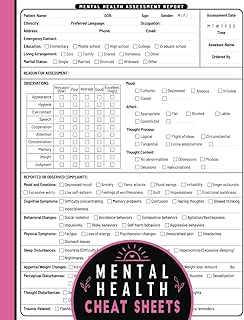



What You'll Learn
- Psychometric Assessments: Tools like MMPI, Beck Depression Inventory, and IQ tests to measure mental abilities and traits
- Clinical Interviews: Structured and semi-structured interviews, such as the DSM-5, to diagnose mental health conditions
- Behavioral Observations: Direct observation of behavior in various settings to assess mental health and functioning
- Neuropsychological Tests: Assessments to evaluate cognitive functions like memory, attention, and problem-solving abilities
- Self-Report Measures: Questionnaires and surveys, such as the PHQ-9, completed by individuals to report their mental health symptoms

Psychometric Assessments: Tools like MMPI, Beck Depression Inventory, and IQ tests to measure mental abilities and traits
Psychometric assessments are standardized tools used in mental health to measure various aspects of an individual's psychological functioning. These assessments provide valuable insights into a person's cognitive abilities, emotional states, and personality traits. Among the most widely used psychometric tools are the Minnesota Multiphasic Personality Inventory (MMPI), the Beck Depression Inventory (BDI), and Intelligence Quotient (IQ) tests.
The MMPI is a comprehensive personality test that assesses an individual's personality traits and psychopathology. It consists of over 500 true-or-false questions that cover a range of topics, including social interactions, emotional experiences, and behavioral tendencies. The MMPI is often used in clinical settings to help diagnose mental health disorders and to guide treatment planning.
The BDI is a self-report questionnaire designed to measure the severity of depressive symptoms. It includes 21 items that assess various aspects of depression, such as mood, motivation, and sleep patterns. The BDI is a useful tool for screening for depression and for monitoring the effectiveness of antidepressant treatments.
IQ tests are used to measure an individual's cognitive abilities and to provide an estimate of their intelligence quotient. These tests typically include a series of tasks that assess verbal reasoning, spatial reasoning, memory, and processing speed. IQ tests are used in a variety of settings, including educational, clinical, and forensic contexts.
Psychometric assessments like the MMPI, BDI, and IQ tests are valuable tools in mental health because they provide objective and standardized measures of psychological functioning. These assessments can help clinicians diagnose mental health disorders, monitor treatment progress, and make informed decisions about patient care. However, it is important to note that these tools should be used in conjunction with other forms of assessment, such as clinical interviews and behavioral observations, to obtain a comprehensive understanding of an individual's mental health needs.
Prioritizing Your Well-being: A Guide to Taking a Mental Health Leave from Work
You may want to see also
Explore related products


Clinical Interviews: Structured and semi-structured interviews, such as the DSM-5, to diagnose mental health conditions
Clinical interviews are a cornerstone of mental health assessment, providing a nuanced understanding of a patient's psychological state. Structured and semi-structured interviews, such as those outlined in the DSM-5, offer a systematic approach to diagnosing mental health conditions. These interviews are designed to elicit specific information about symptoms, their severity, and their impact on daily functioning.
The DSM-5, for instance, includes detailed criteria for various mental disorders, which clinicians use to guide their questioning. This ensures that all relevant aspects of a patient's condition are thoroughly explored. Structured interviews follow a predetermined format, which can help in standardizing the assessment process and making it more reliable. Semi-structured interviews, on the other hand, allow for more flexibility and can be tailored to the individual needs of the patient.
During these interviews, clinicians must be attentive not only to the content of the patient's responses but also to non-verbal cues, such as body language and tone of voice. These can provide valuable insights into the patient's emotional state and help in forming a more accurate diagnosis. It's also crucial for clinicians to establish a rapport with the patient, creating a safe and supportive environment that encourages open communication.
One of the challenges of clinical interviews is ensuring that they are conducted in a way that is both comprehensive and time-efficient. Clinicians must balance the need to gather detailed information with the practical constraints of their practice. Additionally, they must be mindful of potential biases and ensure that their questions are neutral and non-leading.
In conclusion, clinical interviews are an essential tool in the mental health professional's toolkit. When conducted skillfully, they can provide a wealth of information that aids in accurate diagnosis and effective treatment planning. The structured and semi-structured formats outlined in resources like the DSM-5 offer a valuable framework for these assessments, helping clinicians to navigate the complex landscape of mental health with precision and compassion.
Understanding Pink Slips: A Guide to Mental Health Discharge
You may want to see also
Explore related products


Behavioral Observations: Direct observation of behavior in various settings to assess mental health and functioning
Direct observation of behavior is a fundamental assessment tool in mental health, providing valuable insights into an individual's psychological state and functioning. This method involves carefully watching and recording a person's actions, reactions, and interactions in various settings, such as at home, work, or in social situations. By doing so, mental health professionals can gain a deeper understanding of the individual's behavioral patterns, emotional responses, and cognitive processes.
One of the key advantages of behavioral observations is that they offer a more objective and unbiased assessment of mental health compared to self-reported measures. This is particularly important when working with individuals who may have difficulty accurately describing their own symptoms or experiences, such as those with cognitive impairments or young children. Additionally, behavioral observations can help identify subtle changes in behavior that may not be immediately apparent to the individual or their loved ones, allowing for early intervention and treatment.
To conduct a behavioral observation, mental health professionals typically follow a structured protocol that involves identifying specific behaviors of interest, determining the context in which these behaviors occur, and recording the frequency, intensity, and duration of the behaviors. This information is then analyzed to identify patterns and trends, which can inform diagnosis, treatment planning, and monitoring of progress over time.
Behavioral observations can be used in a variety of mental health settings, including inpatient and outpatient clinics, schools, and community-based programs. They are particularly useful for assessing conditions such as autism spectrum disorder, attention deficit hyperactivity disorder (ADHD), and conduct disorders, as well as for monitoring the effectiveness of interventions aimed at improving social skills, emotional regulation, and cognitive functioning.
In conclusion, behavioral observations are a critical assessment tool in mental health, offering a unique window into an individual's psychological state and functioning. By carefully observing and recording behavior in various settings, mental health professionals can gain valuable insights that inform diagnosis, treatment, and monitoring of progress, ultimately leading to better outcomes for individuals struggling with mental health challenges.
Addressing the Absence: Why Women's Mental Health Month is Missing
You may want to see also
Explore related products


Neuropsychological Tests: Assessments to evaluate cognitive functions like memory, attention, and problem-solving abilities
Neuropsychological tests are specialized assessments designed to evaluate various cognitive functions such as memory, attention, language, and problem-solving abilities. These tests are crucial in diagnosing and understanding neurological and psychiatric conditions. They provide valuable insights into how the brain processes information and can help identify areas of cognitive strength and weakness.
One common neuropsychological test is the Mini-Mental State Examination (MMSE), which assesses basic cognitive functions like memory, attention, and language. Another widely used test is the Montreal Cognitive Assessment (MoCA), which is designed to detect mild cognitive impairment. These tests are typically administered by trained professionals, such as psychologists or neurologists, and involve a series of tasks and questions that the individual must complete.
Neuropsychological tests can be used for a variety of purposes, including diagnosing conditions like Alzheimer's disease, assessing the impact of brain injuries, and monitoring cognitive changes over time. They can also be used in research to study cognitive processes and develop new treatments for neurological and psychiatric disorders.
It's important to note that neuropsychological tests are not foolproof and should be interpreted in conjunction with other clinical information. Additionally, these tests can be time-consuming and may require specialized training to administer and interpret accurately. Despite these limitations, neuropsychological tests remain an essential tool in the assessment and treatment of mental health conditions.
Prioritizing Mental Wellness: Crafting a Compassionate Call-In Message
You may want to see also
Explore related products


Self-Report Measures: Questionnaires and surveys, such as the PHQ-9, completed by individuals to report their mental health symptoms
Self-report measures, such as questionnaires and surveys, are essential tools in mental health assessment. These measures rely on individuals to report their own mental health symptoms, providing a subjective perspective that can be crucial in understanding their experiences. One widely used self-report measure is the Patient Health Questionnaire-9 (PHQ-9), which assesses the severity of depressive symptoms.
The PHQ-9 consists of nine questions that cover various aspects of depression, including mood, sleep, appetite, and thoughts of self-harm. Each question is scored on a scale from 0 to 3, with higher scores indicating more severe symptoms. This questionnaire is valued for its brevity, ease of use, and ability to detect changes in symptoms over time. It is often used in primary care settings to screen for depression and monitor treatment response.
Other self-report measures include the Generalized Anxiety Disorder 7-item scale (GAD-7) for anxiety, the Posttraumatic Stress Disorder Checklist (PCL) for posttraumatic stress disorder, and the Eating Disorder Examination Questionnaire (EDE-Q) for eating disorders. These tools are designed to be sensitive to the specific symptoms of each condition, allowing for accurate assessment and diagnosis.
Self-report measures have several advantages, including their cost-effectiveness, ease of administration, and ability to capture the individual's subjective experience. However, they also have limitations, such as the potential for response bias and the reliance on the individual's ability to accurately report their symptoms. Clinicians must consider these factors when interpreting the results of self-report measures and integrate them with other assessment methods, such as clinical interviews and behavioral observations, to obtain a comprehensive understanding of the individual's mental health.
In conclusion, self-report measures like the PHQ-9 are valuable tools in mental health assessment, providing a subjective perspective on an individual's symptoms. These measures are widely used due to their brevity, ease of use, and sensitivity to changes in symptoms. However, clinicians must be aware of their limitations and use them in conjunction with other assessment methods to ensure a thorough and accurate evaluation of mental health.
Navigating Mental Health Conversations: When Loved Ones Resist Treatment
You may want to see also
Frequently asked questions
Common assessment tools in mental health include the Beck Depression Inventory (BDI), the Minnesota Multiphasic Personality Inventory (MMPI), the Structured Clinical Interview for DSM-5 (SCID-5), and the Generalized Anxiety Disorder 7-item scale (GAD-7).
The Beck Depression Inventory (BDI) is a self-report questionnaire used to assess the severity of depressive symptoms in adolescents and adults. It helps clinicians identify and monitor changes in depressive symptoms over time.
The Minnesota Multiphasic Personality Inventory (MMPI) is a standardized psychometric test used to assess personality traits and psychopathology. It is often used in clinical settings to help diagnose mental health conditions and develop treatment plans.
The Generalized Anxiety Disorder 7-item scale (GAD-7) is a self-report questionnaire used to assess the severity of generalized anxiety disorder symptoms. It measures the frequency of anxiety symptoms over the past two weeks and helps clinicians identify and monitor changes in anxiety levels.