Noah Parker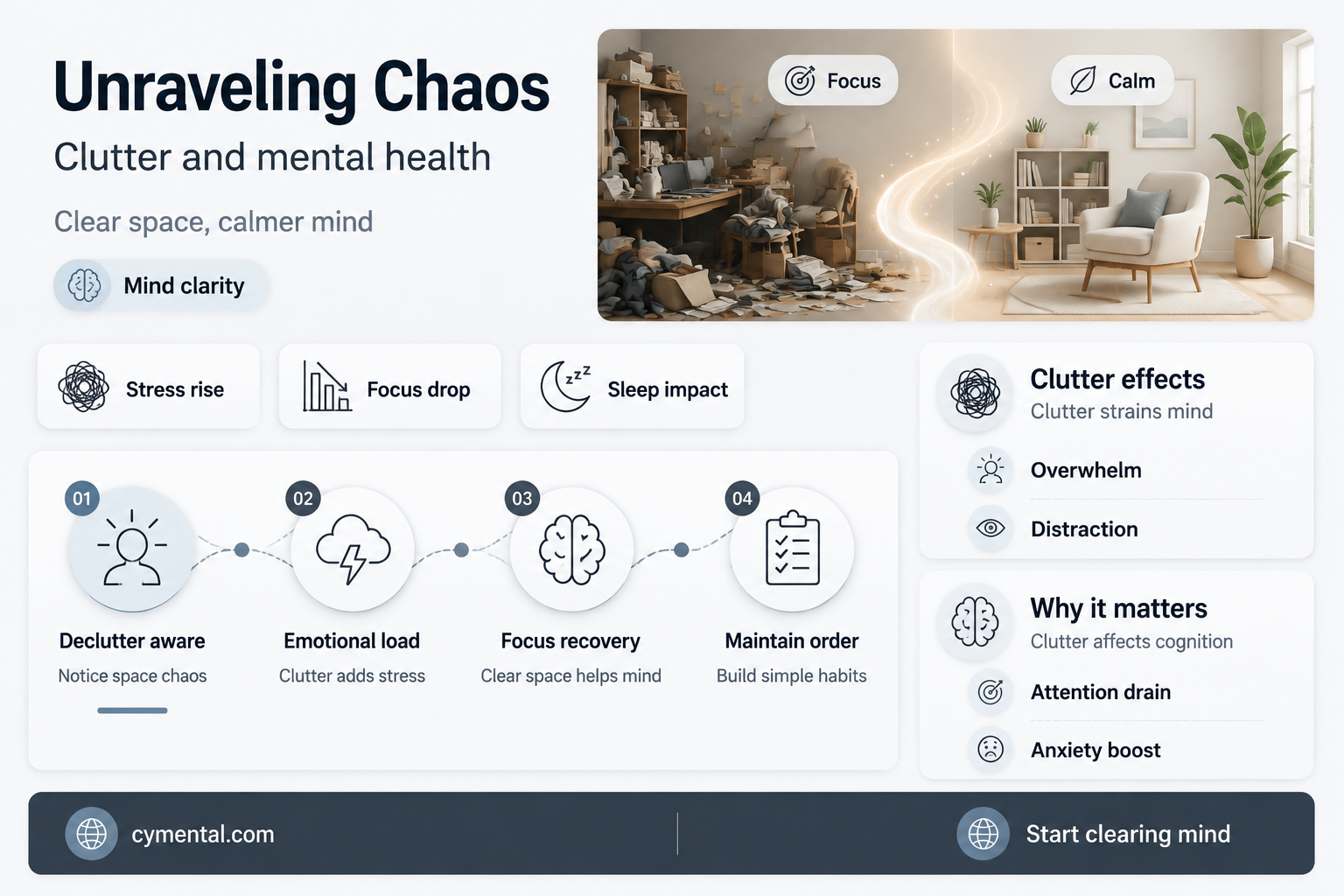
Clutter can have a profound impact on mental health, often leading to increased stress, anxiety, and feelings of overwhelm. When our living or working spaces are filled with excessive items, it can create a sense of chaos and disorganization that mirrors in our minds. This visual clutter can make it difficult to focus, leading to decreased productivity and a constant sense of unease. Moreover, clutter can evoke feelings of guilt or shame, particularly when it becomes a barrier to inviting others into our space or completing tasks efficiently. By understanding how clutter affects mental health, individuals can take steps to declutter their environments and, in turn, improve their overall well-being.
Explore related products


What You'll Learn
- Increased Stress: Clutter can lead to heightened stress levels, making it difficult to relax and focus
- Anxiety and Overwhelm: Excessive items can create a sense of being overwhelmed, contributing to anxiety disorders
- Decreased Productivity: A cluttered environment may hinder productivity by causing distractions and making it hard to concentrate
- Negative Emotional Impact: Clutter can evoke negative emotions such as guilt, shame, and embarrassment, affecting overall mental well-being
- Impaired Cognitive Function: Research suggests that clutter can negatively impact cognitive function, including memory and decision-making abilities

Increased Stress: Clutter can lead to heightened stress levels, making it difficult to relax and focus
Clutter can significantly impact your mental health, particularly by increasing stress levels. This is because a cluttered environment can overwhelm your senses, making it difficult to focus and relax. When your surroundings are chaotic, your brain is constantly processing the visual stimuli, which can lead to a state of heightened alertness and anxiety.
One way clutter can lead to increased stress is by making it harder to find things you need. This can cause frustration and a sense of urgency, especially when you're in a hurry. For example, if you can't find your keys or important documents, you may feel stressed and anxious about being late or missing a deadline.
Another way clutter can affect your mental health is by making you feel guilty or ashamed about your living or working space. This can lead to avoidance behaviors, where you try to ignore the clutter or avoid inviting people over. This can further increase stress levels, as you may feel isolated or disconnected from others.
Clutter can also impact your ability to focus and concentrate. When your environment is cluttered, it can be difficult to block out distractions and stay on task. This can lead to decreased productivity and a sense of overwhelm, which can contribute to increased stress levels.
To reduce stress caused by clutter, it's important to create a more organized and peaceful environment. This can involve decluttering your space, creating designated areas for specific items, and establishing routines for maintaining order. By taking control of your environment, you can reduce the visual stimuli that contribute to stress and create a more calming and focused atmosphere.
Understanding Mental Illness: Does It Inherently Make Someone Mean?
You may want to see also
Explore related products


Anxiety and Overwhelm: Excessive items can create a sense of being overwhelmed, contributing to anxiety disorders
The proliferation of items in one's living or working space can lead to a palpable sense of anxiety and overwhelm. This is particularly true for individuals who already struggle with anxiety disorders, as the excess clutter can exacerbate their symptoms. The visual chaos created by too many possessions can make it difficult for the brain to process information efficiently, leading to feelings of being overwhelmed and out of control.
Research has shown that clutter can have a significant impact on mental health, with studies linking excessive items to increased levels of stress, anxiety, and depression. The constant visual stimulation can activate the brain's fight-or-flight response, leading to a state of heightened alertness and anxiety. This can be especially problematic for individuals with pre-existing anxiety disorders, as the clutter can serve as a trigger for their symptoms.
One of the key ways in which clutter contributes to anxiety is by creating a sense of disorganization and lack of control. When surrounded by excessive items, it can be difficult to find what one needs, leading to frustration and stress. This sense of disarray can also make it challenging to focus and concentrate, further exacerbating feelings of anxiety and overwhelm.
To mitigate the effects of clutter on anxiety, it is essential to create a sense of order and control in one's environment. This can be achieved through regular decluttering and organizing, as well as implementing systems for managing possessions. By creating a more streamlined and organized living or working space, individuals can reduce the visual chaos and create a more calming and peaceful environment.
In addition to decluttering, it is also important to address the underlying causes of anxiety and overwhelm. This may involve seeking professional help, practicing mindfulness and relaxation techniques, and developing healthy coping mechanisms. By addressing both the environmental and psychological factors contributing to anxiety, individuals can create a more balanced and healthy mental state.
Finding Support: Where to Talk About Mental Health
You may want to see also
Explore related products

$9.99


Decreased Productivity: A cluttered environment may hinder productivity by causing distractions and making it hard to concentrate
A cluttered environment can significantly impact productivity by creating a multitude of distractions. These distractions can manifest in various forms, such as visual clutter overwhelming the eyes, making it difficult to focus on a single task. The constant visual stimuli can lead to a state of mental fatigue, where the brain is unable to process information efficiently. This can result in decreased productivity, as individuals find it challenging to concentrate on their work or studies.
Furthermore, clutter can also contribute to a sense of chaos and disorganization, which can negatively affect mental health. When the environment is cluttered, it can create a feeling of being overwhelmed and out of control. This can lead to increased stress levels, anxiety, and even depression. These mental health issues can further exacerbate the problem of decreased productivity, as individuals may struggle to find the motivation and energy to complete tasks.
In addition to the mental health impacts, clutter can also hinder productivity by making it difficult to find necessary items or information. When things are not organized, it can take a significant amount of time to locate what is needed, leading to wasted time and frustration. This can be particularly problematic in a work or study environment, where time is often a valuable resource.
To combat the negative effects of clutter on productivity, it is essential to create a clean and organized space. This can involve decluttering unnecessary items, creating designated areas for specific tasks, and implementing organizational systems such as filing or shelving. By creating a more organized environment, individuals can reduce distractions, improve their mental health, and ultimately increase their productivity.
In conclusion, the impact of clutter on productivity is multifaceted, affecting both mental health and the ability to focus on tasks. By addressing the issue of clutter and creating a more organized space, individuals can improve their overall well-being and become more productive in their work or studies.
Can Mentally Unstable Humans Influence Dog Aggression?
You may want to see also
Explore related products


![Serenity [Blu-ray]](https://m.media-amazon.com/images/I/71ykK8motAL._AC_UY218_.jpg)
Negative Emotional Impact: Clutter can evoke negative emotions such as guilt, shame, and embarrassment, affecting overall mental well-being
Clutter can have a profound impact on our emotional state, often evoking feelings of guilt, shame, and embarrassment. These negative emotions can stem from the perception that clutter is a reflection of one's character or abilities, leading to a sense of inadequacy or failure. For instance, a cluttered workspace might make an individual feel overwhelmed and incapable of managing their tasks effectively, while a cluttered home can create a sense of disorganization and chaos in one's personal life.
The emotional toll of clutter can also manifest in feelings of anxiety and stress. The constant visual stimulation from excessive items can make it difficult for the mind to relax and focus, contributing to a heightened state of alertness. This can be particularly problematic in environments where concentration and mental clarity are essential, such as in the workplace or during study sessions.
Moreover, clutter can lead to social isolation and withdrawal. Individuals may feel embarrassed about the state of their living or working spaces, leading them to avoid inviting others over or seeking help. This can exacerbate feelings of loneliness and depression, creating a vicious cycle where clutter contributes to emotional distress, which in turn makes it more challenging to address the clutter.
To mitigate these negative emotional impacts, it is essential to adopt a proactive approach to decluttering. This can involve setting aside dedicated time for organizing and tidying up, breaking down the task into smaller, manageable steps, and seeking support from friends, family, or professional organizers if needed. By addressing clutter head-on, individuals can create a more conducive environment for mental well-being and emotional stability.
In conclusion, the negative emotional impact of clutter should not be underestimated. By recognizing the ways in which clutter can affect our mental health and taking steps to maintain a tidy and organized living or working space, we can foster a more positive and supportive environment for ourselves and those around us.
Navigating Mental Health Petitions in Michigan: A Comprehensive Guide
You may want to see also
Explore related products


Impaired Cognitive Function: Research suggests that clutter can negatively impact cognitive function, including memory and decision-making abilities
Clutter can have a profound impact on cognitive function, particularly in the areas of memory and decision-making. Research has shown that excessive clutter can lead to increased stress levels, which in turn can impair the ability to focus and process information effectively. This can result in difficulties with memory retention and recall, as well as a decrease in the quality of decision-making.
One study found that individuals who lived in cluttered environments had a harder time remembering important information and making decisions compared to those who lived in more organized spaces. This is likely due to the fact that clutter can create visual distractions that compete for attention, making it more difficult to concentrate on tasks at hand.
Furthermore, clutter can also lead to feelings of overwhelm and anxiety, which can further exacerbate cognitive impairments. When faced with a cluttered environment, the brain may go into a state of 'fight or flight,' releasing stress hormones that can interfere with cognitive processes.
To mitigate the negative effects of clutter on cognitive function, it is important to maintain a clean and organized living space. This can be achieved by regularly decluttering and organizing belongings, as well as implementing systems for keeping items in their designated places. By creating a more organized environment, individuals can reduce stress levels and improve their ability to focus, remember, and make decisions.
In addition to maintaining a clutter-free living space, there are also several cognitive exercises that can be done to improve memory and decision-making abilities. These include activities such as brain teasers, puzzles, and memory games, which can help to strengthen cognitive muscles and improve overall brain function.
In conclusion, the research is clear that clutter can have a significant impact on cognitive function, particularly in the areas of memory and decision-making. By taking steps to reduce clutter and improve organization, individuals can not only improve their mental health but also enhance their cognitive abilities.
Understanding Judicial Authority: Mental Health Sentencing Explained
You may want to see also
Frequently asked questions
Clutter can significantly impact mental health by increasing stress levels, reducing focus, and contributing to feelings of overwhelm and anxiety. A cluttered environment can make it difficult to concentrate and may lead to a sense of being constantly bombarded with stimuli, which can exacerbate mental health issues.
To reduce clutter and improve mental well-being, one can start by decluttering and organizing living spaces, setting aside time for regular cleaning, and establishing systems for managing belongings. Additionally, practicing mindfulness and setting boundaries can help in maintaining a clutter-free environment and promoting mental health.
While clutter is generally associated with negative effects on mental health, some individuals may find comfort and a sense of security in a cluttered environment. However, it is essential to strike a balance, as excessive clutter can still lead to stress and anxiety. Moderation and personal preference play a role in determining the impact of clutter on mental health.