Harper Lewis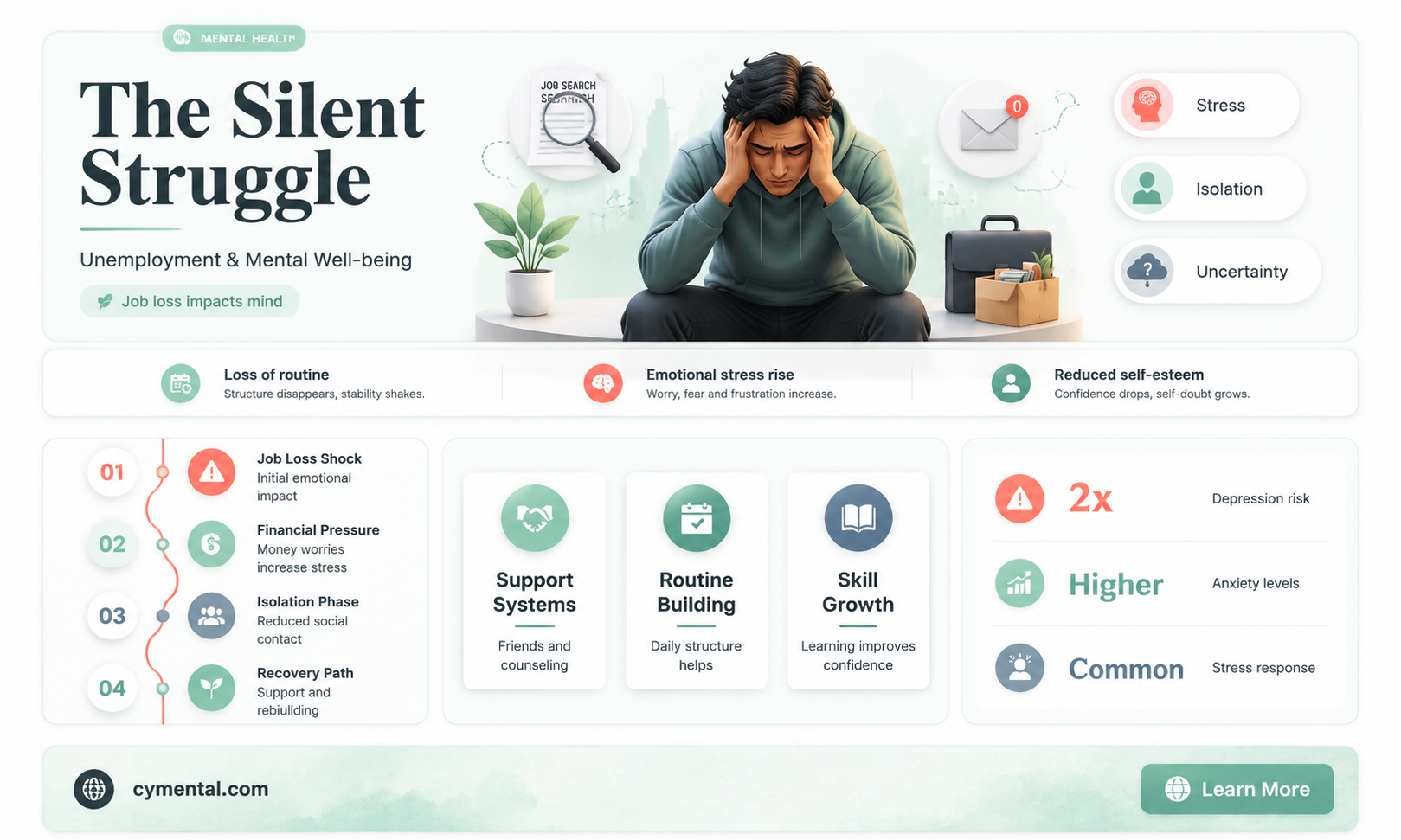
Unemployment can have a profound and detrimental impact on an individual's mental health. The loss of a job often leads to financial insecurity, which can cause significant stress and anxiety. Moreover, unemployment can result in a loss of identity and purpose, as work often plays a central role in defining who we are and how we spend our time. This can lead to feelings of worthlessness and depression. Additionally, the social isolation that can accompany unemployment can exacerbate these mental health issues, as individuals may struggle to maintain social connections and support networks. It is crucial to recognize these potential impacts and to provide support and resources to those who are struggling with unemployment-related mental health issues.
What You'll Learn
- Financial Stress: Unemployment leads to financial instability, causing worry about bills, debt, and basic necessities
- Loss of Identity: Job loss can result in a loss of self-esteem and identity, especially if work is a significant part of one's life
- Social Isolation: Unemployed individuals may withdraw from social interactions due to feelings of shame or lack of financial means
- Anxiety and Depression: The uncertainty and lack of control associated with unemployment can trigger anxiety and depressive symptoms
- Decreased Self-Care: Financial constraints and emotional distress may lead to neglecting physical health and self-care activities

Financial Stress: Unemployment leads to financial instability, causing worry about bills, debt, and basic necessities
Financial stress is a significant byproduct of unemployment, manifesting as persistent worry about bills, debt, and the ability to afford basic necessities. This strain on one's financial well-being can lead to a cascade of negative mental health effects. For instance, the inability to meet financial obligations can result in feelings of inadequacy and failure, which can exacerbate anxiety and depression. The constant pressure of financial insecurity can also lead to sleepless nights, further impairing mental health.
Moreover, financial stress can impact an individual's self-esteem and sense of identity, particularly if they have always prided themselves on their financial independence. The loss of a job and the subsequent reliance on savings or government assistance can be a humbling experience, leading to feelings of shame and embarrassment. These emotions can be particularly challenging to navigate, as they often go unspoken due to societal stigmas surrounding financial struggles.
In addition to these psychological impacts, financial stress can also lead to physical health problems. The chronic worry about money can result in increased blood pressure, headaches, and digestive issues. Furthermore, individuals experiencing financial stress may be more likely to engage in unhealthy coping mechanisms, such as smoking or excessive drinking, which can further deteriorate their physical health.
It is also important to consider the ripple effects of financial stress on relationships and social networks. Financial instability can lead to social isolation, as individuals may withdraw from friends and family due to feelings of shame or the inability to participate in social activities that involve spending money. This isolation can compound the negative mental health effects of unemployment, leading to a deeper sense of loneliness and disconnection.
In conclusion, financial stress is a pervasive and debilitating consequence of unemployment that can have far-reaching impacts on an individual's mental and physical health, as well as their relationships and social networks. Addressing this stress requires a multifaceted approach that includes financial counseling, mental health support, and social services to help individuals navigate the challenges of unemployment and regain a sense of stability and well-being.
Navigating Involuntary Commitment: A Guide to Mental Health Support in California
You may want to see also
Loss of Identity: Job loss can result in a loss of self-esteem and identity, especially if work is a significant part of one's life
Job loss can have a profound impact on an individual's sense of self, particularly when work is a central aspect of their identity. This loss of identity can manifest in various ways, including a diminished sense of purpose, decreased self-esteem, and feelings of inadequacy. When one's job is closely tied to their self-image, losing that job can lead to a crisis of identity, making it challenging to separate their worth from their professional role.
The loss of identity following job loss can be exacerbated by societal pressures that equate work with personal value. In many cultures, work is not only a means of financial support but also a source of social status and personal fulfillment. When an individual loses their job, they may feel as though they have lost a part of themselves, leading to a struggle to redefine their identity outside of their professional role.
Furthermore, the loss of identity can be compounded by the loss of routine and structure that comes with employment. Daily routines and the sense of accomplishment derived from completing tasks can provide a sense of stability and purpose. Without these elements, individuals may feel adrift and uncertain about their place in the world, leading to increased anxiety and depression.
To mitigate the negative impacts of job loss on mental health, it is essential to address the loss of identity head-on. This can involve exploring new hobbies and interests, volunteering, or pursuing further education to discover new aspects of oneself. Additionally, seeking support from friends, family, or mental health professionals can help individuals navigate the complex emotions associated with job loss and rebuild a sense of self-worth and identity.
Compassionate Words: Supporting Someone Through a Mental Breakdown
You may want to see also
Social Isolation: Unemployed individuals may withdraw from social interactions due to feelings of shame or lack of financial means
Unemployment can lead to a profound sense of social isolation, as individuals may withdraw from social interactions due to feelings of shame or a lack of financial means. This withdrawal can exacerbate the negative impact on mental health, creating a vicious cycle of loneliness and deteriorating well-being.
Social isolation can manifest in various ways. Unemployed individuals may avoid social gatherings, stop participating in community activities, or even neglect personal relationships. This can be driven by a sense of shame or embarrassment about their unemployment status, leading them to feel unworthy of social engagement. Additionally, financial constraints can limit their ability to participate in social activities that require spending money, such as dining out, attending events, or joining clubs.
The consequences of social isolation can be severe. It can lead to increased feelings of loneliness, depression, and anxiety. Without the support and interaction of friends and family, unemployed individuals may struggle to cope with the emotional challenges of job loss. This can further hinder their ability to seek employment, as mental health issues can impact motivation, self-esteem, and overall job readiness.
Breaking the cycle of social isolation is crucial for supporting the mental health of unemployed individuals. This can involve encouraging social engagement through community programs, support groups, or online platforms. Providing financial assistance or resources for low-cost social activities can also help alleviate the economic barriers to social interaction. Furthermore, addressing the stigma associated with unemployment can help reduce feelings of shame and promote a more supportive social environment.
In conclusion, social isolation is a significant concern for unemployed individuals, as it can exacerbate mental health issues and hinder their ability to re-enter the workforce. By understanding the causes and consequences of social isolation, we can develop more effective strategies to support the well-being of those affected by unemployment.
Unveiling the Truth: Can Mental Illness Be Fabricated?
You may want to see also
Anxiety and Depression: The uncertainty and lack of control associated with unemployment can trigger anxiety and depressive symptoms
Unemployment can significantly impact an individual's mental health, particularly by triggering symptoms of anxiety and depression. The uncertainty and lack of control associated with job loss can lead to a sense of helplessness and hopelessness, which are common precursors to depressive episodes. Research indicates that the longer an individual remains unemployed, the greater the risk of developing depression, with some studies suggesting that unemployment can increase the likelihood of depression by up to threefold.
Anxiety is another prevalent mental health issue that can arise from unemployment. The constant worry about financial stability, the fear of rejection during job interviews, and the pressure to find new employment can all contribute to heightened levels of anxiety. This can manifest in physical symptoms such as headaches, stomachaches, and sleep disturbances, as well as emotional symptoms like irritability, restlessness, and difficulty concentrating.
The psychological impact of unemployment can be further exacerbated by societal pressures and personal expectations. In many cultures, employment is closely tied to one's sense of identity and self-worth, so job loss can lead to feelings of shame, guilt, and inadequacy. These negative emotions can create a vicious cycle, making it increasingly difficult for individuals to maintain a positive outlook and seek constructive solutions to their employment challenges.
Moreover, unemployment can disrupt an individual's daily routine and social interactions, which are essential for maintaining mental well-being. The loss of a structured work environment and the reduction in social connections with colleagues can contribute to feelings of isolation and aimlessness. This can be particularly challenging for individuals who rely heavily on their job for social interaction and a sense of purpose.
To mitigate the mental health effects of unemployment, it is crucial for individuals to seek support and adopt coping strategies. This may include reaching out to friends and family for emotional support, engaging in regular physical activity to reduce stress, and pursuing hobbies or interests that provide a sense of fulfillment. Additionally, professional counseling or therapy can be beneficial in addressing underlying issues and developing effective coping mechanisms.
In conclusion, unemployment can have a profound impact on an individual's mental health, leading to symptoms of anxiety and depression. By understanding the psychological effects of job loss and seeking appropriate support, individuals can better navigate the challenges of unemployment and maintain their mental well-being.
Hope and Support: Standing By Someone with a Mental Illness
You may want to see also
Decreased Self-Care: Financial constraints and emotional distress may lead to neglecting physical health and self-care activities
Financial constraints and emotional distress may lead to neglecting physical health and self-care activities. This can manifest in various ways, such as skipping meals, reducing exercise, or forgoing necessary medical care. The impact of such neglect can be severe, leading to a decline in overall health and exacerbating existing mental health issues.
One of the primary reasons for decreased self-care during unemployment is the financial strain it places on individuals. Without a steady income, many people find it difficult to afford healthy food, gym memberships, or medical appointments. This financial stress can also lead to increased levels of anxiety and depression, further discouraging self-care activities.
Emotional distress plays a significant role as well. The loss of a job can lead to feelings of worthlessness and hopelessness, which can make it challenging to motivate oneself to engage in self-care. Additionally, the lack of a structured routine that comes with employment can disrupt sleep patterns, eating habits, and exercise regimens, further contributing to a decline in physical health.
To mitigate these effects, it is essential for individuals experiencing unemployment to prioritize self-care despite the challenges. This can include finding low-cost or free resources for exercise, such as local parks or community centers, and seeking out affordable healthcare options. Additionally, maintaining a regular routine and setting aside time for self-care activities can help to establish a sense of structure and purpose.
In conclusion, decreased self-care is a significant concern for those experiencing unemployment, as financial constraints and emotional distress can lead to neglect of physical health. By prioritizing self-care and seeking out available resources, individuals can work to maintain their overall well-being during this challenging time.
Navigating Mental Health in the Workplace: Employer's Dilemma
You may want to see also
Frequently asked questions
Unemployment can lead to feelings of isolation and loneliness as individuals may lose the social connections they had through their workplace. The lack of daily interactions with colleagues and the absence of a structured work environment can make people feel disconnected from others, leading to increased feelings of loneliness and isolation.
Common mental health issues that can arise from unemployment include depression, anxiety, and stress. The loss of a job can lead to a loss of identity and purpose, causing individuals to feel worthless or inadequate. The financial strain and uncertainty about the future can also contribute to increased stress and anxiety levels.
Unemployment can negatively impact self-esteem and confidence as individuals may feel a sense of failure or inadequacy due to the loss of their job. The rejection from potential employers and the difficulty of finding new employment can further erode self-confidence, making it challenging for individuals to maintain a positive self-image.
Strategies that can help mitigate the negative mental health impacts of unemployment include staying connected with friends and family, engaging in regular physical activity, maintaining a structured daily routine, and seeking professional help if needed. It's also important for individuals to focus on their strengths and skills, and to view unemployment as a temporary setback rather than a permanent failure.