Harper Lewis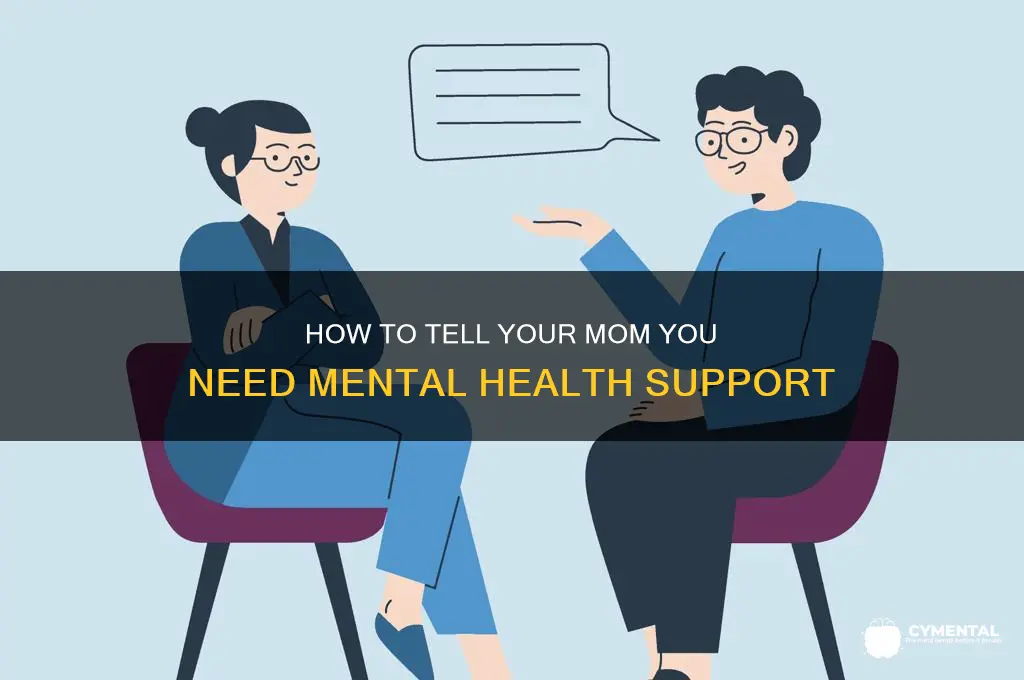
Starting a conversation with your mom about needing mental health support can feel overwhelming, but it’s a courageous and necessary step toward healing. Begin by choosing a calm, private moment when both of you are relaxed and free from distractions. Use I statements to express your feelings, such as, I’ve been feeling overwhelmed lately, and I think I could benefit from some professional help. Be honest about your struggles while emphasizing that seeking help is a sign of strength, not weakness. If you’re worried about her reaction, remind her that you’re sharing this because you trust her and value her support. It’s okay to bring resources or information about mental health to the conversation to help her understand. Remember, this is about your well-being, and taking this step is a powerful act of self-care.
| Characteristics | Values |
|---|---|
| Approach | Be honest, direct, and calm. Choose a quiet, private moment to talk. |
| Language | Use "I" statements to express your feelings and needs (e.g., "I’ve been feeling overwhelmed"). |
| Specificity | Be clear about what you’re struggling with (e.g., anxiety, depression, stress). |
| Timing | Choose a time when your mom is relaxed and not distracted. |
| Reassurance | Let her know it’s not her fault and that you’re reaching out because you trust her. |
| Resources | Mention specific steps you’d like to take (e.g., therapy, counseling, or a doctor’s visit). |
| Emotional Preparedness | Be ready for her reaction, which may range from supportive to shocked or defensive. |
| Follow-Up | Plan to discuss next steps together and keep the conversation open. |
| Self-Care | Emphasize that seeking help is a sign of strength and self-care. |
| Support Systems | Mention if you’ve already spoken to someone else (e.g., a friend, teacher, or counselor). |
| Cultural Sensitivity | Be aware of cultural or familial attitudes toward mental health and adjust your approach accordingly. |
| Examples of Phrases | "Mom, I’ve been feeling really down lately, and I think I need some help." |
| Expectations | Be realistic about her response and give her time to process the information. |
| Professional Guidance | If unsure how to start, consider consulting a therapist or counselor for advice first. |
| Written Communication | If verbal communication is too difficult, consider writing a letter or note. |
| Emergency Situations | If you’re in crisis, prioritize safety and seek immediate help (e.g., a hotline or trusted adult). |
Explore related products


What You'll Learn
- Choosing the Right Time: Pick a calm, private moment when both you and your mom are relaxed
- Start with I Feel: Use I statements to express your emotions without sounding accusatory
- Be Specific: Share clear examples of how you’ve been struggling mentally
- Ask for Support: Let her know you need her help finding resources or therapy
- Prepare for Reactions: Stay calm if she reacts unexpectedly; give her time to process

Choosing the Right Time: Pick a calm, private moment when both you and your mom are relaxed
Timing is everything when initiating a conversation about your mental health with your mom. Imagine trying to discuss something deeply personal during a chaotic family dinner or while she’s rushing to meet a deadline. The stress of the moment would only amplify the tension, making it harder for her to fully listen and respond with empathy. Instead, aim for a moment when both of you are calm and undisturbed. For example, a quiet evening after chores are done, or a weekend morning when the pace is slower. This creates a safe emotional space where she can focus on you without distractions.
Choosing the right time also means considering your own emotional state. If you’re in the middle of a crisis or feeling overwhelmed, you might struggle to articulate your thoughts clearly. Wait until you’re in a relatively stable frame of mind, even if it’s just for a few hours. This doesn’t mean delaying indefinitely—it’s about finding a balance between urgency and clarity. Practically, you could plan this conversation a day or two in advance, giving yourself time to gather your thoughts and her time to mentally prepare once you’ve broached the topic.
Privacy is another critical factor. Your mom might feel more open and less defensive if she doesn’t have to worry about others overhearing or judging. Avoid public spaces or rooms where siblings or roommates might interrupt. A quiet corner of the house, a short walk together, or even a private phone call (if you’re not in the same location) can work well. The goal is to create an environment where both of you feel comfortable being vulnerable.
Finally, observe her mood and energy levels before bringing it up. If she’s visibly stressed, exhausted, or preoccupied, it’s better to wait. You could gently ask, “Is now a good time to talk about something important?” to gauge her readiness. This shows respect for her emotional capacity and increases the likelihood of a productive conversation. Remember, the right time isn’t just about the absence of chaos—it’s about creating a moment where both of you can connect authentically.
Positive Relationships: A Powerful Tool for Mental Health and Well-Being
You may want to see also
Explore related products


Start with I Feel: Use I statements to express your emotions without sounding accusatory
Opening with "I feel" sets a vulnerable yet non-confrontational tone, immediately signaling that the conversation is about your internal experience, not an indictment of your mom’s actions. This approach leverages the power of self-disclosure, a technique widely used in therapy to foster empathy and understanding. By framing your emotions as personal truths rather than universal facts, you invite your mom into your world without triggering defensiveness. For instance, saying, “I feel overwhelmed and anxious lately,” is far more inviting than, “You never notice how stressed I am,” which could shift the focus to blame rather than support.
The effectiveness of "I feel" statements lies in their ability to separate emotion from interpretation. Instead of attributing feelings to external causes, you own them, making it easier for your mom to listen without feeling attacked. Research in communication psychology shows that accusatory language often leads to emotional shutdown, while self-referential statements encourage active listening. For example, “I feel like I’m losing control of my thoughts” is clearer and more actionable than, “Something’s wrong with me, and you don’t get it.” The former invites questions like, “How can I help?” while the latter might provoke, “What do you mean I don’t get it?”
Crafting these statements requires specificity and honesty. Avoid vague phrases like “I feel bad” and instead pinpoint emotions: “I feel lonely,” “I feel trapped,” or “I feel scared.” Pairing these with observable behaviors strengthens your message. For instance, “I feel exhausted, and I’ve been skipping classes because of it” provides context without assigning fault. This clarity not only helps your mom understand your struggles but also demonstrates self-awareness, a trait that can earn her respect and cooperation.
A practical tip is to rehearse these statements beforehand, either in writing or aloud. Start with a list of emotions you’ve been experiencing and pair them with specific examples. For instance, “I feel isolated because I haven’t wanted to hang out with friends lately” or “I feel hopeless when I think about the future.” Practicing ensures you stay focused during the conversation, reducing the likelihood of slipping into accusatory language under stress.
Finally, remember that "I feel" statements are not just about expressing emotions—they’re about creating a safe space for dialogue. By centering the conversation on your experience, you encourage your mom to respond with compassion rather than correction. This method isn’t about shielding her from the truth but about presenting it in a way that fosters connection and understanding. After all, the goal isn’t to win an argument but to seek the support you need.
CBD and Mental Clarity: Enhancing Focus and Cognitive Function Naturally
You may want to see also
Explore related products





Be Specific: Share clear examples of how you’ve been struggling mentally
When preparing to tell your mom you need mental help, being specific about your struggles is crucial. Instead of saying, “I’ve been feeling down,” describe tangible moments, like, “Last week, I couldn’t get out of bed for three days, even though I had work and school commitments.” This clarity helps her understand the severity and validates your need for support. Vague statements can lead to misunderstandings, but concrete examples create a shared reality. For instance, if anxiety is overwhelming, mention, “I’ve had panic attacks twice a week for the past month, and they’re interfering with my ability to focus.” Specificity bridges the gap between your internal experience and her external perspective.
Consider framing your examples in a way that highlights patterns rather than isolated incidents. For example, instead of saying, “I’ve been tired lately,” explain, “Over the past six weeks, I’ve slept 12–14 hours a day but still feel exhausted, and I’ve skipped two family dinners because I couldn’t muster the energy.” This approach demonstrates how your struggles are consistent and impactful. If you’re dealing with intrusive thoughts, share, “Every time I leave the house, I have to check the stove three times, even though I know it’s off, and it’s adding 20 minutes to my morning routine.” Patterns show that this isn’t a fleeting issue but something persistent that requires attention.
Be mindful of your mom’s potential reactions and tailor your examples to resonate with her. If she’s practical, focus on how your mental health affects daily functioning, like, “I’ve missed three deadlines at work this month because I can’t concentrate for more than 10 minutes at a time.” If she’s emotionally driven, share how it impacts your relationships, such as, “I’ve stopped replying to my friends’ texts because I feel too drained to keep up with conversations.” Age can also play a role; a younger mom might relate to examples tied to school or social life, while an older mom might connect with themes of responsibility or long-term goals. Customizing your examples increases the likelihood she’ll empathize and take action.
Finally, balance honesty with practicality to avoid overwhelming her. For instance, instead of listing every symptom, prioritize the most disruptive ones. Say, “I’ve been having suicidal thoughts twice a week, and they scare me,” rather than inundating her with every detail of your emotional turmoil. Provide actionable information, like, “I’ve tried journaling and meditation, but they haven’t helped, so I think I need professional guidance.” This approach ensures she understands the urgency without feeling helpless. Remember, the goal is to invite her into your experience, not to burden her with it. Specificity, paired with clarity and empathy, paves the way for a productive conversation.
Positive Relationships and Mental Health: Insights from Scholarly Research
You may want to see also
Explore related products


$14.91 $20

$12.14 $19.99


Ask for Support: Let her know you need her help finding resources or therapy
Reaching out to your mom for help with mental health isn’t just about admitting you’re struggling—it’s about inviting her to be part of your solution. Frame the conversation as a collaborative effort, not a burden. For example, instead of saying, “I’m falling apart,” try, “I’ve been feeling overwhelmed lately, and I think talking to a professional could help. Can we look into therapists together?” This approach shifts the focus from your distress to actionable steps, making it easier for her to engage without feeling guilty or defensive.
Start by identifying what kind of support you need before the conversation. Are you looking for help finding a therapist, researching affordable options, or simply emotional backing while you navigate resources? For instance, if you’re under 18, your mom’s involvement might be necessary for insurance or consent forms. If you’re an adult, you might ask her to help vet therapists or accompany you to the first appointment. Specificity reduces ambiguity and shows you’ve thought this through, making it harder for her to dismiss your request.
Anticipate potential barriers and address them proactively. If your mom has never prioritized mental health, she might not understand its urgency. Use relatable analogies: “Just like we’d see a doctor for a broken bone, therapy is a way to heal emotional pain.” If cost is a concern, come prepared with options like sliding-scale clinics, telehealth platforms, or university training centers, which often offer sessions for $20–$50. Showing you’ve considered her perspective and done preliminary research demonstrates maturity and respect, increasing the likelihood of her cooperation.
Finally, be prepared for her reaction, which may not align with your hopes. Some parents might feel blamed or overwhelmed, while others may leap into action. If she hesitates, avoid escalating the tension. Instead, suggest a small next step: “Can we start by calling our insurance provider to see what’s covered?” or “Could you help me make a list of therapists in our area?” Breaking the task into manageable chunks makes it feel less daunting for both of you, turning a potentially emotional conversation into a practical, shared endeavor.
Supporting Your Adult Son: A Guide to Accessing Mental Health Care
You may want to see also
Explore related products



Prepare for Reactions: Stay calm if she reacts unexpectedly; give her time to process
Your mom’s reaction to your disclosure about needing mental health support may not align with your expectations. She might respond with immediate understanding, but she could also express shock, denial, or even anger. These reactions aren’t a reflection of her love for you but rather her own emotional processing. For instance, if she’s from a generation that stigmatizes mental health, her initial response might be rooted in fear or misunderstanding. Recognizing this can help you detach from the emotional weight of her reaction and focus on staying grounded.
To stay calm, practice grounding techniques beforehand, such as deep breathing or visualizing a safe space. If she reacts unexpectedly—say, by dismissing your concerns or becoming defensive—avoid escalating the conversation. Instead, use "I" statements to reassert your needs without sounding accusatory. For example, say, "I’m sharing this because I need support," rather than, "You’re not listening to me." This approach keeps the focus on your experience while giving her space to process without feeling attacked.
Time is a critical factor in how your mom processes this information. She may need hours, days, or even weeks to fully absorb what you’ve shared. Resist the urge to push for an immediate resolution or emotional validation. Instead, set boundaries if the conversation becomes overwhelming, such as saying, "I know this is a lot to take in, and I’m here when you’re ready to talk." This gives her room to reflect while reinforcing your need for understanding and support.
Finally, prepare for the possibility that her reaction may evolve over time. Initial resistance or confusion doesn’t mean she won’t eventually become your strongest advocate. Educate her gently by sharing resources like articles or videos about mental health, but avoid overwhelming her with too much information at once. Small, consistent steps can bridge the gap between her initial reaction and her eventual support, turning a potentially divisive conversation into a foundation for deeper connection.
D&D's Therapeutic Power: Enhancing Mental Health Through Role-Playing Games
You may want to see also
Frequently asked questions
Begin by choosing a calm, private moment when both of you are relaxed. Use "I" statements to express your feelings, such as, "Mom, I’ve been feeling overwhelmed lately and think I could benefit from some professional help." Be honest and direct, but also reassure her that you’re taking steps to take care of yourself.
It’s possible she might react emotionally or not fully grasp the situation at first. Gently explain that seeking help is a sign of strength, not weakness, and that it’s about taking care of your well-being. Provide resources or examples to help her understand, and give her time to process the conversation.
Anticipate different responses and remind yourself that her reaction may come from a place of concern or lack of awareness. If she’s unsupportive, stay calm and reiterate your needs. Consider involving a trusted third party, like a school counselor or family friend, to help mediate the conversation if needed.