Ava Ramirez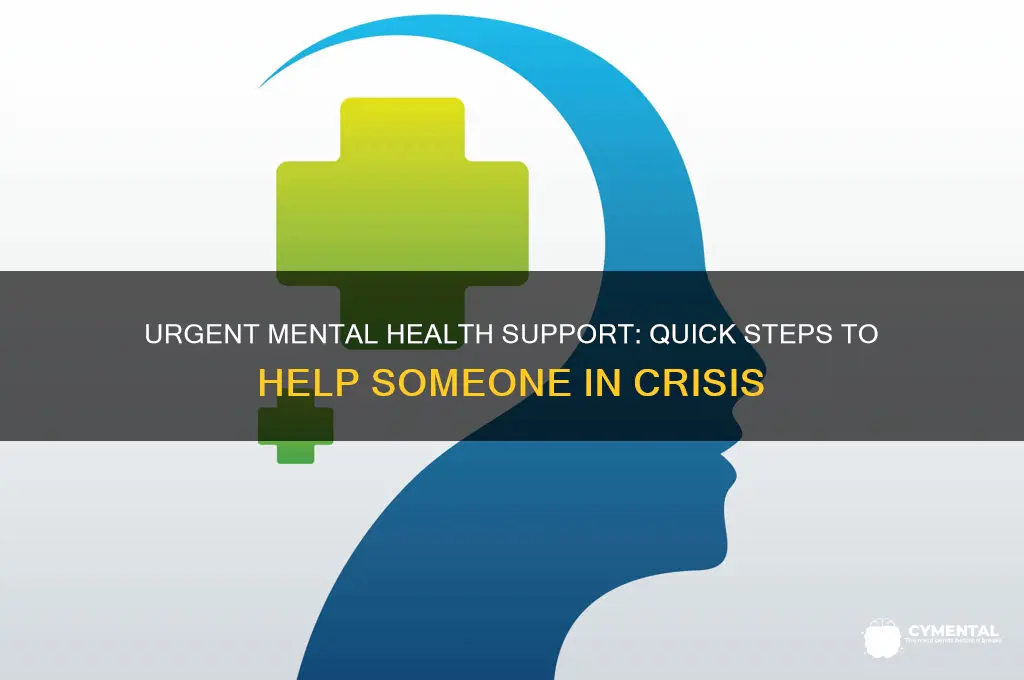
Seeking immediate mental health support for someone in crisis can be urgent and overwhelming, but knowing the right steps can make a significant difference. If the person is in immediate danger or at risk of self-harm, calling emergency services (such as 911 in the U.S.) is crucial. For less urgent but still pressing situations, contacting a local crisis hotline, mental health professional, or using telehealth services can provide rapid assistance. Encouraging open communication, offering emotional support, and helping them connect with resources like therapists, counselors, or support groups can also be effective. Remember, acting quickly and compassionately can help ensure they receive the care they need.
| Characteristics | Values |
|---|---|
| Immediate Crisis Support | Call emergency services (911 in the U.S.), National Suicide Prevention Lifeline (988 in the U.S.), or local crisis hotlines. |
| Telehealth Services | Online therapy platforms (e.g., BetterHelp, Talkspace) offer quick access to licensed therapists. |
| Local Mental Health Clinics | Walk-in clinics or community mental health centers provide urgent assessments and referrals. |
| Primary Care Physician | A doctor can provide initial support, referrals, or prescribe medication if needed. |
| Mobile Crisis Teams | Specialized teams that respond to mental health emergencies in the community. |
| Support Groups | Local or online groups (e.g., NAMI, AA) offer peer support and resources. |
| Psychiatric Emergency Services | Hospital emergency departments with psychiatric evaluation capabilities. |
| Employee Assistance Programs (EAPs) | Workplace programs offering confidential mental health support and referrals. |
| School Counselors/Psychologists | Immediate support for students in educational settings. |
| Online Resources | Websites like Crisis Text Line (text HOME to 741741) or 7 Cups provide instant chat-based support. |
| Family/Friends Intervention | Encourage the person to seek help and accompany them to appointments if needed. |
| Legal/Involuntary Commitment | In extreme cases, legal intervention may be necessary for immediate treatment (varies by region). |
| Follow-Up Care | Ensure ongoing support through therapy, medication, or case management after initial crisis intervention. |
Explore related products


What You'll Learn
- Recognize Crisis Signs: Look for sudden changes, withdrawal, aggression, or suicidal statements
- Contact Emergency Services: Call 911 or local crisis hotlines for immediate professional intervention
- Use Crisis Text Lines: Text support services like Crisis Text Line for quick, anonymous help
- Encourage Professional Help: Suggest therapists, psychiatrists, or mental health clinics for urgent care
- Provide Safe Environment: Stay calm, listen actively, and remove potential harm triggers

Recognize Crisis Signs: Look for sudden changes, withdrawal, aggression, or suicidal statements
Sudden shifts in behavior often signal a mental health crisis. A once outgoing friend becomes reclusive, skipping social events and ignoring messages. A colleague, typically calm, snaps over minor issues, their temper flaring unexpectedly. These aren’t just "bad days" — they’re red flags. Recognizing these changes early can be the difference between intervention and escalation.
Withdrawal is a silent alarm. When someone stops engaging in activities they once enjoyed, isolates themselves, or seems emotionally distant, it’s not just shyness or fatigue. For teens, this might look like dropping out of sports teams or avoiding friends. In adults, it could mean skipping work or ignoring family gatherings. Prolonged isolation often masks deeper struggles like depression or anxiety.
Aggression, whether verbal or physical, is another critical sign. While occasional frustration is normal, frequent outbursts, threats, or destructive behavior warrant attention. For instance, a teenager lashing out at parents over trivial matters or an adult suddenly quitting jobs due to conflicts with coworkers could indicate underlying distress. Addressing this requires caution — approach calmly, avoid confrontation, and suggest professional help.
Suicidal statements are non-negotiable emergencies. Phrases like "I can’t do this anymore," "Everyone would be better off without me," or "I wish I wasn’t here" should never be dismissed as drama. Even indirect references to death or self-harm demand immediate action. Call a crisis hotline (e.g., 988 in the U.S.), stay with the person, and remove any harmful objects from their vicinity.
Practical steps include documenting observed behaviors (dates, times, specifics) to share with mental health professionals. Encourage open conversations without judgment, using phrases like, "I’ve noticed you’ve been pulling away lately — how can I support you?" If resistance to help persists, consult a crisis intervention team or use resources like the Crisis Text Line (text HOME to 741741). Early recognition and action can prevent tragedy and guide someone toward recovery.
Coding Unlocks Potential: Empowering Kids with Mental Disabilities Through Programming
You may want to see also
Explore related products


Contact Emergency Services: Call 911 or local crisis hotlines for immediate professional intervention
In moments of acute mental health crisis, time is of the essence. If someone is at immediate risk of harming themselves or others, or is experiencing severe symptoms like suicidal thoughts, psychosis, or extreme agitation, calling 911 or a local crisis hotline is the fastest way to ensure professional intervention. These services are equipped to dispatch trained responders—whether law enforcement, paramedics, or mental health professionals—who can de-escalate the situation and provide urgent care. Unlike waiting for an appointment or relying on untrained individuals, emergency services offer a structured, immediate response tailored to the severity of the crisis.
Consider the mechanics of these calls: When dialing 911, clearly state the nature of the emergency, emphasizing any risk of harm or life-threatening symptoms. For example, say, “My friend is threatening to take their own life and has access to a weapon.” This specificity helps dispatchers prioritize the call and send the appropriate resources. Alternatively, local crisis hotlines (often found through a quick online search or by texting “HELP” to 741741 in the U.S.) connect you with counselors trained in mental health crises. These hotlines can provide immediate emotional support while guiding you on next steps, such as arranging for a mobile crisis unit to visit the individual’s location.
A common hesitation is the involvement of law enforcement, which can escalate tensions for certain individuals, particularly those from marginalized communities. However, many regions now offer co-responder models, pairing police with mental health professionals to ensure a more compassionate approach. If this is a concern, explicitly request mental health support when calling 911, and if possible, provide context about the person’s history or triggers to help responders tailor their approach. For instance, mentioning, “She responds better to calm voices and has a history of trauma,” can guide the intervention toward de-escalation rather than force.
The takeaway is clear: emergency services are not a last resort but a critical tool for immediate mental health crises. They bridge the gap between recognizing a problem and accessing professional care, often preventing tragedies. While not a long-term solution, they provide the urgent stabilization needed to transition the individual to ongoing treatment, such as hospitalization or outpatient therapy. Knowing when and how to use these resources can be the difference between life and death, making them an indispensable part of any crisis response plan.
Seeking Mental Health Support: Can 111 Be a Helpful Resource?
You may want to see also
Explore related products

$13.54 $16.95


Use Crisis Text Lines: Text support services like Crisis Text Line for quick, anonymous help
In moments of mental health crisis, immediate support can be a lifeline. Crisis Text Lines offer a discreet, accessible way to connect with trained counselors who can provide real-time assistance. By simply texting a designated number, individuals can receive help without the barriers of face-to-face interaction or the stigma often associated with seeking mental health support. This method is particularly effective for those who feel more comfortable expressing themselves in writing or who are in situations where speaking aloud is not an option.
Consider the mechanics of how these services operate. When someone texts a Crisis Text Line, they are paired with a crisis counselor who is trained to de-escalate situations, provide emotional support, and offer resources for further help. The conversation is entirely anonymous, ensuring privacy and reducing hesitation to reach out. For instance, Crisis Text Line in the U.S. uses the number 741741, while similar services in other countries have their own dedicated numbers. The process is straightforward: text the keyword (e.g., "HOME" for Crisis Text Line), and within minutes, a counselor responds. This immediacy is crucial for individuals experiencing acute distress, such as panic attacks, suicidal thoughts, or overwhelming anxiety.
One of the standout advantages of Crisis Text Lines is their adaptability to diverse needs. These services are not one-size-fits-all; counselors tailor their responses based on the texter’s situation, age, and specific concerns. For example, a teenager struggling with peer pressure might receive different guidance than an adult dealing with workplace stress. Additionally, these platforms often incorporate evidence-based techniques like cognitive-behavioral therapy (CBT) principles to help individuals reframe negative thoughts and develop coping strategies. Practical tips, such as deep breathing exercises or grounding techniques, are frequently shared to provide immediate relief.
However, it’s essential to recognize the limitations of text-based support. While Crisis Text Lines are invaluable for urgent situations, they are not a substitute for long-term therapy or medical treatment. Counselors will often encourage individuals to seek ongoing care, such as scheduling an appointment with a mental health professional or contacting a local mental health clinic. For instance, if someone texts about persistent depression, the counselor might suggest resources like the National Alliance on Mental Illness (NAMI) or provide contact information for affordable therapy options. The goal is to stabilize the individual in the moment while pointing them toward sustainable solutions.
To maximize the effectiveness of Crisis Text Lines, there are a few practical tips to keep in mind. First, be as clear and honest as possible in your messages; the more information the counselor has, the better they can assist. Second, if you’re helping someone else, encourage them to text from a private space where they feel safe and uninterrupted. Finally, remember that these services are available 24/7, making them a reliable option regardless of the time or day. By leveraging Crisis Text Lines, individuals can access quick, anonymous, and compassionate support during their most vulnerable moments, bridging the gap until more comprehensive care can be obtained.
Medicare Mental Health Support: Coverage and Benefits Explained
You may want to see also
Explore related products





Encourage Professional Help: Suggest therapists, psychiatrists, or mental health clinics for urgent care
In moments of crisis, the urgency to find professional mental health support can be overwhelming. The first step is to identify the type of help needed: therapists offer talk-based therapy, psychiatrists can prescribe medication, and mental health clinics provide comprehensive care often with shorter wait times. For immediate assistance, contact local emergency services or hotlines like the National Suicide Prevention Lifeline (988 in the U.S.), which can guide you to nearby resources. Many clinics also offer walk-in crisis services, ensuring rapid access to care when every minute counts.
When suggesting professional help, it’s crucial to frame it as a collaborative step toward healing, not a judgment. Start by expressing concern and validating their feelings, then gently propose options like, “I found a clinic nearby that offers same-day appointments—would you like me to help you call?” Provide concrete details, such as the clinic’s name, address, and hours, to reduce barriers. If they’re hesitant, emphasize that seeking help is a sign of strength and offer to accompany them to the first appointment. For younger individuals (under 18), involve a trusted adult or guardian to ensure proper consent and support.
Comparing the roles of therapists, psychiatrists, and clinics can clarify which option best fits the situation. Therapists specialize in counseling and behavioral strategies, ideal for managing stress, anxiety, or relationship issues. Psychiatrists, as medical doctors, diagnose and treat severe conditions like depression or bipolar disorder, often using medication. Mental health clinics, on the other hand, provide a one-stop solution with multidisciplinary teams, making them efficient for complex or urgent cases. For instance, a clinic might offer a same-day assessment, therapy session, and medication consultation, streamlining care when time is critical.
Persuading someone to seek help often requires addressing fears or misconceptions. Many worry about stigma, cost, or the perceived severity of their struggles. Counter these by highlighting affordable options like sliding-scale clinics or telehealth services, which can cost as little as $20–$50 per session. Share success stories or statistics, such as how 75% of individuals benefit from therapy, to normalize the process. For urgent cases, remind them that delaying care can worsen symptoms, while early intervention often leads to faster recovery. Practical tips, like checking insurance coverage or using employee assistance programs, can make the process feel less daunting.
Finally, remember that encouragement must be paired with patience and persistence. Some individuals may need multiple conversations before agreeing to seek help. Keep the dialogue open, offer resources like online therapist directories (e.g., Psychology Today), and regularly check in without being intrusive. If they remain resistant but are at risk of harm, consult a professional for guidance on intervention strategies. The goal is to empower them to take the first step, knowing they’re not alone in navigating the path to recovery.
Creatine's Cognitive Benefits: Enhancing Mental Clarity and Focus
You may want to see also
Explore related products


Provide Safe Environment: Stay calm, listen actively, and remove potential harm triggers
In moments of crisis, the environment you create can either escalate tension or foster trust. A safe space begins with your demeanor: stay calm, even if the situation feels chaotic. Your composure signals to the person that they are not a threat and that you are a stable presence. Avoid sudden movements or raised voices, as these can trigger fear or defensiveness. Instead, use a steady tone and deliberate actions to convey reassurance. This initial step is critical, as it sets the foundation for any further intervention.
Active listening is the next pillar of a safe environment. It’s not just about hearing words but understanding the emotions behind them. Maintain eye contact (if culturally appropriate) and use nonverbal cues like nodding to show engagement. Reflect back what you hear to confirm understanding—for example, “It sounds like you’re feeling overwhelmed right now.” Avoid interrupting or offering solutions prematurely; the goal is to make the person feel heard, not judged. This validation can reduce their distress and build rapport, making them more receptive to help.
Removing potential harm triggers is a practical yet often overlooked step. Scan the immediate surroundings for items that could be used for self-harm or aggression, such as sharp objects, medications, or weapons. If you’re in a public space, move to a quieter, less stimulating area if possible. For adolescents or adults, dimming lights or turning off loud noises can reduce sensory overload. For children, having a familiar object like a stuffed animal nearby can provide comfort. These adjustments may seem small, but they significantly reduce the risk of harm and create a sense of security.
A safe environment also extends to the language you use. Avoid accusatory or dismissive phrases like “You’re overreacting” or “Just calm down.” Instead, use empathetic statements such as “I’m here for you” or “We’ll figure this out together.” If the person is experiencing psychosis or paranoia, acknowledge their reality without reinforcing delusions—for instance, “I understand you’re scared, and I’m here to keep you safe.” This approach respects their experience while gently grounding them in the present.
Finally, remember that creating a safe environment is an ongoing process, not a one-time action. Continuously assess the person’s emotional state and adjust your approach as needed. If they become agitated, give them space but remain within sight. If they withdraw, offer quiet companionship without pressure to talk. By staying calm, listening actively, and removing triggers, you’re not just providing immediate relief—you’re building a bridge to professional help. This initial support can make the difference between someone accepting or rejecting further assistance.
Clean Spaces, Clear Minds: How Housekeeping Impacts Mental Well-Being
You may want to see also
Frequently asked questions
Call 911 or your local emergency number if the person is in immediate danger or at risk of self-harm. Explain the situation clearly, and emergency responders can provide urgent help.
Contact a local crisis hotline, such as the 988 Suicide & Crisis Lifeline in the U.S., or a mental health professional. They can guide you on next steps, including connecting the person to resources like counseling or crisis intervention teams.
Encourage them gently and express your concern without judgment. Offer to accompany them to an appointment or help them find a therapist. If they’re still resistant, consult a professional for advice on intervention strategies.
Yes, many organizations offer immediate support, such as crisis text lines (e.g., texting HOME to 741741 in the U.S.) or online therapy platforms. These can provide temporary assistance while arranging long-term care.