Noah Parker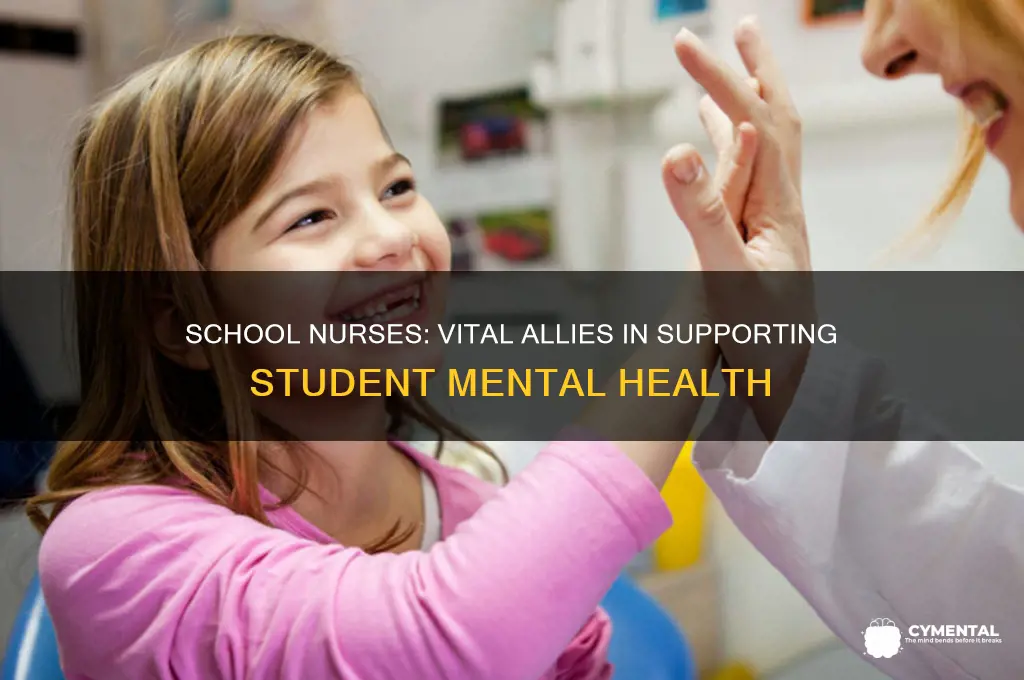
School nurses play a crucial role in supporting students' mental health by providing a safe and confidential environment where students can express their concerns and seek help. They are often the first point of contact for students experiencing mental health issues, offering immediate support, assessments, and referrals to appropriate resources. Beyond individual care, school nurses also contribute to mental health education, raising awareness among students, staff, and parents about the importance of mental well-being and strategies to manage stress, anxiety, and other challenges. Their presence helps reduce stigma, fosters a supportive school culture, and ensures that students have access to the tools and resources they need to thrive emotionally and academically.
Explore related products


What You'll Learn
- Early intervention strategies for students showing signs of mental health issues
- Crisis management and support during emotional or psychological emergencies
- Referral processes to connect students with specialized mental health services
- Promoting mental health awareness through educational programs and workshops
- Monitoring and addressing stress, anxiety, and depression in school environments

Early intervention strategies for students showing signs of mental health issues
School nurses are often the first line of defense in identifying and addressing mental health concerns among students. Their unique position allows them to observe students regularly, notice subtle changes in behavior, and provide a safe, non-judgmental space for students to express their feelings. Early intervention is crucial, as it can prevent minor issues from escalating into more severe mental health disorders. By recognizing the signs early, school nurses can implement strategies that foster resilience, provide support, and connect students with appropriate resources.
One effective early intervention strategy is the implementation of screening tools during routine health checks. For instance, nurses can use validated questionnaires like the Strengths and Difficulties Questionnaire (SDQ) for students aged 4–17 or the Generalized Anxiety Disorder-7 (GAD-7) for older adolescents. These tools help identify symptoms of anxiety, depression, or behavioral issues before they become debilitating. Screening should be followed by a private conversation to explore the student’s experiences further, ensuring sensitivity and confidentiality. For younger students, visual aids or play-based assessments can make the process less intimidating.
Another critical approach is psychoeducation, which involves educating students, parents, and teachers about mental health. School nurses can lead workshops or assemblies to normalize discussions around emotions, stress, and coping mechanisms. For example, teaching deep breathing exercises (inhale for 4 seconds, hold for 4 seconds, exhale for 6 seconds) or mindfulness techniques can empower students to manage mild symptoms independently. Providing parents with resources like local counseling services or apps like Headspace for teens can also extend support beyond the school environment.
Collaborative efforts with school counselors, teachers, and external mental health professionals are equally vital. School nurses can act as liaisons, ensuring seamless communication between these parties. For instance, if a student exhibits persistent withdrawal or sudden academic decline, the nurse can coordinate a referral to a counselor or recommend a 504 plan or Individualized Education Program (IEP) for accommodations. Early referrals to community-based programs, such as youth therapy groups or peer support networks, can also provide additional layers of support.
Finally, creating a supportive school environment is essential for early intervention. School nurses can advocate for policies that reduce stigma, such as incorporating mental health days into attendance policies or allowing flexible deadlines during stressful periods like exams. Establishing a calm room or quiet space where students can decompress during the school day can also help prevent emotional overwhelm. By fostering a culture of empathy and understanding, schools can encourage students to seek help without fear of judgment, ensuring that early signs of mental health issues are addressed promptly and effectively.
Supporting Mental Health: How Can We Effectively Help Those Struggling?
You may want to see also
Explore related products

$99.99 $119.99


Crisis management and support during emotional or psychological emergencies
School nurses are often the first responders to emotional or psychological crises in educational settings, making their role in crisis management critical. When a student experiences a mental health emergency—such as severe anxiety, suicidal ideation, or a panic attack—the nurse’s immediate actions can stabilize the situation and prevent escalation. For instance, during a panic attack, a nurse might guide the student to a quiet space, encourage slow breathing (inhale for 4 seconds, hold for 4, exhale for 6), and use grounding techniques like naming five things they can see or touch. This swift, evidence-based response not only calms the student but also reassures them that they are not alone.
Effective crisis management requires a structured approach, and school nurses often follow a protocol tailored to the age and needs of the student. For younger children (ages 6–12), crises may manifest as emotional outbursts or withdrawal, while adolescents (ages 13–18) might exhibit more complex behaviors like self-harm or verbal aggression. Nurses trained in de-escalation techniques can use age-appropriate language and interventions—for example, offering a fidget toy to a younger child or engaging a teenager in a brief, non-judgmental conversation about their feelings. Documentation is equally vital; nurses must record the incident, interventions used, and outcomes to ensure continuity of care and inform future strategies.
One of the most persuasive arguments for the value of school nurses in crisis situations is their ability to bridge the gap between immediate support and long-term care. After stabilizing a student, nurses collaborate with counselors, teachers, and parents to develop a follow-up plan. This might include referrals to mental health professionals, adjustments to the student’s schedule, or the creation of a safety plan for future crises. For example, a student at risk of self-harm might receive a safety plan outlining coping strategies, emergency contacts, and a list of trusted adults at school. This proactive approach not only addresses the immediate crisis but also empowers students to manage their mental health over time.
Comparing school nurses to other staff members highlights their unique qualifications in crisis management. While teachers and administrators play essential roles, nurses bring medical expertise and a trauma-informed perspective to the table. They are trained to recognize the physical symptoms of psychological distress—such as rapid heartbeat, hyperventilation, or dissociation—and respond accordingly. For instance, a nurse might administer a low-dose anti-anxiety medication (with prior parental consent) to a student experiencing severe panic, a step beyond the scope of most educators. This specialized knowledge ensures that students receive both emotional and physiological support during emergencies.
In practice, crisis management by school nurses is as much about prevention as it is about response. Nurses often conduct mental health screenings, educate students on stress management, and foster a culture of openness around emotional well-being. For example, a nurse might lead a workshop on mindfulness for middle schoolers or create a "calm corner" in the health office stocked with sensory tools like weighted blankets and noise-canceling headphones. These proactive measures reduce the likelihood of crises and equip students with tools to handle distress independently. By combining immediate intervention with long-term strategies, school nurses become indispensable allies in safeguarding students’ mental health.
Helping Others: A Powerful Path to Enhancing Your Mental Well-Being
You may want to see also
Explore related products


Referral processes to connect students with specialized mental health services
School nurses often serve as the first point of contact for students experiencing mental health challenges, making their role in identifying and addressing these issues critical. One of their most impactful contributions is initiating referral processes to connect students with specialized mental health services. These referrals are not one-size-fits-all; they require careful assessment, collaboration, and follow-up to ensure students receive the appropriate level of care. By acting as a bridge between the school environment and external resources, school nurses play a pivotal role in breaking down barriers to mental health support.
The referral process begins with a thorough assessment of the student’s needs. School nurses use their clinical expertise to evaluate symptoms, behaviors, and risk factors, often employing standardized screening tools such as the PHQ-9 for depression or GAD-7 for anxiety in adolescents aged 13 and older. For younger students, observational data and teacher or parent reports may guide the assessment. Once a need is identified, the nurse must determine the appropriate level of care—whether it’s counseling, psychiatric evaluation, or crisis intervention. For instance, a student exhibiting severe self-harm behaviors may require immediate referral to an emergency mental health service, while another with mild anxiety might benefit from a school-based therapist.
Collaboration is the backbone of effective referrals. School nurses work closely with counselors, teachers, and administrators to gather a comprehensive understanding of the student’s situation. Externally, they coordinate with community mental health providers, pediatricians, and insurance providers to streamline access to care. A practical tip for nurses is to maintain an updated list of local mental health resources, including contact information, services offered, and insurance acceptance criteria. This ensures a swift and efficient referral process, reducing delays that could exacerbate a student’s condition.
Despite the structured approach, challenges in the referral process persist. Stigma, lack of parental consent, and limited availability of specialized services can hinder access to care. School nurses must navigate these obstacles with sensitivity and persistence. For example, if a parent is hesitant to consent to a referral, the nurse might educate them on the benefits of early intervention, using relatable examples or data to illustrate the potential long-term impact of untreated mental health issues. Additionally, nurses can advocate for systemic changes, such as integrating mental health services into schools or expanding telehealth options for students in underserved areas.
In conclusion, referral processes led by school nurses are a vital mechanism for connecting students with specialized mental health services. By combining clinical assessment, collaborative efforts, and proactive problem-solving, nurses ensure that students receive timely and appropriate care. Their role extends beyond identification—they are advocates, educators, and coordinators who work tirelessly to address the mental health needs of their students. With the right tools, resources, and support, school nurses can make a profound difference in the lives of young people struggling with mental health challenges.
Growth Mindset: Empowering Mental Health Through Resilience and Adaptability
You may want to see also
Explore related products


Promoting mental health awareness through educational programs and workshops
School nurses are uniquely positioned to identify early signs of mental health issues in students, but their role extends beyond triage. By spearheading educational programs and workshops, they can shift the paradigm from reactive intervention to proactive prevention. These initiatives demystify mental health, equipping students with the vocabulary to express their struggles and the tools to manage them. For instance, a workshop on stress management might introduce middle schoolers to deep-breathing exercises, progressive muscle relaxation, or mindfulness techniques—skills they can practice in as little as 5 minutes daily to mitigate anxiety.
Designing effective programs requires a tailored approach. Elementary students benefit from story-based lessons that personify emotions, such as using books like *The Color Monster* to teach emotional identification. For high schoolers, interactive sessions on digital detox strategies or peer support networks resonate more. Nurses should collaborate with counselors and teachers to integrate these programs into health curricula, ensuring consistency. Caution must be taken to avoid stigmatizing language; phrases like “commit suicide” should be replaced with “die by suicide,” and success stories should emphasize recovery, not struggle.
One proven model is the Youth Mental Health First Aid (YMHFA) program, a 6- to 8-hour training that teaches adults how to recognize and respond to mental health crises in adolescents. School nurses can lead these sessions for staff, parents, and even older students, creating a community of informed allies. Pairing YMHFA with student-led workshops, such as “Mental Health Mythbusters,” fosters peer-to-peer learning and reduces stigma. For maximum impact, schedule these programs during pivotal times—back-to-school season, exam periods, or Mental Health Awareness Month—when stress levels peak.
Evaluation is critical to ensure these programs achieve their goals. Pre- and post-workshop surveys can measure changes in knowledge, attitudes, and behaviors. For example, a simple Likert scale question like, “How confident are you in supporting a friend with anxiety?” can track progress. Nurses should also monitor attendance rates and qualitative feedback, adjusting content to address gaps. A takeaway toolkit—including crisis hotline numbers, self-care checklists, and local therapy resources—reinforces learning and provides ongoing support.
Ultimately, educational programs and workshops led by school nurses transform mental health from a taboo topic into a shared priority. By combining evidence-based practices with creative engagement strategies, nurses can cultivate a school culture where students feel safe discussing their mental well-being. This proactive approach not only reduces the burden on crisis services but also empowers young people to thrive emotionally, academically, and socially.
Effective Strategies to Help Others: A Comprehensive Guide to Support
You may want to see also
Explore related products


Monitoring and addressing stress, anxiety, and depression in school environments
School nurses are often the first line of defense in identifying and addressing mental health issues among students. By monitoring stress, anxiety, and depression, they can intervene early, preventing minor concerns from escalating into major crises. For instance, a nurse might notice a student frequently visiting the health office with vague physical complaints like headaches or stomachaches, which are common somatic manifestations of anxiety. This observation triggers a deeper conversation, allowing the nurse to assess the student’s emotional well-being and connect them with appropriate resources. Such proactive monitoring is critical in school environments, where academic pressure, social dynamics, and developmental challenges converge to heighten mental health risks.
To effectively address these issues, school nurses employ a multi-step approach. First, they conduct screenings using validated tools like the Generalized Anxiety Disorder-7 (GAD-7) or the Patient Health Questionnaire-9 (PHQ-9) for students aged 12 and older. These screenings are particularly useful during annual check-ups or when a student exhibits concerning behaviors. Second, nurses collaborate with teachers, counselors, and parents to gather a holistic view of the student’s struggles. For example, a teacher might report a decline in academic performance, while a parent mentions increased irritability at home. This collaborative effort ensures a comprehensive understanding of the student’s needs. Finally, nurses provide immediate support, such as teaching relaxation techniques (e.g., deep breathing exercises or progressive muscle relaxation) and facilitating referrals to mental health professionals for specialized care.
One practical strategy school nurses use is creating safe spaces for students to express their feelings. This could be a designated "calm corner" in the health office equipped with stress-relief tools like fidget toys, journals, or guided meditation apps. For younger students (ages 6–12), nurses might incorporate storytelling or art activities to help them articulate emotions they cannot yet verbalize. For adolescents, group sessions or peer support programs can foster a sense of community and reduce feelings of isolation. These initiatives not only address immediate distress but also build resilience, equipping students with coping mechanisms they can use long-term.
However, challenges exist in this role. School nurses often face high student-to-nurse ratios, limiting the time they can dedicate to mental health monitoring. Additionally, stigma surrounding mental health can deter students from seeking help. To overcome these barriers, nurses must advocate for policy changes, such as increased staffing or mandatory mental health training for school personnel. They can also leverage technology, like anonymous mental health reporting apps, to encourage students to voice their concerns without fear of judgment. By combining clinical expertise with innovative solutions, school nurses can make a profound impact on student mental health, fostering healthier, more supportive learning environments.
Seeking Support: Discovering Accessible Resources for Guidance and Assistance
You may want to see also
Frequently asked questions
School nurses identify students by observing changes in behavior, academic performance, or physical health, as well as through direct student disclosures, teacher referrals, or routine health screenings.
School nurses provide immediate support, such as calming techniques or crisis intervention, and connect students with mental health resources, including counseling services or community programs.
Yes, school nurses teach stress management techniques, promote healthy habits like sleep and exercise, and collaborate with school staff to create a supportive environment for students.
School nurses communicate with families to provide education, resources, and strategies for supporting their child’s mental health, and help navigate referrals to external mental health professionals.
Yes, school nurses often lead or participate in mental health education programs, teaching students and staff about topics like emotional well-being, resilience, and recognizing signs of mental health issues.