Noah Parker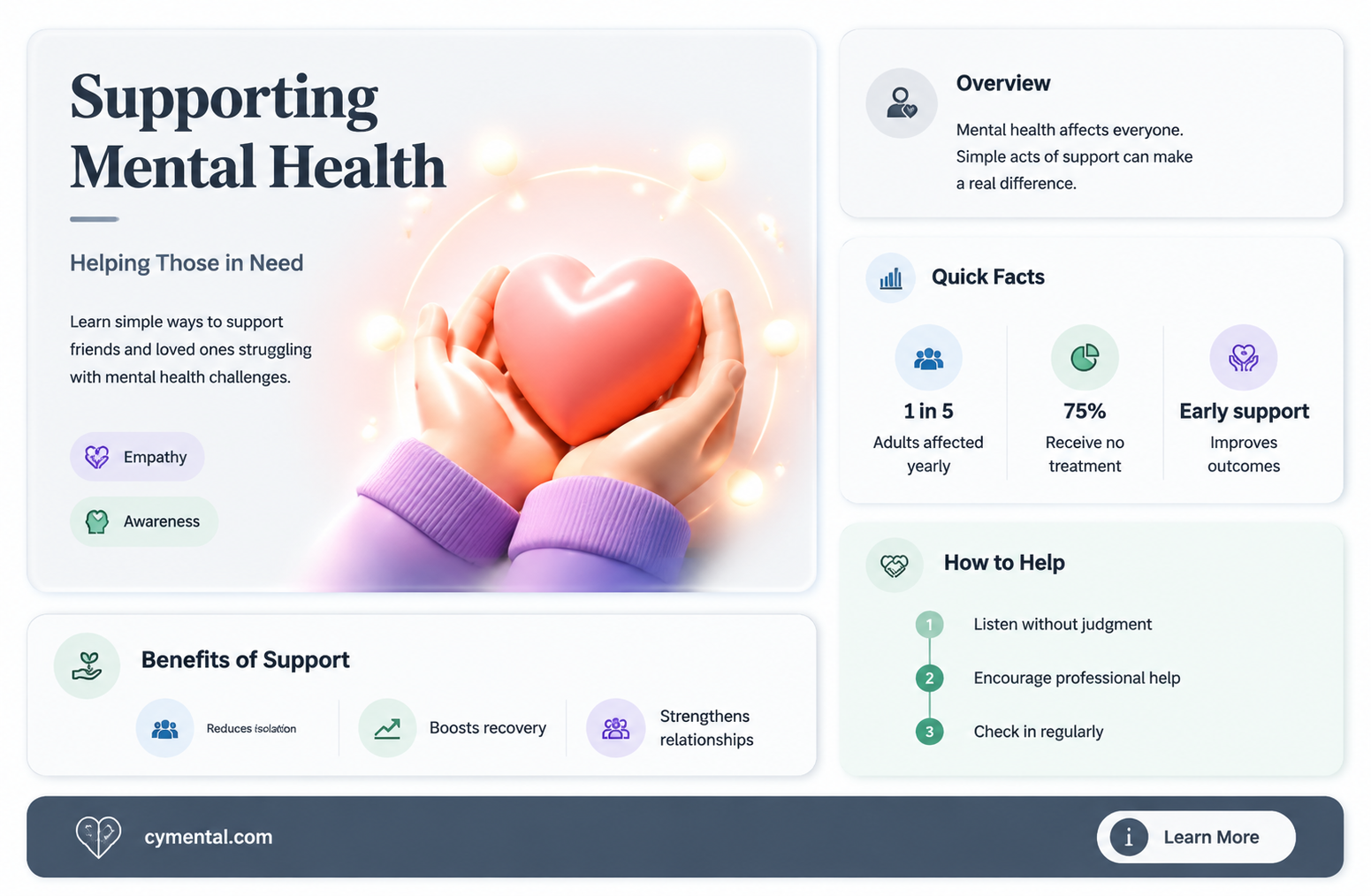
Helping someone with mental health issues is a deeply compassionate and impactful act, but it requires careful consideration and understanding. Mental health challenges are complex and often require professional expertise, yet support from friends, family, or community members can play a crucial role in a person’s recovery. While it’s important to approach the situation with empathy and patience, it’s equally vital to recognize one’s own limitations and encourage professional help when needed. Listening without judgment, offering reassurance, and helping connect the individual to resources can make a significant difference. Ultimately, the willingness to support someone struggling with mental health issues reflects humanity’s capacity for kindness and solidarity, but it must be balanced with awareness and respect for the individual’s needs and boundaries.
Explore related products


What You'll Learn
- Active Listening: Show empathy, focus on their words, avoid judgment, and validate their feelings
- Encouraging Professional Help: Gently suggest therapy, counseling, or support groups for expert guidance
- Creating Safe Spaces: Offer a non-threatening environment where they feel accepted and understood
- Educating Yourself: Learn about their condition to better support them without misconceptions
- Small Acts of Kindness: Simple gestures like checking in or offering help can make a difference

Active Listening: Show empathy, focus on their words, avoid judgment, and validate their feelings
Mental health struggles often leave individuals feeling isolated and misunderstood. Active listening can be a powerful tool to bridge this gap and offer genuine support. It’s not about fixing their problems but creating a safe space where they feel heard and valued. This involves a deliberate shift from passive hearing to engaged, empathetic presence.
Step 1: Mirror Their Language, Not Their Pain
When someone shares their mental health struggles, resist the urge to paraphrase or offer solutions. Instead, reflect their exact words back to them. For example, if they say, “I feel like I’m drowning in anxiety,” respond with, “It sounds like the anxiety feels overwhelming right now.” This shows you’re paying attention and validates their experience without minimizing it.
Step 2: Ask Open-Ended Questions, But Sparingly
While questions like “How does that make you feel?” can encourage dialogue, overuse can feel like an interrogation. Limit probing to moments where silence feels uncomfortable or the person seems hesitant to continue. Instead, focus on nonverbal cues—nodding, maintaining eye contact, and using affirming phrases like “I’m here with you” to keep the connection alive.
Caution: Avoid the “At Least” Trap
Phrases like “At least you don’t have it as bad as…” or “At least you’re not alone” invalidate their pain. Mental health struggles are deeply personal, and comparisons can shut down communication. Stick to statements that acknowledge their reality, such as “That sounds incredibly difficult” or “I can’t imagine how hard this must be for you.”
Takeaway: Empathy Is Not Sympathy
Empathy requires you to step into their emotional world, while sympathy keeps you outside it. For instance, instead of saying, “I’m sorry you’re going through this,” try, “Tell me more about what’s been on your mind.” This subtle shift fosters trust and encourages them to open up further.
Practical Tip: Use the 80/20 Rule
Let the person speak 80% of the time, and limit your responses to 20%. This ensures the focus remains on their feelings and experiences, not your interpretations or advice. Silence is a tool—use it to give them space to process their thoughts without interruption.
By mastering active listening, you become a safe harbor for someone navigating turbulent waters. It’s not about having all the answers but being fully present with compassion and respect. This simple yet profound act can make a world of difference in their journey toward healing.
Art's Healing Power: Boosting Mental Health Through Creativity
You may want to see also
Explore related products


Encouraging Professional Help: Gently suggest therapy, counseling, or support groups for expert guidance
Recognizing when someone is struggling with mental health issues can be challenging, but offering support in the right way is crucial. One of the most effective forms of assistance is encouraging them to seek professional help. Therapy, counseling, or support groups provide expert guidance tailored to their specific needs, offering tools and strategies that friends or family, no matter how well-intentioned, may not be equipped to provide. Gently suggesting these resources can be a turning point, but it requires sensitivity and understanding.
Approaching the conversation with empathy is key. Start by expressing concern in a non-judgmental way, using "I" statements to avoid sounding accusatory. For example, "I’ve noticed you’ve been feeling overwhelmed lately, and I’m worried about you. Have you ever considered talking to a professional about it?" Framing therapy or counseling as a normal, proactive step can reduce stigma. Mention that seeking help is a sign of strength, not weakness, and that many people benefit from having a neutral space to process their feelings. Be specific about the benefits, such as learning coping mechanisms, gaining new perspectives, or simply having someone to talk to without fear of judgment.
If the person is hesitant, offer practical assistance to lower barriers. Research therapists or counselors in their area, suggest support groups tailored to their struggles, or even offer to accompany them to the first session. For younger individuals, such as teens or young adults, consider suggesting school counselors or online therapy platforms, which can feel less intimidating. For older adults, emphasize that mental health care is just as important as physical health care and that it’s never too late to start. Providing concrete options can make the idea of seeking help feel more manageable.
It’s important to respect their autonomy while still encouraging action. Avoid pushing too hard, as this can create resistance. Instead, let them know you’re there to support them, no matter what they decide. Follow up periodically to check in, but give them space to process the suggestion. Remember, your role is to guide, not to fix. By gently suggesting professional help, you’re planting a seed that could lead to significant positive change in their life.
Reporting Mental Health Associations: When Help Falls Short, What Next?
You may want to see also
Explore related products





Creating Safe Spaces: Offer a non-threatening environment where they feel accepted and understood
A person struggling with mental health issues often faces an invisible battle, one that can be exacerbated by feelings of isolation and judgment. Creating a safe space for them is not just about physical comfort but about fostering an environment where they feel emotionally secure and free from criticism. This involves a conscious effort to listen without judgment, speak with empathy, and respect their boundaries. For instance, using open-ended questions like, “How are you feeling today?” instead of “Are you feeling better?” can make a significant difference in how they perceive the interaction.
To build such a space, start by educating yourself about their specific condition, whether it’s anxiety, depression, or PTSD. Avoid dismissive phrases like “Just stay positive” or “It’s all in your head.” Instead, validate their experiences with statements like, “It sounds like this has been really tough for you.” Practical steps include ensuring the environment is calm—dim lighting, minimal noise, and comfortable seating can reduce sensory overload. For younger individuals, such as teens, incorporating familiar objects like a favorite book or playlist can enhance their sense of safety.
One effective strategy is to establish clear boundaries while maintaining openness. Let them know they can share as much or as little as they want, and reassure them that their feelings are valid. For example, saying, “You don’t have to talk about it if you don’t want to, but I’m here if you need me,” provides control and reduces pressure. For children, using age-appropriate language and activities like drawing or storytelling can help them express themselves without feeling overwhelmed.
Comparing this approach to other forms of support highlights its uniqueness. While therapy and medication address symptoms, safe spaces focus on emotional grounding. They act as a buffer against the external world, allowing individuals to process their emotions without fear of rejection. For instance, a support group can be a safe space, but so can a one-on-one conversation with a trusted friend. The key is consistency—regularly offering this environment reinforces its reliability, making it a sanctuary they can turn to in times of distress.
In conclusion, creating a safe space is an act of empathy and intentionality. It requires patience, active listening, and a willingness to adapt to their needs. By doing so, you become a source of stability in their journey, proving that sometimes, the most powerful way to help is simply to be present and accepting. Remember, it’s not about fixing them but about holding space for their healing.
Happiness Boosts Mental Health: Doctors Reveal Surprising Benefits
You may want to see also
Explore related products


Educating Yourself: Learn about their condition to better support them without misconceptions
Understanding a loved one's mental health condition is the first step toward offering meaningful support. Without this knowledge, well-intentioned efforts can inadvertently cause harm. For instance, telling someone with depression to "just cheer up" reflects a lack of awareness about the biological and psychological complexities of the disorder. Educating yourself bridges this gap, replacing misguided advice with empathy and informed actions.
Start by identifying reliable sources. Reputable organizations like the National Alliance on Mental Illness (NAMI), the World Health Organization (WHO), and the American Psychological Association (APA) provide evidence-based information. Avoid anecdotal blogs or sensationalized media, which often perpetuate myths. For example, learning that schizophrenia involves a disruption in thought processes, not a split personality, can reshape how you communicate with someone experiencing it.
Next, tailor your learning to the individual’s specific condition. Bipolar disorder, anxiety, and PTSD each require distinct approaches. For instance, understanding the cyclical nature of bipolar disorder—episodes of mania and depression—can help you recognize triggers and offer stability during mood shifts. Similarly, knowing that PTSD flashbacks are involuntary can prevent you from mistakenly blaming the person for "overreacting."
Practical tips can further enhance your support. For someone with OCD, avoid enabling compulsions by gently encouraging exposure to anxiety-provoking situations. For individuals with eating disorders, focus on non-food-related activities during social gatherings to reduce stress. These actions, rooted in understanding, demonstrate genuine care and respect for their experience.
Finally, recognize that education is an ongoing process. Mental health conditions evolve, and new research emerges constantly. Stay updated by subscribing to newsletters from mental health organizations or attending workshops. By committing to this learning journey, you not only support your loved one but also contribute to a more compassionate and informed society.
Finding Support: A Guide to Getting Help for Schizophrenia
You may want to see also
Explore related products


Small Acts of Kindness: Simple gestures like checking in or offering help can make a difference
A simple text message asking, "How are you, really?" can be a lifeline for someone struggling with their mental health. It signals that you’re paying attention and care enough to cut through the surface-level responses. Research shows that feeling seen and heard reduces feelings of isolation, a common trigger for anxiety and depression. For instance, a study published in the *Journal of Social and Clinical Psychology* found that individuals who received regular check-ins reported a 20% decrease in symptoms of loneliness over six weeks. The key is consistency—a single outreach might feel tokenistic, but a weekly or bi-weekly message becomes a reliable source of support.
Offering help doesn’t always mean grand gestures; it’s often the small, practical acts that ease the burden. For example, if a friend mentions feeling overwhelmed by household chores, propose a specific task: “I’m heading to the grocery store—can I pick up anything for you?” or “I’ve got an hour free tomorrow—can I come by and help with the laundry?” The specificity removes the mental labor of asking for help, a task that can feel insurmountable for someone in distress. A 2021 survey by the American Psychological Association revealed that 68% of respondents found tangible assistance more comforting than vague offers like “Let me know if you need anything.”
Contrast this with the common misconception that helping requires expertise or deep emotional labor. You don’t need to be a therapist to make a difference. A comparative analysis of support strategies highlights that non-judgmental listening and small acts of service are as effective as formal interventions in mild to moderate cases of stress and anxiety. For instance, a 2019 study in *BMC Psychiatry* found that individuals who received regular, low-stakes support from peers showed similar improvements in mood to those in structured therapy groups. The takeaway? Your role isn’t to fix but to accompany—a reminder that they’re not alone.
Finally, consider the long-term impact of these gestures. Small acts of kindness create a ripple effect, fostering a culture of empathy and openness. For younger adults (ages 18–25), who are disproportionately affected by mental health issues, consistent check-ins can normalize vulnerability and encourage help-seeking behaviors. A practical tip: pair your outreach with a resource, like a link to a mental health hotline or a recommendation for a guided meditation app. This combines emotional support with actionable tools, making your gesture both comforting and empowering. In a world where mental health struggles are often silent, your small act could be the first step toward healing.
Can CES Therapy Alleviate Symptoms of Mental Health Disorders?
You may want to see also
Frequently asked questions
Yes, I can provide supportive information, resources, and coping strategies for mental health concerns. However, I am not a substitute for professional therapy or medical advice. If someone is in crisis, encourage them to seek help from a licensed mental health professional or a crisis hotline.
I can offer empathetic responses, active listening, and suggestions for self-care or mindfulness practices. While I can provide a supportive conversation, I cannot replace the personalized care of a therapist or counselor.
I can provide general guidance, educational information, and encouragement to seek professional help. For severe conditions like depression or anxiety, it’s crucial to consult a mental health professional for diagnosis and treatment. I can assist in finding resources but cannot treat mental health disorders.