Caleb Wright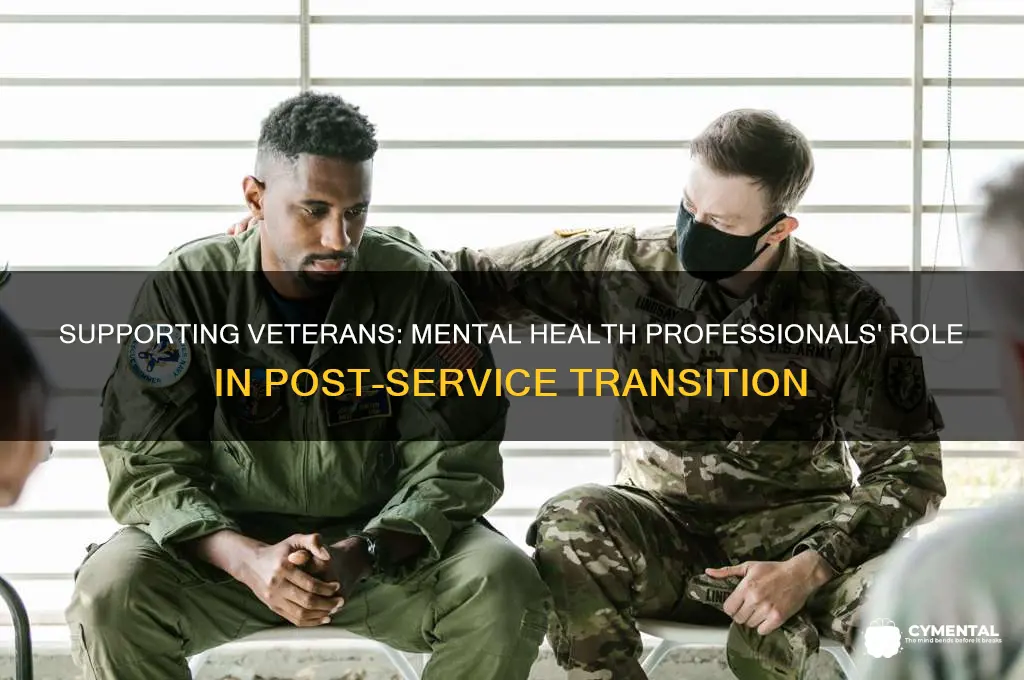
Mental health professionals play a crucial role in supporting veterans as they transition back to civilian life, addressing the unique challenges they face after returning home. Through evidence-based therapies like Cognitive Behavioral Therapy (CBT) and Eye Movement Desensitization and Reprocessing (EMDR), these professionals help veterans process trauma, manage symptoms of PTSD, depression, and anxiety, and rebuild coping mechanisms. They also provide individual and group counseling, fostering a sense of community and understanding among veterans. Additionally, mental health experts collaborate with families to improve communication and support systems, while offering resources for substance abuse, employment, and education. By creating tailored treatment plans and offering compassionate care, these professionals empower veterans to navigate the complexities of reintegration and achieve long-term mental well-being.
Explore related products


What You'll Learn
- PTSD Treatment Options: Evidence-based therapies like CBT, EMDR, and exposure therapy for trauma recovery
- Substance Abuse Support: Addressing addiction through counseling, group therapy, and medication-assisted treatment
- Reintegration Challenges: Assisting with family dynamics, employment, and community reintegration post-deployment
- Suicide Prevention Strategies: Crisis intervention, risk assessment, and ongoing mental health monitoring
- Peer Support Programs: Connecting veterans with peers for shared experiences and mutual encouragement

PTSD Treatment Options: Evidence-based therapies like CBT, EMDR, and exposure therapy for trauma recovery
Veterans returning home often face unique mental health challenges, with Post-Traumatic Stress Disorder (PTSD) being one of the most prevalent. To address this, mental health professionals employ evidence-based therapies that have proven effective in trauma recovery. Among these, Cognitive Behavioral Therapy (CBT), Eye Movement Desensitization and Reprocessing (EMDR), and exposure therapy stand out as cornerstone treatments. Each approach targets different aspects of PTSD, offering veterans tailored pathways to healing.
Cognitive Behavioral Therapy (CBT) is a structured, goal-oriented therapy that typically spans 12 to 16 sessions. It focuses on identifying and challenging negative thought patterns that perpetuate PTSD symptoms. For instance, a veteran struggling with guilt over a combat decision might work with a therapist to reframe the event in a more balanced light. CBT also teaches practical coping skills, such as relaxation techniques and problem-solving strategies. A key strength of CBT is its adaptability; it can be delivered individually or in group settings, making it accessible to a wide range of veterans. Research shows that CBT reduces PTSD symptoms in 50-60% of cases, with effects often lasting beyond treatment completion.
EMDR therapy takes a distinct approach by addressing the way traumatic memories are stored in the brain. During sessions, which usually last 60 to 90 minutes, the therapist guides the veteran in recalling distressing memories while engaging in bilateral stimulation, such as side-to-side eye movements or tapping. This process is believed to "reprocess" traumatic memories, reducing their emotional impact. EMDR is particularly effective for veterans with vivid, intrusive memories of trauma. Studies indicate that 77% of combat veterans show significant improvement after 12 sessions of EMDR, with many reporting relief from nightmares and flashbacks.
Exposure therapy, often integrated into CBT, involves gradually confronting trauma-related memories, feelings, and situations in a safe environment. This can include imaginal exposure (recounting the traumatic event) or in vivo exposure (facing real-life triggers). For example, a veteran with PTSD might work with a therapist to revisit a crowded public space, a common trigger for hypervigilance. The goal is to reduce fear and anxiety through repeated, controlled exposure. While exposure therapy can be intense, its effectiveness is well-documented, with up to 60% of veterans experiencing symptom reduction. Therapists often pair this approach with relaxation techniques to manage distress during sessions.
Choosing the right therapy depends on the veteran’s specific needs, preferences, and the nature of their trauma. CBT is ideal for those seeking structured, skill-building interventions, while EMDR may be more suitable for individuals with deeply ingrained traumatic memories. Exposure therapy, though challenging, offers rapid symptom relief for those willing to engage with their fears. Mental health professionals often combine these therapies or adapt them to fit the veteran’s pace, ensuring a personalized and effective treatment plan. By leveraging these evidence-based approaches, veterans can reclaim their lives and move toward lasting recovery.
Probiotics and Mental Health: Exploring the Gut-Brain Connection for Wellness
You may want to see also
Explore related products


Substance Abuse Support: Addressing addiction through counseling, group therapy, and medication-assisted treatment
Veterans often turn to substances as a coping mechanism for trauma, stress, and reintegration challenges, making addiction a critical issue post-service. Addressing this requires a multi-faceted approach that combines counseling, group therapy, and medication-assisted treatment (MAT) to foster recovery and resilience.
Counseling forms the backbone of substance abuse support, offering veterans a safe space to explore underlying triggers such as PTSD, anxiety, or depression. Cognitive Behavioral Therapy (CBT) is particularly effective, helping individuals identify harmful thought patterns and replace them with healthier coping strategies. For instance, a veteran struggling with alcohol use might learn to reframe the belief that drinking is the only way to manage insomnia or flashbacks. Sessions typically occur weekly, with therapists tailoring techniques to individual needs, ensuring a personalized path to recovery.
Group therapy complements individual counseling by fostering a sense of community and shared understanding. Programs like Veterans Recovery Groups or 12-step meetings provide peer support, reducing feelings of isolation. Participants share experiences, strategies, and encouragement, creating a network of accountability. For example, a veteran in early recovery might gain insight from someone who has successfully navigated similar challenges, reinforcing hope and motivation. These groups often meet bi-weekly, balancing structured discussions with open dialogue to address both emotional and practical aspects of addiction.
Medication-assisted treatment (MAT) plays a crucial role in managing cravings and withdrawal symptoms, particularly for opioids or alcohol. Medications like naltrexone (50 mg daily), buprenorphine (2–16 mg daily), or disulfiram (250 mg daily) are prescribed based on the substance and severity of addiction. MAT is most effective when paired with counseling, as it addresses the physiological aspects while therapy tackles the psychological roots. Veterans must work closely with healthcare providers to monitor dosage, side effects, and progress, ensuring a holistic approach to treatment.
Practical tips for veterans engaging in substance abuse support include establishing a routine, avoiding triggers, and leveraging VA resources. Incorporating mindfulness practices, such as meditation or yoga, can enhance emotional regulation. Families can participate in education programs to better understand addiction and provide informed support. Additionally, veterans should explore telehealth options for counseling or MAT if in-person access is limited, ensuring continuity of care regardless of location.
By integrating counseling, group therapy, and MAT, mental health professionals offer veterans a comprehensive toolkit to combat addiction. This approach not only addresses immediate challenges but also builds long-term resilience, empowering veterans to reclaim their lives after service.
Reading the Bible: A Path to Mental Health and Healing?
You may want to see also
Explore related products


Reintegration Challenges: Assisting with family dynamics, employment, and community reintegration post-deployment
Veterans returning home after deployment often face a complex web of reintegration challenges that extend beyond individual mental health. Family dynamics, employment struggles, and community reconnection can become battlegrounds where unseen wounds resurface. Mental health professionals play a pivotal role in navigating these terrains, offering tailored strategies to rebuild relationships, secure meaningful work, and foster a sense of belonging.
One critical aspect is addressing the shift in family roles during deployment. Spouses may have assumed responsibilities once held by the veteran, children might struggle with emotional reconnection, and communication patterns can become strained. Therapists employ techniques like structural family therapy to redefine roles and boundaries, ensuring everyone feels valued and heard. For instance, a veteran accustomed to giving orders might need guidance in adopting a collaborative approach at home. Group sessions involving the entire family can provide a safe space to express emotions and rebuild trust.
Employment reintegration presents another hurdle. Veterans often grapple with translating military skills into civilian jobs, while employers may harbor misconceptions about PTSD or other service-related conditions. Mental health professionals collaborate with vocational counselors to craft resumes highlighting transferable skills, such as leadership and crisis management. Cognitive-behavioral therapy (CBT) can help veterans reframe job search anxieties and develop coping strategies for workplace stress. Additionally, programs like the Department of Labor’s Veterans’ Employment and Training Service (VETS) offer resources for both veterans and employers, bridging the gap between military and civilian careers.
Community reintegration is equally vital, as veterans may feel disconnected from civilian life. Mental health professionals encourage participation in veteran-specific organizations like the American Legion or local support groups, where shared experiences foster camaraderie. Engaging in community service projects or hobbies can also rebuild a sense of purpose. For younger veterans (ages 18–30), peer-led initiatives often resonate more than traditional therapy, offering a less formal avenue for connection. Older veterans (ages 50+) might benefit from intergenerational programs, mentoring youth or sharing their stories in schools.
A holistic approach is essential, as these reintegration challenges are interconnected. For example, a veteran struggling with family dynamics may find it harder to focus on job searches, while unemployment can exacerbate feelings of isolation. Mental health professionals often use case management models to coordinate care across these domains, ensuring no area is overlooked. By addressing family, employment, and community reintegration in tandem, they empower veterans to rebuild not just their lives, but their identities in a post-deployment world.
Support Groups: A Powerful Tool for Mental Health Healing
You may want to see also
Explore related products


Suicide Prevention Strategies: Crisis intervention, risk assessment, and ongoing mental health monitoring
Veterans face unique mental health challenges upon returning home, with suicide rates significantly higher than the general population. To combat this, mental health professionals employ targeted suicide prevention strategies that combine immediate crisis intervention, thorough risk assessment, and long-term mental health monitoring. These approaches are designed to address the complex interplay of trauma, isolation, and reintegration stress that veterans often experience.
Crisis intervention serves as the first line of defense in suicide prevention. When a veteran is in acute distress, professionals use evidence-based techniques like the Suicide Intervention Response Model (SIRM) or Applied Suicide Intervention Skills Training (ASIST). These frameworks emphasize active listening, empathy, and collaborative safety planning. For instance, a clinician might help a veteran create a crisis response plan that includes emergency contacts, coping strategies (e.g., deep breathing exercises, grounding techniques), and access to 24/7 hotlines like the Veterans Crisis Line (988, then press 1). Immediate steps, such as removing lethal means (e.g., firearms, medications) from the veteran’s environment, are also critical during this phase.
Risk assessment is the next crucial step, moving beyond crisis to identify underlying vulnerabilities. Mental health professionals use tools like the Columbia-Suicide Severity Rating Scale (C-SSRS) or the Veterans Administration Suicide Risk Flags to evaluate factors such as previous suicide attempts, substance abuse, and social isolation. For example, a veteran with a history of PTSD, depression, and recent job loss would be flagged as high-risk. However, assessment isn’t just about identifying risk—it’s about understanding protective factors too, such as strong family support or engagement in meaningful activities. This dual focus informs tailored interventions, like connecting the veteran to peer support groups or vocational training programs.
Ongoing mental health monitoring ensures that prevention efforts don’t end after the crisis passes. Veterans often require long-term care to address chronic conditions like PTSD, anxiety, or depression. Regular check-ins, whether in-person or via telehealth, allow clinicians to track progress and adjust treatment plans as needed. For instance, a veteran prescribed sertraline (50–200 mg/day) for depression might need dosage adjustments based on symptom severity and side effects. Additionally, integrating technology, such as mobile apps for mood tracking or wearable devices to monitor sleep patterns, can provide real-time data to inform care. The goal is to create a safety net that catches signs of deterioration early, preventing crises before they escalate.
In practice, these strategies are most effective when integrated into a holistic care model. For example, a veteran might receive crisis intervention during a suicidal episode, undergo a risk assessment that identifies PTSD as a contributing factor, and then enroll in Cognitive Processing Therapy (CPT) while participating in ongoing monitoring through a VA care team. By combining these approaches, mental health professionals not only save lives in the moment but also build resilience and hope for the future. The key takeaway? Suicide prevention for veterans requires a dynamic, multi-faceted approach that addresses immediate danger, underlying risks, and long-term mental health needs.
Are Mental Health Hotlines Free? Costs and Accessibility Explained
You may want to see also
Explore related products


Peer Support Programs: Connecting veterans with peers for shared experiences and mutual encouragement
Veterans often face unique challenges when transitioning back to civilian life, and traditional therapy may not always resonate with their experiences. Peer support programs offer a powerful alternative by leveraging the shared understanding and camaraderie among veterans. These programs connect individuals who have served in similar capacities, fostering an environment where they can openly discuss their struggles, triumphs, and coping strategies without fear of judgment. Unlike clinical settings, peer support emphasizes mutual encouragement, creating a sense of belonging that can be transformative for mental health.
Consider the structure of a successful peer support program. Typically, these initiatives are facilitated by trained veteran peers who have undergone their own recovery journeys. Sessions may take place in group settings, one-on-one meetings, or even virtual platforms to accommodate diverse needs. For example, a weekly group meeting might focus on topics like managing PTSD symptoms, rebuilding relationships, or navigating career transitions. Practical tips, such as mindfulness techniques or goal-setting exercises, are often shared, providing actionable tools for daily life. Programs like the Veterans of Foreign Wars (VFW) and Team Red, White & Blue have demonstrated how structured peer support can reduce feelings of isolation and improve overall well-being.
One of the key strengths of peer support programs lies in their ability to bridge the gap between clinical care and personal resilience. While mental health professionals provide essential diagnoses and treatments, peer support complements these efforts by offering a human connection that transcends clinical interactions. For instance, a veteran struggling with anxiety might find it easier to confide in someone who has faced similar combat-related stressors than in a therapist who lacks that firsthand experience. This shared context fosters trust and encourages participants to engage more deeply in their recovery process.
However, implementing peer support programs requires careful consideration. Facilitators must be adequately trained to handle sensitive topics and recognize when a participant may need professional intervention. Programs should also be inclusive, catering to veterans of all ages, genders, and service eras. For younger veterans, aged 18–30, incorporating technology—such as mobile apps or online forums—can enhance accessibility. Older veterans, aged 50 and above, might benefit from in-person gatherings that emphasize storytelling and shared memories. Tailoring these programs to specific demographics ensures their relevance and effectiveness.
In conclusion, peer support programs are a vital resource for veterans navigating the complexities of post-military life. By fostering connections rooted in shared experiences, these initiatives provide a unique form of encouragement that traditional therapy often cannot replicate. When designed thoughtfully and inclusively, they empower veterans to support one another, rebuild their lives, and thrive in their civilian journeys. For mental health professionals, integrating peer support into comprehensive care plans can significantly enhance outcomes, offering veterans a holistic pathway to healing.
Legal Frameworks: Empowering Mental Health Support and Reducing Stigma
You may want to see also
Frequently asked questions
Mental health professionals use standardized assessments, interviews, and screening tools to evaluate veterans for conditions like PTSD, depression, anxiety, and substance abuse. They consider the veteran’s military experiences, current symptoms, and support systems to create a tailored treatment plan.
Common therapies include Cognitive Behavioral Therapy (CBT), Eye Movement Desensitization and Reprocessing (EMDR), and Prolonged Exposure Therapy (PE) for trauma. Group therapy, family counseling, and mindfulness-based interventions are also used to address isolation, anger, and reintegration challenges.
Professionals provide trauma-focused therapies, such as PTSD-specific treatments, to help veterans process traumatic memories. They also offer coping strategies, teach stress management techniques, and connect veterans with peer support groups or community resources to foster healing and resilience.