Lucas Bennett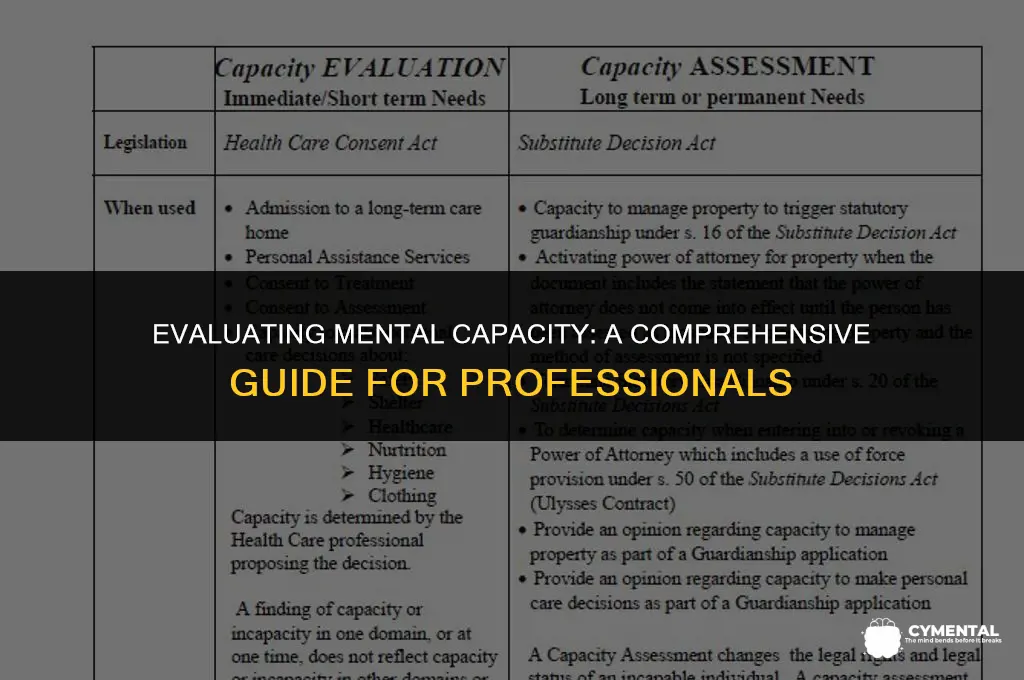
Assessing someone's mental capacity involves evaluating their ability to understand and make decisions. This process is crucial in various contexts, such as healthcare, law, and social services. Mental capacity assessments help determine whether an individual can consent to medical treatment, manage their finances, or make other significant life choices. These evaluations typically involve a multidisciplinary approach, including input from psychiatrists, psychologists, social workers, and legal professionals. The assessment process may include interviews, cognitive tests, and observations of the individual's behavior and decision-making abilities. Ultimately, the goal is to ensure that the person's rights and well-being are protected while also respecting their autonomy and dignity.
Explore related products



What You'll Learn
- Medical History Review: Evaluate past mental health conditions, treatments, and their impact on current capacity
- Cognitive Function Testing: Administer tests to measure memory, attention, problem-solving, and decision-making abilities
- Psychiatric Evaluation: Assess for symptoms of mental disorders that could affect judgment and reasoning
- Functional Assessment: Observe daily living skills and ability to manage personal affairs independently
- Legal and Ethical Considerations: Ensure assessment methods comply with legal standards and ethical guidelines

Medical History Review: Evaluate past mental health conditions, treatments, and their impact on current capacity
A thorough medical history review is crucial in assessing an individual's mental capacity. This process involves evaluating past mental health conditions, treatments received, and their impact on the person's current cognitive and emotional state. By understanding an individual's mental health history, healthcare professionals can gain valuable insights into potential vulnerabilities, strengths, and areas that may require additional support.
The review should begin with a comprehensive examination of the individual's medical records, including any diagnoses of mental health conditions such as depression, anxiety, bipolar disorder, or schizophrenia. It is essential to consider the severity and duration of these conditions, as well as the treatments that were administered. This may include medications, therapy, or other interventions.
In addition to reviewing medical records, healthcare professionals should also consider the individual's self-reported experiences and perceptions. This may involve conducting interviews or surveys to gather information about the person's mental health history, including any symptoms they have experienced, coping mechanisms they have used, and their overall well-being.
The impact of past mental health conditions and treatments on the individual's current capacity should also be carefully evaluated. This may involve assessing cognitive functions such as memory, attention, and problem-solving, as well as emotional regulation and social functioning. By understanding how past experiences have shaped the individual's current mental state, healthcare professionals can develop more effective strategies for supporting their mental capacity.
It is important to note that a medical history review should be conducted with sensitivity and respect for the individual's privacy and autonomy. Healthcare professionals should ensure that the person is aware of the purpose and scope of the review, and that they have provided informed consent. Additionally, the review should be conducted in a non-judgmental and supportive manner, recognizing the individual's strengths and resilience in the face of mental health challenges.
Serving with Strength: Mental Illness and Military Service Explored
You may want to see also
Explore related products


Cognitive Function Testing: Administer tests to measure memory, attention, problem-solving, and decision-making abilities
Cognitive function testing is a critical component in assessing an individual's mental capacity. This process involves administering a series of tests designed to measure various aspects of cognitive ability, including memory, attention, problem-solving, and decision-making skills. These tests are typically standardized and have been validated through extensive research to ensure their reliability and accuracy in evaluating cognitive functions.
One common approach in cognitive function testing is the use of neuropsychological assessments. These assessments can include tasks such as the Mini-Mental State Examination (MMSE), which is widely used to evaluate general cognitive function, particularly in older adults. Other tests might include the Montreal Cognitive Assessment (MoCA), the Mini-Executive Assessment (MIA), and various computerized cognitive tests that provide more detailed information on specific cognitive domains.
When administering these tests, it is essential to consider the individual's age, education level, and cultural background, as these factors can influence test performance. Additionally, the testing environment should be quiet and free from distractions to ensure that the individual can focus and perform to the best of their ability. The results of these tests are typically interpreted by a qualified professional, such as a psychologist or neurologist, who can provide a comprehensive evaluation of the individual's cognitive strengths and weaknesses.
Cognitive function testing can be particularly useful in identifying cognitive impairments that may be indicative of underlying neurological conditions, such as dementia, traumatic brain injury, or attention deficit hyperactivity disorder (ADHD). Early detection of these impairments can lead to timely interventions and improved outcomes for the individual. Furthermore, cognitive testing can also be used to monitor the progression of cognitive decline over time and to evaluate the effectiveness of treatments aimed at improving cognitive function.
In conclusion, cognitive function testing is a valuable tool in assessing an individual's mental capacity. By providing a detailed evaluation of various cognitive domains, these tests can help identify cognitive impairments, inform treatment plans, and monitor changes in cognitive function over time. It is crucial that these tests are administered by qualified professionals in a controlled environment to ensure accurate and reliable results.
Understanding Self-Admission to Mental Health Facilities: A Guide
You may want to see also
Explore related products


$34.99 $49.99


Psychiatric Evaluation: Assess for symptoms of mental disorders that could affect judgment and reasoning
A psychiatric evaluation is a critical component in assessing an individual's mental capacity, particularly when it comes to evaluating symptoms of mental disorders that could impair judgment and reasoning. This process involves a thorough examination of a person's mental health history, current symptoms, and any potential risk factors that may contribute to their condition.
During the evaluation, a mental health professional will typically conduct a series of interviews and assessments to gather information about the individual's mental state. This may include asking questions about their mood, thoughts, behaviors, and any recent changes in their daily functioning. The evaluator may also review medical records, speak with family members or caregivers, and observe the individual's behavior in various settings.
One of the key aspects of a psychiatric evaluation is the assessment of cognitive functioning. This involves testing the individual's memory, attention, language skills, and problem-solving abilities. Cognitive impairments can significantly impact a person's judgment and reasoning, making it essential to identify and address any deficits during the evaluation process.
In addition to cognitive functioning, the evaluator will also assess for symptoms of specific mental disorders, such as depression, anxiety, schizophrenia, or bipolar disorder. These conditions can have a profound impact on an individual's mental capacity, and it is crucial to develop an accurate diagnosis in order to provide appropriate treatment.
The results of a psychiatric evaluation can have significant implications for an individual's legal rights, financial management, and overall well-being. Therefore, it is essential that the evaluation is conducted by a qualified mental health professional who can provide an objective and comprehensive assessment of the individual's mental capacity.
In conclusion, a psychiatric evaluation is a vital tool in assessing an individual's mental capacity, particularly when it comes to identifying symptoms of mental disorders that could impair judgment and reasoning. By conducting a thorough and accurate evaluation, mental health professionals can help ensure that individuals receive the appropriate care and support they need to manage their conditions and maintain their mental well-being.
Finding Support: Where to Talk About Mental Health
You may want to see also
Explore related products


Functional Assessment: Observe daily living skills and ability to manage personal affairs independently
Functional assessment involves evaluating an individual's ability to perform daily tasks and manage their personal affairs without assistance. This type of assessment is crucial in determining mental capacity, as it provides insight into a person's practical skills and independence. By observing how someone handles everyday activities, such as cooking, cleaning, and financial management, assessors can gauge their cognitive functioning and ability to make sound decisions.
One approach to functional assessment is through direct observation. This may involve watching the individual perform tasks in their natural environment or in a controlled setting designed to mimic daily living situations. Assessors look for cues such as the person's ability to follow a recipe, balance a checkbook, or navigate public transportation. These observations can reveal important information about the individual's problem-solving skills, memory, and executive functioning.
Another method is through self-reporting and interviews. Assessors may ask the individual to describe how they manage various aspects of their daily life, such as shopping, paying bills, or maintaining their living space. This can provide valuable insight into the person's self-awareness and ability to articulate their needs and challenges. Additionally, interviews with family members, caregivers, or other professionals involved in the individual's life can offer a more comprehensive understanding of their functional abilities.
Functional assessment also considers the individual's ability to adapt to new situations and learn new skills. For example, an assessor may introduce a novel task or problem and observe how the person responds. This can reveal their flexibility, creativity, and ability to generalize skills to new contexts. Furthermore, assessors may evaluate the individual's ability to use assistive technologies or tools to enhance their independence and daily functioning.
In conclusion, functional assessment is a multifaceted approach to evaluating mental capacity that focuses on an individual's practical skills and ability to manage their daily life. By combining direct observation, self-reporting, and interviews, assessors can gain a comprehensive understanding of a person's cognitive functioning and independence. This information is essential for developing personalized interventions and support plans that promote autonomy and enhance quality of life.
Unraveling the Complex Link Between Dishonesty and Mental Health
You may want to see also
Explore related products


Legal and Ethical Considerations: Ensure assessment methods comply with legal standards and ethical guidelines
When assessing someone's mental capacity, it is crucial to ensure that the methods used comply with legal standards and ethical guidelines. This is not only to protect the rights and dignity of the individual being assessed but also to ensure the validity and reliability of the assessment results. Legal standards vary by jurisdiction, but generally, they require that assessments be conducted by qualified professionals using standardized and scientifically validated methods. Ethical guidelines, on the other hand, emphasize the importance of respecting the autonomy and confidentiality of the individual, obtaining informed consent, and avoiding any form of discrimination or bias.
One key legal consideration is the requirement for informed consent. This means that the individual being assessed must be fully informed about the nature and purpose of the assessment, the methods that will be used, and the potential risks and benefits. They must also be given the opportunity to ask questions and to refuse to participate in the assessment if they so choose. In cases where the individual lacks the capacity to give informed consent, it may be necessary to obtain consent from a legal representative or guardian.
Another important ethical consideration is the need to respect the individual's privacy and confidentiality. This means that all information obtained during the assessment must be kept confidential and not shared with anyone without the individual's explicit permission. Assessors must also be aware of their own biases and take steps to ensure that these do not influence the assessment results. This may involve using standardized assessment tools that are designed to minimize bias and ensure that all individuals are treated fairly and equitably.
In addition to these general considerations, there are specific legal and ethical guidelines that apply to different types of assessments and different populations. For example, when assessing the mental capacity of children or individuals with intellectual disabilities, it is important to use age-appropriate and culturally sensitive assessment methods. Similarly, when assessing individuals from diverse cultural backgrounds, it is important to be aware of cultural differences that may affect the assessment results and to use methods that are sensitive to these differences.
In conclusion, ensuring that assessment methods comply with legal standards and ethical guidelines is essential for protecting the rights and dignity of individuals being assessed and for ensuring the validity and reliability of the assessment results. Assessors must be aware of their legal and ethical obligations and take steps to ensure that these are met in all cases.
Navigating Love and Mental Health: Can You Marry Someone with Mental Illness?
You may want to see also