Noah Parker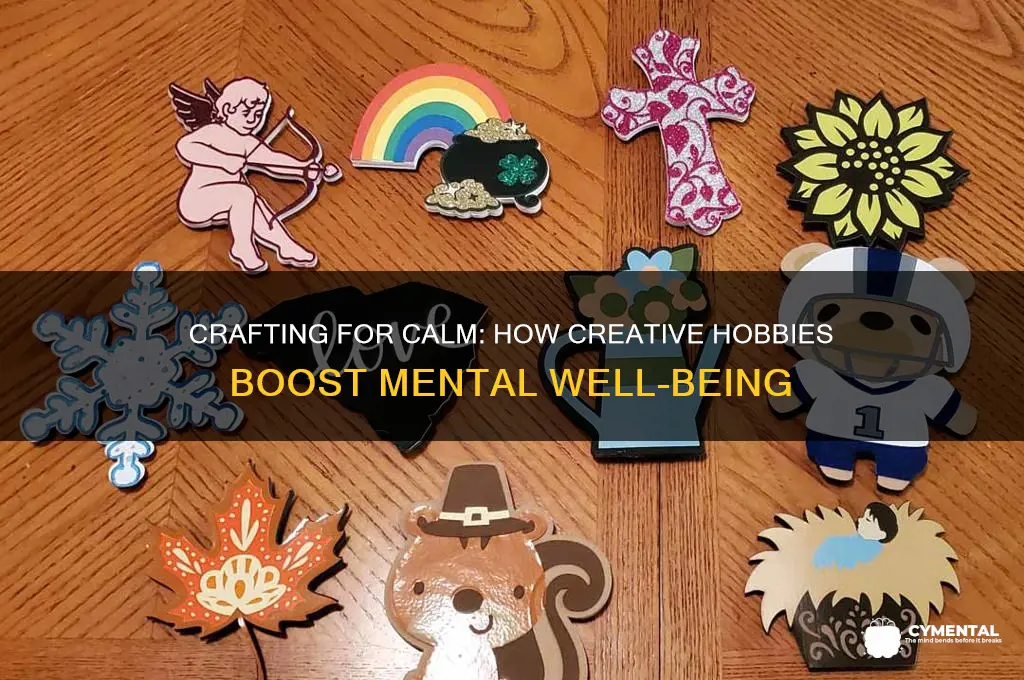
Crafting, whether it involves knitting, painting, woodworking, or other creative activities, has been increasingly recognized as a powerful tool for improving mental health. Engaging in hands-on, creative processes can reduce stress, anxiety, and symptoms of depression by promoting mindfulness and providing a sense of accomplishment. The repetitive motions in many crafts induce a meditative state, calming the mind and lowering cortisol levels, while the act of creating something tangible boosts self-esteem and fosters a sense of purpose. Additionally, crafting often encourages social connection, whether through group classes or sharing finished projects, which can combat feelings of isolation. By combining relaxation, creativity, and productivity, crafting offers a holistic approach to mental well-being, making it a valuable practice for individuals seeking to nurture their emotional and psychological health.
| Characteristics | Values |
|---|---|
| Stress Reduction | Crafting activates the reward centers in the brain, reducing cortisol levels and promoting relaxation. |
| Mindfulness | Engages the mind in the present moment, reducing anxiety and improving focus. |
| Cognitive Benefits | Enhances problem-solving skills, memory, and spatial reasoning through complex tasks. |
| Mood Enhancement | Releases dopamine, a feel-good neurotransmitter, boosting mood and reducing symptoms of depression. |
| Sense of Accomplishment | Completing a project fosters pride and self-efficacy, improving self-esteem. |
| Social Connection | Group crafting activities reduce loneliness and build community through shared interests. |
| Flow State Induction | Immersive crafting activities lead to a "flow state," where time seems to disappear, enhancing mental well-being. |
| Therapeutic Outlet | Provides a healthy coping mechanism for processing emotions and trauma. |
| Improved Motor Skills | Fine motor skills are enhanced through repetitive crafting actions, benefiting overall dexterity. |
| Reduced Symptoms of PTSD | Crafting can help individuals with PTSD by providing a calming and distracting activity. |
| Enhanced Creativity | Encourages innovative thinking and self-expression, fostering personal growth. |
| Better Sleep | Reduces pre-sleep anxiety and promotes a restful state, improving sleep quality. |
| Chronic Pain Management | Distracts from pain and provides a sense of purpose, reducing the perception of discomfort. |
| Increased Resilience | Regular crafting builds emotional resilience by providing a consistent, positive activity. |
| Neuroplasticity | Stimulates brain plasticity, aiding in recovery from neurological conditions like stroke. |
Explore related products


What You'll Learn
- Stress Reduction: Crafting lowers cortisol, promotes relaxation, and reduces anxiety through repetitive, mindful activities
- Mindfulness Practice: Focus on the present moment enhances mental clarity and emotional calmness
- Creative Expression: Crafting allows emotional release, boosts self-esteem, and fosters personal identity
- Cognitive Benefits: Enhances problem-solving, memory, and fine motor skills through hands-on engagement
- Social Connection: Group crafting combats loneliness, builds community, and strengthens relationships

Stress Reduction: Crafting lowers cortisol, promotes relaxation, and reduces anxiety through repetitive, mindful activities
Cortisol, often dubbed the "stress hormone," spikes in response to pressure, anxiety, or fear. Crafting, particularly activities involving repetition like knitting, crocheting, or coloring, has been shown to lower cortisol levels. A study published in the *Journal of the Neurological Sciences* found that participants engaging in creative activities experienced a significant decrease in cortisol within 45 minutes. The rhythmic, predictable nature of these tasks signals the brain to shift from a stressed state to a calmer one, effectively interrupting the body’s fight-or-flight response.
To harness this benefit, consider incorporating crafting into your daily routine as a deliberate stress-reduction practice. Start with 20–30 minutes of focused crafting, such as stitching a simple pattern or painting with watercolors. Avoid multitasking during this time; instead, immerse yourself in the sensory experience of the materials. For example, feel the texture of yarn, observe the blending of colors, or listen to the click of knitting needles. This mindfulness amplifies the relaxation effect, making the activity a powerful tool for immediate stress relief.
Comparing crafting to other stress-reduction methods highlights its unique advantages. While meditation requires mental discipline and exercise demands physical exertion, crafting offers a dual benefit: it calms the mind through repetition while engaging the hands in purposeful movement. This combination makes it accessible to a wide range of individuals, including those who find traditional relaxation techniques challenging. For instance, a 2019 survey by the Craft & Hobby Association revealed that 74% of respondents reported feeling less stressed after crafting, with older adults and teenagers alike citing it as a preferred coping mechanism.
Practical tips can maximize crafting’s stress-reducing potential. Choose projects that match your skill level to avoid frustration—beginners might opt for adult coloring books or basic knitting kits. Create a dedicated crafting space, even if it’s just a corner of your desk, to signal to your brain that it’s time to unwind. Pair the activity with calming elements like soft music or natural light to enhance relaxation. Finally, set realistic goals, such as completing one row of knitting or filling in a small section of a coloring page, to maintain a sense of accomplishment without adding pressure.
The takeaway is clear: crafting isn’t just a hobby; it’s a scientifically backed strategy for lowering cortisol, promoting relaxation, and reducing anxiety. By engaging in repetitive, mindful activities, you can effectively counteract stress in a way that feels both productive and enjoyable. Whether you’re a seasoned crafter or a curious beginner, the therapeutic benefits are within reach—all it takes is a willingness to slow down, pick up a tool, and create.
Empowering Support: Saving Young Adults Battling Mental Illness Effectively
You may want to see also
Explore related products


Mindfulness Practice: Focus on the present moment enhances mental clarity and emotional calmness
Crafting naturally anchors the mind in the present, making it a powerful tool for mindfulness practice. Unlike activities that allow the mind to wander, crafting demands attention to detail—whether it’s threading a needle, aligning beads, or blending colors. This focus on the task at hand shifts awareness away from intrusive thoughts or worries, creating a mental pause that fosters clarity. For instance, knitting requires counting stitches and maintaining tension, leaving little room for rumination. Studies show that even 20 minutes of focused crafting can reduce cortisol levels, the body’s primary stress hormone, by up to 25%. This physiological response underscores the immediate calming effect of present-moment engagement.
To harness crafting as a mindfulness practice, start with intentionality. Choose a project that requires precision but isn’t overly complex—origami, cross-stitching, or pottery are excellent options. Set aside a dedicated time, ideally 30–45 minutes daily, to immerse yourself fully. Begin by taking three deep breaths to center your mind, then focus on the sensory aspects of the craft: the texture of clay, the sound of scissors cutting paper, or the smell of wood. When your mind drifts (as it inevitably will), gently guide it back to the task without judgment. Over time, this practice trains the brain to stay present, reducing mental clutter and enhancing emotional stability.
Comparing crafting to other mindfulness techniques, such as meditation or yoga, reveals its unique advantages. While meditation often requires stillness and quiet, crafting allows for active engagement, making it more accessible for those who struggle with sitting still. Unlike yoga, which focuses on physical movement, crafting combines tactile activity with cognitive focus, offering a dual benefit. For example, a study published in the *Journal of Positive Psychology* found that participants who engaged in crafting reported higher levels of flow—a state of complete absorption in an activity—compared to those practicing traditional meditation. This flow state not only enhances mindfulness but also boosts feelings of accomplishment and joy.
Practical tips can maximize the mindfulness benefits of crafting. First, minimize distractions by turning off notifications and creating a calm workspace. Second, choose materials that engage multiple senses—soft yarn, vibrant paints, or smooth wood—to deepen sensory immersion. For children and teens, simpler crafts like coloring mandalas or building with LEGO can teach mindfulness in an age-appropriate way. Adults might explore more complex projects like quilting or woodworking to sustain focus. Finally, reflect on the process, not just the product. Ask yourself: *What did I notice while crafting? How did it feel to be fully present?* This reflection reinforces the mindfulness habit, making it easier to apply in daily life.
Incorporating crafting into a mindfulness routine offers a tangible way to cultivate mental clarity and emotional calmness. Its structured yet creative nature provides a safe space to practice being present, while its sensory and cognitive demands keep the mind grounded. Whether you’re a beginner or an experienced crafter, the key lies in approaching the activity with intention and awareness. By doing so, crafting becomes more than a hobby—it transforms into a mindful ritual that nurtures both the mind and the soul.
Prisons vs. Treatment: Do Jails Help or Harm the Mentally Ill?
You may want to see also
Explore related products


Creative Expression: Crafting allows emotional release, boosts self-esteem, and fosters personal identity
Crafting serves as a powerful tool for emotional release, allowing individuals to channel complex feelings into tangible creations. Whether through knitting, painting, or sculpting, the act of making something by hand provides a safe outlet for emotions that might otherwise feel overwhelming. For instance, a study published in *Art Therapy: Journal of the American Art Therapy Association* found that engaging in creative activities significantly reduces cortisol levels, the body’s primary stress hormone. This physiological response underscores why many turn to crafting during times of anxiety or grief—it transforms abstract emotions into something concrete, making them easier to process and release.
Boosting self-esteem is another critical benefit of crafting, particularly when projects are completed successfully. Each finished piece, no matter how small, serves as a visible reminder of one’s capabilities and creativity. For beginners, starting with simple projects like hand-painted pottery or basic embroidery can provide quick wins, building confidence incrementally. A 2019 survey by the Craft & Hobby Association revealed that 74% of respondents reported feeling a sense of accomplishment after completing a craft project. This sense of achievement is especially impactful for individuals struggling with self-doubt or low self-worth, offering a tangible way to rebuild confidence.
Crafting also plays a pivotal role in fostering personal identity, as it allows individuals to explore and express their unique perspectives. Unlike mass-produced items, handmade creations carry the maker’s personal touch, reflecting their tastes, values, and experiences. For example, a quilter might incorporate family heirlooms into their work, creating a piece that tells a deeply personal story. This process of self-expression helps individuals articulate who they are, both to themselves and to others. In a world that often prioritizes conformity, crafting offers a rare space for authenticity and individuality.
To maximize these benefits, consider incorporating crafting into a regular routine. Dedicate at least 30 minutes daily or a few hours weekly to creative pursuits, treating it as non-negotiable self-care time. For those new to crafting, start with beginner-friendly activities like journaling, collage-making, or simple jewelry-making. Joining a crafting group or online community can also enhance the experience, providing support and inspiration. Remember, the goal isn’t perfection but expression—allow yourself to experiment, make mistakes, and enjoy the process. By doing so, crafting becomes more than a hobby; it becomes a pathway to emotional healing, self-confidence, and a stronger sense of self.
Talking About Mental Health: Breaking Stigma, Fostering Healing, and Saving Lives
You may want to see also
Explore related products


Cognitive Benefits: Enhances problem-solving, memory, and fine motor skills through hands-on engagement
Crafting isn’t just a pastime; it’s a cognitive workout in disguise. When you knit a scarf, build a model, or assemble a puzzle, your brain is actively engaged in solving problems, from deciphering patterns to troubleshooting mistakes. This hands-on process forces you to think critically, plan steps, and adapt when things don’t go as expected. For instance, a study published in the *Journal of Neuropsychiatry* found that complex crafts like quilting or woodworking activate multiple brain regions, including those responsible for problem-solving and spatial reasoning. The takeaway? Crafting isn’t just creating something tangible—it’s sharpening your mind’s ability to navigate challenges.
Consider this: memory retention improves when you pair physical activity with mental focus. Crafting does exactly that. Whether you’re following a crochet pattern or remembering the sequence of steps in pottery, you’re exercising your working memory. A 2019 study in *The Journal of the American Geriatrics Society* revealed that older adults who engaged in crafts like knitting or sewing had a 30-70% lower risk of cognitive impairment. The act of recalling instructions, visualizing outcomes, and coordinating movements reinforces neural pathways, making memory recall more efficient. Practical tip: Start with simple projects and gradually increase complexity to keep your memory muscles flexed without overwhelming yourself.
Fine motor skills—those small, precise movements of your hands and fingers—are often overlooked but crucial for daily life. Crafting hones these skills through repetitive, deliberate actions. Take embroidery, for example: threading a needle, controlling tension, and stitching patterns demand dexterity and hand-eye coordination. Research from *Occupational Therapy International* highlights that such activities can improve grip strength and finger agility, even in individuals with conditions like arthritis. For children, crafts like beadwork or origami are excellent for developing these skills early. Pro tip: Dedicate 20-30 minutes daily to a craft requiring fine motor precision to see noticeable improvements over time.
Here’s the persuasive angle: crafting is a low-cost, accessible way to boost cognitive health across all ages. Unlike digital games or apps, it offers a tactile experience that engages the brain on multiple levels. For seniors, it’s a way to combat age-related cognitive decline; for children, it’s a fun method to develop essential skills; for adults, it’s a stress-relieving activity that doubles as brain training. The key is consistency. Incorporate crafting into your routine—even 15 minutes a day can make a difference. Start small, choose projects that interest you, and watch as your problem-solving, memory, and fine motor skills flourish alongside your creations.
Boost Productivity: Mental Mapping Strategies for Workplace Success
You may want to see also
Explore related products


Social Connection: Group crafting combats loneliness, builds community, and strengthens relationships
Loneliness is a silent epidemic, affecting people of all ages and backgrounds. Group crafting offers a powerful antidote by creating spaces where individuals can connect, share, and collaborate. Unlike solitary hobbies, crafting in a group setting fosters face-to-face interaction, breaking down barriers and encouraging meaningful conversations. Whether it’s a knitting circle, pottery workshop, or scrapbooking club, these gatherings provide a sense of belonging that combats isolation. Research shows that regular social interaction, even in small doses, can significantly reduce feelings of loneliness and improve overall well-being.
Consider the structure of a typical crafting group: participants work on individual projects while engaging in collective dialogue. This balance of focus and interaction allows for natural bonding without the pressure of forced socialization. For example, a weekly quilting group might spend two hours together, with the first hour dedicated to stitching and the second to sharing stories and techniques. This format ensures that even introverts feel comfortable, as the crafting activity serves as a shared anchor. Over time, these gatherings become more than just hobby sessions—they evolve into support networks where members celebrate achievements, offer advice, and lean on one another during difficult times.
To maximize the social benefits of group crafting, organizers should prioritize inclusivity and accessibility. Choose projects that cater to various skill levels, ensuring no one feels left behind. For instance, a mixed-media art group might offer simple collage techniques alongside advanced painting methods. Additionally, consider intergenerational crafting sessions, where younger participants can learn from older members, fostering connections across age groups. Practical tips include setting a consistent schedule, providing affordable materials, and creating a welcoming environment free of judgment. Even virtual crafting groups, facilitated via video calls, can bridge geographical gaps and maintain connections during times of physical separation.
The impact of group crafting on relationships is profound, particularly in strengthening existing bonds. Couples or families who craft together often report improved communication and deeper understanding of one another. For example, a parent and child working on a joint woodworking project must collaborate, problem-solve, and compromise—skills that translate directly to healthier relationships. Similarly, friends who attend crafting retreats often return with renewed appreciation for one another, having shared an immersive, creative experience. These shared activities create lasting memories and inside jokes, reinforcing the emotional ties that sustain relationships over time.
In conclusion, group crafting is more than a hobby—it’s a tool for building and sustaining social connections. By providing a structured yet flexible environment for interaction, it addresses the root causes of loneliness and fosters a sense of community. Whether you’re organizing a local crafting group or joining an existing one, the key is consistency and inclusivity. Start small, with a clear plan and an open heart, and watch as the simple act of creating together transforms lives and strengthens the fabric of your community.
Positive Relationships: A Powerful Tool for Mental Health and Well-Being
You may want to see also
Frequently asked questions
Crafting engages the mind in a focused, repetitive activity, which promotes relaxation and reduces cortisol levels. It also provides a sense of accomplishment, helping to alleviate anxiety.
Yes, crafting stimulates the release of dopamine, a neurotransmitter associated with pleasure and reward, which can boost mood and reduce symptoms of depression.
Absolutely. Crafting requires concentration on the present moment, fostering mindfulness and helping to clear the mind of intrusive or negative thoughts.
Crafting involves problem-solving, creativity, and fine motor skills, which stimulate neural connections and may help delay cognitive decline in older adults.
Yes, joining crafting groups or sharing projects online can create social connections, combat isolation, and provide emotional support, positively impacting mental well-being.