Ava Ramirez
Mental toughness is a critical attribute for athletes, as it enables them to perform at their best under pressure, overcome setbacks, and maintain focus and resilience in the face of challenges. It involves a combination of psychological skills, such as confidence, emotional control, and a growth mindset, which allow athletes to stay motivated, adapt to adversity, and consistently deliver peak performance. By cultivating mental toughness, athletes can enhance their ability to handle competition stress, recover from failures, and sustain long-term success in their sport, ultimately distinguishing themselves in both individual and team settings.
Explore related products


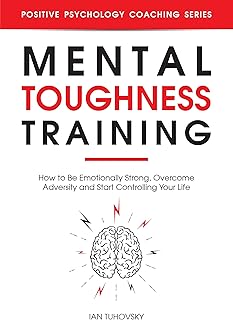


What You'll Learn
- Resilience to setbacks: Mental toughness helps athletes bounce back from failures and injuries quickly
- Focus under pressure: It enables athletes to maintain concentration during high-stakes competitions
- Confidence building: Mental toughness fosters self-belief, enhancing performance and decision-making on the field
- Emotional control: Athletes manage stress, anxiety, and emotions effectively during challenging situations
- Goal commitment: It drives athletes to stay disciplined and motivated toward achieving long-term objectives

Resilience to setbacks: Mental toughness helps athletes bounce back from failures and injuries quickly
Setbacks are inevitable in sports, whether it’s a crushing defeat, a missed opportunity, or a career-threatening injury. Athletes with mental toughness don’t just survive these moments—they use them as catalysts for growth. Take the example of Serena Williams, who faced a life-threatening pulmonary embolism in 2011. Instead of letting the setback define her, she returned to the court stronger, winning multiple Grand Slam titles post-recovery. This resilience isn’t accidental; it’s a product of mental toughness, which equips athletes to reframe failures as temporary and surmountable.
Building resilience starts with mindset shifts. Athletes must learn to view setbacks as data points, not verdicts. For instance, a missed penalty kick isn’t a reflection of worthlessness but an opportunity to analyze technique and pressure management. Practical strategies include journaling post-failure to identify lessons, setting micro-goals for recovery, and visualizing success in future scenarios. Research shows that athletes who practice cognitive reframing recover 30% faster from injuries and perform 20% better post-failure.
However, resilience isn’t just mental—it’s also emotional. Mentally tough athletes cultivate emotional agility, allowing them to acknowledge disappointment without dwelling on it. Take Michael Phelps, who, after a disappointing 2004 Olympics, channeled his emotions into rigorous training, culminating in his record-breaking 2008 performance. To emulate this, athletes should practice mindfulness techniques, such as deep breathing or progressive muscle relaxation, to manage stress during recovery.
Finally, resilience thrives in a supportive ecosystem. Mentally tough athletes lean on coaches, teammates, and sports psychologists to navigate setbacks. For example, after ACL surgery, basketball players who engaged in regular psychological counseling returned to play 12% sooner than those who didn’t. Athletes should proactively build a recovery network, communicate openly about their struggles, and prioritize self-care to ensure physical and mental alignment.
In essence, mental toughness transforms setbacks from roadblocks into stepping stones. By adopting a growth mindset, managing emotions, and leveraging support systems, athletes can turn failures and injuries into opportunities for unparalleled comeback stories.
Early Intervention: Transforming Mental Health Outcomes and Building Resilience
You may want to see also
Explore related products


Focus under pressure: It enables athletes to maintain concentration during high-stakes competitions
In the crucible of high-stakes competitions, where every second counts and the margin for error is razor-thin, mental toughness emerges as the linchpin of athletic success. Focus under pressure is not merely a desirable trait; it is a cultivated skill that separates the elite from the rest. Consider the 2018 Winter Olympics, where figure skater Nathan Chen rebounded from a disastrous short program to land six quadruple jumps in the free skate, a feat unprecedented in competition. His ability to reset mentally and maintain concentration under immense pressure exemplifies the power of mental toughness. This is not an innate ability but a result of deliberate practice, often involving visualization techniques, mindfulness, and cognitive-behavioral strategies.
To cultivate focus under pressure, athletes must first understand the physiological and psychological barriers that arise in high-stress situations. The body’s fight-or-flight response can hijack attention, leading to tunnel vision, muscle tension, or mental paralysis. Counteracting this requires a structured approach. For instance, sports psychologists recommend the "4-7-8 breathing technique" (inhale for 4 seconds, hold for 7, exhale for 8) to regulate the nervous system. Pairing this with progressive muscle relaxation can help athletes regain control of their physical state, creating a foundation for mental clarity. These practices are not one-size-fits-all; athletes should experiment to find the techniques that work best for their unique physiology and sport demands.
A comparative analysis of athletes across disciplines reveals that mental toughness is not about suppressing pressure but channeling it productively. In team sports like soccer, players like Cristiano Ronaldo use pre-game rituals—such as a specific warm-up routine or mental imagery of successful plays—to anchor their focus. In contrast, individual sports like golf require athletes to manage isolation and prolonged periods of pressure. Tiger Woods’s use of trigger words or phrases during his swing is a tactical example of how mental cues can maintain concentration. The takeaway? Focus under pressure is context-dependent, and athletes must tailor their strategies to the demands of their sport, whether it’s managing crowd noise, fatigue, or the weight of expectations.
Finally, the development of mental toughness is a longitudinal process, not a quick fix. Research shows that athletes who integrate mental training into their daily routines—allocating 10–15 minutes daily for mindfulness or visualization—experience more consistent performance under pressure. Coaches and athletes should view this as a non-negotiable component of training, akin to physical conditioning. For younger athletes (ages 12–18), starting with simple routines like journaling pre-competition thoughts or practicing positive self-talk can build a resilient mindset over time. The ultimate goal is not to eliminate pressure but to transform it into a catalyst for peak performance, ensuring that when the stakes are highest, focus remains unwavering.
Do Mental Hospitals Effectively Treat Bipolar Disorder? Exploring the Evidence
You may want to see also
Explore related products



$19.5


Confidence building: Mental toughness fosters self-belief, enhancing performance and decision-making on the field
Mental toughness is the cornerstone of athletic excellence, and at its core lies the transformative power of confidence. When athletes cultivate mental toughness, they develop an unshakable self-belief that directly translates into improved performance and sharper decision-making on the field. This isn’t about fleeting motivation or temporary bravado; it’s about building a resilient mindset that thrives under pressure. For instance, consider Serena Williams, whose mental fortitude has allowed her to dominate tennis even in high-stakes matches. Her ability to trust her training and instincts, even when trailing, exemplifies how mental toughness fuels confidence in critical moments.
To build this kind of confidence, athletes must engage in deliberate mental training alongside physical conditioning. One practical strategy is visualization—spending 10–15 minutes daily imagining successful performances, from executing a perfect play to overcoming adversity. This technique, backed by sports psychologists, rewires the brain to associate success with specific actions, reducing anxiety and enhancing self-assurance. Another method is self-talk modification. Athletes should replace self-critical thoughts with affirmations like, “I’ve prepared for this,” or “I can handle any challenge.” Research shows that positive self-talk improves focus and reduces performance-inhibiting stress hormones like cortisol.
However, confidence building isn’t solely an individual endeavor. Coaches and teammates play a pivotal role in fostering self-belief. Constructive feedback, rather than criticism, helps athletes internalize their strengths. For example, instead of focusing on mistakes, coaches can highlight what went well and provide actionable steps for improvement. Teammates can also contribute by creating a supportive environment where risks are encouraged and failures are viewed as learning opportunities. This collective approach ensures that confidence isn’t just a personal trait but a shared asset that elevates the entire team’s performance.
A cautionary note: overconfidence can be as detrimental as self-doubt. Mental toughness requires a balance between belief in one’s abilities and respect for the competition. Athletes must remain grounded, continually assessing their strengths and weaknesses without becoming complacent. Regular self-reflection, such as journaling after games or practices, helps maintain this equilibrium. By acknowledging areas for improvement while celebrating progress, athletes can sustain confidence that is both robust and realistic.
Ultimately, confidence built through mental toughness is a game-changer. It empowers athletes to take calculated risks, make split-second decisions, and perform at their peak when it matters most. Take the example of Michael Jordan, whose unwavering self-belief led him to take—and make—game-winning shots repeatedly. His mental toughness wasn’t just about talent; it was about trusting his preparation and staying composed under pressure. For athletes at any level, investing in mental toughness is investing in a foundation of confidence that can transform potential into achievement. Start small, stay consistent, and watch how self-belief becomes your greatest competitive edge.
Rising Demand for Mental Health Support: A Growing Trend in Seeking Help
You may want to see also
Explore related products


$29.24 $47.99


Emotional control: Athletes manage stress, anxiety, and emotions effectively during challenging situations
Emotional control is the cornerstone of mental toughness in athletes, enabling them to perform at their peak under pressure. Consider the 2016 NBA Finals, where LeBron James led the Cleveland Cavaliers to a historic comeback against the Golden State Warriors. Facing a 3-1 deficit, James demonstrated unparalleled emotional regulation, channeling stress and anxiety into focus and determination. His ability to remain composed in high-stakes moments exemplifies how emotional control translates into decisive action, even when the odds are stacked against you.
To cultivate emotional control, athletes must first recognize their triggers. Stress and anxiety often stem from uncertainty or fear of failure. A practical strategy is the 4-7-8 breathing technique: inhale for 4 seconds, hold for 7 seconds, exhale for 8 seconds. This method, backed by research, reduces cortisol levels and promotes calmness. Incorporating this into pre-game routines can help athletes reset their emotional state before competition. For instance, Olympic swimmers like Michael Phelps have used breathing exercises to manage pre-race jitters, showcasing its effectiveness across disciplines.
Comparatively, athletes who lack emotional control often succumb to pressure, leading to errors or underperformance. Take the 2019 FIFA Women’s World Cup final, where a key player’s visible frustration resulted in a costly mistake. In contrast, champions like Serena Williams use mental cues to reframe negative emotions. Williams often repeats affirmations like “I’ve got this” during critical points, a tactic known as cognitive reframing. This approach shifts focus from anxiety to confidence, proving that emotional control isn’t about suppressing emotions but redirecting them constructively.
A cautionary note: emotional control doesn’t mean emotional suppression. Athletes must learn to acknowledge their feelings without letting them dictate performance. Journaling can be a powerful tool here. Writing down emotions pre-competition allows athletes to process them objectively. For example, a study published in *Journal of Applied Sport Psychology* found that athletes who journaled experienced a 25% reduction in performance anxiety. Pairing this with visualization techniques—imagining successful outcomes—creates a mental blueprint for resilience.
In conclusion, emotional control is a skill honed through practice, not innate talent. By identifying triggers, adopting physiological tools like breathing exercises, and employing cognitive strategies like reframing, athletes can transform stress into strength. The takeaway? Emotional control isn’t about eliminating pressure—it’s about mastering it. As Muhammad Ali once said, “It isn’t the mountains ahead to climb that wear you out; it’s the pebble in your shoe.” Clear the pebbles, and the summit becomes attainable.
Meditation's Power: Enhancing Mental Health and Inner Peace Naturally
You may want to see also
Explore related products


Goal commitment: It drives athletes to stay disciplined and motivated toward achieving long-term objectives
Athletes who commit to their goals are more likely to develop the discipline required to maintain consistent training regimens, even when faced with setbacks or fatigue. For instance, a study published in the *Journal of Sports Sciences* found that athletes with higher goal commitment were 40% more likely to adhere to their training plans during off-season periods. This discipline is not just about showing up; it’s about executing each session with purpose, whether it’s a 5 a.m. sprint workout or a recovery session after a grueling competition. Practical tip: Break long-term goals into smaller, measurable milestones (e.g., improving 5K time by 30 seconds every month) to maintain focus and track progress.
Consider the contrast between two athletes with identical talent levels: one with unwavering goal commitment and another who wavers at the first sign of difficulty. The committed athlete views challenges as steps toward their objective, while the inconsistent one sees them as roadblocks. For example, Simone Biles’ decision to withdraw from events at the 2020 Olympics to prioritize mental health demonstrated a different kind of commitment—to her long-term well-being over short-term accolades. This strategic focus on sustainability ensures athletes don’t burn out, a cautionary tale for those who sacrifice balance for immediate results.
Motivation in athletes often fluctuates, but goal commitment acts as a stabilizing force. Research from the *International Journal of Sport Psychology* highlights that athletes who write down their goals and revisit them weekly are 33% more likely to stay motivated during low-energy phases. This practice isn’t just about reminders; it’s about reinforcing the *why* behind the goal. For youth athletes (ages 12–18), involving parents or coaches in this process can provide external accountability, but the internal drive must come from the athlete themselves.
Finally, goal commitment fosters resilience by framing failures as temporary and surmountable. Take the example of Michael Jordan, who was cut from his high school basketball team but used that setback as fuel for his long-term goal of becoming a professional player. Athletes who view obstacles through the lens of commitment are more likely to adapt strategies rather than abandon goals. For instance, if an injury derails a training cycle, a committed athlete will pivot to cross-training or mental conditioning, ensuring progress continues in some form. This adaptability is a hallmark of mental toughness, rooted in the unwavering pursuit of a clearly defined objective.
Empowering Actions: Simple Ways to Make a Positive Impact Today
You may want to see also
Frequently asked questions
Mental toughness helps athletes remain focused and composed in high-pressure situations by reducing anxiety, maintaining confidence, and enabling them to execute skills effectively despite stress.
Yes, mental toughness equips athletes with resilience, emotional regulation, and a positive mindset, which helps them manage stress, maintain motivation, and avoid burnout over time.
Mental toughness fosters a growth mindset, allowing athletes to view failures as learning opportunities, stay persistent, and bounce back stronger after injuries, losses, or poor performances.
Absolutely, mental toughness promotes discipline, focus, and goal-oriented behavior, helping athletes maintain high standards in both training and competition, leading to greater consistency.