Caleb Wright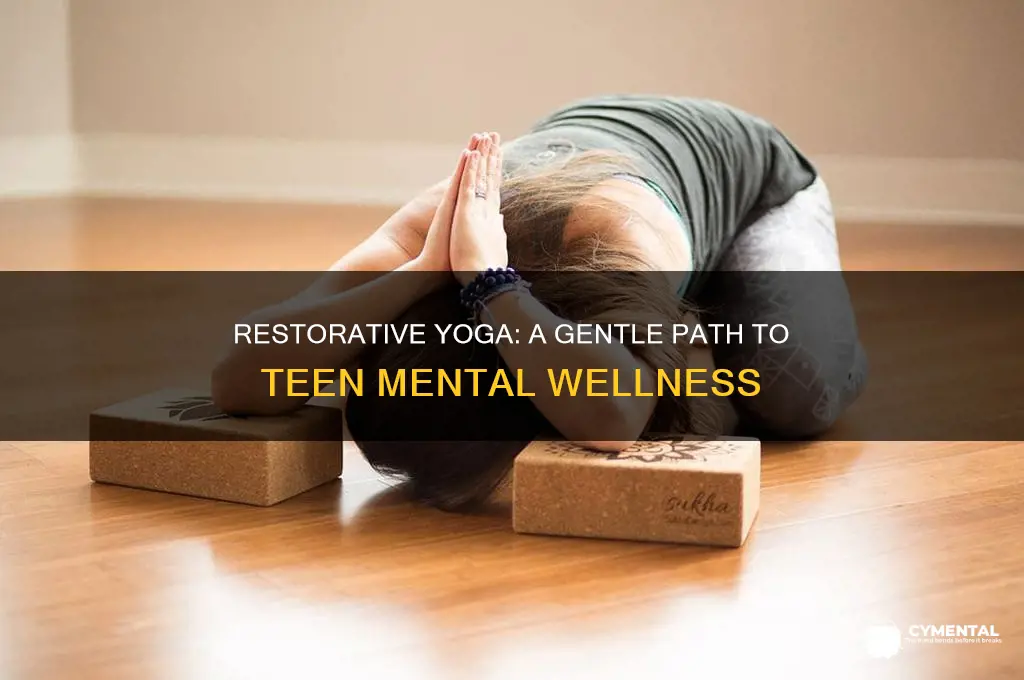
Restorative yoga offers a gentle yet powerful approach to supporting teen mental health by creating a safe space for relaxation, self-awareness, and emotional healing. Through the use of props and passive poses held for extended periods, this practice encourages teens to slow down, connect with their breath, and release physical and mental tension. By activating the parasympathetic nervous system, restorative yoga helps reduce stress, anxiety, and symptoms of depression, fostering a sense of calm and balance. It also promotes mindfulness, allowing teens to develop healthier coping mechanisms and a deeper understanding of their emotions. In a world where adolescents face increasing pressures, restorative yoga provides a nurturing tool to build resilience, improve focus, and cultivate a positive relationship with their bodies and minds.
| Characteristics | Values |
|---|---|
| Stress Reduction | Activates the parasympathetic nervous system, reducing cortisol levels and promoting relaxation. |
| Anxiety Management | Encourages mindfulness and deep breathing, helping teens manage anxiety symptoms. |
| Emotional Regulation | Provides a safe space for emotional processing, reducing emotional reactivity. |
| Improved Sleep | Promotes relaxation, aiding in better sleep quality and duration. |
| Self-Awareness | Enhances body awareness and introspection, fostering a deeper understanding of oneself. |
| Mood Enhancement | Increases serotonin and endorphin levels, improving overall mood and reducing depression symptoms. |
| Trauma Healing | Gentle poses and mindfulness techniques help teens process and cope with trauma. |
| Focus and Concentration | Reduces mental clutter, improving attention span and cognitive function. |
| Physical Relaxation | Relieves muscle tension and physical stress, contributing to mental calmness. |
| Resilience Building | Teaches coping mechanisms and mindfulness tools to navigate mental health challenges. |
| Social Connection | Group restorative yoga sessions can foster a sense of community and reduce feelings of isolation. |
| Mind-Body Connection | Strengthens the link between physical and mental well-being, promoting holistic health. |
| Reduced Symptoms of ADHD | Helps teens with ADHD improve focus and reduce hyperactivity through structured practice. |
| Coping with Peer Pressure | Builds inner strength and self-confidence, aiding in resisting negative peer influences. |
| Long-Term Mental Health Benefits | Regular practice can lead to sustained improvements in mental health and emotional resilience. |
Explore related products


What You'll Learn

Stress reduction through gentle poses and breathwork
Teens today face unprecedented levels of stress, from academic pressures to social media comparisons. Restorative yoga offers a sanctuary through its gentle poses and mindful breathwork, providing a tangible way to unwind both body and mind. Unlike more dynamic forms of exercise, restorative yoga focuses on stillness and support, often using props like bolsters and blankets to encourage deep relaxation. This approach is particularly effective for teens, whose nervous systems are still developing and highly sensitive to stress.
Consider the supported child’s pose, a staple in restorative practice. To perform it, kneel on a mat, sit back on your heels, and fold forward, resting your forehead on a bolster or pillow. Extend your arms gently to the sides or alongside your body. Hold this pose for 5–10 minutes, focusing on slow, deep breaths. This simple posture activates the parasympathetic nervous system, the body’s "rest and digest" mode, counteracting the fight-or-flight response triggered by stress. For teens, this can mean a noticeable reduction in anxiety and an improved ability to focus.
Breathwork, or pranayama, is another cornerstone of restorative yoga’s stress-reducing benefits. One effective technique is diaphragmatic breathing, also known as belly breathing. Instruct teens to lie on their backs with one hand on their chest and the other on their abdomen. Encourage them to inhale slowly through their nose, letting their belly rise, and exhale through their mouth, letting it fall. Aim for 6–10 breaths per minute, a pace proven to lower cortisol levels. This practice can be done anywhere—before a test, after a disagreement, or even in bed before sleep—making it a versatile tool for teens to manage stress in real time.
The combination of gentle poses and breathwork creates a synergistic effect, addressing stress at both physical and mental levels. For instance, a study published in the *Journal of Adolescent Health* found that teens who practiced restorative yoga for 30 minutes, three times a week, reported significant reductions in perceived stress and improved mood over six weeks. The key lies in consistency; even short, daily sessions can yield long-term benefits. Parents and educators can encourage teens to carve out 10–15 minutes daily for these practices, perhaps as part of a bedtime routine or study break.
However, it’s essential to approach restorative yoga with patience and self-compassion. Teens may initially find it challenging to slow down or may feel restless in prolonged stillness. Encourage them to start small, perhaps with a 5-minute pose and gradual increases. Remind them that the goal isn’t perfection but presence—being fully in the moment, breath by breath. With time, this practice can become a trusted ally in navigating the complexities of adolescence, offering a calm refuge in a chaotic world.
Dark Chocolate's Role in Supporting Mental Health: Fact or Fiction?
You may want to see also
Explore related products


Improved sleep quality and relaxation techniques
Teens struggling with mental health often face sleep disturbances, a vicious cycle that exacerbates anxiety, depression, and stress. Restorative yoga offers a natural antidote by activating the parasympathetic nervous system, promoting deep relaxation, and preparing the body for restorative sleep.
Consider this: a 2019 study published in the *Journal of Clinical Psychology* found that adolescents practicing restorative yoga for 30 minutes, 3 times weekly, experienced significant improvements in sleep quality and duration within 8 weeks. Poses like Supported Child’s Pose (using bolsters or blankets) and Reclined Butterfly (with blocks under the knees) gently stretch the body, release tension, and signal to the brain that it’s time to unwind.
To integrate restorative yoga into a teen’s bedtime routine, start with 10–15 minutes of practice 1–2 hours before sleep. Dim the lights, play calming music, and encourage the use of props like eye pillows or weighted blankets to enhance relaxation. Avoid stimulating poses or intense stretches; instead, focus on passive holds (3–5 minutes per pose) that allow the body to surrender fully.
A cautionary note: while restorative yoga is generally safe, teens with chronic pain or injuries should consult a healthcare provider before beginning. Additionally, consistency is key—sporadic practice yields limited results, whereas regular sessions build cumulative benefits over time.
In conclusion, restorative yoga isn’t just about flexibility or strength; it’s a powerful tool for rewiring the teen brain for better sleep. By incorporating simple, accessible poses into their routine, teens can break the cycle of sleeplessness and cultivate a foundation for improved mental well-being.
Vacations and Mental Health: Unwinding for a Healthier Mind
You may want to see also
Explore related products


Emotional regulation via mindfulness practices
Teens today face a barrage of stressors—academic pressure, social media comparison, and hormonal fluctuations—that can overwhelm their emotional landscapes. Restorative yoga, when paired with mindfulness practices, offers a powerful toolkit for emotional regulation. Unlike high-intensity workouts, restorative yoga uses props like bolsters and blankets to support the body in passive poses held for 5–20 minutes, allowing the nervous system to shift from "fight or flight" to "rest and digest." This physiological change creates a fertile ground for mindfulness techniques, such as focused breathing and body scanning, to take root.
Consider the example of a 16-year-old struggling with anxiety. In a supported reclined butterfly pose, she’s guided to notice the rise and fall of her chest without judgment. This simple act of observation interrupts the cycle of anxious thoughts, anchoring her in the present moment. Research shows that even 10 minutes of daily mindfulness practice can reduce cortisol levels by up to 14%, offering teens a tangible way to manage stress. The key is consistency—integrating these practices into a routine, perhaps before bedtime or during study breaks, to build emotional resilience over time.
However, mindfulness in restorative yoga isn’t about eliminating emotions but cultivating a healthier relationship with them. Teens often label emotions as "good" or "bad," leading to suppression or escalation. Through mindfulness, they learn to observe emotions as transient experiences, like clouds passing through the sky. For instance, a teen feeling anger might notice the tightness in their chest during a supported twist pose, acknowledging the sensation without acting impulsively. This emotional distancing fosters self-awareness and reduces reactivity, skills critical for navigating adolescence.
Implementing these practices requires sensitivity to teens’ developmental stage. Shorter sessions (20–30 minutes) with clear instructions and minimal spiritual jargon are more engaging. Incorporating technology, such as guided meditation apps or calming playlists, can make the practice feel less foreign. Parents and educators can model these behaviors, creating a supportive environment for teens to explore mindfulness. For example, a family might designate 10 minutes after dinner for silent, restorative stretching, normalizing the practice as part of daily life.
In conclusion, restorative yoga combined with mindfulness practices provides teens with a practical, accessible method for emotional regulation. By slowing down, tuning into their bodies, and observing their emotions without judgment, teens can develop the resilience needed to thrive in a fast-paced world. The beauty lies in its simplicity—no special equipment or expertise required, just a willingness to pause and breathe. For teens drowning in a sea of stimuli, this could be their lifeline.
Finding Support: Where to Go for Help in Difficult Times
You may want to see also
Explore related products


Enhanced self-awareness and body connection
Teens often struggle with understanding their emotions and physical sensations, a disconnect that can exacerbate mental health issues like anxiety and depression. Restorative yoga bridges this gap by encouraging stillness and introspection, allowing teens to tune into their bodies without the pressure of performance. Poses like Supported Child’s Pose or Reclined Butterfly, held for 5–10 minutes with props like bolsters and blankets, create a safe space for self-observation. During these extended holds, teens learn to notice subtle cues—a tightened jaw, shallow breathing, or restless legs—that often mirror their emotional state. This practice fosters a deeper understanding of how stress manifests physically, empowering them to address it before it escalates.
Consider the process as a guided exploration of the mind-body link. Unlike dynamic yoga styles, restorative yoga emphasizes passive stretching and relaxation, making it accessible even to teens with no prior experience. For instance, in Legs-Up-the-Wall Pose, teens are instructed to focus on the sensation of gravity pulling their legs downward, the softness of the support beneath them, and the rhythm of their breath. Over time, this mindful awareness translates into daily life, where teens become more attuned to signs of tension or discomfort. A 2020 study published in *Frontiers in Psychology* found that adolescents who practiced restorative yoga reported greater body awareness and reduced symptoms of anxiety, highlighting its effectiveness in building this critical skill.
However, introducing restorative yoga to teens requires sensitivity to their developmental stage. Adolescents aged 13–18 are navigating rapid physical and emotional changes, which can make them self-conscious or resistant to introspection. To engage them, instructors should frame the practice as a tool for self-discovery rather than self-improvement. For example, instead of saying, “This will help you relax,” try, “Notice how your body feels in this pose—what does it tell you about your day?” This approach shifts the focus from achieving a result to cultivating curiosity, a mindset more aligned with teen psychology.
Practical tips can further enhance the experience. Encourage teens to keep a journal after each session, noting physical sensations and corresponding emotions. For instance, “My shoulders felt heavy, and I realized I’ve been carrying stress about my exams.” Over weeks, patterns may emerge, providing actionable insights. Additionally, incorporating guided meditations or calming playlists during poses can deepen relaxation and focus. For teens with ADHD or restless tendencies, shorter holds (3–5 minutes) paired with gentle reminders to “come back to your breath” can make the practice more manageable.
Ultimately, enhanced self-awareness through restorative yoga equips teens with a lifelong skill: the ability to listen to their bodies as a barometer of their mental state. This connection doesn’t erase challenges but offers a tangible way to navigate them. A teen who recognizes that a racing heart and clenched fists signal anxiety can pause, breathe, and perhaps choose a restorative pose over a stress spiral. In a world that often urges teens to disconnect from their emotions, restorative yoga provides a counterbalance—a quiet, nurturing space to reconnect with themselves.
After School Programs: Boosting Mental Health and Well-Being in Youth
You may want to see also
Explore related products



Reduced anxiety and mood stabilization
Teens today face a barrage of stressors—academic pressure, social media comparisons, and hormonal fluctuations—that can send anxiety levels soaring and moods on a rollercoaster. Restorative yoga offers a sanctuary from this chaos, providing a structured yet gentle way to recalibrate the nervous system. Unlike more dynamic styles, restorative yoga uses props like bolsters, blankets, and blocks to support the body in passive poses held for 5–20 minutes. This prolonged stillness activates the parasympathetic nervous system, often referred to as the "rest and digest" mode, which counteracts the fight-or-flight response triggered by stress. For teens, this physiological shift can mean the difference between feeling overwhelmed and finding a sense of calm.
Consider the pose *Supta Baddha Konasana* (Reclined Bound Angle Pose). By placing a bolster under the back and allowing the hips to open gently, this pose encourages deep relaxation while stimulating the heart and chest. Research suggests that such heart-opening poses can reduce symptoms of anxiety by lowering cortisol levels, the body’s primary stress hormone. A study published in the *Journal of Alternative and Complementary Medicine* found that participants who practiced restorative yoga for 60 minutes, three times a week, experienced a 20% reduction in anxiety levels after just one month. For teens, incorporating this practice into their evening routine can help ease the transition from a busy day to a restful night, stabilizing mood swings often exacerbated by fatigue.
However, the benefits of restorative yoga extend beyond the physical. The mindfulness component—focusing on breath and bodily sensations—trains the brain to stay present, breaking the cycle of rumination that fuels anxiety. For instance, in *Supported Child’s Pose*, teens are encouraged to synchronize their breath with the rise and fall of their back, a technique that fosters a sense of grounding. This mindful awareness can be particularly powerful for teens dealing with generalized anxiety disorder or panic attacks, as it provides a tangible tool to regain control during moments of distress.
Practical implementation is key. Start with 2–3 sessions per week, each lasting 30–45 minutes, and gradually increase duration as comfort allows. Encourage teens to create a quiet, tech-free space for practice, perhaps with soft lighting or calming music. For those resistant to yoga, frame it as a "mental reset" rather than exercise, emphasizing its role in improving focus and emotional resilience. Parents and educators can also model the behavior by practicing alongside teens, fostering a supportive environment.
In a world where teens are constantly bombarded with stimuli, restorative yoga provides a rare opportunity to disconnect and recharge. By reducing anxiety and stabilizing moods, it equips them with a lifelong skill to navigate life’s challenges. The beauty lies in its simplicity—no special skills or flexibility required, just a willingness to pause and breathe. For teens struggling with mental health, this practice isn’t just beneficial; it’s transformative.
Seeking Support: A Guide to Mental Health Assistance and Recovery
You may want to see also
Frequently asked questions
Restorative yoga promotes deep relaxation by using props and gentle poses to support the body, allowing teens to release physical tension. This relaxation triggers the parasympathetic nervous system, reducing cortisol levels and calming the mind, which helps alleviate stress and anxiety.
Yes, restorative yoga can improve sleep by calming the nervous system and reducing racing thoughts. The practice encourages mindfulness and relaxation, making it easier for teens to unwind and achieve a restful state, which is essential for mental health recovery.
Restorative yoga fosters self-awareness and mindfulness, helping teens recognize and manage their emotions. By focusing on breath and body sensations in a safe, non-judgmental space, teens can develop healthier coping mechanisms and build emotional resilience over time.