Madison Cole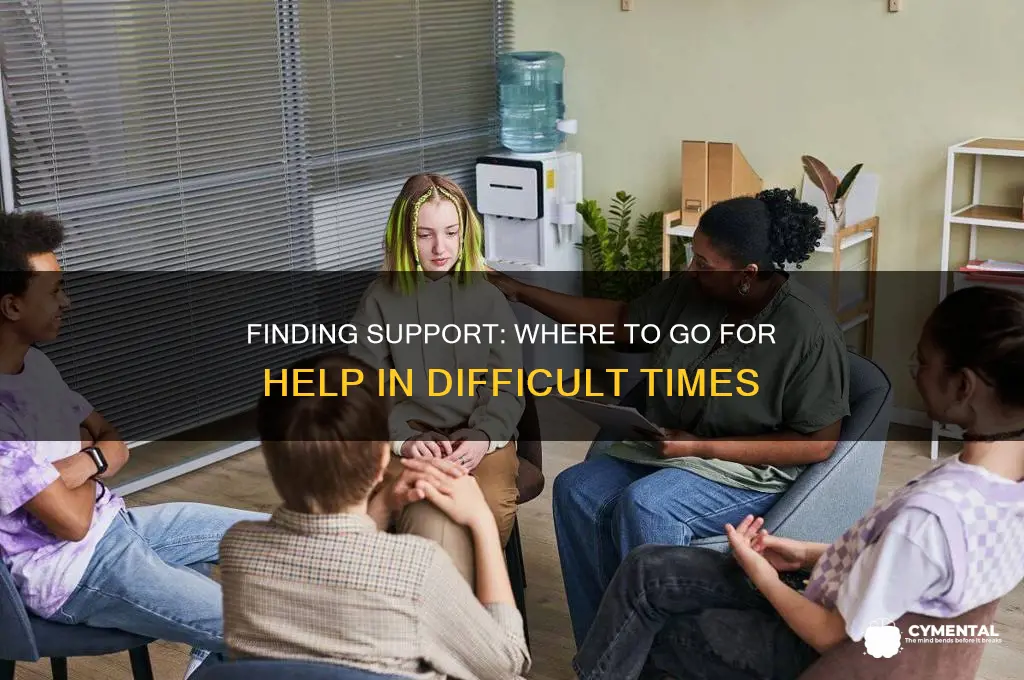
When faced with challenges or uncertainties, knowing where to go for help can make all the difference. Whether it’s personal, professional, or emotional support, there are numerous resources available to guide and assist you. For immediate concerns, trusted friends, family, or colleagues can offer valuable advice and a listening ear. Professional help can be sought from therapists, counselors, or coaches who specialize in specific areas. Online platforms, community centers, and helplines also provide accessible support for various issues, from mental health to legal advice. Additionally, local organizations, religious institutions, and support groups often offer tailored assistance and a sense of community. Identifying the right resource depends on the nature of your need, but taking the first step to seek help is always a courageous and important decision.
Explore related products


What You'll Learn
- Local Support Groups: Find community-based groups offering emotional and practical help for various needs
- Online Resources: Access websites, forums, and apps providing guidance and support on diverse topics
- Professional Services: Connect with therapists, counselors, or specialists for expert assistance and advice
- Hotlines & Helplines: Call 24/7 crisis lines for immediate support in emergencies or distress
- Government & NGOs: Explore programs and services offered by government agencies and non-profits for aid

Local Support Groups: Find community-based groups offering emotional and practical help for various needs
Local support groups are often the unsung heroes of community resilience, providing a lifeline for individuals facing challenges ranging from mental health struggles to financial crises. These groups, typically rooted in neighborhoods or towns, offer a unique blend of emotional and practical assistance that larger, more formalized organizations may lack. Unlike online forums or national hotlines, local support groups foster face-to-face connections, creating a sense of belonging and accountability that can be transformative. For instance, a grief support group in a small town might not only provide a safe space to share emotions but also organize meal trains or childcare swaps for members in need.
To locate these groups, start by tapping into local resources. Libraries, community centers, and places of worship often maintain directories of nearby support groups. Online platforms like Meetup or Facebook Groups can also be valuable, though they may require sifting through less structured options. When evaluating a group, consider its focus, meeting frequency, and facilitator qualifications. For example, a parenting support group might meet weekly and be led by a certified counselor, while a chronic illness group could be peer-led and meet monthly. Practical tips include attending at least two sessions before deciding if it’s the right fit and asking about confidentiality policies upfront.
One of the most compelling aspects of local support groups is their adaptability to diverse needs. Whether you’re a teenager struggling with anxiety, a caregiver for an aging parent, or someone recovering from addiction, there’s likely a group tailored to your situation. For instance, youth-focused groups often incorporate creative activities like art or music therapy, while caregiver groups may offer workshops on stress management and legal resources. Some groups even provide tangible assistance, such as a local food insecurity group that pairs emotional support with access to community gardens or food banks.
However, it’s important to approach these groups with realistic expectations. While they can be profoundly helpful, they are not a substitute for professional therapy or medical treatment. For example, a depression support group can offer camaraderie and coping strategies, but it shouldn’t replace medication or counseling prescribed by a healthcare provider. Additionally, not all groups are created equal; some may lack structure or fail to address specific needs. If a group feels unsupportive or unproductive, don’t hesitate to seek alternatives.
In conclusion, local support groups are a powerful resource for those seeking both emotional solace and practical assistance. By leveraging community ties, these groups create a network of care that extends beyond individual struggles. To maximize their benefits, research thoroughly, attend with an open mind, and complement their support with professional services when necessary. In a world that often feels disconnected, local support groups remind us that help—and hope—can be found right in our own backyard.
Supporting Reluctant Loved Ones: Strategies for Accessing Mental Health Care
You may want to see also
Explore related products



Online Resources: Access websites, forums, and apps providing guidance and support on diverse topics
The internet is a vast repository of knowledge, offering guidance and support on virtually any topic imaginable. From mental health to home repairs, online resources provide accessible, often free, assistance to those in need. Websites like Healthline and WebMD offer medically reviewed articles on health concerns, while platforms such as Khan Academy and Coursera provide educational support across subjects. Forums like Reddit and Quora connect users with communities of experts and peers who share experiences and advice. Apps like Headspace for mindfulness and TaskRabbit for household tasks further illustrate the diversity of online tools available. This digital ecosystem ensures that help is just a click away, tailored to individual needs and preferences.
Navigating these resources effectively requires a strategic approach. Start by identifying reputable sources—look for websites with `.org`, `.edu`, or `.gov` domains, as they often provide reliable information. For forums, prioritize active communities with moderators who ensure quality and accuracy. When using apps, read reviews and check privacy policies to safeguard personal data. For instance, if seeking mental health support, 7 Cups connects users with trained listeners, while BetterHelp offers licensed therapists. Always cross-reference information from multiple sources to ensure accuracy, especially for critical topics like medical advice. This methodical approach maximizes the benefits of online resources while minimizing risks.
One of the most compelling aspects of online resources is their ability to cater to niche needs. For parents, Kelly Mom provides evidence-based advice on breastfeeding, while BabyCenter offers forums for parenting discussions. Gamers can turn to Steam Forums for troubleshooting, and hobbyists find specialized communities on platforms like Instructables. Even complex topics like legal advice have dedicated spaces, such as Avvo, where users can ask questions and find attorneys. This granularity ensures that no matter how specific the need, there’s likely an online resource tailored to address it.
Despite their advantages, online resources are not without limitations. The sheer volume of information can be overwhelming, and not all sources are credible. Misinformation spreads quickly, particularly on unregulated forums or social media. For example, self-diagnosis based on unverified health advice can lead to unnecessary anxiety or delayed treatment. Additionally, digital tools may lack the personal touch of face-to-face interactions, which can be crucial for sensitive issues. To mitigate these risks, combine online resources with professional consultation when possible. For instance, use MyFitnessPal to track nutrition but consult a dietitian for personalized meal plans.
In conclusion, online resources are a powerful tool for accessing guidance and support across diverse topics. By leveraging websites, forums, and apps strategically, individuals can find solutions to their problems efficiently and effectively. However, it’s essential to approach these tools with discernment, verifying information and complementing them with professional advice when needed. Whether you’re learning a new skill, seeking emotional support, or solving a practical problem, the digital world offers a wealth of resources ready to assist.
Effective Strategies and Tools to Help You Overcome Daily Challenges
You may want to see also
Explore related products


Professional Services: Connect with therapists, counselors, or specialists for expert assistance and advice
Navigating life's challenges often requires more than self-help books or online forums. When emotional distress, mental health concerns, or complex personal issues arise, seeking professional services can be transformative. Therapists, counselors, and specialists offer evidence-based strategies tailored to individual needs, providing a structured path toward healing and growth. Unlike generic advice, these professionals bring expertise in diagnosing, treating, and managing conditions, ensuring you receive the most effective support.
Consider the process of finding the right professional as a deliberate, personalized journey. Start by identifying your specific needs—whether it’s anxiety, relationship issues, or trauma—and research specialists trained in those areas. For instance, cognitive-behavioral therapists excel in treating anxiety disorders, while marriage and family therapists focus on relational dynamics. Online directories like Psychology Today or GoodTherapy allow you to filter by specialty, location, and insurance acceptance, streamlining your search. Don’t hesitate to schedule consultations to assess compatibility; the therapeutic relationship is a cornerstone of successful outcomes.
One common misconception is that therapy is a last resort or a sign of weakness. In reality, it’s a proactive step toward self-improvement. Studies show that 75% of individuals who engage in therapy experience significant benefits, including reduced symptoms and improved quality of life. For example, adolescents struggling with depression often benefit from dialectical behavior therapy (DBT), which teaches emotional regulation and distress tolerance skills. Similarly, couples counseling can provide tools to rebuild trust and communication, even in long-standing relationships.
Practical considerations are equally important. Verify your insurance coverage to understand copays and session limits, or explore sliding-scale options if cost is a barrier. Teletherapy has also expanded access, allowing individuals to connect with professionals remotely. However, be mindful of potential limitations, such as the lack of non-verbal cues in virtual sessions. Combining therapy with self-care practices—like mindfulness or journaling—can enhance progress, but always consult your therapist before integrating new strategies.
Ultimately, engaging with professional services is an investment in your well-being. It’s not about “fixing” yourself but about gaining insights, tools, and support to navigate life’s complexities. Whether you’re addressing a specific issue or seeking personal growth, therapists, counselors, and specialists provide a safe, nonjudgmental space to explore and evolve. Take the first step—reach out, ask questions, and prioritize your mental health. The right professional can guide you toward a more resilient, fulfilling life.
Revitalize Your Mind: Strategies to Overcome Mental Exhaustion Effectively
You may want to see also
Explore related products


Hotlines & Helplines: Call 24/7 crisis lines for immediate support in emergencies or distress
In moments of crisis, the immediacy of support can be a lifeline. Hotlines and helplines offer a direct connection to trained professionals who provide real-time assistance, whether you’re facing mental health emergencies, domestic violence, substance abuse, or other urgent situations. These services are accessible 24/7, ensuring help is available whenever distress strikes, regardless of the hour. Unlike online resources or in-person appointments, they provide instant, confidential, and non-judgmental support tailored to your immediate needs.
Consider this scenario: a teenager struggling with suicidal thoughts at 3 a.m. or a survivor of domestic violence seeking safety in the middle of the night. In such cases, hotlines like the National Suicide Prevention Lifeline (988 in the U.S.) or the National Domestic Violence Hotline (1-800-799-SAFE) become critical resources. These lines are staffed by professionals trained to de-escalate crises, offer coping strategies, and connect callers to local emergency services if needed. For instance, the Crisis Text Line (text HOME to 741741) provides a text-based alternative for those uncomfortable with voice calls, proving that accessibility is a cornerstone of these services.
While hotlines are invaluable, it’s essential to understand their scope. They are not a substitute for long-term therapy or medical treatment but serve as a bridge to immediate relief and further resources. For example, someone experiencing a panic attack can call a mental health hotline to receive grounding techniques, but they may still need follow-up care from a therapist or psychiatrist. Additionally, some hotlines cater to specific demographics—such as LGBTQ+ youth (The Trevor Project: 1-866-488-7386) or veterans (Veterans Crisis Line: 988, Press 1)—ensuring culturally competent support.
Practical tips for using hotlines effectively include keeping a list of relevant numbers in your phone or wallet, as stress can impair memory during emergencies. If calling from an unsafe location, inform the operator immediately; they can assist discreetly. For those hesitant to speak, many hotlines offer chat or text options, though response times may vary. Remember, reaching out is a sign of strength, not weakness, and these services are designed to meet you where you are, no matter the circumstance.
In conclusion, hotlines and helplines are a vital component of emergency support systems, offering immediate, confidential, and specialized assistance. By understanding their purpose, limitations, and practicalities, individuals can leverage these resources effectively during times of distress. Whether you’re in crisis or helping someone else, knowing where to turn can make all the difference.
Supporting Your Adult Son’s Mental Health: Practical Steps for Parents
You may want to see also
Explore related products


Government & NGOs: Explore programs and services offered by government agencies and non-profits for aid
Government agencies and non-governmental organizations (NGOs) are often the first line of defense for individuals and communities in need. These entities offer a wide array of programs and services designed to provide aid, from financial assistance to healthcare, education, and emergency relief. For instance, in the United States, the Supplemental Nutrition Assistance Program (SNAP) provides eligible low-income individuals and families with funds to purchase groceries, while NGOs like Feeding America operate food banks and meal programs nationwide. Understanding the scope of these offerings can be the key to accessing critical support during challenging times.
To effectively explore these resources, start by identifying your specific needs. Are you seeking housing assistance, mental health services, or educational support? Government websites, such as USA.gov or Benefits.gov, serve as centralized hubs where you can search for federal programs by category or eligibility criteria. For localized aid, visit your state or city’s official website, which often lists regional initiatives and partnerships with NGOs. For example, the Department of Housing and Urban Development (HUD) offers rental assistance programs, while local NGOs like Habitat for Humanity provide affordable housing solutions. Pairing these resources can maximize your chances of finding comprehensive support.
While government programs often have structured eligibility requirements, NGOs frequently fill gaps with more flexible, community-driven solutions. For instance, the YMCA provides affordable childcare and after-school programs, catering to working parents who may not qualify for government subsidies. Similarly, organizations like the American Red Cross offer disaster relief and emergency services, often collaborating with government agencies to amplify their reach. When navigating these options, consider reaching out directly to NGOs for personalized assistance, as they may offer case management or advocacy services that government programs do not.
One practical tip is to leverage technology to streamline your search. Many governments and NGOs have mobile apps or online portals where you can apply for aid, track your application status, or find nearby service centers. For example, the FEMA app provides real-time updates on disasters and connects users to emergency resources. Additionally, social media platforms can be valuable tools for discovering local initiatives or crowdfunding campaigns supported by NGOs. However, exercise caution and verify the legitimacy of online resources to avoid scams or misinformation.
In conclusion, government agencies and NGOs form a robust ecosystem of support, each bringing unique strengths to the table. By understanding their distinct roles and leveraging their combined resources, individuals can navigate challenges more effectively. Whether through structured government programs or the adaptability of NGOs, help is often closer than it seems—provided you know where to look. Start with a clear assessment of your needs, utilize official platforms, and don’t hesitate to tap into the community-driven solutions offered by non-profits.
Healing Hooves: How Horses Boost Mental Health and Well-being
You may want to see also
Frequently asked questions
For immediate mental health support, you can contact crisis hotlines such as the National Suicide Prevention Lifeline (988 in the U.S.), local crisis centers, or online resources like Crisis Text Line. Additionally, visit an emergency room or call emergency services if you or someone else is in immediate danger.
For legal advice, consider contacting local legal aid organizations, bar associations, or pro bono services. Online platforms like LegalZoom or Avvo can also provide guidance. If you’re in immediate need, consult a licensed attorney or visit a legal clinic.
For financial assistance, reach out to nonprofit organizations like the United Way, local community centers, or government programs such as SNAP or unemployment benefits. Financial counseling is available through organizations like the National Foundation for Credit Counseling (NFCC) or local financial advisors.