Ava Ramirez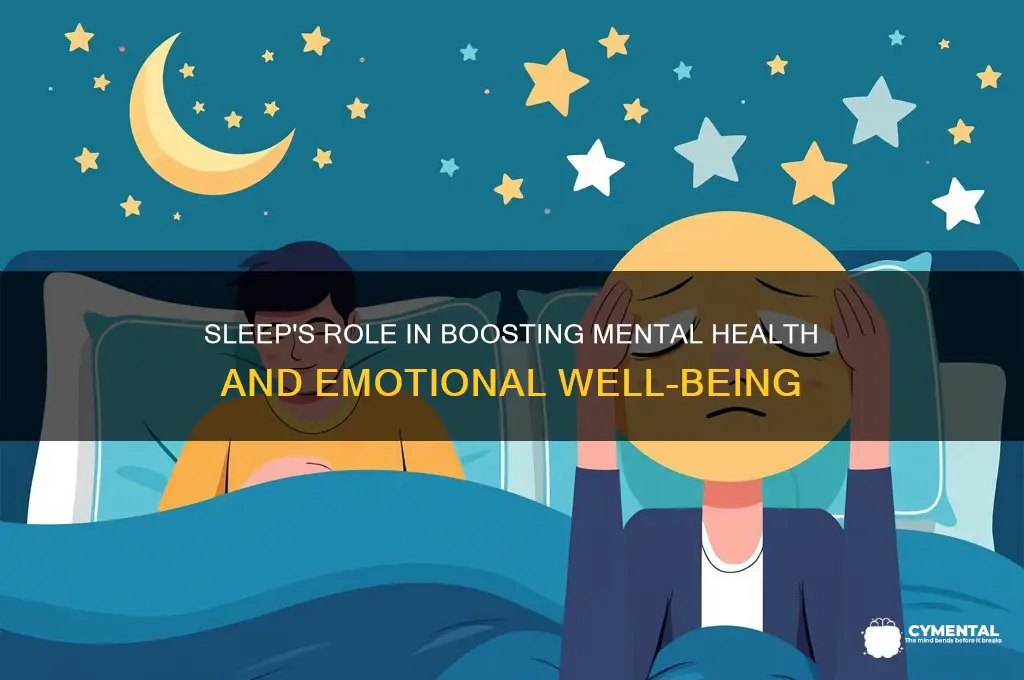
Sleep plays a crucial role in maintaining and enhancing mental health by allowing the brain to process emotions, consolidate memories, and restore cognitive functions. During sleep, the brain clears out toxins and strengthens neural connections, which supports emotional regulation and reduces the risk of anxiety and depression. Adequate rest also helps manage stress by regulating the body’s stress hormone, cortisol, and promotes resilience to daily challenges. Conversely, chronic sleep deprivation can exacerbate mental health issues, impair judgment, and hinder the ability to cope with adversity. Thus, prioritizing quality sleep is essential for emotional well-being and overall mental resilience.
| Characteristics | Values |
|---|---|
| Emotional Regulation | Sleep helps regulate emotions by allowing the brain to process and consolidate emotional experiences. Lack of sleep can lead to increased irritability, mood swings, and heightened sensitivity to negative emotions. |
| Stress Reduction | Adequate sleep reduces cortisol (stress hormone) levels, promoting relaxation and resilience to stressors. Chronic sleep deprivation can exacerbate stress and anxiety. |
| Cognitive Function | Sleep enhances memory consolidation, problem-solving, and decision-making. Poor sleep impairs concentration, creativity, and cognitive performance. |
| Mental Resilience | Quality sleep strengthens the brain's ability to cope with challenges, reducing the risk of mental health disorders like depression and anxiety. |
| Neuroplasticity | Sleep supports neuroplasticity, the brain's ability to adapt and reorganize. This is crucial for learning, recovery, and maintaining mental health. |
| Mood Stabilization | Sleep helps maintain a balanced mood by regulating neurotransmitters like serotonin and dopamine. Sleep deprivation is linked to mood disorders. |
| Reduced Risk of Mental Disorders | Consistent sleep patterns lower the risk of developing conditions such as depression, anxiety, bipolar disorder, and schizophrenia. |
| Improved Social Functioning | Adequate sleep enhances empathy, communication, and interpersonal skills, fostering healthier relationships. |
| Physical Health Connection | Sleep supports overall physical health, which indirectly benefits mental well-being by reducing inflammation and improving immune function. |
| Recovery from Trauma | Sleep aids in processing traumatic experiences, reducing symptoms of PTSD and promoting emotional healing. |
| Hormonal Balance | Sleep regulates hormones like melatonin and growth hormone, which are essential for mental and emotional stability. |
| Reduced Suicidal Ideation | Better sleep is associated with a lower risk of suicidal thoughts and behaviors, particularly in individuals with mental health conditions. |
Explore related products




What You'll Learn
- Sleep reduces stress and anxiety by regulating cortisol levels and promoting relaxation
- Improved sleep enhances mood by balancing neurotransmitters like serotonin and dopamine
- Adequate rest boosts cognitive function, improving focus, memory, and problem-solving skills
- Sleep supports emotional resilience, helping manage and process difficult emotions effectively
- Restorative sleep aids in reducing symptoms of depression and preventing its onset

Sleep reduces stress and anxiety by regulating cortisol levels and promoting relaxation
Sleep acts as a natural regulator of cortisol, the body’s primary stress hormone. When you’re sleep-deprived, cortisol levels spike, amplifying feelings of stress and anxiety. Conversely, adequate sleep—typically 7–9 hours for adults—helps maintain cortisol within a healthy range. Research shows that even a single night of restorative sleep can reduce cortisol levels by up to 15%, creating a biochemical foundation for calmness. For teens, who require 8–10 hours, this regulation is especially critical during their hormonally turbulent years.
To harness sleep’s stress-reducing power, prioritize a consistent sleep schedule. Go to bed and wake up at the same time daily, even on weekends. This trains your body’s internal clock, optimizing cortisol rhythms. Pair this with a relaxing bedtime routine: dim lights, avoid screens 1–2 hours before bed, and incorporate calming activities like reading or deep breathing. For those with anxiety, a warm bath with magnesium flakes can further promote relaxation by reducing muscle tension and lowering cortisol.
Compare the effects of sleep on cortisol to a thermostat regulating room temperature. Just as a thermostat prevents overheating, sleep prevents cortisol from surging uncontrollably. Chronic sleep deprivation, however, is like leaving the heat on full blast—it creates an environment where stress and anxiety thrive. Studies reveal that individuals sleeping less than 6 hours nightly have cortisol levels 50% higher than those sleeping 7–8 hours, underscoring the direct link between sleep and stress management.
For practical implementation, start with small adjustments. If you’re currently sleeping 5–6 hours, aim to add 15–30 minutes nightly until you reach the 7–9 hour range. Track your stress levels using a journal or app to observe improvements. Additionally, limit caffeine after 2 p.m. and create a sleep-friendly environment—cool, dark, and quiet. For parents, ensure children and teens adhere to age-appropriate sleep durations: 9–12 hours for school-aged children and 8–10 hours for teens.
The takeaway is clear: sleep isn’t a luxury—it’s a non-negotiable tool for managing stress and anxiety. By regulating cortisol and promoting relaxation, it equips your mind and body to handle daily pressures more effectively. Treat sleep as a priority, not a compromise, and you’ll build resilience against the mental toll of modern life.
Supporting Through Crisis: Texting Tips for Mental Breakdown Assistance
You may want to see also
Explore related products


Improved sleep enhances mood by balancing neurotransmitters like serotonin and dopamine
Sleep isn't just downtime for your body; it's a critical period for brain maintenance, particularly in regulating mood-influencing neurotransmitters like serotonin and dopamine. During sleep, especially in the REM stage, the brain recalibrates these chemical messengers, ensuring they function optimally. Serotonin, often called the "feel-good" neurotransmitter, plays a key role in regulating mood, anxiety, and happiness. Dopamine, associated with reward and motivation, helps drive focus and pleasure. Without adequate sleep, the delicate balance of these neurotransmitters is disrupted, leading to mood swings, irritability, and even symptoms of depression.
Consider this: a single night of poor sleep can reduce serotonin production by up to 10%, according to some studies. Over time, chronic sleep deprivation can lead to a persistent serotonin deficit, making it harder to cope with stress and maintain emotional stability. Similarly, dopamine levels fluctuate with sleep quality, affecting motivation and the ability to experience pleasure. For instance, individuals with insomnia often report feeling less motivated and less enjoyment in activities they once loved. This isn’t just anecdotal—research shows that sleep-deprived individuals have lower dopamine receptor availability, which correlates with decreased mood and energy.
To harness sleep’s mood-enhancing benefits, prioritize consistent sleep hygiene. Aim for 7–9 hours of sleep per night, especially for adults aged 18–64. Establish a bedtime routine that signals to your brain it’s time to wind down: dim lights, avoid screens at least an hour before bed, and incorporate relaxation techniques like deep breathing or meditation. For those struggling with serotonin imbalances, exposure to natural sunlight in the morning can boost serotonin production, while regular exercise increases dopamine levels. However, avoid intense workouts close to bedtime, as they can interfere with sleep.
A practical tip for balancing neurotransmitters is to monitor your diet. Foods rich in tryptophan, a serotonin precursor, such as turkey, eggs, and bananas, can support serotonin synthesis. For dopamine, include tyrosine-rich foods like almonds, dairy, and beans. Pairing these dietary choices with adequate sleep creates a synergistic effect, amplifying their benefits. Conversely, be cautious of caffeine and alcohol, as they disrupt sleep patterns and further imbalance neurotransmitter levels.
In conclusion, improved sleep acts as a natural regulator of serotonin and dopamine, directly impacting mood and emotional resilience. By understanding this relationship and implementing targeted strategies, you can use sleep as a powerful tool to enhance mental well-being. It’s not just about resting—it’s about actively restoring your brain’s chemical balance for a brighter, more stable mood.
Music's Power: Boosting Middle Schoolers' Mental Health and Well-Being
You may want to see also
Explore related products


Adequate rest boosts cognitive function, improving focus, memory, and problem-solving skills
Sleep is the unsung hero of cognitive performance, a nightly reset that sharpens the mind’s tools for the day ahead. During deep sleep, the brain consolidates memories, pruning unnecessary information and strengthening neural pathways. Studies show that adults who consistently achieve 7–9 hours of sleep per night exhibit a 20–30% improvement in memory retention compared to those who sleep less. This process, known as synaptic plasticity, is essential for learning and adapting to new information. Without it, the brain struggles to encode experiences, leaving you with a foggy recall of even recent events.
Consider the practical implications for problem-solving. A well-rested brain processes information more efficiently, identifying patterns and generating creative solutions faster. Research from the Journal of Experimental Psychology found that participants who slept after encountering a complex problem were twice as likely to solve it the next day compared to those who stayed awake. Sleep deprivation, on the other hand, impairs the prefrontal cortex, the brain’s decision-making hub, leading to rigid thinking and poor judgment. For students, professionals, or anyone tackling challenges, prioritizing sleep isn’t a luxury—it’s a strategic advantage.
Focus, often the first casualty of sleep deprivation, relies on the brain’s ability to filter distractions. During sleep, the brain clears out waste products like beta-amyloid proteins, which accumulate during waking hours and interfere with attention. A study published in Nature Neuroscience revealed that even one night of poor sleep reduces the brain’s ability to sustain attention by up to 40%. To combat this, establish a consistent sleep schedule, dim screens an hour before bed, and create a cool, dark environment conducive to rest. These small adjustments can dramatically enhance your ability to concentrate, whether you’re analyzing data or reading a book.
For those skeptical of sleep’s impact, compare it to charging a smartphone. Just as a device runs slower and glitches with a low battery, the brain falters without adequate rest. Teens, who require 8–10 hours of sleep, are particularly vulnerable; a study in the Journal of Adolescent Health linked insufficient sleep to lower grades and increased difficulty in problem-solving. Similarly, older adults can offset age-related cognitive decline by maintaining healthy sleep habits. The takeaway? Sleep isn’t downtime—it’s active maintenance for the brain, ensuring it operates at peak capacity.
Finally, integrate sleep hygiene into your routine as you would any other health practice. Avoid caffeine after 2 p.m., incorporate a 10-minute wind-down ritual (like reading or meditation), and limit naps to 20 minutes to prevent grogginess. By treating sleep as a non-negotiable pillar of cognitive health, you’ll notice sharper focus, quicker recall, and more innovative solutions to life’s puzzles. The brain thrives on rest—give it what it needs, and it will reward you with clarity and efficiency.
Empowering Self-Care: Practical Strategies to Help Yourself Thrive Daily
You may want to see also
Explore related products


Sleep supports emotional resilience, helping manage and process difficult emotions effectively
Sleep is the brain’s nightly reset button, a process critical for emotional resilience. During deep sleep, the amygdala—the brain’s emotional alarm system—cools down, while the prefrontal cortex, responsible for rational decision-making, strengthens its connections. This overnight recalibration allows individuals to approach difficult emotions with clarity rather than reactivity. For instance, a study published in *Nature Communications* found that participants who slept after viewing distressing images were less likely to experience heightened emotional responses when revisiting them compared to those who stayed awake. This neurological housekeeping is why a single night of quality sleep can shift perspective on a stressful situation from overwhelming to manageable.
To harness sleep’s emotional benefits, prioritize consistency over duration. Aim for 7–9 hours of uninterrupted sleep, particularly for adults aged 18–64, as this range aligns with the brain’s need to complete multiple sleep cycles. Adolescents (14–17) require 8–10 hours, while older adults (65+) should still target 7–8 hours despite common misconceptions about reduced sleep needs. Practical tips include maintaining a cool, dark bedroom and establishing a pre-sleep routine that avoids screens at least one hour before bed. Blue light from devices suppresses melatonin, the sleep hormone, disrupting the emotional regulation processes that occur during REM sleep.
Compare the effects of sleep on emotional resilience to a pressure cooker’s release valve. Without adequate sleep, emotional pressure builds, leading to outbursts or prolonged stress. Conversely, sufficient sleep acts as a release mechanism, allowing emotions to be processed and diffused. For example, a 2018 study in *Journal of Sleep Research* demonstrated that individuals with insomnia reported higher levels of anxiety and irritability, which decreased significantly after improving sleep quality. This comparison underscores why sleep isn’t just rest—it’s active emotional maintenance.
Persuasively, consider sleep as a non-negotiable tool for emotional survival. Just as physical wounds require rest to heal, emotional wounds need sleep to mend. Ignoring this need can lead to chronic emotional dysregulation, increasing the risk of conditions like depression or anxiety. For those struggling with difficult emotions, a sleep-focused intervention—such as cognitive behavioral therapy for insomnia (CBT-I)—can be as transformative as traditional therapy. Start by tracking sleep patterns for two weeks to identify disruptions, then address them systematically. Small changes, like shifting bedtime by 15 minutes earlier each week, can yield significant emotional dividends.
Animal Companionship: Boosting Mental Health and Emotional Well-Being in Humans
You may want to see also
Explore related products





Restorative sleep aids in reducing symptoms of depression and preventing its onset
Sleep isn't just a luxury; it's a cornerstone of mental well-being. Among its many benefits, restorative sleep plays a pivotal role in mitigating symptoms of depression and acting as a preventive measure against its onset. Research consistently shows that individuals who achieve 7-9 hours of uninterrupted, high-quality sleep per night report lower levels of depressive symptoms compared to those with sleep deficits. This isn't merely correlation—neurological studies reveal that deep sleep stages, particularly slow-wave sleep, facilitate emotional regulation by clearing toxic byproducts from the brain and strengthening neural pathways associated with mood stability.
Consider the mechanism at play: during restorative sleep, the brain processes and consolidates emotions experienced throughout the day, reducing their intensity. For instance, a study published in *Nature Communications* found that participants who slept after viewing emotionally charged images exhibited a 60% reduction in emotional reactivity the following day compared to those who stayed awake. This emotional buffering effect is particularly crucial for individuals at risk of depression, as it prevents negative emotions from spiraling into persistent mood disorders. Practical steps to enhance this process include maintaining a consistent sleep schedule, creating a dark and quiet sleep environment, and avoiding screens at least an hour before bed to promote natural melatonin production.
However, achieving restorative sleep isn’t always straightforward, especially for those already grappling with depressive symptoms. Sleep disturbances like insomnia or hypersomnia often accompany depression, creating a vicious cycle. Breaking this cycle requires targeted interventions. Cognitive Behavioral Therapy for Insomnia (CBT-I) has proven effective, with studies showing a 50% reduction in insomnia symptoms and a corresponding decrease in depressive symptoms within 8 weeks. Additionally, incorporating relaxation techniques such as progressive muscle relaxation or mindfulness meditation can improve sleep quality by reducing pre-sleep arousal. For those with persistent difficulties, consulting a healthcare provider for a sleep evaluation may uncover underlying issues like sleep apnea, which, when treated, can significantly alleviate depressive symptoms.
A comparative analysis highlights the importance of sleep quality over quantity. While 7-9 hours is the recommended range, fragmented or non-restorative sleep can negate these benefits. For example, shift workers who achieve the same number of sleep hours as day workers but experience disrupted sleep cycles are 40% more likely to report depressive symptoms. This underscores the need for prioritizing sleep hygiene practices, such as avoiding caffeine after noon, engaging in regular physical activity, and limiting daytime naps to 20 minutes to preserve nighttime sleep depth. By focusing on both the duration and quality of sleep, individuals can harness its restorative power to combat depression effectively.
In conclusion, restorative sleep is a potent tool in the fight against depression, both as a symptom reliever and a preventive measure. By understanding the science behind sleep’s role in emotional regulation and implementing practical strategies to enhance sleep quality, individuals can fortify their mental health. Whether through structured therapies, lifestyle adjustments, or environmental modifications, prioritizing restorative sleep is an actionable step toward reducing the burden of depression and fostering overall well-being.
Reading the Bible: A Path to Mental Health and Healing?
You may want to see also
Frequently asked questions
Sleep plays a crucial role in emotional regulation by allowing the brain to process and consolidate emotions. Lack of sleep can lead to increased irritability, anxiety, and difficulty managing stress, while adequate sleep helps maintain emotional balance and stability.
Yes, chronic sleep deprivation is strongly linked to the development and worsening of mental health disorders such as depression and anxiety. Sleep helps regulate neurotransmitters and stress hormones, and insufficient sleep can disrupt these systems, increasing vulnerability to mental health issues.
Sleep is essential for cognitive processes like memory, attention, and problem-solving. During sleep, the brain clears waste products and consolidates memories, improving mental clarity and focus. Poor sleep impairs these functions, leading to difficulties with concentration and decision-making.
Yes, sleep helps regulate the body’s stress response by balancing cortisol levels and supporting the nervous system. Adequate sleep enhances resilience to stress, while sleep deprivation can heighten stress reactivity and make it harder to cope with challenges.
Sleep is a foundational pillar of mental well-being, supporting emotional health, cognitive function, and stress management. It also aids in recovery from mental health challenges by allowing the brain to repair and restore itself, promoting long-term mental resilience and stability.