Ava Ramirez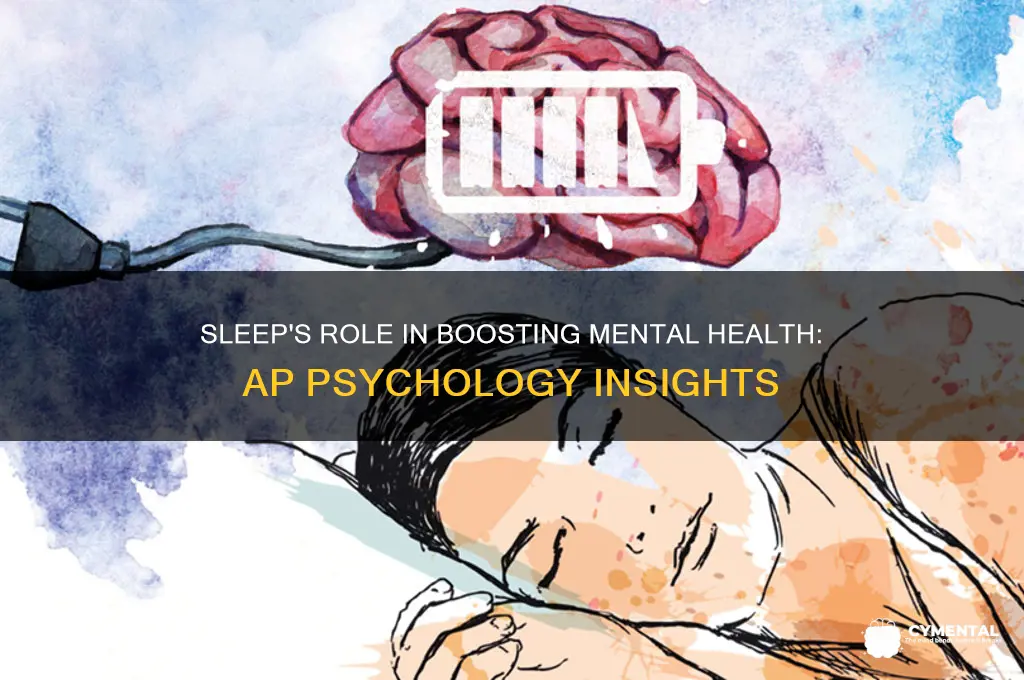
Sleep plays a crucial role in maintaining and enhancing mental health, a topic extensively explored in AP Psychology. Adequate sleep supports cognitive functions such as memory consolidation, emotional regulation, and problem-solving, all of which are essential for psychological well-being. During sleep, the brain processes and stores information, reducing stress and anxiety while promoting emotional resilience. Chronic sleep deprivation, on the other hand, is linked to increased risks of mood disorders, such as depression and anxiety, and can impair judgment and decision-making. Understanding the relationship between sleep and mental health highlights the importance of prioritizing healthy sleep habits as a foundational aspect of psychological self-care.
| Characteristics | Values |
|---|---|
| Emotional Regulation | Sleep helps regulate emotions by allowing the brain to process and consolidate emotional experiences, reducing reactivity to stressors. |
| Memory Consolidation | Adequate sleep strengthens memory retention and learning by transferring information from short-term to long-term memory. |
| Stress Reduction | Sleep lowers cortisol levels, reducing stress and anxiety, and promotes relaxation. |
| Cognitive Function | Improves attention, problem-solving, and decision-making abilities by restoring brain function. |
| Mood Stabilization | Lack of sleep is linked to increased irritability, depression, and mood disorders; sufficient sleep stabilizes mood. |
| Neuroplasticity | Sleep enhances brain plasticity, supporting the formation of new neural connections and adaptability. |
| Hormonal Balance | Regulates hormones like serotonin and dopamine, which are crucial for mental well-being and mood regulation. |
| Reduction of Mental Health Risks | Chronic sleep deprivation is associated with higher risks of anxiety, depression, and other mental health disorders. |
| Recovery and Repair | During sleep, the brain clears toxins and repairs neurons, supporting overall mental health. |
| Resilience to Trauma | Adequate sleep improves emotional resilience and the ability to cope with traumatic experiences. |
Explore related products




What You'll Learn

Sleep's role in emotional regulation and mood stabilization
Sleep deprivation amplifies emotional reactivity, making everyday irritations feel like insurmountable obstacles. Studies show that after just one night of restricted sleep, individuals exhibit heightened amygdala activity—the brain's alarm center—in response to negative stimuli. Conversely, the prefrontal cortex, responsible for rational decision-making and emotional control, shows decreased activity. This imbalance explains why sleep-deprived individuals are more prone to snapping at colleagues, overreacting to minor setbacks, or feeling overwhelmed by emotions they'd typically manage.
Consider this scenario: Imagine two versions of yourself facing a stressful work presentation. One version has had a full 7-8 hours of sleep, while the other has only slept for 4 hours. The well-rested version is likely to approach the presentation with calm focus, able to handle unexpected questions or technical glitches with composure. The sleep-deprived version, however, might feel their heart racing, their thoughts scattered, and their temper fraying at the slightest criticism. This illustrates how sleep acts as a buffer against emotional volatility, allowing for more measured responses to life's challenges.
The relationship between sleep and emotional regulation isn't just anecdotal; it's rooted in neurobiology. During deep sleep stages, the brain processes and consolidates emotional memories, effectively "filing away" the day's experiences. This process helps prevent emotional residue from spilling over into the next day, contributing to a sense of emotional reset. For adolescents, whose brains are still developing emotional regulation circuits, adequate sleep (8-10 hours per night) is particularly crucial. Chronic sleep deprivation during these formative years can lead to heightened anxiety, mood swings, and difficulty managing stress.
To harness sleep's mood-stabilizing benefits, prioritize a consistent sleep schedule, even on weekends. Create a relaxing bedtime routine that signals to your brain it's time to wind down—dim lights, avoid screens for at least an hour before bed, and engage in calming activities like reading or gentle stretching. For those struggling with insomnia, cognitive-behavioral therapy for insomnia (CBT-I) has proven highly effective, often outperforming sleep medications without the side effects. Remember, sleep isn't a luxury; it's a non-negotiable pillar of mental health, essential for keeping emotions in balance and navigating life's ups and downs with resilience.
Empowering Young Hearts: Children Supporting Seniors with Mental Health Challenges
You may want to see also
Explore related products


Memory consolidation and cognitive function enhancement during sleep
Sleep is not merely a passive state of rest; it is an active process crucial for memory consolidation and cognitive function enhancement. During sleep, the brain reorganizes and consolidates memories, transferring information from short-term to long-term storage. This process, primarily occurring during deep sleep (slow-wave sleep) and REM sleep, strengthens neural connections and integrates new knowledge with existing memories. For instance, studies show that students who sleep after learning retain information better than those who stay awake, highlighting the direct link between sleep and memory retention.
To optimize memory consolidation, aim for 7-9 hours of uninterrupted sleep per night, especially after intense learning sessions. Practical tips include maintaining a consistent sleep schedule, creating a dark and quiet sleep environment, and avoiding stimulants like caffeine at least 6 hours before bedtime. For adolescents, who require 8-10 hours of sleep, prioritizing sleep is essential for academic performance and cognitive development. Conversely, sleep deprivation disrupts this process, leading to forgetfulness and impaired learning ability, as evidenced by research in *AP Psychology* contexts.
A comparative analysis reveals that REM sleep plays a unique role in enhancing creative problem-solving and emotional memory processing. During this stage, the brain reactivates and restructures memories, often leading to insights or new connections. For example, musicians and artists frequently report breakthroughs after a good night’s sleep. In contrast, deep sleep focuses on declarative memory (facts and events), making it vital for students preparing for exams. Balancing both sleep stages is key, achieved by ensuring a full sleep cycle (approximately 90 minutes per cycle) without interruptions.
Persuasively, prioritizing sleep is not just beneficial—it’s essential for cognitive peak performance. Chronic sleep deprivation, common among college students and professionals, impairs attention, decision-making, and creativity. A study published in *Nature* found that even one night of sleep loss reduces cognitive performance equivalent to a 0.10 blood alcohol level. To counteract this, incorporate a pre-sleep routine that signals to your brain it’s time to wind down, such as reading or practicing mindfulness. For shift workers or those with irregular schedules, napping strategically (20-30 minutes) can partially mitigate cognitive deficits, though it’s no substitute for consistent nighttime sleep.
In conclusion, memory consolidation and cognitive function enhancement during sleep are not passive benefits but active processes that require intentionality. By understanding the roles of deep and REM sleep, and implementing practical strategies to optimize rest, individuals can significantly improve learning, problem-solving, and overall mental health. Treat sleep as a non-negotiable pillar of cognitive wellness, and the brain will reward you with sharper memory and enhanced mental clarity.
Ketamine's Role in Mental Health: A Breakthrough Treatment Explained
You may want to see also
Explore related products


Sleep deprivation's impact on stress and anxiety levels
Sleep deprivation amplifies the body's stress response, triggering a cascade of physiological reactions that exacerbate anxiety. When you lose even a single night of sleep, your body releases higher levels of cortisol, often referred to as the stress hormone. For example, studies show that individuals who sleep less than 6 hours a night have cortisol levels up to 50% higher than those who get 7-9 hours. This hormonal surge puts your body in a heightened state of alert, making you more reactive to stressors, whether they’re real or perceived. Over time, chronic sleep loss can lead to a persistent state of hyperarousal, where even minor inconveniences feel overwhelming.
Consider the brain’s emotional regulation centers, such as the amygdala and prefrontal cortex. The amygdala processes fear and emotional responses, while the prefrontal cortex helps regulate these reactions. Sleep deprivation weakens the prefrontal cortex’s ability to keep the amygdala in check, leading to heightened emotional reactivity. For instance, a study published in *Nature Neuroscience* found that sleep-deprived individuals showed a 60% greater amygdala response to negative stimuli compared to well-rested participants. This imbalance explains why pulling an all-nighter or consistently sleeping poorly can make you feel more irritable, on edge, or prone to anxiety attacks.
To mitigate these effects, prioritize sleep hygiene practices. Aim for 7-9 hours of sleep per night, especially if you’re under stress. Establish a consistent sleep schedule, even on weekends, to regulate your body’s internal clock. Limit exposure to screens at least an hour before bed, as blue light suppresses melatonin production, a hormone essential for sleep. Incorporate relaxation techniques like deep breathing or progressive muscle relaxation to calm your mind before bed. For those with persistent sleep issues, cognitive-behavioral therapy for insomnia (CBT-I) has proven effective, with studies showing a 70-80% success rate in improving sleep quality and reducing anxiety symptoms.
Comparing sleep-deprived individuals to those who maintain healthy sleep patterns reveals stark differences in stress resilience. Well-rested individuals demonstrate better emotional regulation, problem-solving skills, and coping mechanisms under pressure. In contrast, sleep-deprived people often experience a downward spiral: stress leads to poor sleep, which in turn heightens stress, creating a vicious cycle. Breaking this cycle requires intentional effort, such as setting boundaries around work or social commitments to ensure adequate rest. Remember, sleep isn’t a luxury—it’s a non-negotiable pillar of mental health.
Finally, consider the long-term consequences of ignoring sleep’s role in stress and anxiety management. Chronic sleep deprivation is linked to an increased risk of anxiety disorders, depression, and even cardiovascular problems. For adolescents and young adults, who often sacrifice sleep for academic or social demands, the impact can be particularly severe. A study in *Sleep Medicine Reviews* found that teens sleeping less than 6 hours a night were twice as likely to experience anxiety symptoms compared to their well-rested peers. By viewing sleep as a proactive tool for mental health, you can reduce stress, improve emotional resilience, and foster overall well-being.
Gatorade and Mental Health: Hydration's Role in Cognitive Well-being
You may want to see also
Explore related products


REM sleep's connection to processing emotions and trauma
Sleep, particularly the REM (Rapid Eye Movement) stage, plays a pivotal role in emotional regulation and trauma processing. During REM sleep, the brain consolidates emotional memories, reducing their intensity and helping individuals cope with stressful experiences. This process is facilitated by the amygdala, which communicates with the hippocampus to reprocess and store emotional events in a less threatening form. For instance, studies show that individuals who experience REM sleep after a traumatic event are less likely to develop symptoms of post-traumatic stress disorder (PTSD) compared to those deprived of this sleep stage.
To harness REM sleep’s benefits for emotional health, prioritize a consistent sleep schedule, aiming for 7–9 hours nightly for adults. Adolescents require 8–10 hours, while children need even more, depending on age. Practical tips include creating a sleep-conducive environment—dim lights, cool temperature, and minimal noise—and avoiding stimulants like caffeine or screens at least an hour before bed. Incorporating relaxation techniques, such as deep breathing or progressive muscle relaxation, can also enhance REM sleep quality, allowing the brain to more effectively process emotions and trauma.
A comparative analysis reveals that REM sleep’s role in emotional processing is distinct from other sleep stages. While non-REM sleep focuses on physical restoration and memory consolidation, REM sleep specifically targets emotional memories, often through dreaming. Dreams during REM sleep act as a simulated environment where the brain can rehearse responses to emotional stimuli, reducing their real-world impact. For example, a study published in *Nature Neuroscience* found that participants who experienced REM sleep after viewing emotionally charged images showed reduced amygdala reactivity to those images the following day, highlighting REM’s unique ability to dampen emotional intensity.
However, disruptions to REM sleep can exacerbate emotional difficulties and trauma responses. Conditions like insomnia or sleep apnea, which fragment sleep and reduce REM duration, are often linked to heightened anxiety, depression, and PTSD symptoms. For those with trauma histories, restoring healthy REM sleep is critical. Cognitive-behavioral therapy for insomnia (CBT-I) and medications like low-dose antidepressants can improve sleep continuity, but caution is advised: some sleep aids suppress REM sleep, counteracting its therapeutic benefits. Always consult a healthcare provider to tailor interventions to individual needs.
In conclusion, REM sleep is a vital mechanism for emotional resilience and trauma recovery. By understanding its function and implementing strategies to enhance it, individuals can better manage their mental health. Prioritize sleep hygiene, seek professional guidance for sleep disorders, and recognize the profound connection between REM sleep and emotional well-being. This knowledge not only informs personal practices but also underscores the importance of sleep in psychological treatment frameworks.
Functional Family Therapy: Healing Juveniles with Mental Illness Through Support
You may want to see also
Explore related products


Sleep hygiene practices for improving mental health outcomes
Sleep deprivation exacerbates mental health issues, amplifying symptoms of anxiety, depression, and cognitive impairment. Conversely, prioritizing sleep hygiene can act as a protective factor, enhancing emotional resilience and cognitive function. To harness these benefits, consider the following evidence-based practices tailored to improve mental health outcomes.
Establish a Consistent Sleep Schedule: Irregular sleep patterns disrupt the body’s circadian rhythm, which is closely linked to mood regulation. Aim to go to bed and wake up at the same time every day, even on weekends. For adults aged 18–64, the National Sleep Foundation recommends 7–9 hours of sleep per night. Adolescents (14–17) require 8–10 hours, while older adults (65+) should aim for 7–8 hours. Consistency reinforces the brain’s sleep-wake cycle, reducing the risk of mood disorders.
Optimize Your Sleep Environment: A conducive sleep environment is critical for mental restoration. Keep the bedroom cool (60–67°F or 15–19°C), dark, and quiet. Invest in blackout curtains, earplugs, or a white noise machine if necessary. Remove electronic devices like smartphones and laptops, as their blue light suppresses melatonin production, delaying sleep onset. A clutter-free, comfortable space signals to the brain that it’s time to unwind, fostering deeper, more restorative sleep.
Limit Stimulants and Heavy Meals Before Bed: Caffeine and nicotine are potent stimulants that interfere with sleep quality. Avoid consuming them at least 4–6 hours before bedtime. Similarly, heavy, spicy, or sugary meals close to bedtime can cause discomfort or acid reflux, disrupting sleep. Instead, opt for a light snack if hungry, such as a banana or a small serving of nuts, which contain magnesium to promote relaxation.
Incorporate Relaxation Techniques: Stress and anxiety are common barriers to sleep, particularly for individuals with mental health conditions. Practices like mindfulness meditation, deep breathing exercises, or progressive muscle relaxation can calm the nervous system. For example, the 4-7-8 breathing technique (inhale for 4 seconds, hold for 7, exhale for 8) reduces cortisol levels and prepares the body for sleep. Incorporating these techniques 30 minutes before bed can significantly improve sleep onset and quality.
Monitor and Adjust Daytime Habits: Daytime behaviors profoundly impact nighttime sleep. Regular physical activity, particularly aerobic exercise, enhances sleep quality and reduces symptoms of depression and anxiety. However, avoid vigorous exercise within 2 hours of bedtime, as it may be stimulating. Additionally, limit daytime naps to 20–30 minutes to prevent sleep fragmentation. Exposure to natural light, especially in the morning, helps regulate the circadian rhythm, further supporting mental health.
By implementing these sleep hygiene practices, individuals can create a foundation for improved mental health outcomes. While not a standalone treatment for mental health disorders, optimizing sleep is a powerful adjunctive strategy that enhances emotional stability, cognitive function, and overall well-being.
Sex and Mental Health: Exploring the Surprising Benefits and Connections
You may want to see also
Frequently asked questions
Sleep plays a critical role in emotional regulation by allowing the brain to process and consolidate emotions. During REM sleep, the brain processes emotional experiences, helping to reduce emotional reactivity. Lack of sleep can lead to heightened stress, irritability, and difficulty managing emotions, which are key topics in AP Psychology when discussing the link between sleep and mental health.
Sleep is essential for cognitive processes such as memory consolidation, attention, and problem-solving. During deep sleep, the brain transfers information from short-term to long-term memory. Poor sleep impairs these functions, leading to difficulties in learning and decision-making, which are central to understanding mental health in AP Psychology.
Chronic sleep deprivation is linked to an increased risk of mental health disorders such as anxiety, depression, and bipolar disorder. Sleep helps regulate neurotransmitters and stress hormones, and its absence disrupts these systems, exacerbating symptoms. AP Psychology often explores how sleep disturbances are both a symptom and a contributor to mental health issues.