Harper Lewis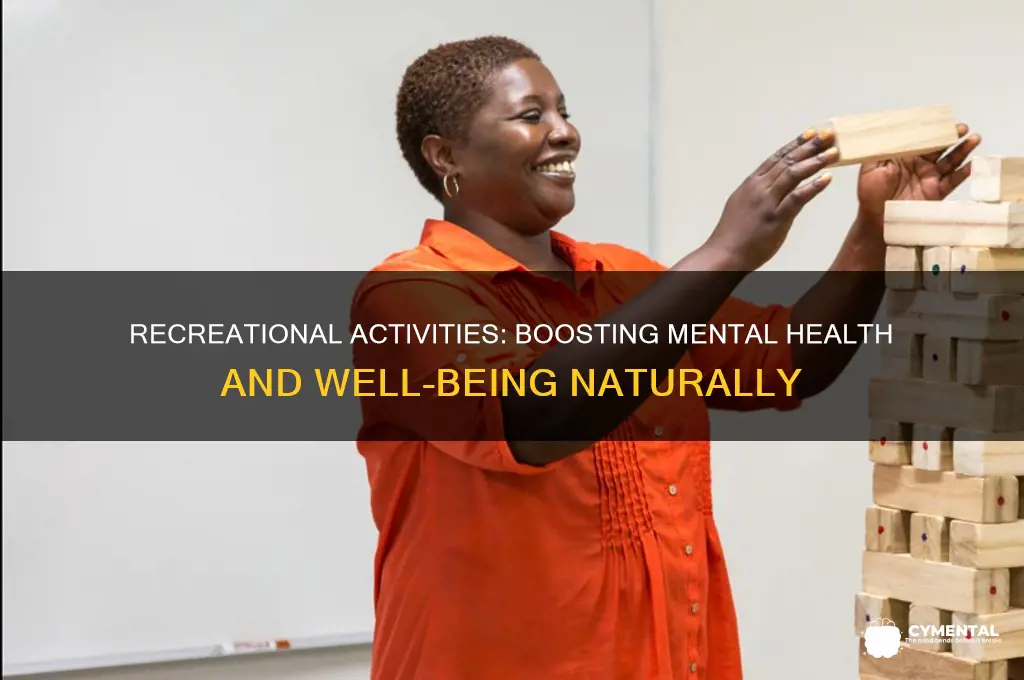
Recreational activities play a pivotal role in enhancing mental health by providing a much-needed break from daily stressors and fostering emotional well-being. Engaging in hobbies, sports, or creative pursuits stimulates the release of endorphins, often referred to as feel-good hormones, which reduce anxiety and depression. These activities also promote mindfulness, allowing individuals to focus on the present moment and temporarily escape negative thought patterns. Additionally, recreational pursuits often involve social interaction, combating feelings of loneliness and building a sense of community. By offering a sense of accomplishment and purpose, these activities boost self-esteem and resilience, ultimately contributing to a more balanced and positive mental state.
Explore related products




What You'll Learn
- Stress Reduction: Physical activity lowers cortisol, reduces tension, and promotes relaxation, improving overall mental well-being
- Mood Enhancement: Exercise releases endorphins, boosting happiness and reducing symptoms of depression and anxiety
- Social Connection: Group activities foster relationships, combat loneliness, and provide emotional support
- Cognitive Benefits: Engaging hobbies improve focus, memory, and creativity, enhancing mental clarity
- Self-Esteem Boost: Mastering skills in recreational activities builds confidence and a sense of accomplishment

Stress Reduction: Physical activity lowers cortisol, reduces tension, and promotes relaxation, improving overall mental well-being
Physical activity is a powerful antidote to stress, acting as a natural regulator of the body’s stress response system. When you engage in recreational activities like jogging, swimming, or even a brisk walk, your body releases endorphins, often referred to as "feel-good" hormones. Simultaneously, cortisol, the primary stress hormone, decreases. Research shows that just 30 minutes of moderate exercise, such as cycling or dancing, can significantly lower cortisol levels, providing immediate relief from tension. This biochemical shift not only calms the mind but also creates a buffer against the cumulative effects of chronic stress, making it a practical tool for daily mental health management.
Consider the mechanics of stress reduction through movement: when muscles contract during physical activity, they stimulate the release of neurotransmitters like serotonin and dopamine, which enhance mood and promote relaxation. For instance, activities like yoga or tai chi combine physical exertion with mindfulness, amplifying their stress-reducing effects. A study published in the *Journal of Clinical Psychiatry* found that participants who practiced yoga for 60 minutes three times a week experienced a 24% reduction in cortisol levels compared to those who did not. This highlights the importance of incorporating structured, mindful movement into your routine for optimal stress relief.
Not all recreational activities are created equal in their stress-reducing potential. High-intensity workouts like HIIT or weightlifting can be effective, but they may temporarily increase cortisol levels due to their demanding nature. For those seeking immediate relaxation, low- to moderate-intensity activities such as hiking, gardening, or even a leisurely bike ride are more suitable. Age and fitness level also play a role: older adults or beginners may benefit from gentler activities like water aerobics or stretching, while younger individuals might find stress relief in more vigorous pursuits like basketball or rock climbing. Tailoring the activity to your needs ensures it remains a source of relaxation, not additional stress.
Practical implementation is key to reaping the stress-reducing benefits of physical activity. Start small by incorporating 10–15 minutes of movement into your daily routine, gradually increasing to the recommended 150 minutes of moderate exercise per week. Pairing physical activity with social interaction, such as joining a group fitness class or playing a team sport, can enhance its stress-relieving effects by fostering connection and support. Additionally, consistency is crucial—scheduling regular activity, even on busy days, helps maintain the cortisol-lowering benefits over time. By viewing recreational activities as a non-negotiable part of self-care, you can transform them into a sustainable strategy for managing stress and improving mental well-being.
Worksheets for Mental Health: Tools for Healing and Self-Discovery
You may want to see also
Explore related products



Mood Enhancement: Exercise releases endorphins, boosting happiness and reducing symptoms of depression and anxiety
Exercise is a powerful tool for mood enhancement, and its effectiveness lies in the science of endorphins. These neurotransmitters, often referred to as "feel-good" hormones, are released during physical activity, creating a natural high that can significantly impact mental well-being. Research shows that even moderate exercise, such as a 30-minute brisk walk or a gentle yoga session, can stimulate endorphin production, leading to an immediate uplift in mood. For individuals struggling with depression or anxiety, this biochemical response can provide a much-needed respite from negative emotions, offering a sense of calm and happiness.
To harness the mood-boosting benefits of exercise, consistency is key. Aim for at least 150 minutes of moderate aerobic activity or 75 minutes of vigorous activity per week, as recommended by health guidelines. Breaking this down into smaller, manageable sessions—like three 10-minute walks per day—can make the goal more achievable. Incorporating strength training twice a week further enhances mental health benefits by improving overall physical health and self-esteem. For older adults or those with mobility issues, low-impact activities such as swimming, tai chi, or chair exercises can be equally effective in triggering endorphin release.
The psychological benefits of exercise extend beyond the biochemical. Engaging in physical activity often provides a distraction from stressors, allowing the mind to reset. Group exercises, like team sports or fitness classes, add a social component that combats loneliness and fosters a sense of belonging. For instance, a study published in the *Journal of Happiness Studies* found that individuals who participated in group exercises reported higher levels of happiness compared to those who exercised alone. This highlights the dual impact of exercise: it not only releases endorphins but also creates opportunities for social connection, amplifying its mood-enhancing effects.
However, it’s important to approach exercise as a complement to, rather than a replacement for, other mental health strategies. While endorphins can alleviate symptoms of depression and anxiety, they are not a cure-all. Individuals with severe mental health conditions should consult healthcare professionals for comprehensive treatment plans. Additionally, over-exercising can lead to burnout or injury, negating the positive effects. Listen to your body, start slowly if you’re new to exercise, and choose activities you enjoy to ensure sustainability. By integrating regular physical activity into your routine, you can tap into the natural mood-enhancing power of endorphins and take a proactive step toward better mental health.
Self-Control and Mental Health: A Powerful Tool for Disorder Management
You may want to see also
Explore related products


Social Connection: Group activities foster relationships, combat loneliness, and provide emotional support
Human beings are inherently social creatures, and our mental well-being is deeply intertwined with the quality of our relationships. Group recreational activities act as a powerful catalyst for fostering social connections, offering a structured yet enjoyable environment to meet people, build rapport, and cultivate lasting bonds. Unlike forced social interactions, these activities provide a shared purpose and common ground, making it easier to initiate conversations and find commonalities. Whether it's a weekly book club, a hiking group, or a community sports league, the repetitive nature of these gatherings allows relationships to develop organically over time.
Consider the example of a beginner's pottery class. Participants, initially strangers, are united by their shared interest in learning a new skill. As they struggle with shaping clay and celebrate small victories, a sense of camaraderie emerges. The act of creating something tangible together fosters a unique bond, and the supportive environment encourages vulnerability and openness. Over the course of several weeks, these individuals transform from acquaintances to friends, their shared experience in the pottery studio becoming a foundation for a deeper connection.
The impact of these social connections on mental health is profound. Loneliness, a pervasive issue in modern society, has been linked to increased risk of depression, anxiety, and even physical health problems. Group activities provide a powerful antidote, offering a sense of belonging and reducing feelings of isolation. The emotional support derived from these relationships acts as a buffer against life's stressors, providing a safety net during difficult times. Research suggests that individuals with strong social networks are more resilient, better equipped to cope with challenges, and experience greater overall life satisfaction.
To maximize the benefits of group activities for social connection, consider the following:
- Choose activities aligned with your interests: Shared passions create a natural foundation for connection.
- Be consistent: Regular attendance fosters familiarity and allows relationships to deepen. Aim for at least weekly participation for optimal results.
- Initiate conversations: Don't be afraid to introduce yourself and engage with others. Simple questions about the activity or shared experiences can break the ice.
- Be open-minded: Approach new people and situations with curiosity and a willingness to connect. Remember, everyone is there for a similar reason – to enjoy the activity and potentially meet new people.
- Follow up: Exchange contact information with individuals you connect with and maintain communication outside of the group setting. This strengthens bonds and allows relationships to flourish beyond the activity itself.
Supporting Mental Health: Practical Ways to Help Someone in Need
You may want to see also
Explore related products




Cognitive Benefits: Engaging hobbies improve focus, memory, and creativity, enhancing mental clarity
Recreational activities aren’t just downtime—they’re cognitive workouts in disguise. Engaging in hobbies like playing a musical instrument, solving puzzles, or learning a new language activates multiple areas of the brain, strengthening neural connections. Studies show that adults who dedicate at least 30 minutes daily to such activities experience measurable improvements in focus and memory retention. Think of it as lifting weights for your mind: consistent effort yields lasting strength.
Consider the case of creative hobbies like painting or writing. These activities force the brain to shift between analytical and imaginative thinking, fostering flexibility and innovation. Research from the *Journal of Cognitive Enhancement* highlights that individuals who engage in creative pursuits for 4–6 hours weekly demonstrate a 20% increase in divergent thinking scores—a key marker of creativity. This isn’t just about making art; it’s about rewiring your brain to approach problems from new angles.
For those seeking structure, here’s a practical approach: start with a hobby that challenges you cognitively but remains enjoyable. For instance, chess improves strategic thinking, while knitting enhances hand-eye coordination and pattern recognition. Pair this with a routine—say, 20 minutes before work or during lunch breaks. Consistency is key; the brain thrives on regular stimulation. Avoid overloading yourself; start small and gradually increase complexity as your skills grow.
A cautionary note: not all hobbies are created equal. Passive activities like scrolling social media lack the cognitive demand needed for mental sharpening. Instead, opt for tasks requiring active engagement, such as learning a foreign language or coding. For older adults, memory-intensive hobbies like crosswords or storytelling can help combat age-related cognitive decline. The goal is to keep the brain actively processing, not just consuming.
In conclusion, engaging hobbies aren’t merely escapes—they’re tools for cognitive refinement. By dedicating time to activities that challenge focus, memory, and creativity, you’re not just passing time; you’re investing in mental clarity and resilience. Start today, stay consistent, and watch your mind sharpen with every session.
Army Chaplains: Mental Health Allies in Military Service?
You may want to see also
Explore related products

$15.83 $16.99


Self-Esteem Boost: Mastering skills in recreational activities builds confidence and a sense of accomplishment
Mastering a skill in any recreational activity is a powerful way to elevate self-esteem, offering tangible proof of one’s capabilities and fostering a lasting sense of accomplishment. Whether it’s perfecting a tennis serve, completing a complex knitting pattern, or mastering a new hiking trail, each achievement serves as a milestone that reinforces self-worth. Research shows that the brain releases dopamine, a neurotransmitter linked to pleasure and reward, during moments of success, creating a positive feedback loop that encourages continued effort and growth. This neurological response not only enhances mood but also strengthens the belief in one’s ability to overcome challenges.
Consider the process of learning to play a musical instrument, a common recreational pursuit. Beginners often struggle with coordination and technique, but with consistent practice, they gradually improve. The first time a learner plays a song from start to finish without mistakes, the surge of pride is undeniable. This achievement isn’t just about the music—it’s about proving to oneself that persistence pays off. For adults, dedicating 30 minutes daily to practice can yield noticeable progress within three months, while children, with their natural adaptability, often see faster results. The key is setting realistic goals and celebrating small victories along the way.
However, the path to mastery isn’t without its pitfalls. Over-ambition can lead to frustration, undermining the very confidence it aims to build. For instance, attempting to run a marathon without proper training can result in injury and discouragement. To avoid this, break larger goals into manageable steps. If learning to paint is the objective, start with basic techniques like color mixing and brush control before tackling complex compositions. Additionally, seek feedback from mentors or peers, as constructive criticism can refine skills without diminishing motivation. Remember, the goal is progress, not perfection.
The benefits of skill mastery extend beyond the activity itself, influencing other areas of life. A teenager who learns to code through gaming, for example, may gain confidence in their problem-solving abilities, which can translate to improved academic performance. Similarly, an adult who masters yoga poses may find themselves more patient and resilient in stressful work situations. This cross-applicability highlights the transformative potential of recreational skill-building. By investing time in activities that challenge and reward, individuals not only enhance their self-esteem but also cultivate a mindset of growth and possibility.
Incorporating recreational skill-building into daily life doesn’t require drastic changes. Start by identifying an activity that genuinely interests you, whether it’s gardening, photography, or rock climbing. Allocate consistent time—even 15 minutes a day can make a difference—and track progress through journals or digital apps. For families, engaging in skill-based activities together, like cooking or building models, can strengthen bonds while boosting collective confidence. The ultimate takeaway? Mastering skills in recreational activities isn’t just about the activity—it’s about proving to yourself that you’re capable of growth, one achievement at a time.
Effective Strategies to Support and Empower Individuals in Need
You may want to see also
Frequently asked questions
Recreational activities reduce stress, promote relaxation, and release endorphins, which are natural mood lifters. They also provide a distraction from negative thoughts and daily pressures.
Yes, engaging in recreational activities like exercise, hobbies, or social games can reduce symptoms of anxiety and depression by boosting serotonin levels, improving self-esteem, and fostering a sense of accomplishment.
Social interaction during recreational activities combats loneliness, builds connections, and provides emotional support, all of which are crucial for maintaining good mental health.
Outdoor activities like hiking, gardening, or walking expose you to nature, which has been shown to reduce stress, improve mood, and enhance overall mental clarity and focus.
Yes, physical and mentally engaging recreational activities can regulate sleep patterns by reducing anxiety and tiring the body, leading to better sleep quality, which is essential for mental health recovery and stability.