Lucas Bennett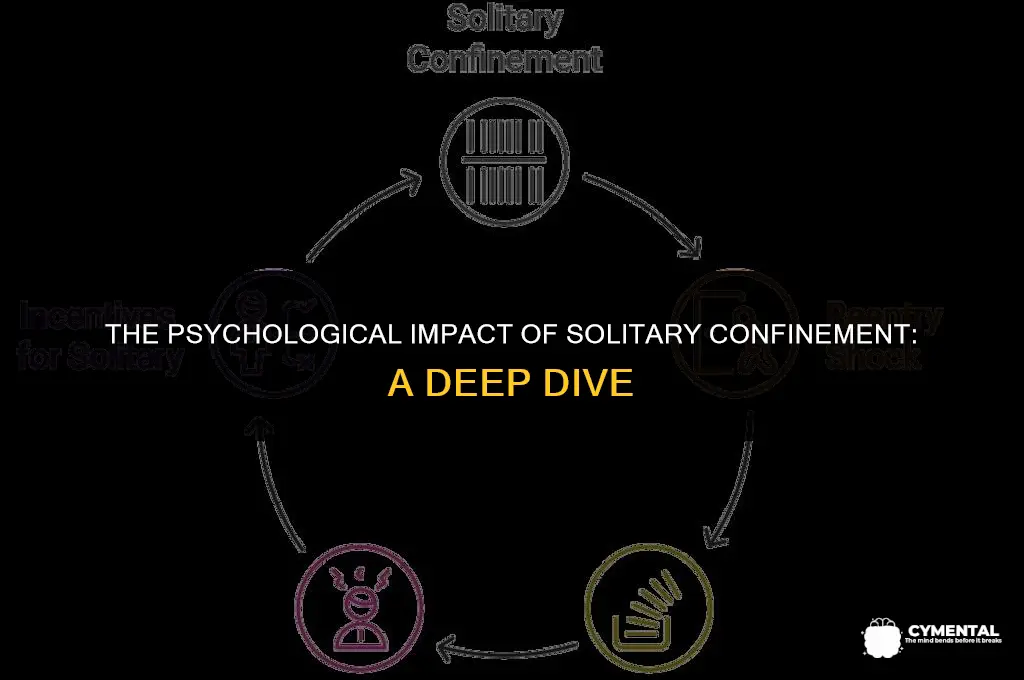
Solitary confinement, a practice where individuals are isolated from others for extended periods, has profound implications for mental health. Research indicates that prolonged isolation can lead to severe psychological distress, including symptoms of depression, anxiety, and even psychosis. The lack of social interaction and sensory deprivation inherent in solitary confinement can disrupt normal cognitive functioning and emotional regulation, potentially exacerbating pre-existing mental health conditions or leading to the development of new ones. Understanding the psychological impact of solitary confinement is crucial for informing ethical considerations and potential reforms in correctional and detention systems worldwide.
Explore related products


What You'll Learn
- Isolation and Loneliness: Prolonged separation from others can lead to deep feelings of loneliness and disconnection
- Anxiety and Depression: The lack of social interaction and confined space can exacerbate anxiety and depressive symptoms
- Cognitive Decline: Reduced mental stimulation may result in cognitive deterioration, affecting memory and problem-solving abilities
- Psychosis Risk: Extended solitary confinement can increase the risk of developing psychotic disorders, such as schizophrenia
- Coping Mechanisms: Inmates may develop unique coping strategies to deal with the psychological stress of solitary confinement

Isolation and Loneliness: Prolonged separation from others can lead to deep feelings of loneliness and disconnection
Prolonged isolation can profoundly impact an individual's mental health, leading to deep feelings of loneliness and disconnection. This is particularly evident in the context of solitary confinement, where the lack of human interaction can exacerbate these emotions. The absence of social stimuli and the inability to engage in meaningful relationships can result in a sense of emotional numbness, where individuals may struggle to recall the warmth of human connection or the comfort of shared experiences.
The psychological effects of isolation are multifaceted. Research has shown that extended periods of solitude can lead to increased levels of stress, anxiety, and depression. The absence of social support systems can make it difficult for individuals to cope with these negative emotions, potentially leading to a downward spiral of mental health deterioration. Furthermore, the lack of cognitive stimulation that comes with social interaction can impair cognitive function, including memory, attention, and problem-solving abilities.
In the context of solitary confinement, the impact of isolation is further compounded by the lack of control over one's environment and the uncertainty of one's future. This can lead to feelings of hopelessness and despair, as individuals may feel trapped and powerless. The sensory deprivation that often accompanies solitary confinement, such as the lack of natural light, fresh air, and varied auditory stimuli, can also contribute to a sense of disorientation and disconnection from the outside world.
It is crucial to recognize that the effects of isolation and loneliness are not limited to the individual experiencing them. These emotions can also have a ripple effect on the broader community, as individuals who are isolated may struggle to reintegrate into society upon release. This can lead to increased rates of recidivism, as well as a range of social and economic challenges.
In conclusion, the impact of isolation and loneliness on mental health is a complex and multifaceted issue. It is essential to address these challenges through a comprehensive approach that includes the provision of social support, cognitive stimulation, and opportunities for meaningful human connection. By doing so, we can help to mitigate the negative effects of isolation and promote the well-being of individuals who are at risk of experiencing these profound emotional challenges.
Understanding Legal Consequences: Can Mental Abuse Lead to Jail Time?
You may want to see also
Explore related products


Anxiety and Depression: The lack of social interaction and confined space can exacerbate anxiety and depressive symptoms
Solitary confinement can significantly exacerbate anxiety and depressive symptoms due to the lack of social interaction and confined space. This is because humans are inherently social creatures, and prolonged isolation can disrupt the delicate balance of neurotransmitters in the brain, leading to a cascade of negative psychological effects.
One of the primary ways in which solitary confinement affects anxiety and depression is through the deprivation of social support. Social support is a critical factor in maintaining mental health, and when it is absent, individuals may experience increased feelings of loneliness, helplessness, and hopelessness. These feelings can then contribute to the development or worsening of anxiety and depressive disorders.
Furthermore, the confined space of solitary confinement can also contribute to the exacerbation of anxiety and depressive symptoms. This is because the lack of physical space can lead to feelings of claustrophobia, which can then trigger panic attacks or other anxiety-related symptoms. Additionally, the lack of environmental stimulation can lead to boredom, which can then contribute to feelings of depression and despair.
It is also important to note that the effects of solitary confinement on anxiety and depression can be long-lasting, even after the individual is released from confinement. This is because the psychological damage caused by prolonged isolation can be difficult to repair, and may require extensive therapy and support to overcome.
In conclusion, solitary confinement can have a devastating impact on mental health, particularly in terms of anxiety and depression. The lack of social interaction and confined space can exacerbate these symptoms, leading to a cascade of negative psychological effects that can be difficult to overcome. It is therefore crucial to consider the mental health implications of solitary confinement when designing and implementing correctional policies.
Navigating Mental Fitness Evaluations in Michigan: A Comprehensive Guide
You may want to see also
Explore related products


$186 $232.95


Cognitive Decline: Reduced mental stimulation may result in cognitive deterioration, affecting memory and problem-solving abilities
Solitary confinement can lead to a significant reduction in mental stimulation, which in turn may result in cognitive decline. This deterioration can manifest in various ways, including impaired memory, decreased problem-solving abilities, and a decline in overall cognitive function. The lack of social interaction, environmental enrichment, and mental challenges in solitary confinement can cause the brain to atrophy, much like a muscle that is not exercised.
One of the primary ways in which solitary confinement affects cognitive function is through the deprivation of social interaction. Social engagement is crucial for maintaining cognitive health, as it provides opportunities for learning, problem-solving, and emotional regulation. In solitary confinement, individuals are often deprived of meaningful social contact, which can lead to a decline in their ability to communicate effectively, empathize with others, and understand social cues.
Furthermore, the lack of environmental enrichment in solitary confinement can also contribute to cognitive decline. Environmental enrichment refers to the presence of stimulating and challenging elements in one's environment, such as access to educational materials, opportunities for physical activity, and the ability to engage in creative pursuits. In solitary confinement, individuals are often confined to a small, barren cell with limited access to such enriching activities, which can lead to a decline in their cognitive abilities.
Research has shown that solitary confinement can have a profound impact on the brain's structure and function. Studies have found that individuals who have spent extended periods in solitary confinement exhibit changes in brain activity, particularly in regions associated with memory, attention, and emotional regulation. These changes can persist even after individuals are released from solitary confinement, suggesting that the cognitive effects of this practice can be long-lasting and difficult to reverse.
In conclusion, the reduction in mental stimulation that occurs in solitary confinement can lead to significant cognitive decline, affecting memory, problem-solving abilities, and overall cognitive function. This decline is likely due to the deprivation of social interaction and environmental enrichment, which are crucial for maintaining cognitive health. The long-term effects of solitary confinement on the brain highlight the importance of addressing this issue and finding ways to mitigate its cognitive impact on individuals.
Understanding Mental Illness: Dispelling Myths About Insanity
You may want to see also
Explore related products



Psychosis Risk: Extended solitary confinement can increase the risk of developing psychotic disorders, such as schizophrenia
Extended solitary confinement can significantly increase the risk of developing psychotic disorders, such as schizophrenia. This is due to the profound impact of isolation on the human psyche. When individuals are deprived of social interaction and environmental stimulation for prolonged periods, their mental health can deteriorate rapidly.
One of the primary mechanisms by which solitary confinement contributes to psychosis risk is through the disruption of normal cognitive processes. In the absence of external stimuli, the brain may begin to generate its own, often distorted, perceptions of reality. This can lead to the development of delusions and hallucinations, which are hallmark symptoms of psychotic disorders.
Furthermore, solitary confinement can exacerbate existing mental health conditions, making it more challenging for individuals to cope with their symptoms. The lack of access to mental health services and support in solitary confinement settings can further compound this risk, leaving individuals without the necessary resources to manage their conditions effectively.
Research has shown that the effects of solitary confinement on mental health can be long-lasting, even after individuals are released from isolation. This highlights the importance of addressing the mental health needs of individuals in solitary confinement and implementing strategies to mitigate the risk of psychosis and other mental health disorders.
In conclusion, the risk of developing psychotic disorders, such as schizophrenia, is a significant concern for individuals subjected to extended solitary confinement. The disruption of normal cognitive processes, exacerbation of existing mental health conditions, and lack of access to mental health services all contribute to this increased risk. It is crucial that steps be taken to address these issues and provide individuals in solitary confinement with the necessary support and resources to maintain their mental health.
Journey to Recovery: Overcoming Mental Illness Through Resilience and Support
You may want to see also
Explore related products


Coping Mechanisms: Inmates may develop unique coping strategies to deal with the psychological stress of solitary confinement
In the stark confines of a solitary cell, inmates often grapple with profound psychological stress. To survive, many develop unique coping strategies that can be as varied and intricate as the individuals themselves. These mechanisms serve as mental lifelines, helping them navigate the treacherous waters of isolation.
One such coping strategy is the cultivation of rich inner worlds. Inmates may immerse themselves in elaborate fantasies, creating entire universes within their minds. This mental escapism can provide a temporary reprieve from the crushing reality of their situation. For example, an inmate might imagine themselves as a hero in a grand adventure, battling dragons and saving kingdoms. Such fantasies can be incredibly detailed, with complex characters, plots, and settings that evolve over time.
Another coping mechanism is the development of routines and rituals. Inmates may establish strict daily schedules, meticulously planning each hour of their day. This sense of structure and control can be comforting in an environment where freedom is severely limited. Rituals, such as meditation, prayer, or even simple repetitive actions like pacing or tapping, can also provide a sense of stability and purpose.
Some inmates turn to creative expression as a means of coping. Writing, drawing, or composing music can serve as an outlet for their emotions and thoughts. This creative process can be therapeutic, allowing them to process their experiences and find meaning in their suffering. For instance, an inmate might write poetry about their feelings of isolation or draw intricate landscapes that represent their longing for freedom.
In addition to these individual strategies, some inmates may also form connections with others, even if only through letters or occasional visits. These relationships can provide a vital sense of human connection and support, helping to mitigate the psychological effects of solitary confinement. For example, an inmate might correspond with a pen pal, sharing their thoughts and experiences with someone who can offer empathy and understanding.
Overall, the coping mechanisms developed by inmates in solitary confinement are a testament to the human spirit's resilience and adaptability. These strategies, though varied, all serve the essential function of helping individuals endure and, in some cases, even find meaning in their isolation.
Losing a Loved One to Mental Illness: A Painful Journey
You may want to see also
Frequently asked questions
The immediate psychological effects of solitary confinement can include anxiety, depression, and a sense of isolation. The lack of social interaction and environmental stimulation can lead to a rapid decline in mental health, with individuals often reporting feelings of loneliness and despair within the first few days or weeks.
Prolonged solitary confinement can significantly impact cognitive function. Studies have shown that extended periods of isolation can lead to cognitive impairments, including difficulties with memory, attention, and problem-solving. The absence of mental stimulation and social engagement can result in a decline in cognitive abilities over time.
Long-term mental health conditions that can result from solitary confinement include chronic depression, post-traumatic stress disorder (PTSD), and psychosis. The persistent lack of human contact and environmental enrichment can exacerbate these conditions, leading to severe and potentially irreversible psychological damage.