Harper Lewis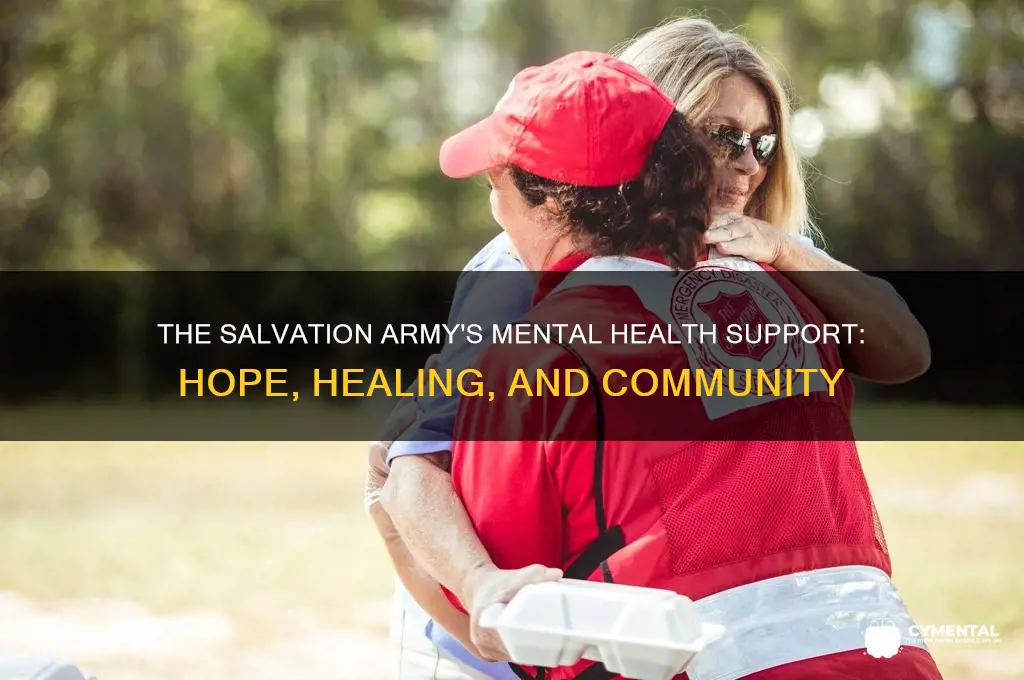
The Salvation Army plays a vital role in addressing mental health challenges by offering a range of supportive services and resources to individuals in need. Through their community centers, shelters, and outreach programs, they provide counseling, crisis intervention, and emotional support to those struggling with mental health issues. Additionally, they offer practical assistance such as housing, food, and employment services, which can alleviate stressors that exacerbate mental health conditions. Their holistic approach often includes spiritual care, recognizing the interconnectedness of mental, emotional, and spiritual well-being. By partnering with local healthcare providers and mental health professionals, the Salvation Army ensures access to specialized care while fostering a compassionate and non-judgmental environment for healing and recovery.
Explore related products


What You'll Learn
- Counseling Services: Offers free, professional counseling to individuals and families in need
- Crisis Support: Provides immediate assistance for those experiencing mental health emergencies
- Community Programs: Runs group activities promoting mental well-being and social connection
- Housing Assistance: Supports stable living environments for those with mental health challenges
- Education & Awareness: Conducts workshops to reduce stigma and increase mental health literacy

Counseling Services: Offers free, professional counseling to individuals and families in need
The Salvation Army recognizes that mental health struggles often intersect with financial strain, creating a vicious cycle. Their counseling services break this cycle by offering free, professional support to individuals and families regardless of income. This removes a significant barrier to accessing care, allowing those who might otherwise go without to receive the help they need.
Imagine a single mother juggling multiple jobs, struggling with anxiety and depression, unable to afford therapy. The Salvation Army's free counseling provides her with a lifeline, offering a safe space to process her emotions, develop coping mechanisms, and build resilience.
These services aren't limited to individual sessions. Family counseling addresses the ripple effects of mental health issues, fostering understanding, improving communication, and strengthening familial bonds. This holistic approach recognizes that mental well-being is deeply intertwined with our relationships and support systems.
A veteran battling PTSD, for instance, might benefit from individual counseling to process trauma, while family sessions could help his spouse and children understand his experiences and learn how to best support him.
The Salvation Army's counseling services are delivered by qualified professionals, ensuring individuals receive evidence-based interventions tailored to their specific needs. This commitment to professionalism and quality care sets them apart from many free or low-cost mental health services.
By offering free, professional counseling, the Salvation Army doesn't just treat symptoms; it empowers individuals and families to break free from the grip of mental health challenges. It's an investment in long-term well-being, fostering resilience and hope for a brighter future.
Empowering Support: Saving Young Adults Battling Mental Illness Effectively
You may want to see also
Explore related products


Crisis Support: Provides immediate assistance for those experiencing mental health emergencies
In moments of acute mental health crisis, timely intervention can be the difference between despair and hope. The Salvation Army’s Crisis Support services are designed to provide immediate, compassionate assistance to individuals facing mental health emergencies, ensuring they are not left to navigate their darkest hours alone. These services are a lifeline, offering a combination of emotional support, practical resources, and pathways to long-term care.
Consider the scenario of someone experiencing suicidal ideation or severe anxiety. The Salvation Army’s crisis hotlines, staffed by trained professionals and volunteers, offer a safe space for individuals to express their feelings without judgment. These hotlines are accessible 24/7, ensuring that help is available precisely when it’s needed most. For instance, in the U.S., The Salvation Army partners with local crisis centers to provide immediate counseling and, if necessary, dispatch emergency services to ensure physical safety. This rapid response model is critical, as delays in intervention can exacerbate mental health crises.
Beyond immediate emotional support, The Salvation Army’s Crisis Support includes practical assistance. For someone in crisis, basic needs like food, shelter, or transportation to a healthcare facility can be overwhelming to manage. The organization steps in to address these logistical challenges, removing barriers to care. For example, in Australia, The Salvation Army’s Doorways program provides emergency accommodation and meals for individuals in mental health crises, ensuring stability while they access treatment. This holistic approach recognizes that mental health emergencies often intersect with other crises, such as homelessness or financial instability.
A key strength of The Salvation Army’s Crisis Support is its integration with broader mental health services. After stabilizing an individual in crisis, the organization connects them to ongoing care, such as counseling, support groups, or psychiatric services. This continuity is vital, as mental health emergencies are often symptoms of underlying issues that require sustained attention. For instance, in the UK, The Salvation Army’s partnership with local NHS services ensures that individuals receive follow-up care tailored to their needs, reducing the risk of future crises.
To maximize the effectiveness of Crisis Support, individuals and communities can take proactive steps. First, familiarize yourself with local Salvation Army crisis resources, including hotline numbers and emergency shelters. Second, encourage open conversations about mental health to reduce stigma and ensure those in need feel empowered to seek help. Finally, consider volunteering or donating to support these critical services, as they rely on community engagement to operate. By understanding and utilizing these resources, we can collectively strengthen the safety net for those facing mental health emergencies.
Shower Therapy: How Daily Showers Boost Mental Health and Well-being
You may want to see also
Explore related products


Community Programs: Runs group activities promoting mental well-being and social connection
The Salvation Army recognizes that mental well-being thrives in community, not isolation. Their community programs combat loneliness and foster social connection through structured group activities designed to nurture mental health. These programs aren't just about socializing; they're strategically crafted to provide a sense of belonging, purpose, and emotional support.
Imagine a weekly art therapy session where individuals struggling with anxiety find solace in brushstrokes and shared experiences. Or a community garden project where the act of planting and nurturing life mirrors the process of healing and growth. These are just glimpses into the diverse range of activities offered, each tailored to different interests and needs.
The beauty lies in the accessibility. Programs cater to various age groups, from children grappling with emotional challenges to seniors battling loneliness. Activities might include mindfulness workshops, book clubs, sports teams, or even cooking classes. The key is creating a safe and supportive environment where individuals can connect, share their stories, and learn coping mechanisms from one another.
Think of it as a preventative measure, a proactive approach to mental health. By fostering social connections and providing outlets for expression, these programs aim to reduce the risk of mental health issues escalating and promote overall well-being.
Participating in these programs isn't just about attending events; it's about becoming part of a community that understands and supports you. It's about finding your tribe, discovering shared passions, and realizing you're not alone in your struggles. The Salvation Army's community programs offer a lifeline, a chance to rebuild connections and rediscover joy in a safe and welcoming space.
Dungeons & Dragons: A Therapeutic Journey for Mental Well-Being
You may want to see also
Explore related products




Housing Assistance: Supports stable living environments for those with mental health challenges
Stable housing is a cornerstone of mental health recovery, yet individuals facing mental health challenges often struggle to secure and maintain it. The Salvation Army addresses this critical need through multifaceted housing assistance programs designed to provide not just shelter, but a foundation for long-term stability. These initiatives range from emergency shelters to transitional housing and permanent supportive housing, each tailored to meet the unique needs of individuals at different stages of their recovery journey. By offering a safe, consistent living environment, the Salvation Army helps mitigate the stress and instability that can exacerbate mental health issues, creating a space where healing and growth can occur.
One of the key strategies employed by the Salvation Army is the integration of mental health services within their housing programs. Residents are not merely provided with a roof over their heads; they gain access to on-site counseling, case management, and life skills training. For instance, in transitional housing programs, individuals work with case managers to set personal goals, develop budgeting skills, and address underlying mental health concerns. This holistic approach ensures that housing assistance is not just a temporary solution but a stepping stone toward self-sufficiency. Studies show that such integrated models significantly improve mental health outcomes, reducing hospitalizations and increasing the likelihood of sustained independence.
For those with severe and persistent mental health conditions, permanent supportive housing (PSH) is a lifeline. PSH combines affordable housing with intensive, flexible support services, allowing individuals to live independently while receiving the care they need. The Salvation Army’s PSH programs often include partnerships with local mental health providers, ensuring residents have access to medication management, therapy, and crisis intervention. This model has proven particularly effective for individuals who have experienced chronic homelessness, as it addresses both their housing and mental health needs simultaneously. For example, a Salvation Army PSH program in Chicago reported a 90% housing retention rate among participants, alongside marked improvements in mental health symptoms and overall quality of life.
While the benefits of housing assistance are clear, challenges remain. Securing funding for these programs, navigating complex bureaucratic systems, and addressing the stigma surrounding mental illness are ongoing hurdles. The Salvation Army tackles these issues through advocacy, community partnerships, and innovative funding models, such as leveraging federal grants and private donations. For individuals seeking assistance, the first step is often a visit to a local Salvation Army center, where staff can assess needs and connect them to appropriate resources. Practical tips for those in need include gathering necessary documentation (e.g., identification, proof of income) and being prepared to engage in a collaborative process with case managers to develop a personalized plan.
In conclusion, the Salvation Army’s housing assistance programs are more than just a response to homelessness; they are a strategic intervention in the cycle of mental health instability. By providing stable living environments coupled with comprehensive support services, these programs empower individuals to rebuild their lives. Whether through emergency shelters, transitional housing, or permanent supportive housing, the Salvation Army demonstrates that addressing mental health challenges requires not just treatment, but also the foundational security of a place to call home. For those in need, these programs offer hope, healing, and a pathway to a brighter future.
Exercise and Mental Health: Boosting Mood, Reducing Stress, and Enhancing Well-being
You may want to see also
Explore related products


Education & Awareness: Conducts workshops to reduce stigma and increase mental health literacy
Stigma silences. It turns mental health struggles into shameful secrets, preventing people from seeking help. The Salvation Army recognizes this, and their workshops directly confront this barrier. Through facilitated discussions, personal testimonies, and evidence-based information, they create safe spaces for open dialogue. Participants learn to challenge stereotypes, recognize harmful language, and replace judgment with empathy. This isn't just theoretical; it's about equipping individuals with the tools to become agents of change within their communities.
Imagine a teenager struggling with anxiety, afraid to confide in anyone for fear of being labeled "weak." A Salvation Army workshop could be their first encounter with a supportive environment where they hear others share similar experiences. This normalization, coupled with education on anxiety's biological basis, could be the catalyst for them seeking professional help.
These workshops aren't one-size-fits-all. They're tailored to diverse audiences, from youth groups to church congregations, from corporate teams to homeless shelters. For children, interactive activities and storytelling might be used, while adults might engage in role-playing scenarios or group discussions. The key is to meet people where they are, addressing their specific concerns and misconceptions.
A crucial aspect is the emphasis on mental health literacy. Participants learn to identify warning signs, understand different diagnoses, and explore coping mechanisms. This knowledge empowers them to support themselves and others effectively. Imagine a parent who, after attending a workshop, recognizes signs of depression in their child and feels equipped to initiate a conversation and seek appropriate resources.
The impact of these workshops extends beyond individual transformation. They contribute to a cultural shift, fostering communities that are more understanding and supportive of mental health struggles. By reducing stigma and increasing literacy, The Salvation Army's efforts create a ripple effect, encouraging early intervention, preventing crises, and ultimately saving lives.
Mental Models: Unlocking Clarity, Decision-Making, and Personal Growth
You may want to see also
Frequently asked questions
The Salvation Army provides a range of services, including counseling, crisis intervention, and support groups, to help individuals manage mental health challenges and improve their overall well-being.
Yes, many Salvation Army locations have trained counselors and partnerships with mental health professionals to provide therapy and emotional support tailored to individual needs.
The Salvation Army offers shelters, transitional housing, and case management services that address both homelessness and mental health, ensuring holistic support for vulnerable populations.
The Salvation Army provides specialized programs for veterans, including mental health counseling, PTSD support, and resources to address issues like depression, anxiety, and substance abuse.
Yes, The Salvation Army offers family counseling, youth programs, and parenting workshops to address mental health challenges within families and promote healthy relationships.