Ava Ramirez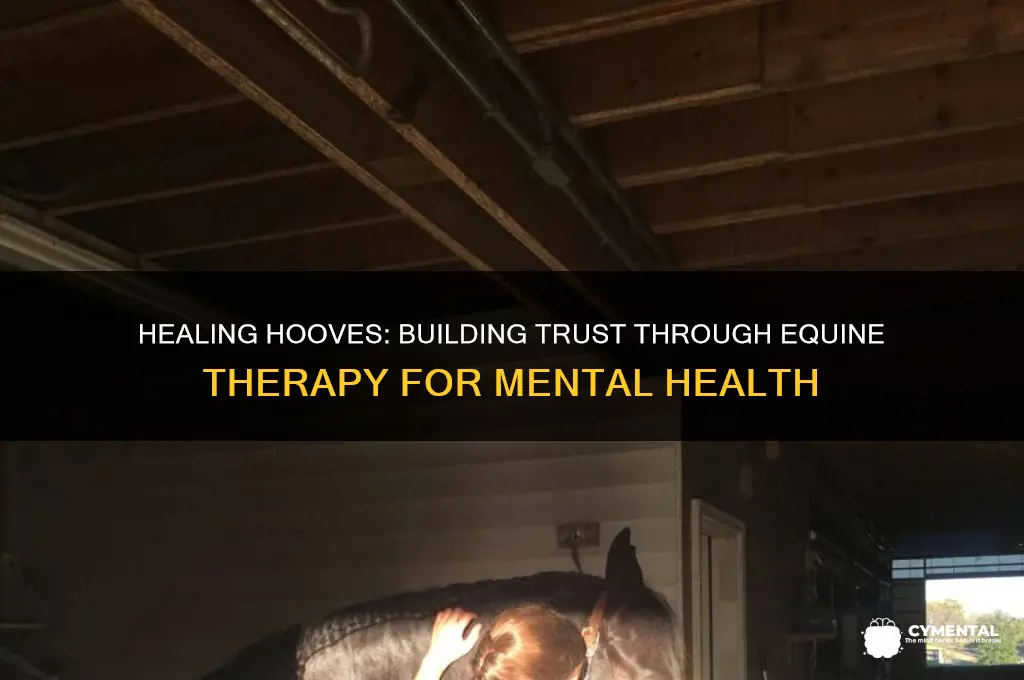
Horses have emerged as powerful allies in addressing mental health issues, particularly in building trust and emotional resilience. Through equine-assisted therapy, individuals facing challenges such as anxiety, depression, or trauma engage in structured interactions with horses, which foster a unique bond based on nonverbal communication and mutual understanding. Horses, being highly intuitive animals, mirror human emotions and respond authentically, creating a safe and nonjudgmental environment for individuals to confront and process their feelings. This therapeutic approach encourages trust, self-awareness, and emotional regulation, as participants learn to establish boundaries, build confidence, and develop healthier coping mechanisms. By leveraging the natural connection between humans and horses, this method offers a transformative pathway to healing and personal growth for those struggling with mental health issues.
| Characteristics | Values |
|---|---|
| Non-Judgmental Presence | Horses provide a safe, non-verbal, and non-judgmental environment, allowing individuals to express themselves freely without fear of criticism. |
| Emotional Regulation | Interacting with horses helps individuals develop emotional awareness and regulation skills, as horses mirror human emotions and respond to calm, assertive energy. |
| Trust Building | Through consistent and respectful interactions, individuals learn to build trust with horses, which translates to improved trust in human relationships. |
| Mindfulness and Grounding | Horse-related activities encourage present-moment awareness, helping individuals reduce anxiety and improve focus through sensory engagement. |
| Responsibility and Confidence | Caring for horses fosters a sense of responsibility and accomplishment, boosting self-esteem and confidence in one's abilities. |
| Social Skills Development | Group equine-assisted activities promote teamwork, communication, and empathy, enhancing social skills and reducing isolation. |
| Physical Activity | Riding and grooming horses provide gentle physical exercise, releasing endorphins and improving overall well-being. |
| Trauma Healing | Equine-assisted therapy can help individuals process trauma by creating a safe space for emotional release and rebuilding trust. |
| Goal Setting and Achievement | Working with horses often involves setting and achieving small goals, which can improve motivation and a sense of purpose. |
| Sensory Integration | The tactile and sensory experiences with horses can be particularly beneficial for individuals with sensory processing disorders or autism. |
| Reduced Stress and Anxiety | The calming presence of horses and the rhythmic motion of riding have been shown to lower cortisol levels and reduce stress. |
| Improved Communication | Non-verbal communication with horses enhances understanding of body language and non-verbal cues, improving overall communication skills. |
Explore related products

$29.68 $32.95


What You'll Learn
- Bonding Builds Trust: Gentle interactions with horses foster emotional connections, enhancing trust in relationships
- Nonverbal Communication: Horses respond to body language, teaching trust through silent, intuitive understanding
- Responsibility and Care: Caring for horses builds trust in oneself and reliability in tasks
- Emotional Regulation: Horses mirror emotions, helping individuals trust their feelings and manage them
- Consistency and Safety: Predictable horse behavior creates a safe space, fostering trust in environments

Bonding Builds Trust: Gentle interactions with horses foster emotional connections, enhancing trust in relationships
Horses, with their innate sensitivity and non-judgmental nature, create a unique environment for fostering trust through gentle interactions. Unlike humans, horses respond to body language and emotional cues without bias, making them ideal partners for individuals struggling with trust issues. For instance, a person with a history of trauma may find it challenging to trust others due to past betrayals. In equine-assisted therapy, a simple activity like grooming a horse can initiate a trust-building process. The horse’s calm acceptance of the individual’s presence and actions mirrors a safe, non-threatening relationship, gradually helping the person feel secure and open to connection.
To maximize the benefits of these interactions, therapists often structure sessions around specific trust-building exercises. One common practice is leading a horse through an obstacle course without physical restraints, relying solely on verbal cues and body language. This activity requires the participant to assert themselves gently yet confidently, mirroring the dynamics of healthy human relationships. For children aged 8–12, shorter sessions of 30–45 minutes are recommended, focusing on basic bonding activities like feeding or brushing the horse. Adolescents and adults, however, may benefit from longer, more complex exercises lasting up to 90 minutes, which allow for deeper emotional engagement.
The science behind these interactions lies in the neurobiological response to positive, non-verbal communication. When individuals engage in gentle, consistent interactions with horses, their oxytocin levels often rise, promoting feelings of trust and attachment. Conversely, cortisol levels, associated with stress, tend to decrease. A study published in the *Journal of Equine Veterinary Science* found that participants in equine-assisted therapy reported a 25% increase in self-perceived trust levels after just six weeks of consistent sessions. This data underscores the measurable impact of bonding with horses on mental health outcomes.
Practical tips for enhancing trust through equine interactions include starting with passive activities like observing the horse from a distance, then gradually progressing to hands-on tasks. Wearing comfortable, closed-toe shoes and avoiding sudden movements ensures safety for both the participant and the horse. For individuals with severe anxiety, therapists may introduce a "safe space" rule, allowing the person to step away from the horse if they feel overwhelmed. Over time, as trust builds, these boundaries can be gently expanded, fostering a deeper emotional connection.
Ultimately, the bond formed between humans and horses serves as a microcosm of healthy relationships. By learning to trust a creature that communicates without words or judgment, individuals can internalize the skills needed to trust others. This process is particularly transformative for those with attachment disorders or social anxiety. While equine therapy is not a one-size-fits-all solution, its ability to rebuild trust through gentle, consistent interactions makes it a powerful tool in the realm of mental health treatment.
Mounjaro's Impact: Exploring Mental Health Benefits and Potential Effects
You may want to see also
Explore related products


Nonverbal Communication: Horses respond to body language, teaching trust through silent, intuitive understanding
Horses, with their acute sensitivity to nonverbal cues, serve as mirrors reflecting human emotional states and intentions. Unlike humans, they lack the capacity for deceit, responding solely to authenticity. This makes them ideal partners in teaching trust through silent, intuitive understanding. When a person approaches a horse with tension in their shoulders or a hurried gait, the horse will often mirror that anxiety by becoming skittish or distant. Conversely, a calm, grounded presence invites the horse to relax and engage, fostering a mutual sense of safety. This immediate feedback loop forces individuals to become acutely aware of their own body language, encouraging self-regulation and emotional honesty—key components in rebuilding trust, both with the horse and within oneself.
To harness this dynamic, practitioners in equine-assisted therapy often begin sessions with grounding exercises. Participants are instructed to stand still, breathe deeply, and focus on softening their gaze before approaching the horse. These steps are not arbitrary; they align with the horse’s natural communication system, which prioritizes stillness and openness as signs of non-threat. For instance, a lowered head and relaxed stance in a horse signal submission and trust, behaviors that humans can learn to emulate. Over time, this practice translates into human interactions, where trust is often built on similar nonverbal cues—a steady voice, open posture, and consistent eye contact. The horse becomes a silent coach, reinforcing these behaviors through its predictable responses.
One of the most compelling aspects of this process is its applicability across age groups and mental health conditions. Children with anxiety, veterans with PTSD, and adults with depression all benefit from the horse’s ability to read and respond to unspoken emotions. For example, a teenager struggling with social trust might initially approach the horse with hesitancy, arms crossed and eyes averted. Through guided interaction, they learn to uncross their arms, lower their hands, and maintain a steady gaze—actions that not only calm the horse but also signal approachability to peers. This tangible progress often translates into increased confidence in human relationships, as the individual internalizes the connection between their body language and the trust they inspire.
However, it’s crucial to approach this work with intentionality and caution. Horses, while intuitive, are not therapists; they are animals with their own boundaries and needs. Overstepping these boundaries—through forceful movements, loud voices, or invasive touch—can erode trust rather than build it. Practitioners must educate participants on equine behavior, emphasizing the importance of respecting the horse’s space and signals. For instance, a horse that turns its shoulder away is communicating discomfort, a cue that should be heeded immediately. By honoring these boundaries, individuals learn not only to trust but also to be trustworthy—a reciprocal dynamic that mirrors healthy human relationships.
Incorporating this understanding into daily life requires mindfulness and practice. Start by observing your body language in low-stakes situations: notice how you carry yourself when entering a room or meeting someone new. Experiment with small adjustments—softening your hands, slowing your pace, or maintaining eye contact—and observe the responses you elicit. Over time, these micro-changes accumulate into a more trusting presence, both for yourself and those around you. The horse’s lesson is clear: trust is not built through words alone but through the silent, intuitive language of the body—a language we can all learn to speak fluently.
Probation Officers: Supporting Mental Health During Probationary Periods
You may want to see also
Explore related products


Responsibility and Care: Caring for horses builds trust in oneself and reliability in tasks
Caring for a horse demands consistency, a trait often elusive for individuals grappling with mental health challenges. Horses require daily feeding, grooming, and exercise, regardless of the caregiver’s emotional state. This non-negotiable routine forces individuals to prioritize tasks beyond their immediate feelings, fostering a sense of reliability. For example, a study by the Equine Assisted Growth and Learning Association (EAGALA) found that participants with anxiety or depression reported improved adherence to personal schedules after six weeks of equine care responsibilities. The horse’s dependence on the caregiver creates a tangible consequence for neglect, teaching accountability in a way abstract goals often cannot.
The act of grooming a horse, a task that can take 30–45 minutes daily, serves as a meditative practice in responsibility. It requires focus, patience, and attention to detail, qualities often diminished in individuals struggling with self-trust. As the horse relaxes under the caregiver’s touch, a feedback loop of competence emerges. The caregiver observes their ability to positively impact another being, reinforcing their capacity for effective action. This small but consistent achievement counters self-doubt, building trust in one’s ability to manage tasks and relationships.
Critics might argue that relying on an animal for self-validation is unsustainable, but equine care operates on a principle of mutual benefit. Horses, as prey animals, are acutely sensitive to human energy and respond to calm, consistent handling. This dynamic teaches caregivers to regulate their emotions to meet the horse’s needs, a skill transferable to human interactions. For instance, a teenager with ADHD participating in a therapeutic riding program reported improved impulse control after learning to adjust their movements to avoid startling their horse. The horse becomes both a mirror and a teacher, reflecting the caregiver’s reliability and rewarding it with trust.
Practical integration of equine care into mental health routines requires structure. Start with 15-minute daily sessions focused on a single task, such as feeding or stall cleaning, to build habit formation. Gradually introduce more complex responsibilities, like lunging or tack maintenance, as confidence grows. Pairing these tasks with journaling can help individuals track progress and identify patterns of self-sabotage. For maximum benefit, combine equine care with professional therapy, using sessions to process the emotional insights gained from the horse-caregiver relationship. Over time, the horse’s unwavering need for care becomes a cornerstone for rebuilding trust in oneself and one’s ability to fulfill obligations.
Nutrition's Impact: How Eating Better Boosts Mental Health and Well-Being
You may want to see also
Explore related products


$11.98


Emotional Regulation: Horses mirror emotions, helping individuals trust their feelings and manage them
Horses, with their innate ability to mirror human emotions, serve as powerful catalysts for emotional regulation. Unlike humans, who often mask or misinterpret feelings, horses respond authentically to emotional cues, creating a feedback loop that helps individuals recognize and validate their own states. For instance, a person experiencing anxiety may exhibit tense body language, which a horse will reflect by becoming skittish or distant. This immediate, non-judgmental response forces the individual to confront their emotional state, fostering self-awareness and the first step toward regulation.
To harness this dynamic, structured equine-assisted therapy sessions often begin with grounding exercises. Participants are instructed to stand calmly near the horse, focusing on deep breathing while observing the animal’s reactions. If the horse remains relaxed, it signals emotional equilibrium; if it pulls away or fidgets, it indicates distress. Therapists then guide individuals to identify the emotions driving these responses, using the horse’s behavior as a mirror. For children aged 8–12, this process is particularly effective, as it simplifies complex emotions into observable actions, making them easier to process and manage.
A critical aspect of this approach is the horse’s role as a co-regulator. Unlike traditional therapy, where emotional regulation relies on verbal communication, horses provide real-time, non-verbal feedback. For example, a teenager struggling with anger may approach a horse aggressively, only to find the animal retreating. This immediate consequence teaches the teen to modulate their behavior, translating into better emotional control in human interactions. Studies show that consistent sessions (2–3 times weekly for 6–8 weeks) yield measurable improvements in emotional regulation, particularly in individuals with anxiety or trauma-related disorders.
However, this method is not without challenges. Horses are prey animals with acute sensitivity to threats, making them unpredictable in high-stress situations. Therapists must carefully monitor interactions, ensuring both participant and horse safety. For instance, individuals with severe PTSD may inadvertently trigger a horse’s flight response, requiring gradual exposure and professional mediation. Practical tips include starting sessions in a controlled environment, using haltered horses, and teaching participants to read equine body language before advancing to more complex exercises.
In conclusion, horses’ ability to mirror emotions offers a unique pathway to emotional regulation, particularly for those who struggle with self-awareness or trust in their feelings. By providing immediate, honest feedback, horses help individuals recognize, validate, and manage their emotions in a way that traditional therapy often cannot. While the approach requires careful facilitation, its potential to foster trust and emotional mastery is unparalleled, making it a valuable tool in mental health treatment.
Supporting Your Son's Mental Health: A Guide for Concerned Parents
You may want to see also
Explore related products



Consistency and Safety: Predictable horse behavior creates a safe space, fostering trust in environments
Horses, with their innate predictability, offer a unique foundation for building trust in therapeutic settings. Unlike humans, whose emotions and reactions can be complex and unpredictable, horses operate on instinct and routine. This consistency in behavior creates a stable environment where individuals struggling with mental health issues can feel secure. For example, a horse will respond to calm, clear cues with predictable actions, such as moving forward or stopping, which helps participants learn to anticipate outcomes and feel in control. This predictability is particularly beneficial for those with anxiety or trauma, as it reduces the fear of the unknown and fosters a sense of safety.
Consider the process of grooming a horse as a practical exercise in trust-building. Grooming requires patience, gentle touch, and attention to the horse’s reactions. Over time, the horse’s consistent response to this care—relaxing, lowering its head, or even nuzzling—reinforces the idea that kindness and consistency yield positive results. This simple, repeatable interaction teaches individuals that their actions have predictable consequences, a lesson that can be transferred to human relationships. For adolescents aged 13–18, who often struggle with trust due to peer pressure or familial instability, this can be especially impactful. A study by the Equine Assisted Growth and Learning Association (EAGALA) found that consistent equine interactions improved trust and communication skills in 78% of participating teens.
To maximize the benefits of this predictability, therapists often structure sessions around specific routines. For instance, a typical session might begin with observing the horse’s behavior in its paddock, followed by a guided grooming session, and ending with a short riding exercise. This structured approach not only reinforces the horse’s predictable nature but also helps participants feel grounded and secure. For adults with PTSD, this routine can serve as a stabilizing force, reducing hypervigilance and allowing them to focus on the present moment. A 2021 study published in the *Journal of Trauma & Dissociation* noted that participants who engaged in consistent equine therapy sessions reported a 40% reduction in PTSD symptoms over 12 weeks.
However, it’s crucial to note that while horses are predictable, they are not passive. Their responses are immediate and honest, which means participants must remain mindful and respectful. For example, a sudden movement or raised voice can startle a horse, disrupting the sense of safety. Therapists often emphasize the importance of self-regulation during sessions, teaching participants to monitor their tone, body language, and emotions. This not only ensures the horse’s cooperation but also helps individuals develop emotional awareness and control—skills that are essential for building trust in all areas of life.
Incorporating equine therapy into a mental health regimen requires careful consideration. Sessions should be tailored to the individual’s needs, with a focus on gradual exposure to build confidence. For children under 12, shorter, play-based interactions are often more effective, while adults may benefit from longer, more structured sessions. Regardless of age, consistency is key: regular sessions, ideally once or twice a week, allow participants to build on their progress and deepen their trust. By leveraging the predictable nature of horses, therapists can create a safe, supportive environment where healing and growth can flourish.
Supporting Young Minds: Education Systems Empowering Mentally Ill Children
You may want to see also
Frequently asked questions
Horses are highly intuitive animals that respond to nonverbal cues, encouraging individuals to be present and authentic. Through consistent interactions, individuals learn to trust the horse’s reactions, which translates into building trust in themselves and others.
Yes, horse-assisted therapy often involves activities that require teamwork and communication, fostering trust between the individual and the therapist, as well as with others participating in the session.
Horses are large, powerful animals that require respect and clear boundaries. By safely interacting with them, individuals learn to establish trust through consistency, patience, and understanding of the horse’s needs.
Trust is a cornerstone of horse-assisted therapy. As individuals learn to trust the horse, they often begin to trust themselves more, which can lead to improved self-esteem and reduced anxiety or fear.
Yes, exercises like grooming, leading, or groundwork activities are designed to build trust. These activities require the individual to read the horse’s body language and respond appropriately, fostering a sense of mutual trust and respect.


![The Trust [Blu-ray + Digital HD]](https://m.media-amazon.com/images/I/51+wX-sYCuL._AC_UL320_.jpg)