Noah Parker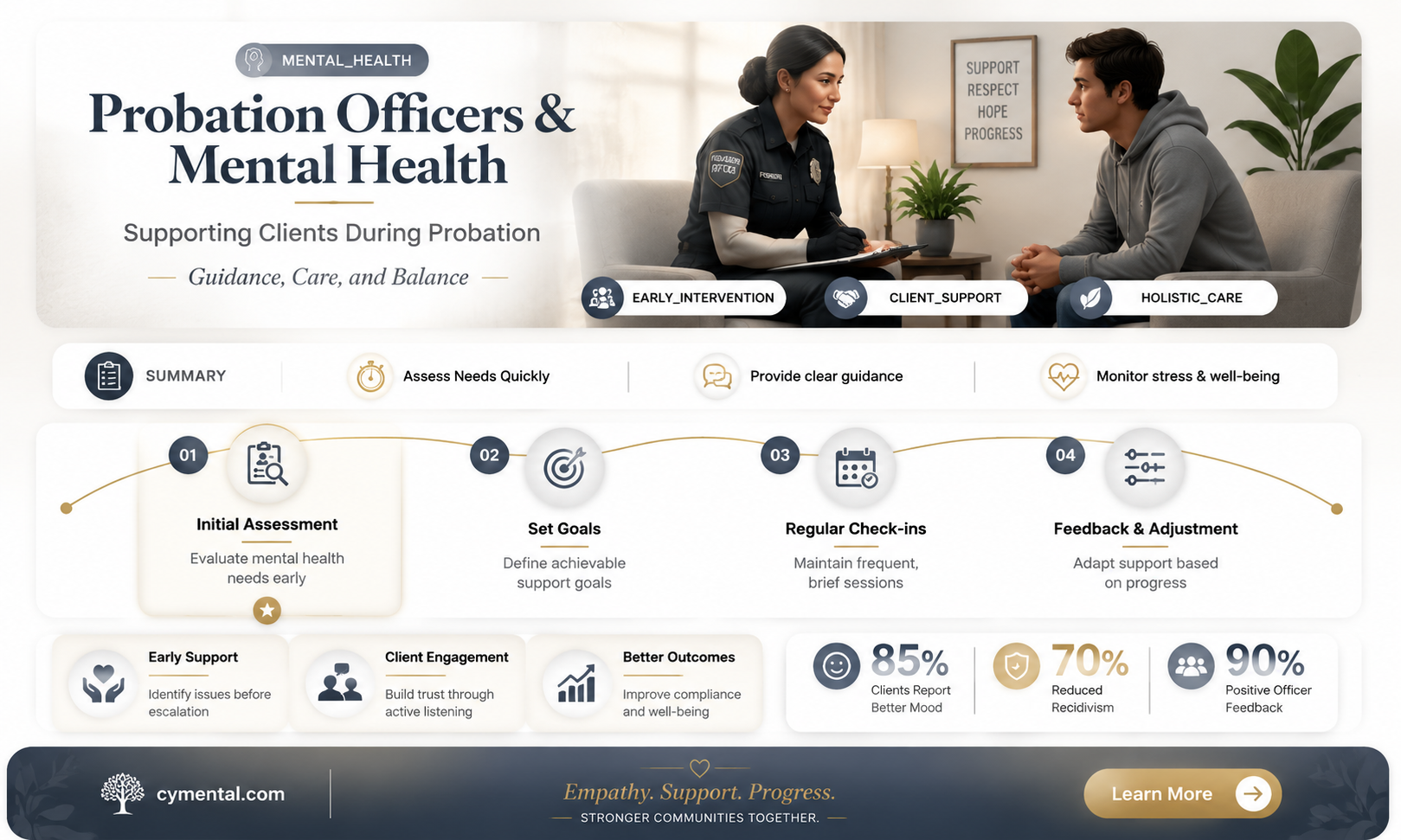
Probation officers play a critical role in the criminal justice system, often serving as a bridge between offenders and community resources. Given the high prevalence of mental health issues among individuals on probation, there is growing interest in whether these officers can effectively support probationers' mental health needs. While their primary responsibilities include monitoring compliance with court-ordered conditions and ensuring public safety, probation officers are increasingly being called upon to identify mental health challenges, connect probationers to appropriate treatment, and provide ongoing support. However, their ability to do so is often constrained by limited training, heavy caseloads, and a lack of integrated mental health services. As such, exploring how probation officers can be better equipped to address mental health concerns is essential for improving outcomes for both probationers and the communities they return to.
| Characteristics | Values |
|---|---|
| Role of Probation Officers | Probation officers can play a crucial role in supporting individuals with mental health issues on probation by monitoring their progress, connecting them to resources, and ensuring compliance with court-ordered treatment. |
| Mental Health Screening | Many probation departments conduct initial mental health screenings to identify individuals in need of support, though the effectiveness depends on the jurisdiction and available resources. |
| Referral to Services | Probation officers often refer probationers to mental health services, substance abuse treatment, and counseling, acting as a bridge between the justice system and healthcare providers. |
| Case Management | Officers may provide case management, helping probationers navigate treatment plans, medication management, and therapy appointments. |
| Crisis Intervention | In some cases, probation officers are trained to intervene during mental health crises, though this varies by region and training availability. |
| Collaboration with Providers | Effective support often relies on collaboration between probation officers, mental health professionals, and community organizations to address holistic needs. |
| Challenges | Limited training, high caseloads, and lack of mental health resources can hinder a probation officer's ability to adequately support probationers with mental health issues. |
| Legal and Ethical Considerations | Officers must balance public safety with the need for compassionate support, ensuring actions align with legal requirements and ethical standards. |
| Outcome Improvement | Research suggests that probation officers who actively support mental health needs can reduce recidivism and improve overall outcomes for probationers. |
| Training Needs | Increased training in mental health awareness, de-escalation techniques, and trauma-informed care is essential for probation officers to effectively assist this population. |
Explore related products


What You'll Learn

Role in mental health support
Probation officers are increasingly recognized as vital intermediaries in addressing the mental health needs of individuals under their supervision. Their role extends beyond enforcement to include support, particularly in identifying and mitigating mental health issues that often underpin recidivism. By fostering trust and leveraging their regular interactions, probation officers can act as early detectors of psychological distress, connecting probationers to essential resources before crises escalate.
Consider the structured approach probation officers can adopt to integrate mental health support into their practice. First, they must undergo training in mental health first aid, enabling them to recognize symptoms of common disorders such as depression, anxiety, or PTSD. Second, they should maintain a resource directory of local mental health services, including crisis hotlines, counseling centers, and support groups. For instance, officers might refer probationers to Cognitive Behavioral Therapy (CBT) programs, which have shown efficacy in reducing reoffending rates by 20-30% among participants. Third, officers can collaborate with mental health professionals to develop individualized case plans that align probation conditions with therapeutic goals, ensuring accountability without exacerbating psychological strain.
A comparative analysis reveals that probation officers in jurisdictions with formalized mental health partnerships report higher success rates in probation completion. For example, in California, the Collaborative Courts program integrates mental health treatment into probation terms, resulting in a 50% reduction in recidivism among participants compared to traditional probation models. Conversely, in areas where such partnerships are absent, probationers often cycle in and out of the system due to untreated mental health issues. This disparity underscores the importance of systemic support for probation officers, including access to real-time consultation with mental health experts and funding for evidence-based interventions.
Persuasively, the argument for expanding the mental health role of probation officers rests on both moral and practical grounds. Ethically, it is incumbent upon the justice system to address the root causes of criminal behavior, many of which stem from untreated mental illness. Practically, investing in this dual role yields significant cost savings by reducing incarceration rates and improving community safety. For instance, a study in Washington State found that every dollar spent on mental health diversion programs saved taxpayers $9.80 in avoided criminal justice costs. By reframing their role as facilitators of recovery rather than solely enforcers of compliance, probation officers can contribute to a more just and effective system.
Descriptively, the day-to-day work of a probation officer in this expanded role involves a delicate balance of empathy and authority. During routine check-ins, they might notice subtle signs of relapse—withdrawal, missed appointments, or changes in demeanor—and intervene proactively. For a probationer struggling with substance abuse and co-occurring depression, the officer could coordinate a referral to a dual-diagnosis program, ensuring transportation and scheduling accommodations. Over time, this hands-on approach builds rapport, encouraging probationers to view their officer as an ally in their recovery journey rather than an adversary. Such relationships are transformative, turning a period of supervision into an opportunity for healing and growth.
Running for Mental Health: How Lacing Up Boosts Your Mind
You may want to see also
Explore related products


Access to therapy resources
Probation officers often serve as critical intermediaries between individuals on probation and essential mental health services. One of their key roles is facilitating access to therapy resources, which can significantly impact a probationer’s ability to address underlying mental health issues and reduce recidivism. However, the effectiveness of this support hinges on the officer’s knowledge of available resources and their ability to navigate systemic barriers. For instance, officers who maintain updated lists of local therapists, sliding-scale clinics, and telehealth options can streamline referrals, ensuring probationers receive timely care. Without such proactive measures, individuals may fall through the cracks, exacerbating their mental health challenges and increasing the likelihood of probation violations.
Consider the practical steps probation officers can take to enhance access to therapy. First, officers should establish partnerships with community mental health providers to create a referral network. This network could include therapists specializing in trauma, substance use disorders, or anger management—common issues among probation populations. Second, officers should educate probationers about their rights to mental health care and the benefits of therapy, dispelling stigma and encouraging participation. For example, explaining that cognitive-behavioral therapy (CBT) can reduce relapse rates by up to 50% in individuals with substance use disorders may motivate engagement. Third, officers should advocate for funding or grants to cover therapy costs for indigent probationers, as financial barriers often prevent access to care.
A comparative analysis reveals disparities in therapy access based on geographic location and socioeconomic status. Urban areas typically offer more mental health resources, including specialized clinics and telehealth services, while rural regions often lack even basic therapy options. Probation officers in rural settings must therefore be creative, leveraging telehealth platforms or arranging transportation to distant providers. Additionally, probationers from low-income backgrounds face unique challenges, such as lack of insurance or inability to afford copays. Officers in these contexts can connect individuals with Medicaid enrollment assistance or free clinics, ensuring financial constraints do not impede treatment.
The persuasive argument for prioritizing therapy access lies in its long-term benefits for both probationers and society. Studies show that individuals who receive consistent mental health treatment are 40% less likely to reoffend compared to those who do not. Moreover, therapy can improve emotional regulation, decision-making, and interpersonal skills, fostering stability in probationers’ lives. By investing time and resources in connecting probationers to therapy, officers not only fulfill their mandate to supervise and rehabilitate but also contribute to public safety. This dual impact underscores why access to therapy resources should be a cornerstone of probation officers’ strategies for supporting mental health.
Finally, a descriptive example illustrates the transformative potential of therapy access. Imagine a 28-year-old probationer with a history of anxiety and PTSD, stemming from childhood trauma. Initially resistant to therapy, he eventually engages with a trauma-informed therapist after his probation officer provides a list of providers and explains the confidentiality of sessions. Over six months of weekly CBT sessions, he learns coping mechanisms, processes his trauma, and reports reduced anxiety. This progress not only helps him comply with probation conditions but also empowers him to pursue stable employment and rebuild relationships. Such outcomes highlight how probation officers, by facilitating therapy access, can catalyze profound personal and systemic change.
Gardening for Mental Health: Cultivating Peace and Well-Being Naturally
You may want to see also
Explore related products


Crisis intervention strategies
Probation officers often find themselves at the intersection of the criminal justice system and mental health care, a role that demands more than routine supervision. Crisis intervention strategies are essential tools in their arsenal, enabling them to de-escalate volatile situations and connect probationers with critical mental health resources. These strategies are not one-size-fits-all; they require adaptability, empathy, and a deep understanding of both the individual’s needs and systemic barriers.
Consider a probationer experiencing a psychotic episode during a check-in. A probation officer trained in crisis intervention would first prioritize safety, using calm, non-threatening language to establish rapport. Techniques like active listening and reflective responses can help the individual feel heard, reducing agitation. For instance, acknowledging their distress with phrases like, “I can see you’re feeling overwhelmed—let’s figure this out together,” can create a sense of partnership. The officer might then employ the 5 A’s of Crisis Intervention: Assess the situation, Affirm the individual’s feelings, Assist in problem-solving, Adapt to their responses, and Arrange for follow-up care, such as contacting a mobile crisis unit or scheduling an emergency therapy session.
However, crisis intervention isn’t solely about immediate de-escalation; it’s also about prevention. Probation officers can implement proactive strategies like regular mental health screenings, using tools such as the Brief Jail Mental Health Screen (BJMHS), to identify risks early. For probationers with known mental health conditions, officers can collaborate with treatment providers to develop crisis plans, outlining specific steps to take during an episode, including emergency contacts and preferred coping mechanisms. For example, a probationer with PTSD might include grounding techniques or a trusted support person in their plan.
One critical challenge is balancing the officer’s role as a supervisor with their role as a helper. While crisis intervention requires empathy, officers must also maintain boundaries to avoid dual relationships. A comparative analysis of successful programs, like the Sequential Intercept Model, shows that integrating mental health professionals into probation teams can alleviate this tension. For instance, co-responding models, where a mental health clinician accompanies the officer during high-risk visits, have reduced arrests and hospitalizations in jurisdictions like Los Angeles County.
In conclusion, crisis intervention strategies empower probation officers to address mental health crises effectively, but their success hinges on training, collaboration, and systemic support. By combining immediate de-escalation techniques with long-term preventive measures, officers can not only manage crises but also foster stability and recovery for probationers. Practical steps, such as adopting standardized protocols and leveraging community resources, can transform probation from a punitive process into a pathway to healing.
Supporting Mental Health: Compassionate Ways to Help a Loved One
You may want to see also
Explore related products


Collaboration with healthcare providers
Probation officers often encounter individuals with mental health challenges, yet their training primarily focuses on law enforcement and case management, not clinical intervention. This gap underscores the critical need for collaboration with healthcare providers to address the complex needs of probationers effectively. By partnering with mental health professionals, probation officers can ensure that individuals receive appropriate treatment, reducing recidivism and improving overall well-being.
Consider the case of a 28-year-old probationer diagnosed with bipolar disorder. Without collaboration, a probation officer might misinterpret manic episodes as non-compliance, leading to unnecessary sanctions. However, when a probation officer works with a psychiatrist, they can differentiate between behavioral issues and symptoms of mental illness. For instance, the psychiatrist might recommend mood stabilizers like lithium (dosage: 300–600 mg daily) and therapy, while the probation officer adjusts expectations and timelines to accommodate treatment. This coordinated approach ensures the individual receives support rather than punishment for manageable symptoms.
Effective collaboration requires clear communication protocols. Probation officers should establish regular meetings with healthcare providers to discuss progress, challenges, and adjustments to treatment plans. For example, a probationer with schizophrenia may struggle with medication adherence due to side effects. A collaborative team could explore alternatives, such as long-acting injectable antipsychotics (e.g., aripiprazole lauroxil, administered monthly), which reduce reliance on daily pills. Additionally, shared access to secure, HIPAA-compliant platforms can streamline information exchange while maintaining confidentiality.
Critics might argue that such collaboration burdens an already strained healthcare system. However, the long-term benefits outweigh the costs. Studies show that integrated care models reduce hospitalizations and criminal justice involvement among individuals with mental illness. For instance, a 2020 study found that probationers in collaborative programs were 30% less likely to reoffend within two years. By investing in these partnerships, jurisdictions can allocate resources more efficiently, focusing on prevention rather than reaction.
To implement this collaboration successfully, probation departments should prioritize training officers in mental health literacy and the basics of care coordination. Healthcare providers, in turn, must understand the legal constraints and goals of probation. Pilot programs in cities like Los Angeles have demonstrated that even small-scale initiatives, such as co-locating mental health clinicians in probation offices, can yield significant improvements. Ultimately, collaboration transforms probation from a punitive system into a rehabilitative one, fostering recovery and community safety.
Can CES Therapy Alleviate Symptoms of Mental Health Disorders?
You may want to see also
Explore related products


Monitoring mental health progress
Probation officers often serve as critical touchpoints for individuals navigating both the justice system and mental health challenges. Monitoring mental health progress in this context requires a structured yet empathetic approach. Regular check-ins, ideally biweekly or monthly, provide opportunities to assess stability, adherence to treatment plans, and emerging risks. These interactions should include standardized screening tools, such as the PHQ-9 for depression or GAD-7 for anxiety, to quantify symptom severity objectively. Equally important is the officer’s ability to observe non-verbal cues—changes in appearance, speech patterns, or emotional responsiveness—that may signal deterioration. Documentation of these observations ensures continuity of care, especially when collaborating with mental health providers.
Effective monitoring also hinges on clear communication with treatment teams. Probation officers should establish consent-based information-sharing protocols, using release forms to access therapy notes, medication logs, or crisis intervention records. For instance, if a probationer is prescribed antipsychotics like olanzapine (10–20 mg/day), the officer can verify compliance by cross-referencing pharmacy refill records with self-reported adherence. However, this collaboration must respect confidentiality boundaries, focusing only on risk-relevant data. Officers should avoid interpreting clinical details themselves but instead flag inconsistencies (e.g., missed therapy sessions) for professional follow-up.
A proactive stance is essential when addressing barriers to progress. Common obstacles include transportation difficulties, medication side effects, or stigma-driven resistance to treatment. Officers can mitigate these by connecting probationers to community resources, such as sliding-scale clinics or peer support groups. For younger individuals (ages 18–25), who often face transitional challenges, officers might encourage participation in vocational programs that double as stabilizing routines. Practical strategies, like helping set phone reminders for medication or providing bus tokens for therapy appointments, demonstrate tangible support without overstepping roles.
Comparatively, probation officers’ monitoring role differs from that of clinicians by emphasizing behavioral accountability alongside wellness. While therapists focus on root causes and emotional processing, officers ensure that mental health struggles do not escalate into probation violations. For example, a probationer experiencing psychotic symptoms might require a temporary curfew adjustment to accommodate hospitalization, rather than punitive action. This dual focus demands a nuanced understanding of when to enforce rules and when to advocate for accommodations, always prioritizing public safety without sacrificing compassion.
Ultimately, successful monitoring transforms the probationary period into a rehabilitative opportunity. By tracking progress systematically, fostering cross-disciplinary collaboration, and addressing practical barriers, officers can help stabilize mental health while upholding legal mandates. The goal is not just compliance but meaningful improvement—a shift achievable when officers view themselves as facilitators of recovery, not merely enforcers of conditions. This balanced approach not only reduces recidivism but also empowers individuals to rebuild their lives beyond the constraints of both the justice system and mental illness.
Mental Health Support: A Key to Stable Housing Solutions
You may want to see also
Frequently asked questions
No, probation officers are not licensed mental health professionals and cannot provide treatment. However, they can refer individuals to appropriate mental health services and monitor their participation.
A probation officer can connect the individual to mental health resources, advocate for accommodations, and collaborate with treatment providers to ensure compliance with probation conditions while addressing mental health needs.
Yes, a probation officer can recommend or enforce court-ordered mental health treatment as a condition of probation, provided it is approved by the judge and aligns with the individual’s needs.
A probation officer monitors compliance with treatment plans, attends court-ordered therapy sessions if necessary, and reports progress or concerns to the court to ensure the individual is meeting their mental health-related probation requirements.
Yes, a probation officer can assist by connecting the individual to crisis intervention services, contacting emergency mental health providers, or notifying the court to adjust probation conditions as needed.