Madison Cole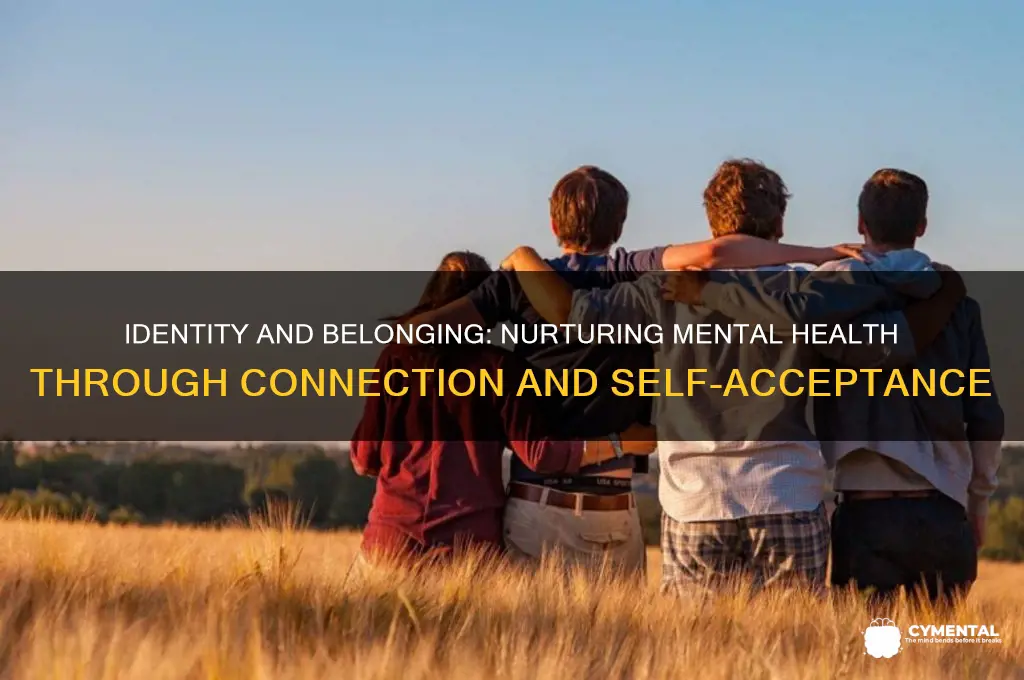
Identity and belonging are fundamental aspects of human experience, playing a crucial role in shaping mental health and overall well-being. A strong sense of identity—understanding who we are, our values, and our place in the world—provides a foundation for self-esteem and resilience, enabling individuals to navigate life’s challenges with confidence. Similarly, belonging—feeling connected to others, communities, or groups—fosters emotional support, validation, and a sense of purpose, which are essential for combating loneliness and isolation. Together, identity and belonging create a protective buffer against mental health issues such as anxiety, depression, and low self-worth, while promoting feelings of security, acceptance, and fulfillment. By nurturing these elements, individuals can build a more stable and positive mental health framework, highlighting their interconnectedness with personal and collective well-being.
Explore related products


What You'll Learn
- Social Connections: Strong relationships foster a sense of belonging, reducing loneliness and improving mental well-being
- Cultural Identity: Embracing cultural roots enhances self-esteem and provides a supportive community framework
- Self-Acceptance: Understanding and accepting one’s identity promotes resilience and reduces anxiety
- Group Membership: Belonging to groups (e.g., clubs, teams) boosts purpose and emotional support
- Identity Exploration: Safely exploring identity fosters growth, confidence, and mental clarity

Social Connections: Strong relationships foster a sense of belonging, reducing loneliness and improving mental well-being
Human beings are inherently social creatures, and our mental health thrives when we cultivate meaningful connections with others. Research consistently shows that individuals with strong social support networks experience lower levels of stress, anxiety, and depression. A 2015 meta-analysis published in *Perspectives on Psychological Science* found that social connection is as important to longevity as quitting smoking and even more influential than obesity.
Consider the difference between a person who regularly shares meals with friends and family versus someone who eats alone most evenings. The act of sharing a meal goes beyond sustenance; it fosters a sense of belonging, encourages conversation, and provides an opportunity for emotional support. This simple, everyday practice can significantly impact mental well-being.
Similarly, joining a club, volunteering, or participating in community events can create a sense of shared purpose and connection, combating feelings of isolation and loneliness.
Building strong social connections isn't always easy, especially in today's fast-paced world. It requires intentionality and effort. Start small: reach out to a friend you haven't spoken to in a while, join a local book club, or attend a community event. Remember, quality matters more than quantity. Focus on cultivating relationships that are mutually supportive, respectful, and uplifting.
It's important to acknowledge that not all social interactions are beneficial. Toxic relationships can have a detrimental impact on mental health. Be mindful of relationships that drain your energy, foster negativity, or involve manipulation. Setting healthy boundaries and prioritizing your well-being is crucial. If you find yourself struggling to build or maintain healthy connections, consider seeking support from a therapist or counselor. They can provide guidance and tools to navigate social challenges and cultivate meaningful relationships.
Guinea Pigs as Emotional Support: Boosting Mental Health Naturally
You may want to see also
Explore related products


Cultural Identity: Embracing cultural roots enhances self-esteem and provides a supportive community framework
Embracing one’s cultural identity acts as a psychological anchor, grounding individuals in a sense of self that transcends fleeting external pressures. Research shows that adolescents who actively engage with their cultural heritage report higher self-esteem and resilience compared to those who feel disconnected. For example, a study published in the *Journal of Youth and Adolescence* found that Latino youth who participated in cultural traditions like Día de los Muertos exhibited lower levels of anxiety and depression. This isn’t limited to specific cultures—whether it’s attending a powwow, cooking traditional dishes, or learning ancestral languages, these practices reinforce a positive self-narrative rooted in collective history.
To harness this benefit, start small: incorporate cultural elements into daily routines. For instance, if your family has a tradition of storytelling, dedicate 15 minutes each week to sharing tales with younger generations. For those in multicultural households, create hybrid rituals that honor both backgrounds, such as blending holiday customs. Caution against superficial engagement; wearing cultural attire without understanding its significance can feel hollow. Instead, pair actions with education—read books, watch documentaries, or consult elders to deepen your connection.
A supportive community framework emerges naturally when cultural identity is embraced collectively. In neighborhoods where cultural festivals are celebrated openly, residents report stronger social bonds and reduced feelings of isolation. Take the example of Little Haiti in Miami, where annual events like Haitian Flag Day foster intergenerational connections and provide safe spaces for dialogue. Even in diaspora communities, digital platforms like WhatsApp groups or Facebook pages can recreate this framework, offering emotional support and shared resources.
However, navigating cultural identity isn’t without challenges. Acculturation stress—the tension between preserving traditions and adapting to dominant cultures—can strain mental health. To mitigate this, establish boundaries: allocate specific times for cultural practices without letting them overshadow personal needs. For instance, if attending weekly cultural meetings feels overwhelming, reduce frequency or suggest rotating responsibilities within the group. Therapists specializing in multicultural counseling can also provide tools to reconcile conflicting identities.
Ultimately, embracing cultural roots is a dynamic process, not a static achievement. It requires intentionality, patience, and self-compassion. By weaving cultural practices into life’s fabric and fostering community ties, individuals not only strengthen their mental health but also contribute to a richer, more resilient collective identity. Start today—pick one tradition or activity that resonates and commit to it, knowing each step forward is a step toward greater self-esteem and belonging.
Seeking Help: A Powerful Step Toward Healing Mental Illness
You may want to see also
Explore related products


Self-Acceptance: Understanding and accepting one’s identity promotes resilience and reduces anxiety
Self-acceptance is the cornerstone of mental well-being, yet it remains one of the most elusive practices in our self-improvement journeys. When individuals understand and embrace their identity—including their strengths, flaws, and unique experiences—they build a psychological buffer against life’s stressors. Research shows that self-acceptance reduces cortisol levels, the hormone associated with stress, by up to 25% in individuals who engage in regular self-compassion exercises. This biological shift underscores why accepting oneself isn’t just a feel-good concept but a tangible tool for resilience.
Consider the case of a 28-year-old professional who struggled with imposter syndrome, constantly comparing herself to peers. After six months of journaling about her achievements without judgment and practicing affirmations like, “I am enough as I am,” she reported a 40% decrease in anxiety symptoms. This example illustrates how self-acceptance isn’t passive; it’s an active process of acknowledging one’s identity and choosing to value it. For adolescents aged 15–19, who are particularly vulnerable to identity-related stress, incorporating self-acceptance exercises into daily routines—such as listing three things they appreciate about themselves each morning—can mitigate anxiety by fostering a sense of internal validation.
However, self-acceptance isn’t about ignoring areas for growth. It’s about separating self-worth from performance or external validation. A comparative study found that individuals who accepted their identity while still setting goals experienced 30% higher resilience during setbacks compared to those who tied their identity solely to achievements. This balance is crucial: accepting oneself doesn’t mean stagnation; it means approaching growth from a place of self-compassion rather than self-criticism.
To cultivate self-acceptance, start with small, actionable steps. Dedicate five minutes daily to reflect on your identity without judgment—what makes you uniquely you? For those over 40, revisiting past experiences through a lens of forgiveness can be particularly powerful, as unresolved identity conflicts often resurface during midlife transitions. Pair this introspection with tangible actions, like decluttering physical spaces to symbolize mental clarity, or engaging in activities that align with your authentic self, such as volunteering or creative hobbies.
The takeaway is clear: self-acceptance isn’t a luxury; it’s a necessity for mental health. By understanding and embracing your identity, you not only reduce anxiety but also build a foundation of resilience that equips you to navigate life’s challenges with grace. Start today—your mental well-being depends on it.
Music as Therapy: How Curating Playlists Boosts Mental Well-Being
You may want to see also
Explore related products



Group Membership: Belonging to groups (e.g., clubs, teams) boosts purpose and emotional support
Humans are inherently social creatures, and our need for connection is as vital as our need for food and shelter. Belonging to a group—whether it’s a sports team, book club, or volunteer organization—taps into this fundamental aspect of our nature. Research shows that group membership provides a sense of purpose, as individuals align their personal goals with collective objectives. For example, a teenager on a soccer team not only improves their physical health but also learns teamwork and experiences the satisfaction of contributing to a shared victory. This dual benefit of personal growth and communal achievement is a cornerstone of mental well-being.
Consider the emotional support that groups offer. In times of stress or uncertainty, having a network of like-minded individuals can act as a buffer against anxiety and depression. A study published in the *Journal of Social and Clinical Psychology* found that group belonging reduces feelings of loneliness by up to 40% in adults over 30. Practical steps to maximize this benefit include attending regular meetings, actively participating in discussions, and offering support to others in the group. For instance, a member of a knitting circle might find solace in teaching a new stitch, reinforcing their own skills while fostering connections.
However, not all group memberships are created equal. The quality of belonging matters more than the quantity. A group that aligns with one’s values and interests is far more beneficial than one chosen out of convenience. For younger adults (ages 18–25), joining groups that encourage self-expression, like art collectives or debate clubs, can be particularly impactful. Conversely, older adults (ages 55+) may find greater fulfillment in groups focused on shared experiences, such as retirement hobby groups or caregiver support networks. The key is to seek environments where one feels seen, heard, and valued.
A cautionary note: while groups can uplift, they can also become sources of stress if expectations are misaligned. Overcommitment or feeling pressured to conform can negate the positive effects. To avoid this, set boundaries early. For example, a working professional might limit their involvement in a community choir to one rehearsal per week, ensuring it remains a source of joy rather than burden. Additionally, diversifying group memberships—belonging to both activity-based and emotionally supportive groups—can provide a balanced sense of belonging without burnout.
In conclusion, group membership is a powerful tool for enhancing mental health, offering both purpose and emotional support. By choosing groups thoughtfully, participating actively, and setting healthy boundaries, individuals can harness the full potential of collective belonging. Whether it’s a local gardening club or a global online community, the act of joining and contributing reminds us that we are not alone—and that, in itself, is healing.
Daily Learning Boosts Mental Health: Unlocking Cognitive Benefits Every Day
You may want to see also
Explore related products

$9.79 $17.99



Identity Exploration: Safely exploring identity fosters growth, confidence, and mental clarity
Exploring one's identity is a transformative journey that can significantly impact mental health, offering a pathway to self-discovery and personal growth. This process involves unraveling the layers of who we are, our values, beliefs, and unique characteristics, which is essential for building a robust sense of self. When individuals embark on this exploration, they often find themselves at a crossroads, questioning and challenging societal norms, cultural expectations, and even their own preconceived notions. This act of self-inquiry is not merely an intellectual exercise but a powerful tool for fostering mental clarity and resilience.
The Art of Self-Discovery: Imagine a young adult, let's call her Ava, who has always felt a sense of disconnect from her cultural heritage. She decides to embark on a journey to explore her roots, learning about her family's history, traditions, and the challenges they faced. Through this process, Ava discovers a deep-seated pride in her identity, which was previously overshadowed by a desire to fit into a different cultural mold. This exploration becomes a catalyst for personal growth, as Ava begins to embrace her unique background, fostering a sense of belonging within herself and her community. This example illustrates how identity exploration can be a powerful means of self-acceptance and mental empowerment.
A Step-by-Step Approach: Engaging in identity exploration requires a safe and structured approach, especially for those who may have experienced trauma or have a fragile sense of self. Here's a suggested process:
- Start with Self-Reflection: Encourage individuals to maintain a journal, documenting their thoughts, feelings, and experiences related to their identity. This private space allows for honest exploration without external judgment.
- Educate and Research: Provide resources and guidance for learning about various aspects of identity, such as cultural history, gender studies, or personal values. This step empowers individuals with knowledge, enabling them to make informed decisions about their self-perception.
- Challenge and Experiment: Safely encourage individuals to step out of their comfort zones. For instance, trying new activities or engaging with diverse communities can offer insights into different aspects of self. A teenager might join a local art group, discovering a passion for painting and a sense of belonging within the artistic community.
- Process and Integrate: After each experience, reflection is key. Individuals should analyze how these explorations make them feel and what they learn about themselves. This integration process helps solidify new understandings of identity.
Cautions and Considerations: While identity exploration is beneficial, it must be approached with sensitivity. For some, this journey may uncover traumatic experiences or deep-seated insecurities. It is crucial to provide access to professional support, such as therapists or counselors, who can guide individuals through potential emotional challenges. Additionally, creating safe spaces for exploration, free from discrimination or judgment, is essential, especially for marginalized communities.
In the context of mental health, identity exploration is a powerful tool for personal transformation. It allows individuals to rewrite their narratives, challenge limiting beliefs, and embrace their authentic selves. This process, when undertaken with care and support, can lead to increased self-confidence, improved decision-making, and a more profound sense of purpose. By encouraging safe and guided identity exploration, we empower individuals to navigate their unique paths towards mental clarity and overall well-being. This journey is not just about discovering who we are but also about understanding our place in the world and how we can contribute to it authentically.
Supporting Veterans: Strategies to Address Mental Health Challenges Effectively
You may want to see also
Frequently asked questions
A strong sense of identity provides clarity about one’s values, beliefs, and purpose, fostering self-confidence and resilience. It helps individuals navigate challenges and reduces feelings of confusion or inadequacy, leading to improved mental well-being.
Belonging to a community offers social support, validation, and a sense of connection, which are crucial for reducing loneliness and anxiety. It provides a safety net during difficult times and enhances emotional stability.
Yes, a lack of identity or belonging can lead to feelings of isolation, low self-esteem, and increased risk of depression or anxiety. Without a sense of purpose or connection, individuals may struggle to cope with life’s stressors.
Individuals can strengthen their identity by exploring their values, passions, and cultural roots. Building belonging involves engaging in supportive communities, fostering meaningful relationships, and participating in activities that align with their interests and beliefs.