Harper Lewis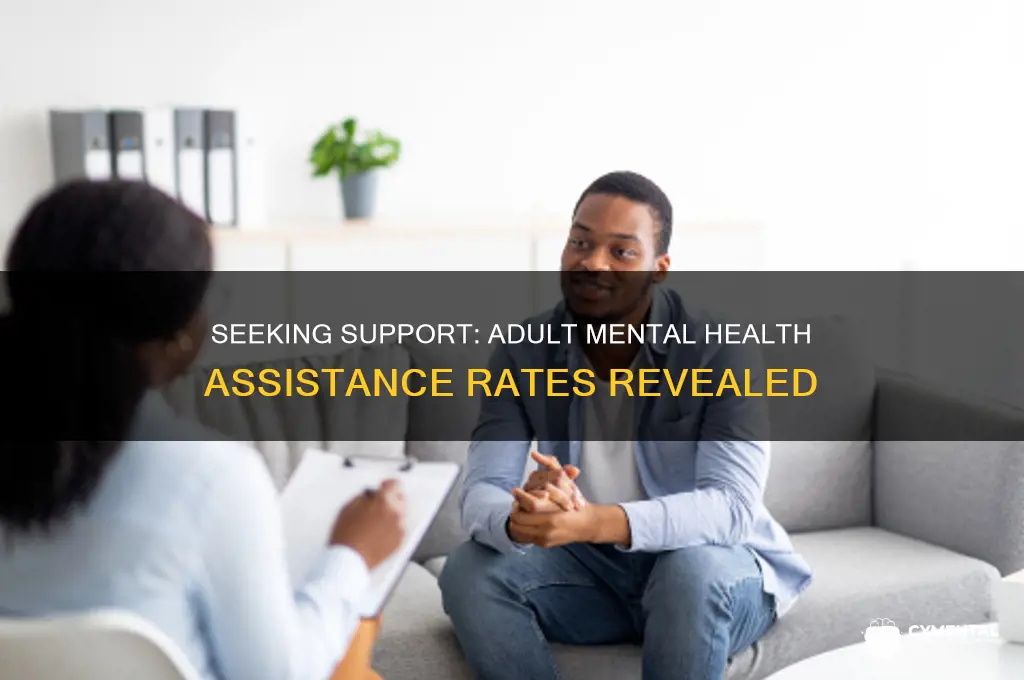
The prevalence of mental health issues among adults has become a pressing concern in recent years, prompting a growing number of individuals to seek professional help. Understanding how many adults have actively pursued mental health support is crucial for assessing the effectiveness of available resources and identifying gaps in care. Studies indicate that a significant portion of the adult population experiences mental health challenges, yet only a fraction actually seek assistance due to factors such as stigma, lack of awareness, or limited access to services. Examining these trends not only sheds light on the scale of the issue but also highlights the importance of destigmatizing mental health care and improving accessibility to ensure more individuals receive the support they need.
Explore related products


What You'll Learn
- Demographics Seeking Help: Age, gender, and cultural factors influencing adults seeking mental health support
- Types of Mental Health Issues: Anxiety, depression, PTSD, and other conditions prompting adults to seek help
- Barriers to Access: Stigma, cost, and lack of resources preventing adults from getting mental health care
- Treatment Methods: Therapy, medication, and alternative approaches adults use for mental health support
- Impact of COVID-19: Pandemic-related stress and increased demand for adult mental health services

Demographics Seeking Help: Age, gender, and cultural factors influencing adults seeking mental health support
Young adults aged 18–25 are the most likely demographic to report mental health challenges, yet they often face barriers to accessing care. According to the National Alliance on Mental Illness (NAMI), nearly 25% of this age group experiences a mental health condition each year, but only 40% receive treatment. This disparity highlights the need for targeted interventions, such as college-based counseling services and digital mental health platforms tailored to their tech-savvy preferences. For instance, apps like Calm and BetterHelp have seen significant uptake among this group, offering accessible, stigma-free support.
Gender plays a pivotal role in both the prevalence of mental health issues and the likelihood of seeking help. Women are nearly twice as likely as men to be diagnosed with anxiety or depression, yet men are far less likely to seek treatment. The American Psychological Association notes that societal expectations of masculinity often discourage men from expressing vulnerability. To bridge this gap, gender-specific programs, such as men’s support groups or campaigns like Movember, have emerged to encourage help-seeking behaviors. Employers can also play a role by offering mental health days and fostering workplace cultures that normalize emotional well-being for all genders.
Cultural factors significantly influence whether adults seek mental health support, with stigma and lack of representation in care systems acting as major deterrents. In communities of color, historical mistrust of healthcare institutions and language barriers often prevent individuals from accessing services. For example, only 34% of Black adults with mental illness receive treatment, compared to 50% of white adults, per the Substance Abuse and Mental Health Services Administration (SAMHSA). Culturally competent care, such as therapists who share patients’ cultural backgrounds or bilingual services, can improve engagement. Organizations like the National Queer and Trans Therapists of Color Network are leading the way in providing inclusive, affirming care.
Age-related stigma also impacts older adults, who are often overlooked in mental health discussions despite high rates of depression and anxiety. The World Health Organization reports that 15% of adults aged 60 and over live with a mental disorder, yet many avoid seeking help due to fears of being dismissed as "just old." Tailored initiatives, such as senior-focused therapy groups or telehealth options for those with mobility issues, can address these barriers. Caregivers and family members can support older adults by recognizing subtle signs of distress, such as withdrawal or changes in appetite, and encouraging professional intervention.
Practical steps can be taken to improve mental health support across demographics. For young adults, integrating mental health screenings into routine college health checks can normalize care-seeking. For men, workplace workshops on emotional intelligence can reframe vulnerability as strength. In culturally diverse communities, training more therapists from underrepresented backgrounds and offering sliding-scale fees can increase accessibility. Finally, for older adults, primary care providers should routinely screen for mental health issues during check-ups, ensuring that no generation is left behind in the pursuit of well-being.
Supporting Teens: Practical Strategies for Navigating Mental Health Challenges
You may want to see also
Explore related products


$54.19 $114


Types of Mental Health Issues: Anxiety, depression, PTSD, and other conditions prompting adults to seek help
Anxiety disorders affect over 40 million adults in the United States alone, making them the most common mental health issue driving individuals to seek professional help. Unlike everyday stress, clinical anxiety persists, interferes with daily functioning, and often manifests physically—rapid heartbeat, sweating, or insomnia. Generalized Anxiety Disorder (GAD), panic disorder, and social anxiety are frequent diagnoses. Cognitive Behavioral Therapy (CBT) and medications like SSRIs (e.g., sertraline 50–200 mg/day) are first-line treatments, but lifestyle changes—regular exercise, mindfulness, and limiting caffeine—can significantly reduce symptoms. Recognizing when worry becomes debilitating is key to timely intervention.
Depression, another leading cause of adult mental health treatment, impacts approximately 17 million U.S. adults annually. It goes beyond sadness, encompassing persistent fatigue, loss of interest in activities, and suicidal thoughts. Major Depressive Disorder (MDD) and Persistent Depressive Disorder (PDD) are common diagnoses. Treatment often combines antidepressants (e.g., fluoxetine 20–60 mg/day) with psychotherapy. For treatment-resistant cases, newer options like ketamine infusions or transcranial magnetic stimulation (TMS) may be considered. Early signs, such as withdrawal from social interactions or changes in appetite, should prompt a mental health evaluation.
Post-Traumatic Stress Disorder (PTSD) affects roughly 8 million adults, often following traumatic events like accidents, assault, or combat. Symptoms include flashbacks, nightmares, and hypervigilance. Treatment typically involves trauma-focused therapies like Eye Movement Desensitization and Reprocessing (EMDR) or Prolonged Exposure (PE) therapy. Medications such as paroxetine (20–50 mg/day) or sertraline may be prescribed to manage symptoms. Veterans and first responders are particularly vulnerable, but anyone exposed to trauma can develop PTSD. Support groups and peer counseling can complement professional treatment, fostering a sense of community and understanding.
Beyond these, adults increasingly seek help for conditions like bipolar disorder, obsessive-compulsive disorder (OCD), and eating disorders. Bipolar disorder, marked by extreme mood swings, often requires mood stabilizers (e.g., lithium 900–1800 mg/day) and psychotherapy. OCD, characterized by intrusive thoughts and repetitive behaviors, responds well to CBT with Exposure and Response Prevention (ERP). Eating disorders, such as anorexia or bulimia, demand multidisciplinary care—nutrition counseling, therapy, and sometimes medication. Emerging trends show a rise in adults addressing burnout and digital addiction, highlighting the evolving landscape of mental health challenges. Understanding these distinctions ensures tailored, effective care.
Shorter School Weeks: Boosting Student Mental Health and Well-Being
You may want to see also
Explore related products


$25.49 $47.99


Barriers to Access: Stigma, cost, and lack of resources preventing adults from getting mental health care
Stigma remains one of the most insidious barriers to mental health care, silencing adults who might otherwise seek help. Despite growing awareness, societal misconceptions about mental illness persist, often framing it as a sign of weakness or personal failure. This stigma manifests in both overt discrimination and subtle, internalized shame, causing individuals to fear judgment from employers, friends, or family. For example, a 2021 study found that 40% of adults avoided seeking mental health care due to concerns about being labeled or treated differently. To combat this, public campaigns emphasizing mental health as a normal part of overall well-being—akin to physical health—are essential. Employers can also play a role by fostering workplace cultures that encourage openness and provide confidential support systems.
Cost is another formidable barrier, particularly in countries without universal healthcare coverage. In the United States, for instance, nearly 10% of adults report forgoing mental health treatment due to prohibitive expenses. Even with insurance, high deductibles, copays, and limited provider networks often make care inaccessible. For those without insurance, the situation is dire: a single therapy session can cost $100–$200, and psychiatric medications can run into hundreds of dollars monthly. Practical solutions include advocating for policy changes that mandate mental health parity in insurance plans and expanding access to sliding-scale clinics or telehealth services, which can reduce costs by up to 50%.
The lack of resources compounds these challenges, particularly in rural or underserved areas. In the U.S., over 130 million people live in areas with a shortage of mental health professionals, forcing some to travel hours for care or wait months for appointments. Globally, the World Health Organization estimates a 1.3 million shortfall in mental health nurses worldwide. To address this, governments and organizations should invest in training programs for mental health professionals and incentivize practitioners to work in underserved regions. Telehealth platforms, while not a panacea, can bridge gaps by providing remote access to therapists and psychiatrists, though they require reliable internet access—a resource not universally available.
These barriers—stigma, cost, and resource scarcity—often intersect, creating a complex web that traps adults in need. For instance, someone in a rural area might face both high costs and a lack of providers, while simultaneously battling stigma that discourages them from seeking help at all. Breaking this cycle requires a multi-pronged approach: destigmatizing mental health through education, making care affordable through policy reforms, and expanding resources through innovative solutions like telehealth and community-based programs. Without addressing these barriers, millions will continue to suffer in silence, underscoring the urgent need for systemic change.
Music's Power: Boosting Middle Schoolers' Mental Health and Well-Being
You may want to see also
Explore related products


Treatment Methods: Therapy, medication, and alternative approaches adults use for mental health support
Recent data reveals that approximately one in five adults globally experiences a mental health disorder each year, yet only 40–50% of those affected seek professional help. This gap highlights the critical need to understand and utilize effective treatment methods. Among adults who do seek support, therapy, medication, and alternative approaches are the primary tools for managing conditions like depression, anxiety, and PTSD. Each method offers distinct benefits and challenges, making personalized treatment plans essential.
Therapy, particularly cognitive-behavioral therapy (CBT), remains a cornerstone of mental health treatment. CBT is structured, goal-oriented, and typically spans 12–20 sessions, depending on the individual’s needs. For example, adults with generalized anxiety disorder often learn to reframe negative thought patterns, while those with depression focus on behavioral activation to increase engagement in meaningful activities. Group therapy, another effective modality, provides peer support and reduces feelings of isolation. However, therapy requires time, commitment, and emotional vulnerability, which can deter some individuals. Practical tips include finding a therapist who specializes in your specific concerns and setting realistic expectations for progress.
Medication is another widely used approach, often prescribed in conjunction with therapy. Antidepressants like SSRIs (e.g., sertraline, fluoxetine) are commonly prescribed for depression and anxiety, with dosages typically starting at 25–50 mg daily and adjusted based on response. For severe cases, antipsychotics or mood stabilizers may be added. While medication can provide rapid symptom relief, it often comes with side effects such as weight gain, drowsiness, or sexual dysfunction. Adults over 65 require careful monitoring due to increased sensitivity to medication. It’s crucial to consult a psychiatrist to balance benefits and risks, and to avoid abrupt discontinuation, which can lead to withdrawal symptoms.
Alternative approaches are gaining popularity as complementary or standalone treatments for mental health. Mindfulness-based stress reduction (MBSR), for instance, teaches adults to cultivate present-moment awareness through meditation and yoga. Studies show that 8 weeks of consistent practice can reduce symptoms of anxiety and depression. Another emerging method is transcranial magnetic stimulation (TMS), a non-invasive procedure that uses magnetic fields to stimulate nerve cells in the brain. TMS is particularly effective for treatment-resistant depression, with sessions lasting 20–40 minutes over 4–6 weeks. While these approaches may not replace traditional treatments, they offer flexibility and appeal to those seeking holistic options.
In conclusion, the choice of treatment method depends on individual needs, preferences, and the severity of the condition. Therapy provides tools for long-term emotional growth, medication offers quick symptom relief, and alternative approaches cater to those seeking non-traditional paths. Adults should work with healthcare professionals to explore these options, combining them strategically for optimal outcomes. With the right support, mental health challenges can be managed effectively, enabling individuals to lead fulfilling lives.
Laughter as Therapy: How Humor Boosts Mental Health and Well-Being
You may want to see also
Explore related products


Impact of COVID-19: Pandemic-related stress and increased demand for adult mental health services
The COVID-19 pandemic has been a catalyst for an unprecedented surge in mental health challenges among adults, with global studies indicating a 25% increase in anxiety and depression cases during the peak of lockdowns. This period of isolation, economic uncertainty, and fear of the virus created a perfect storm for heightened stress levels, pushing many to seek professional help for the first time. For instance, in the United States, the Census Bureau’s Household Pulse Survey revealed that over 40% of adults reported symptoms of anxiety or depressive disorder in early 2021, compared to 11% in 2019. This dramatic shift underscores the pandemic’s profound impact on mental well-being.
One of the most striking trends has been the demographic expansion of those seeking mental health services. While younger adults (ages 18–24) have historically been more likely to report mental health issues, the pandemic saw a significant rise in middle-aged adults (ages 35–54) reaching out for support. This group, often balancing caregiving responsibilities, job insecurity, and health concerns, faced unique stressors that exacerbated pre-existing conditions or triggered new ones. Telehealth services emerged as a lifeline, with a 60% increase in virtual therapy sessions globally, making mental health care more accessible to those unable to attend in-person appointments.
However, the increased demand has strained mental health systems worldwide, revealing gaps in capacity and resources. In the UK, for example, the NHS reported a 30% rise in referrals to mental health services in 2020, yet wait times for treatment extended to several months in some areas. This delay in care can worsen outcomes, as untreated mental health issues often escalate. To address this, some countries have implemented innovative solutions, such as Australia’s rollout of free mental health sessions under Medicare, which saw over 1 million adults access subsidized therapy in 2021.
Practical steps for adults navigating pandemic-related stress include establishing a routine, limiting exposure to distressing news, and leveraging digital tools like mindfulness apps. Employers can play a critical role by offering mental health days and promoting work-life balance. Policymakers must prioritize funding for mental health services, ensuring that the infrastructure can meet the growing need. As the world moves beyond the acute phase of the pandemic, the lessons learned about mental health resilience and accessibility will be crucial in shaping a more supportive future.
Staying Active: How Keeping Busy Boosts Mental Health and Well-being
You may want to see also
Frequently asked questions
While exact global figures are hard to pinpoint due to varying reporting methods, the World Health Organization (WHO) estimates that over 1 in 4 adults experience a mental health issue annually, but only a fraction seek help. In some countries, less than 20% of those affected access professional support.
According to the National Institute of Mental Health (NIMH), approximately 20% of adults in the U.S. experience mental illness each year, and about 43% of those receive treatment. This means roughly 8-9% of the adult population seeks help annually.
Yes, studies show that younger adults, particularly those aged 18-25, are more likely to seek mental health services compared to older adults. This trend is attributed to increased awareness, reduced stigma, and greater access to resources among younger generations.
Common barriers include stigma, lack of access to affordable care, insufficient mental health professionals, fear of judgment, and lack of awareness about available resources. Cultural factors and misinformation also play significant roles.
Yes, there has been a notable increase in adults seeking mental health help, particularly since the COVID-19 pandemic. Surveys indicate a rise in demand for mental health services, with more people acknowledging the importance of mental well-being and seeking support.


![Help![Blu-ray]](https://m.media-amazon.com/images/I/6155cLsT0HL._AC_UY218_.jpg)


![Help! [LP]](https://m.media-amazon.com/images/I/71Lo3XMoSlL._AC_UY218_.jpg)