Ava Ramirez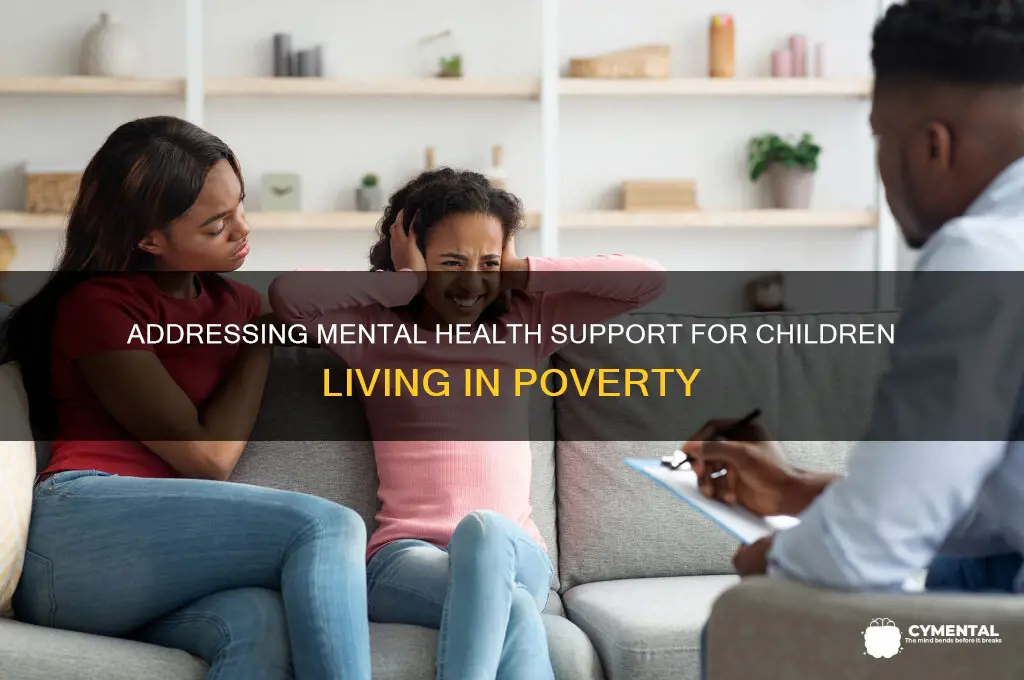
Addressing mental health among children in poverty is a critical yet often overlooked issue, as these young individuals face unique challenges that can exacerbate psychological distress. Poverty not only limits access to basic resources like food, shelter, and education but also creates chronic stress, instability, and trauma, all of which are risk factors for mental health disorders. Despite the growing recognition of this need, many children living in poverty lack access to adequate mental health services due to financial barriers, stigma, and a shortage of providers in underserved areas. Understanding how many of these children receive the necessary support is essential for identifying gaps in care, advocating for policy changes, and ensuring that vulnerable populations are not left behind in the pursuit of mental well-being.
Explore related products


$26.02 $29.95


What You'll Learn
- Access to Mental Health Services: Barriers and availability of mental health care for impoverished children
- Funding for Programs: Government and private funding allocated to mental health support for poor children
- Community Resources: Role of local organizations in providing mental health assistance to children in poverty
- Stigma and Awareness: Impact of societal stigma on seeking mental health help for impoverished youth
- Effectiveness of Interventions: Success rates of mental health programs targeting children living in poverty

Access to Mental Health Services: Barriers and availability of mental health care for impoverished children
Impoverished children face a stark reality: their mental health needs often go unmet due to systemic barriers that limit access to care. Studies show that while 1 in 5 children in the U.S. experience mental health disorders, those living in poverty are twice as likely to receive inadequate or no treatment. This disparity is not merely a gap in services but a reflection of deeper socioeconomic inequalities that perpetuate cycles of disadvantage.
One of the primary barriers is financial. Mental health services, including therapy and medication, can be prohibitively expensive for families living below the poverty line. Even in countries with public healthcare systems, out-of-pocket costs for specialized care or long-term treatment often remain out of reach. For instance, a single therapy session in the U.S. can cost between $100 and $250, a sum that many low-income families cannot afford weekly or even monthly. Insurance coverage, when available, often excludes comprehensive mental health benefits, leaving families to choose between basic needs and mental health care.
Geographic isolation compounds these challenges. Rural areas, where poverty rates are often higher, frequently lack mental health providers. In the U.S., over 77% of rural counties are designated as mental health professional shortage areas. For families without reliable transportation, traveling to urban centers for care becomes an insurmountable obstacle. Telehealth services, while promising, are limited by poor internet access in underserved communities, further marginalizing these children.
Stigma and lack of awareness also play a critical role. In many low-income communities, mental health issues are misunderstood or dismissed, leading to underreporting and delayed intervention. Cultural barriers, language differences, and mistrust of healthcare systems can deter families from seeking help. For example, immigrant families may fear that accessing mental health services could jeopardize their legal status, even when such services are available.
Addressing these barriers requires multifaceted solutions. Policymakers must expand Medicaid and public insurance programs to cover comprehensive mental health services, including therapy and psychiatric care, with no out-of-pocket costs for low-income families. Schools, often the primary point of contact for impoverished children, should integrate mental health screenings and counseling services into their programs. Mobile clinics and community-based initiatives can bridge the gap in rural areas, while culturally sensitive outreach programs can reduce stigma and increase awareness.
Ultimately, ensuring access to mental health care for impoverished children is not just a moral imperative but a strategic investment in breaking the cycle of poverty. By removing financial, geographic, and cultural barriers, we can provide these children with the support they need to thrive, fostering healthier, more equitable communities for future generations.
Daily Learning Boosts Mental Health: Unlocking Cognitive Benefits Every Day
You may want to see also
Explore related products


Funding for Programs: Government and private funding allocated to mental health support for poor children
Children living in poverty face heightened risks of mental health issues, yet access to support remains fragmented and underfunded. Government funding for these programs often falls short, with only an estimated 20-30% of low-income children receiving adequate mental health care. Federal initiatives like Medicaid and the Substance Abuse and Mental Health Services Administration (SAMHSA) provide critical but limited resources, often constrained by eligibility criteria and state-level disparities. For instance, while Medicaid covers mental health services for children, many states offer minimal reimbursement rates, deterring providers from accepting these patients. This creates a gap where even available funding fails to translate into accessible care.
Private funding, though smaller in scale, plays a pivotal role in filling these gaps. Foundations like the Annie E. Casey Foundation and the Robert Wood Johnson Foundation have launched targeted programs to address mental health in underserved communities. For example, the Casey Foundation’s "Thriving Families, Safer Children" initiative allocates grants to community-based organizations that integrate mental health services into existing poverty alleviation programs. However, private funding is often project-based and short-term, lacking the sustained investment needed for systemic change. A 2021 report by the National Council for Mental Wellbeing found that private grants account for less than 5% of total mental health funding for low-income children, highlighting the need for more robust private sector involvement.
A comparative analysis reveals that countries with universal healthcare systems, such as the UK and Canada, allocate a higher proportion of their budgets to child mental health, particularly for low-income families. In contrast, the U.S. relies heavily on a patchwork of public and private funding, leading to inequitable access. For instance, in the UK, the National Health Service (NHS) provides school-based mental health teams in deprived areas, reaching over 50% of at-risk children. Such models demonstrate the potential of targeted, government-led funding to bridge the care gap.
To maximize the impact of funding, a multi-pronged approach is essential. First, governments should increase Medicaid reimbursement rates to incentivize providers to serve low-income children. Second, private funders should prioritize long-term, scalable initiatives rather than one-off projects. For example, investing in training school counselors in evidence-based interventions like cognitive-behavioral therapy (CBT) can provide cost-effective, accessible care. Finally, policymakers must address the social determinants of mental health, such as housing instability and food insecurity, which often underlie children’s struggles. Without addressing these root causes, even well-funded programs will fall short of creating lasting change.
Free Time's Impact: Boosting Mental Health and Well-being
You may want to see also
Explore related products


Community Resources: Role of local organizations in providing mental health assistance to children in poverty
Children in poverty face heightened risks of mental health challenges, yet access to professional care remains elusive for many. Local organizations step into this gap, offering critical support that traditional healthcare systems often cannot provide. These community-based entities, ranging from nonprofits to faith-based groups, tailor their services to meet the unique needs of underserved populations. For instance, organizations like Big Brothers Big Sisters provide mentorship programs that foster resilience and emotional well-being, while others, such as local YMCAs, offer safe spaces and activities that indirectly address mental health by reducing stress and isolation. By embedding themselves within the community, these organizations build trust and ensure that their services are culturally relevant and accessible.
One of the most effective strategies employed by local organizations is the integration of mental health support into existing programs. For example, after-school programs often include counseling services or mindfulness activities, making mental health care a seamless part of a child’s daily routine. This approach reduces stigma and increases participation, as children and families may feel more comfortable accessing help in a familiar setting. Additionally, organizations like Boys & Girls Clubs of America collaborate with mental health professionals to train staff in recognizing signs of distress and providing basic interventions. This dual focus on prevention and early intervention is key to addressing mental health disparities among children in poverty.
Despite their impact, local organizations face significant challenges, including limited funding and a lack of specialized resources. Many rely on grants, donations, and volunteers, which can be unpredictable. To overcome these barriers, some organizations adopt innovative models, such as telehealth partnerships or peer support networks, to extend their reach. For instance, a community center in a low-income neighborhood might partner with a local university’s psychology department to offer free counseling sessions led by supervised graduate students. Such collaborations not only provide children with much-needed care but also offer valuable training opportunities for future mental health professionals.
The role of local organizations extends beyond direct service provision; they also advocate for systemic change. By collecting data on the mental health needs of children in their communities, these organizations can influence policy decisions and secure additional funding for underserved areas. For example, a coalition of nonprofits in a rural region might present evidence of rising anxiety and depression rates among local youth, prompting the allocation of state resources for school-based mental health programs. This advocacy ensures that the voices of marginalized children are heard and that long-term solutions are prioritized.
In conclusion, local organizations are indispensable in addressing the mental health needs of children in poverty. Their ability to provide culturally sensitive, accessible, and integrated care fills a critical void left by traditional healthcare systems. By fostering partnerships, adopting innovative strategies, and advocating for systemic change, these organizations not only offer immediate relief but also lay the groundwork for a healthier, more equitable future. Supporting and expanding their efforts is essential to ensuring that every child, regardless of socioeconomic status, has the opportunity to thrive.
Does a Mental Health Worker Certificate Boost Your Career?
You may want to see also
Explore related products


![Support Your Local Sheriff [Blu-ray]](https://m.media-amazon.com/images/I/81THHG1wB7L._AC_UL320_.jpg)


Stigma and Awareness: Impact of societal stigma on seeking mental health help for impoverished youth
Children living in poverty face a double burden when it comes to mental health: the stress of their circumstances and the societal stigma that discourages them from seeking help. This stigma manifests in various ways, from internalized shame to external judgment, creating a barrier that can be as debilitating as the mental health challenges themselves. For impoverished youth, the fear of being labeled "weak" or "broken" often outweighs the desperate need for support, leading to a cycle of suffering in silence.
Consider the case of a 14-year-old girl in a low-income community who experiences anxiety and depression due to food insecurity and familial instability. Despite her struggles, she avoids school counseling services because her peers mock mental health issues, calling it a "rich kid problem." This perception, fueled by societal stereotypes, isolates her further. Research shows that such stigma is particularly pervasive in marginalized communities, where mental health is often misunderstood or dismissed as a luxury rather than a necessity. For instance, a 2021 study found that only 20% of children in poverty receive mental health treatment, compared to 40% of their higher-income peers, with stigma cited as a primary barrier.
To combat this, awareness campaigns must be tailored to address the unique challenges of impoverished youth. For example, schools in low-income areas could integrate mental health education into existing programs, framing it as a universal human need rather than a sign of weakness. Peer-led initiatives, where youth share their experiences without judgment, can normalize seeking help. Additionally, community leaders and healthcare providers should use culturally sensitive language to dismantle misconceptions. For instance, instead of "therapy," they might refer to "emotional support sessions," which feels more accessible and less clinical.
However, awareness alone is insufficient. Practical steps must accompany education. Schools and clinics should offer free, confidential mental health services with flexible scheduling to accommodate families juggling multiple jobs or unstable housing. Telehealth options can bridge the gap for those without reliable transportation. Parents and caregivers also need resources to recognize signs of mental distress in children, such as changes in sleep patterns, withdrawal from social activities, or declining academic performance. Providing them with simple, actionable steps—like asking open-ended questions or creating a safe space for conversation—can empower them to support their children effectively.
Ultimately, breaking the stigma requires a shift in societal perspective: mental health is not a privilege but a fundamental right, regardless of socioeconomic status. By combining targeted awareness campaigns with accessible, compassionate care, we can create an environment where impoverished youth feel safe to seek help without fear of judgment. This isn’t just a moral imperative—it’s an investment in a healthier, more equitable future for all.
Can Cannabis Break Mental Ruts? Exploring Weed's Role in Mindset Shifts
You may want to see also
Explore related products




Effectiveness of Interventions: Success rates of mental health programs targeting children living in poverty
Children living in poverty face heightened risks of mental health issues, yet access to effective interventions remains inconsistent. Studies indicate that only 20-30% of these children receive any form of mental health support, despite evidence linking poverty to higher rates of anxiety, depression, and trauma. Among the programs that do reach them, success rates vary widely, influenced by factors like program design, duration, and cultural relevance. For instance, school-based interventions, such as cognitive-behavioral therapy (CBT) programs, have shown success rates of up to 60% in reducing symptoms of anxiety and depression when delivered consistently over 8–12 weeks. However, these outcomes are often contingent on sustained engagement and trained facilitators, which are not always available in under-resourced communities.
One effective model is the trauma-focused CBT (TF-CBT), tailored for children aged 3–18 who have experienced trauma, a common issue among impoverished youth. TF-CBT involves 12–16 sessions, combining psychoeducation, cognitive coping skills, and gradual exposure to traumatic memories. A 2020 meta-analysis found that 70% of participating children showed significant symptom reduction, with effects lasting up to 6 months post-intervention. However, implementation challenges, such as high therapist turnover and limited parental involvement, can hinder scalability. For example, in urban settings, dropout rates for TF-CBT programs average 30%, often due to transportation barriers or competing family demands.
Another promising approach is peer-led interventions, which leverage community members or older youth to deliver mental health support. Programs like the *Friends for Life* curriculum, designed for children aged 9–13, teach emotional regulation and problem-solving skills through group activities. Success rates for such programs hover around 50%, with the added benefit of fostering social connections and reducing stigma. However, peer-led models require rigorous training and supervision to ensure fidelity to the curriculum, which can be resource-intensive. A pilot in rural Kenya demonstrated that pairing peer leaders with monthly professional supervision increased program effectiveness by 20%.
Despite these successes, systemic barriers persist. A 2021 study found that only 40% of mental health programs targeting impoverished children incorporate culturally adaptive practices, such as using local languages or addressing community-specific stressors. Without such adaptations, even evidence-based interventions may fail to resonate with their intended audience. For example, a mindfulness-based program in a Native American community saw a 40% dropout rate when it did not align with traditional healing practices. In contrast, a culturally adapted version in the same community achieved an 80% completion rate and significant symptom reduction.
To maximize effectiveness, interventions must address practical considerations. For instance, dosage matters: programs delivering fewer than 8 sessions often yield minimal long-term benefits. Flexibility is also key—offering sessions after school or on weekends can improve attendance. Additionally, integrating mental health services into existing systems, such as schools or primary care clinics, can enhance accessibility. A case in point is the *Healthy Steps* program, which embeds mental health professionals in pediatric clinics, achieving a 65% success rate in addressing behavioral issues among low-income children aged 0–5.
In conclusion, while targeted interventions can significantly improve mental health outcomes for children in poverty, their success hinges on thoughtful design, cultural relevance, and practical implementation. Policymakers and practitioners must prioritize scalable, adaptable models that address both clinical and logistical barriers to ensure these vulnerable children receive the support they need.
Seeking Support: A Guide to Finding Help When You Need It Most
You may want to see also
Frequently asked questions
The exact number varies by region and country, but studies indicate that a significant proportion of children in poverty lack access to adequate mental health services. In many low-income areas, fewer than 20% of children in need receive professional help due to limited resources, stigma, and lack of awareness.
Common barriers include financial constraints, lack of available mental health professionals, stigma surrounding mental health issues, and limited awareness of available services. Additionally, systemic issues like inadequate healthcare infrastructure in impoverished areas further restrict access.
Yes, there are programs, often run by governments, NGOs, or community organizations, that target mental health support for impoverished children. Examples include school-based counseling, community mental health clinics, and telehealth services. However, these programs are often underfunded and insufficient to meet the demand.
Poverty increases the risk of mental health issues due to stressors like food insecurity, unstable housing, and exposure to violence. Children in poverty are also less likely to seek help because of financial barriers, lack of transportation, and limited knowledge about mental health resources.