Lucas Bennett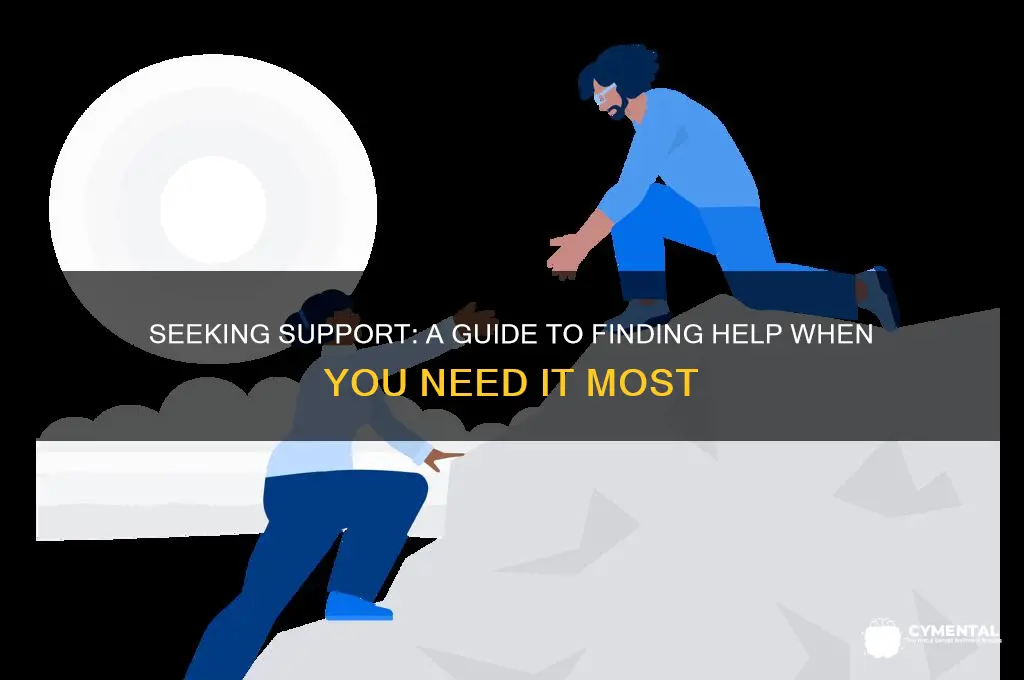
Finding help when you need it is a crucial skill that can significantly improve your well-being and ability to navigate life’s challenges. Whether you’re facing personal struggles, professional obstacles, or simply seeking guidance, knowing where and how to find assistance is essential. Resources can range from trusted friends and family to professional services like therapists, counselors, or support groups. Online platforms, community organizations, and helplines also offer accessible and often immediate support. Recognizing when you need help and taking proactive steps to seek it demonstrates strength and self-awareness, paving the way for growth and resolution.
Explore related products

$14.99 $29.99



What You'll Learn
- Identify Your Needs: Clearly define the type of help required (emotional, financial, legal, etc.)
- Research Resources: Use online tools, directories, or helplines to locate relevant support services
- Reach Out Locally: Contact community centers, churches, or NGOs for nearby assistance options
- Ask for Referrals: Seek recommendations from friends, family, or professionals for trusted help
- Utilize Hotlines: Call crisis or support hotlines for immediate guidance and resources

Identify Your Needs: Clearly define the type of help required (emotional, financial, legal, etc.)
The first step in finding help is recognizing the specific area where you need support. Are you struggling with overwhelming anxiety that disrupts your daily life, or is it a financial crisis leaving you unable to pay rent? Perhaps it's a legal issue like a contract dispute or a family matter requiring mediation. Defining the *type* of help needed is crucial because it determines where to look and who to ask. Emotional struggles might require a therapist, while financial troubles could necessitate a financial advisor or community resources. Vague requests for "help" often lead to vague solutions, so precision is key.
Consider this scenario: A 35-year-old single parent is juggling work, childcare, and mounting medical bills. They feel overwhelmed but aren’t sure where to start. By identifying their needs—financial assistance for bills, emotional support for stress, and possibly legal advice for insurance claims—they can break the problem into manageable parts. This clarity allows them to seek targeted help, such as contacting a local nonprofit for financial aid, joining a support group for emotional relief, and consulting a legal clinic for insurance guidance. Without this breakdown, they might remain stuck, unsure of where to turn.
Analyzing your needs also involves assessing urgency and scope. For instance, if you’re experiencing suicidal thoughts, immediate emotional support from a crisis hotline (like the National Suicide Prevention Lifeline at 988) is critical. In contrast, long-term financial planning might require a certified financial planner and a timeline of several months. Understanding the scale and timeline of your needs ensures you allocate resources effectively. A helpful exercise is to list your challenges and categorize them—emotional, financial, legal, etc.—then prioritize based on urgency and impact.
Persuasively, acknowledging your needs isn’t a sign of weakness; it’s a strategic move toward resolution. Many avoid seeking help due to stigma or pride, but unaddressed issues often worsen over time. For example, untreated mental health issues can lead to physical health problems, and ignored legal matters can result in costly consequences. By clearly defining your needs, you empower yourself to take proactive steps. Think of it as diagnosing a problem before prescribing a solution—you wouldn’t treat a headache with antibiotics, so why apply generic fixes to specific issues?
Finally, practical tips can streamline the process. Keep a journal to track symptoms, expenses, or legal developments related to your needs. This documentation provides concrete evidence when seeking professional help. For emotional needs, apps like Calm or Headspace offer guided exercises, but they’re no substitute for therapy if the issue is severe. Financial needs might require gathering documents like pay stubs and bills before meeting with an advisor. Legal issues often demand written records and timelines. The more prepared you are, the more effective the help you receive. Remember, clarity in identifying needs is the compass that guides you to the right resources.
Supporting Teens: Practical Strategies for Navigating Mental Health Challenges
You may want to see also
Explore related products





Research Resources: Use online tools, directories, or helplines to locate relevant support services
The internet is a vast repository of information, but finding the right support services can feel like searching for a needle in a haystack. This is where online tools, directories, and helplines become invaluable. These resources act as digital signposts, guiding you through the maze of available services to connect you with the help you need. Whether you're seeking mental health support, legal advice, or community assistance, these tools streamline the process, saving you time and reducing stress.
Step-by-Step Guide to Using Online Tools:
- Identify Your Need: Start by clearly defining what kind of help you require. Are you looking for counseling, financial assistance, or medical advice? Specificity is key.
- Use Search Engines Strategically: Instead of generic searches, use targeted keywords. For example, search for “free mental health helpline in [your city]” or “legal aid for low-income families.”
- Leverage Directories: Websites like 211.org (in the U.S.) or NHS Services Finder (in the UK) aggregate local and national support services. These directories often filter results by category, location, and eligibility criteria.
- Explore Specialized Platforms: For niche needs, turn to platforms like Psychology Today for therapists, FindHello for immigrant resources, or Crisis Text Line for immediate emotional support.
- Verify Credibility: Always check the legitimacy of the service. Look for reviews, certifications, or affiliations with reputable organizations.
Cautions and Considerations:
While online tools are powerful, they’re not foolproof. Some services may be outdated, geographically limited, or require fees. Additionally, helplines and directories can be overwhelming due to the sheer volume of information. To avoid decision fatigue, narrow your search by prioritizing urgency, proximity, and relevance. For instance, if you’re in crisis, prioritize 24/7 helplines over appointment-based services.
Comparative Analysis: Online Tools vs. Traditional Methods
Compared to traditional methods like word-of-mouth or physical directories, online tools offer speed, accessibility, and anonymity. However, they lack the personal touch of a trusted referral. Combining both approaches—using online resources to shortlist options and then seeking recommendations—can yield the best results. For example, after finding a therapist through Psychology Today, ask your primary care physician for their opinion.
Practical Tips for Maximizing Effectiveness:
- Bookmark Useful Sites: Save frequently visited directories or helplines for quick access.
- Use Incognito Mode: If privacy is a concern, search in incognito mode to avoid storing sensitive data.
- Set Realistic Expectations: Not every service will be a perfect fit. Be prepared to explore multiple options.
- Follow Up: After identifying a resource, contact them promptly. Many services have waitlists or limited availability.
By mastering these online tools, directories, and helplines, you can transform the daunting task of finding help into a manageable, even empowering process. The key lies in knowing where to look, how to filter, and when to act.
Supporting Mental Health: Practical Ways to Help Loved Ones Heal
You may want to see also
Explore related products


$8.99 $16.99


Reach Out Locally: Contact community centers, churches, or NGOs for nearby assistance options
Local resources are often the most immediate and accessible avenues for assistance, yet they’re frequently overlooked in favor of broader, more impersonal solutions. Community centers, churches, and NGOs are embedded within neighborhoods, staffed by individuals who understand the unique challenges of the area. These organizations typically offer a range of services—from food pantries and job training to mental health support and legal aid—tailored to local needs. Start by identifying the nearest community hub; a simple online search or call to your city’s information line can yield a list of active centers. Once you’ve located one, reach out directly via phone or email to inquire about available programs. Many centers also host regular events or workshops, which can double as opportunities to connect with others in similar situations.
Consider the role of churches, which often serve as unsung heroes in local support networks. Even if you’re not religious, many churches operate outreach programs open to the broader community. For instance, St. Mary’s Church in downtown Chicago runs a weekly free clinic staffed by volunteer doctors, while the First Baptist Church in Austin offers a clothing drive every second Saturday of the month. To tap into these resources, look up local congregations and check their websites or social media pages for program details. If online information is scarce, don’t hesitate to attend a service or community event; many churches are eager to engage with newcomers and will gladly explain their offerings in person.
NGOs, or non-governmental organizations, are another critical resource, often specializing in specific areas like homelessness, domestic violence, or youth development. For example, the YMCA provides affordable childcare and after-school programs, while organizations like Habitat for Humanity offer assistance with housing repairs. When contacting an NGO, be specific about your needs to ensure you’re directed to the right program. Many NGOs also collaborate with local governments or other nonprofits, so they may be able to refer you to additional resources if they can’t meet your needs directly. Keep a record of your inquiries, including names, contact information, and notes on available services, to streamline your search.
A practical tip for maximizing local assistance is to attend community meetings or forums where multiple organizations are represented. These events often serve as one-stop shops for information, allowing you to gather resources from various providers in a single visit. For instance, a monthly neighborhood council meeting might include representatives from the local food bank, a mental health clinic, and a job training program. Bring a notebook or use your phone to jot down details, and don’t be afraid to ask follow-up questions. Building rapport with these organizations can also open doors to long-term support, as many prioritize individuals who demonstrate engagement and commitment.
Finally, remember that local resources are not just about receiving help—they’re also about building community. Volunteering at a center or church program can provide a sense of purpose while connecting you with others who may offer informal support or advice. For example, a single parent volunteering at a community garden might learn about a local parenting group from another volunteer. This reciprocal relationship strengthens the community as a whole and ensures that these vital resources continue to thrive. By actively engaging with local organizations, you’re not just finding help—you’re becoming part of a network that sustains and uplifts everyone involved.
Sports and Mental Health: Boosting Well-Being Through Physical Activity
You may want to see also
Explore related products






Ask for Referrals: Seek recommendations from friends, family, or professionals for trusted help
One of the most effective ways to find reliable help is by tapping into your personal network. Asking for referrals from friends, family, or professionals leverages the power of social proof, reducing the risk of choosing someone unqualified or untrustworthy. For instance, if you’re seeking a therapist, a recommendation from a friend who’ve had a positive experience can save you hours of research and potential missteps. This method works because people are more likely to share honest feedback with those they know, ensuring you get vetted options.
To maximize the effectiveness of this approach, be specific about your needs when asking for referrals. Instead of a generic "Do you know a good plumber?" try, "I need a plumber who can handle a leaky pipe and is available this weekend—anyone you’ve used and trusted?" This clarity helps the person giving the referral tailor their suggestion to your situation. Additionally, don’t hesitate to ask follow-up questions about their experience, such as cost, timeliness, and professionalism. The more details you gather, the better equipped you’ll be to make an informed decision.
While referrals are valuable, it’s important to balance them with your own research. A recommendation from a trusted source is a strong starting point, but it’s not a guarantee of a perfect fit. For example, a tutor recommended by a colleague might excel with older students but struggle with younger age groups. Cross-check referrals by reading reviews, verifying credentials, or scheduling a consultation to ensure alignment with your specific needs. This dual approach combines the warmth of personal advice with the rigor of independent evaluation.
Finally, consider the context of the referral. A professional recommendation from a colleague in your industry might carry more weight than a casual suggestion from a distant relative, depending on the type of help you need. For instance, a financial advisor referred by a fellow business owner is likely more relevant than one recommended by a friend who has different financial goals. By assessing the relevance of the referral source, you can prioritize suggestions that are most likely to meet your unique requirements. This thoughtful approach turns a simple ask into a strategic tool for finding trusted help.
Supporting Mental Health: Effective Ways to Help a Loved One in Need
You may want to see also
Explore related products


Utilize Hotlines: Call crisis or support hotlines for immediate guidance and resources
In moments of crisis, the immediacy of support can be a lifeline. Hotlines offer a direct connection to trained professionals who provide real-time guidance, resources, and emotional support. Unlike online searches or waiting for appointments, hotlines are accessible 24/7, ensuring help is available when it’s needed most. Whether facing mental health struggles, domestic violence, substance abuse, or other emergencies, a single call can connect you to someone equipped to assist.
Consider the mechanics of how hotlines operate. Most are toll-free and confidential, ensuring privacy and eliminating financial barriers. For instance, the National Suicide Prevention Lifeline (988 in the U.S.) connects callers to counselors trained in crisis intervention. Similarly, the National Domestic Violence Hotline (1-800-799-SAFE) offers immediate safety planning and local resources. These services are not just for emergencies; many hotlines provide ongoing support, referrals to therapists, and assistance navigating complex systems like healthcare or legal aid.
A common misconception is that hotlines are only for extreme situations. In reality, they serve a spectrum of needs. Feeling overwhelmed by stress? Call a mental health hotline. Unsure how to help a friend? Hotlines offer guidance on intervention. Even if you’re not in crisis, many hotlines provide preventive resources, such as coping strategies or community programs. The key is recognizing that reaching out is a proactive step, not a last resort.
Practical tips can enhance the effectiveness of hotline use. First, keep a list of relevant numbers in your phone or on your fridge for quick access. Second, if you’re calling on behalf of someone else, have their consent and relevant details (e.g., age, symptoms) ready. Third, be honest with the operator—they’re trained to handle any situation without judgment. Finally, if language is a barrier, many hotlines offer multilingual services or translation options.
The takeaway is clear: hotlines are a powerful, underutilized tool in the quest for help. They bridge the gap between recognizing a need and receiving support, offering immediacy, expertise, and compassion. By understanding their scope and preparing to use them effectively, anyone can leverage these resources to navigate challenges with greater confidence and clarity.
Supporting Student Well-being: Practical Strategies for Schools to Enhance Mental Health
You may want to see also
Frequently asked questions
Reach out to a mental health professional, such as a therapist or counselor, or contact local mental health clinics. Hotlines like the National Alliance on Mental Illness (NAMI) or Crisis Text Line are also available for immediate support.
Contact local government agencies, nonprofit organizations, or community centers that offer financial assistance programs. Websites like 211.org can help you find resources tailored to your needs.
Reach out to organizations like the Substance Abuse and Mental Health Services Administration (SAMHSA) or local rehab centers. Support groups such as Alcoholics Anonymous (AA) or Narcotics Anonymous (NA) are also valuable resources.
Contact legal aid organizations, local bar associations, or pro bono services for assistance. Online platforms like LegalAid.org can also connect you with resources and advice.
Call the National Domestic Violence Hotline or reach out to local shelters and advocacy groups. These organizations provide immediate support, safety planning, and resources for survivors.