Madison Cole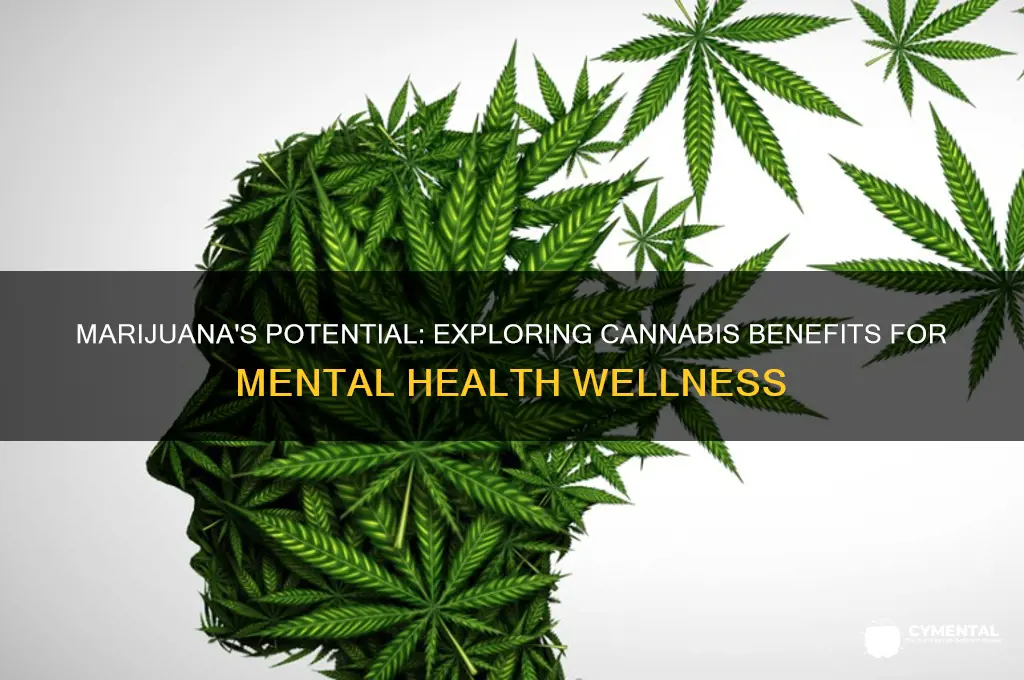
Marijuana, also known as cannabis, has gained significant attention for its potential therapeutic benefits in addressing various mental health conditions. Research suggests that certain compounds in marijuana, such as CBD (cannabidiol) and THC (tetrahydrocannabinol), may help alleviate symptoms of anxiety, depression, PTSD, and insomnia by interacting with the body’s endocannabinoid system, which plays a role in regulating mood, stress, and sleep. While more studies are needed to fully understand its efficacy and long-term effects, anecdotal evidence and preliminary research indicate that marijuana can provide relief for some individuals when used responsibly and under professional guidance. However, it’s important to consider individual differences and potential risks, as marijuana may not be suitable for everyone and can exacerbate certain mental health issues in some cases.
Explore related products


What You'll Learn
- Reducing Anxiety Symptoms: THC and CBD may alleviate anxiety by interacting with brain receptors, promoting relaxation
- Managing PTSD: Cannabis can reduce nightmares and flashbacks, aiding PTSD symptom management and emotional regulation
- Alleviating Depression: Certain strains may boost mood by increasing serotonin levels, offering temporary relief from depression
- Easing ADHD Symptoms: Marijuana may improve focus and reduce hyperactivity in some individuals with ADHD
- Combating Insomnia: Indica strains can induce sleep, helping those with insomnia achieve better rest

Reducing Anxiety Symptoms: THC and CBD may alleviate anxiety by interacting with brain receptors, promoting relaxation
Marijuana's potential to reduce anxiety symptoms has garnered significant attention, with THC and CBD emerging as key players in this therapeutic interaction. These cannabinoids interact with the brain's endocannabinoid system, a complex network of receptors that regulate mood, stress, and relaxation. When THC binds to CB1 receptors, it can induce a calming effect, while CBD modulates these receptors indirectly, promoting balance without the psychoactive high. This dual action offers a nuanced approach to anxiety relief, making cannabis a subject of interest for those seeking alternatives to traditional medications.
Consider the practical application: a microdose of THC (2.5–5 mg) combined with a moderate dose of CBD (10–20 mg) can be an effective starting point for anxiety management. This ratio minimizes the risk of THC-induced paranoia while maximizing CBD’s anxiolytic properties. For individuals aged 21 and older, this regimen can be administered via tinctures or edibles, allowing for precise control over dosage. It’s crucial to start low and go slow, monitoring effects over several days to find the optimal balance. Pairing this with mindfulness practices, such as deep breathing or meditation, can enhance relaxation and amplify the therapeutic benefits.
However, not all anxiety responds uniformly to cannabis. Generalized anxiety disorder (GAD) and social anxiety disorder (SAD) may benefit more from CBD-dominant strains, as CBD’s non-intoxicating nature avoids exacerbating anxiety in sensitive individuals. Conversely, THC’s euphoric effects might be counterproductive for those with panic disorder or a history of substance misuse. Age and metabolism also play a role; younger adults (18–25) may metabolize THC faster, requiring adjustments in dosage or frequency. Consulting a healthcare provider is essential to tailor this approach to individual needs.
A comparative analysis reveals that cannabis’s anxiolytic effects differ from conventional medications like benzodiazepines. While benzodiazepines act quickly, they carry risks of dependence and cognitive impairment. Cannabis, when used mindfully, offers a potentially safer long-term option, particularly with CBD’s lack of addictive properties. However, it’s not a one-size-fits-all solution. For instance, individuals with comorbid conditions like depression or PTSD may require a more integrated treatment plan, combining cannabis with therapy or other medications under professional guidance.
In conclusion, THC and CBD’s interaction with brain receptors presents a promising avenue for reducing anxiety symptoms. By understanding dosage, individual differences, and complementary practices, users can harness cannabis’s relaxation-promoting properties effectively. While research continues to evolve, this natural approach offers hope for those seeking relief from anxiety’s grip, provided it’s approached with caution and informed decision-making.
Magnesium's Role in Mental Health: Benefits, Research, and Potential Impact
You may want to see also
Explore related products


Managing PTSD: Cannabis can reduce nightmares and flashbacks, aiding PTSD symptom management and emotional regulation
Post-traumatic stress disorder (PTSD) often manifests as relentless nightmares and intrusive flashbacks, trapping individuals in cycles of fear and distress. Cannabis, particularly strains high in THC and CBD, has shown promise in disrupting these patterns. Studies suggest that THC’s interaction with the endocannabinoid system can suppress REM sleep, the stage where nightmares occur, offering respite to those haunted by traumatic memories. For instance, a 2019 study published in the *Journal of Alternative and Complementary Medicine* found that PTSD patients using medical cannabis reported a 70% reduction in nightmare frequency. This physiological intervention doesn’t erase trauma but provides a practical tool for reclaiming sleep and reducing nocturnal terror.
However, dosage and strain selection are critical. Beginners should start with low-THC, high-CBD products (e.g., 5–10 mg THC and 10–20 mg CBD) to minimize psychoactive effects while harnessing CBD’s anxiolytic properties. For severe cases, a 1:1 THC-to-CBD ratio may be more effective, but this should be titrated under medical supervision. Sublingual tinctures or vaporizers offer rapid onset, ideal for acute episodes, while edibles provide longer-lasting relief but with delayed effects. Timing matters too—administering cannabis 30–60 minutes before bedtime can help mitigate nightmares without disrupting sleep architecture.
Critics argue that cannabis merely masks symptoms rather than addressing root causes, but this perspective overlooks its role in emotional regulation. CBD, for example, modulates the amygdala’s hyperactivity, a hallmark of PTSD, reducing anxiety and improving emotional resilience. This dual action—suppressing nightmares while calming the nervous system—creates a window for therapeutic interventions like cognitive-behavioral therapy (CBT) to take hold. It’s not a cure, but a bridge to healing, particularly for those resistant to traditional medications like SSRIs.
Practical integration requires caution. Cannabis can exacerbate anxiety or paranoia in some users, especially at high doses or with THC-dominant strains. Patients should avoid sativa strains, which are more stimulating, and opt for indicas or hybrids like Granddaddy Purple or AC/DC. Keeping a symptom journal can help track efficacy and side effects, ensuring adjustments are data-driven. Additionally, combining cannabis with mindfulness practices, such as deep breathing or grounding techniques, can amplify its calming effects during flashbacks.
In conclusion, cannabis offers a nuanced approach to managing PTSD symptoms, particularly nightmares and flashbacks. Its effectiveness lies in its ability to address both physiological and emotional facets of the disorder, providing immediate relief while fostering conditions for long-term recovery. For those navigating the labyrinth of PTSD, cannabis may not be a panacea, but it can be a valuable ally in reclaiming peace and stability.
Unlocking Healing: How Mental Health Therapy Transforms Lives and Minds
You may want to see also
Explore related products


Alleviating Depression: Certain strains may boost mood by increasing serotonin levels, offering temporary relief from depression
Depression, a pervasive mental health condition affecting millions, often leaves individuals searching for effective relief. Among emerging alternatives, certain strains of marijuana have shown promise in boosting mood by potentially increasing serotonin levels, offering a temporary reprieve from depressive symptoms. This phenomenon hinges on the interaction between cannabinoids like THC and CBD and the brain’s endocannabinoid system, which plays a role in regulating mood and stress responses. While not a cure, this approach provides a nuanced tool for managing acute episodes, particularly for those seeking adjunctive options to traditional therapies.
Consider the case of sativa-dominant strains, such as Harlequin or Jack Herer, which are often recommended for their uplifting effects. These strains typically contain higher CBD-to-THC ratios, minimizing psychoactive intensity while promoting a sense of clarity and euphoria. For instance, a microdose of 2.5–5 mg of THC combined with 10–20 mg of CBD may help elevate mood without overwhelming anxiety or sedation. Users report feeling more grounded and capable of engaging in daily activities, a stark contrast to the lethargy often associated with depression. However, individual responses vary, and starting with the lowest effective dose is critical to avoid counterproductive effects.
Analyzing the science behind this approach reveals that THC binds to CB1 receptors in the brain, potentially modulating serotonin release, a neurotransmitter linked to mood regulation. CBD, on the other hand, may enhance serotonin receptor signaling by inhibiting its reuptake, prolonging its availability in the synaptic cleft. A 2020 study published in *Neuropharmacology* suggested that low doses of THC could act as a serotonin reuptake inhibitor, mimicking the mechanism of certain antidepressants. However, this effect is transient, lasting hours rather than days, underscoring the need for consistent dosing or integration with long-term treatments.
Practical implementation requires caution. For adults over 21, incorporating marijuana for depression should complement, not replace, evidence-based interventions like therapy or medication. Keeping a mood journal to track strain efficacy, dosage, and side effects can help refine the approach. For example, if a strain like ACDC (high CBD, low THC) provides mild relief without impairment, it could be used as needed during particularly challenging days. Conversely, strains with higher THC, like Blue Dream, might be reserved for evenings to avoid daytime cognitive fog. Consulting a healthcare provider or cannabis clinician is essential, especially for those on antidepressants, as cannabinoids can interact with medications metabolized by the liver.
The takeaway is clear: while marijuana’s role in alleviating depression is not universal or permanent, specific strains offer a viable, temporary solution for some. By understanding the interplay of cannabinoids, serotonin, and individual tolerance, users can navigate this option with greater precision. It’s a delicate balance—one that prioritizes informed, mindful use over indiscriminate experimentation. For those grappling with depression, this could mean reclaiming moments of lightness in an otherwise heavy world.
Mental Illness Diagnosis: A Lifeline or a Label?
You may want to see also
Explore related products


Easing ADHD Symptoms: Marijuana may improve focus and reduce hyperactivity in some individuals with ADHD
Marijuana’s potential to ease ADHD symptoms challenges conventional treatment norms, offering a nuanced alternative for those who find traditional medications ineffective or intolerable. While stimulant medications like Adderall or Ritalin are the standard, they often come with side effects such as insomnia, appetite loss, or increased anxiety. For some individuals, cannabis—particularly strains high in CBD and balanced THC—may improve focus, reduce hyperactivity, and mitigate impulsivity without the same adverse effects. This isn’t a one-size-fits-all solution, but for those who respond positively, it can be transformative.
Consider the case of a 28-year-old diagnosed with ADHD who struggled with the jittery side effects of stimulants. After consulting a physician, they began microdosing with a 1:1 THC:CBD tincture (2.5 mg of each, twice daily). Within weeks, they reported improved task completion, reduced restlessness, and better emotional regulation. This example highlights the importance of personalized dosing and strain selection—factors often overlooked in broader discussions about cannabis and ADHD. For instance, high-THC strains may exacerbate anxiety or distractibility in some users, while CBD-dominant options tend to offer calming effects without psychoactive interference.
Analyzing the science behind this phenomenon reveals that cannabis interacts with the endocannabinoid system, which plays a role in attention, mood, and behavior regulation. THC can enhance dopamine release, potentially improving focus in individuals with ADHD, whose dopamine levels are often dysregulated. Meanwhile, CBD’s anxiolytic properties may counteract THC’s psychoactivity while promoting relaxation. However, research remains limited, with most studies relying on self-reported data rather than controlled trials. This underscores the need for cautious experimentation under medical supervision.
For those considering this approach, practical steps include starting with low doses (e.g., 2.5–5 mg THC and 10–20 mg CBD daily) and gradually titrating upward. Avoid smoking or vaping, as inhalation delivers unpredictable doses; instead, opt for edibles, tinctures, or capsules for precision. Keep a symptom journal to track effects, and consult a healthcare provider familiar with cannabis therapeutics. Adults over 25 may respond differently than younger individuals due to variations in brain development and metabolism, so age-specific considerations are crucial.
The takeaway? Marijuana isn’t a cure for ADHD, but for some, it’s a viable tool to manage symptoms when traditional methods fall short. Its efficacy depends on individualized factors like genetics, ADHD subtype, and cannabis tolerance. While more research is needed, anecdotal evidence and preliminary studies suggest it warrants consideration—provided users approach it with informed caution and professional guidance.
Family Involvement: A Key to Effective Mental Health Recovery
You may want to see also
Explore related products


Combating Insomnia: Indica strains can induce sleep, helping those with insomnia achieve better rest
Insomnia affects millions worldwide, disrupting not only sleep but also overall mental health. For those struggling to fall or stay asleep, Indica strains of marijuana offer a natural alternative to traditional sleep aids. Unlike pharmaceuticals, which often come with side effects like grogginess or dependency, Indica strains are known for their sedative properties, promoting relaxation and easing the transition into sleep. This makes them particularly appealing for individuals seeking a holistic approach to managing insomnia.
To harness the sleep-inducing benefits of Indica strains, start with a low dose, typically 5–10 mg of THC, especially if you’re new to cannabis. Consume it 30–60 minutes before bedtime, either through inhalation (vaping or smoking) for faster effects or via edibles for longer-lasting relief. Strains like Granddaddy Purple, Northern Lights, or Afghan Kush are popular choices due to their high myrcene content, a terpene known for its calming effects. Pairing cannabis use with a consistent bedtime routine—such as dimming lights, avoiding screens, and practicing deep breathing—can enhance its effectiveness.
While Indica strains can be a game-changer for insomnia, they’re not a one-size-fits-all solution. Factors like age, tolerance, and underlying health conditions play a role in how your body responds. For instance, older adults may require smaller doses due to increased sensitivity, while those with anxiety should monitor their reaction, as high THC levels can sometimes exacerbate symptoms. Consulting a healthcare provider or cannabis specialist can help tailor the approach to your specific needs.
A key advantage of using Indica strains for insomnia is their potential to address both sleep and mental health simultaneously. Chronic sleep deprivation is linked to heightened anxiety, depression, and cognitive impairment, creating a vicious cycle. By improving sleep quality, Indica strains can indirectly alleviate these mental health symptoms, fostering a sense of well-being. However, it’s crucial to use cannabis mindfully, avoiding nightly reliance to prevent tolerance buildup. Instead, incorporate it as part of a broader sleep hygiene strategy for sustainable results.
Boost Your Brain: The Surprising Benefits of Mental Math Mastery
You may want to see also
Frequently asked questions
Marijuana may provide temporary relief for some individuals with anxiety and depression due to its interaction with the endocannabinoid system. However, its effects vary widely, and long-term use can potentially worsen symptoms or lead to dependency.
Some studies suggest that marijuana, particularly strains high in CBD, may help alleviate PTSD symptoms like nightmares and hyperarousal. However, research is still limited, and it should be used cautiously under professional guidance.
Anecdotal reports indicate that some individuals with ADHD find marijuana helpful for improving focus and reducing restlessness. However, scientific evidence is inconclusive, and it may not be suitable for everyone, especially due to potential cognitive side effects.
Marijuana, especially indica strains or those high in THC, can promote relaxation and aid sleep for some users. However, it may disrupt REM sleep and lead to tolerance or dependence if used regularly for insomnia.