Lucas Bennett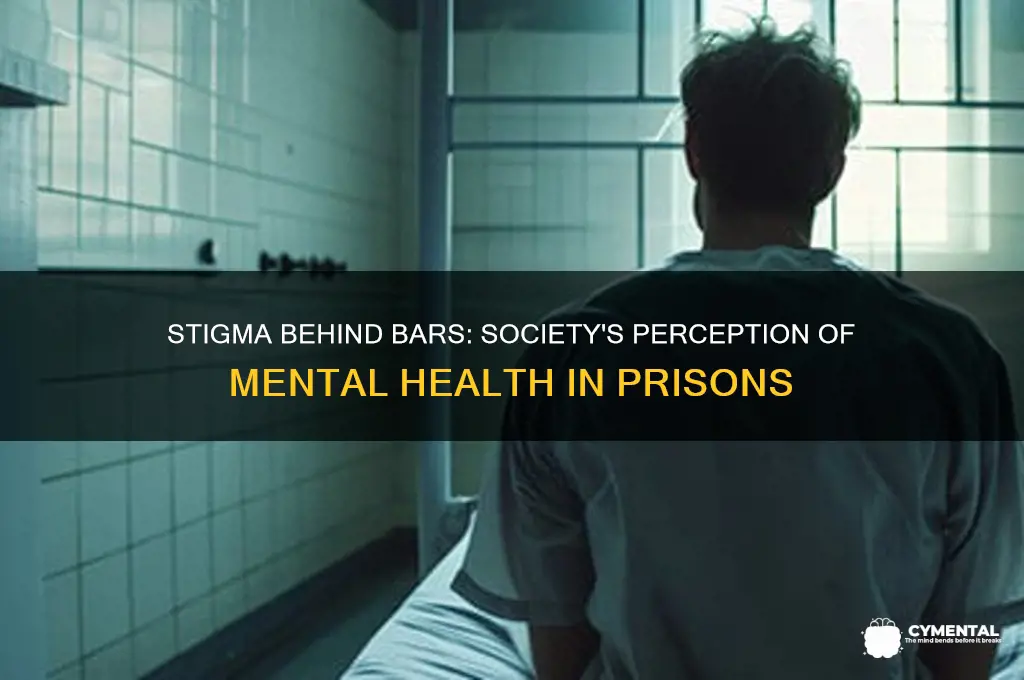
The perception of individuals with mental health issues within the prison system is a complex and often stigmatized topic. Society frequently views incarcerated people with mental illnesses through a lens of fear, misunderstanding, or indifference, perpetuating stereotypes of violence or incompetence. This stigma can lead to inadequate support, harsher treatment, and a lack of empathy, exacerbating their struggles. Prisons, often ill-equipped to address mental health needs, may prioritize punishment over rehabilitation, further marginalizing these individuals. Understanding how societal attitudes shape their treatment is crucial for advocating for systemic change, humane care, and a more compassionate approach to mental health within correctional facilities.
Explore related products


What You'll Learn
- Stigma and Stereotypes: Negative perceptions of prisoners with mental health issues as dangerous or unpredictable
- Lack of Empathy: Societal indifference toward incarcerated individuals struggling with mental health challenges
- Systemic Neglect: Inadequate mental health care and support within prison systems exacerbating existing issues
- Criminalization of Illness: Treating mental health symptoms as disciplinary problems rather than medical conditions
- Public Misconceptions: Beliefs that mental illness in prison is rare or a result of incarceration

Stigma and Stereotypes: Negative perceptions of prisoners with mental health issues as dangerous or unpredictable
Prisoners with mental health issues often face a double stigma: the societal mark of criminality and the pervasive misconception that their conditions render them inherently dangerous or unpredictable. This dual burden exacerbates their isolation and limits access to necessary support, creating a cycle of marginalization that hinders rehabilitation. Media portrayals of violent offenders with mental illness, though statistically rare, dominate public consciousness, reinforcing the stereotype that all such individuals pose a threat. For instance, high-profile cases like the 2012 Aurora movie theater shooting are frequently cited, despite research showing that people with mental health issues are more likely to be victims of violence than perpetrators.
Consider the practical implications of this stigma within correctional facilities. Staff, often undertrained in mental health management, may default to punitive measures rather than therapeutic interventions when dealing with prisoners exhibiting erratic behavior. A 2019 study found that 68% of correctional officers reported feeling ill-equipped to handle mental health crises, leading to overreliance on solitary confinement—a practice that exacerbates symptoms of conditions like schizophrenia or bipolar disorder. This approach not only fails to address the root cause of the behavior but also reinforces the perception that these individuals are unmanageable, further entrenching the stereotype.
To dismantle this stigma, education is paramount. Correctional systems must prioritize training programs that equip staff with de-escalation techniques and an understanding of mental health conditions. For example, the Crisis Intervention Team (CIT) model, implemented in over 2,700 communities across the U.S., has shown promise in reducing the use of force and improving outcomes for individuals in crisis. Similarly, peer support programs, where prisoners with lived experience of mental health issues assist others, can foster empathy and challenge misconceptions. A pilot program in a Texas prison saw a 40% reduction in disciplinary incidents among participants, demonstrating the power of human connection in breaking down stereotypes.
Finally, policymakers and the public must recognize the systemic failures that contribute to the overrepresentation of people with mental health issues in prisons. In the U.S., an estimated 20% of prisoners have a serious mental illness—a rate four to five times higher than in the general population. This is not a reflection of inherent danger but rather of inadequate community mental health resources and the criminalization of behaviors stemming from untreated conditions. By redirecting funding from incarceration to prevention and treatment, society can address the root causes of this crisis while challenging the harmful narratives that stigmatize this vulnerable population.
Police Response to Mental Health Calls: Frequency and Statistics
You may want to see also
Explore related products


Lack of Empathy: Societal indifference toward incarcerated individuals struggling with mental health challenges
Incarcerated individuals with mental health challenges often face a double stigma: the societal judgment of being imprisoned and the misunderstanding of their psychological struggles. This dual burden exacerbates their isolation, as public perception rarely distinguishes between criminal behavior and mental health conditions. For instance, a 2019 study revealed that 60% of surveyed individuals believed prisoners with mental illness were "dangerous," despite data showing they are more likely to be victims of violence than perpetrators. This misconception fuels indifference, as society prioritizes safety over compassion, leaving these individuals without the support they desperately need.
Consider the systemic failures that perpetuate this cycle. Prisons are ill-equipped to handle mental health crises, with only 1 in 5 correctional facilities providing adequate psychiatric care. Staff often lack training to de-escalate situations involving mentally ill inmates, leading to punitive measures instead of therapeutic interventions. For example, solitary confinement, used disproportionately on mentally ill prisoners, can exacerbate conditions like schizophrenia or depression. Yet, public discourse rarely addresses these issues, focusing instead on punishment as a deterrent. This neglect stems from a lack of awareness and a societal tendency to dehumanize those behind bars, viewing their suffering as a consequence of their actions rather than a call for help.
To bridge this empathy gap, education is critical. Campaigns highlighting the prevalence of mental illness in prisons—affecting over 40% of inmates—can humanize their struggles. For instance, sharing stories of individuals whose conditions worsened due to neglect can evoke empathy and challenge stereotypes. Practical steps include advocating for policy changes, such as mandatory mental health training for correctional staff and increased funding for in-prison therapy programs. Communities can also support reintegration initiatives, as 80% of mentally ill inmates face homelessness or relapse post-release due to societal rejection. By reframing the narrative, society can move from indifference to action, recognizing that mental health in prisons is a public health issue, not just a criminal justice one.
Comparing societal attitudes toward mental health in prisons versus in the general population reveals a stark contrast. While campaigns like "Mental Health Awareness Month" garner widespread support, similar efforts for incarcerated individuals are met with silence. This disparity underscores a moral dilemma: does the right to empathy expire upon incarceration? Challenging this notion requires a shift in perspective—viewing prisoners not as irredeemable offenders but as individuals deserving of dignity and care. Until then, societal indifference will persist, perpetuating a cycle of suffering that benefits no one.
Understanding the Prevalence of Mental Health Issues in Society
You may want to see also
Explore related products


Systemic Neglect: Inadequate mental health care and support within prison systems exacerbating existing issues
Prisons, often seen as punitive institutions, are increasingly becoming de facto mental health facilities, yet they are ill-equipped to handle this role. Approximately 20% of the U.S. prison population has a serious mental illness, a rate four to five times higher than in the general population. Despite this staggering statistic, mental health care within correctional facilities remains woefully inadequate. Overcrowded facilities, underfunded programs, and a lack of trained professionals create an environment where mental health issues are not only untreated but often exacerbated. This systemic neglect perpetuates a cycle of suffering, recidivism, and societal stigma, raising critical questions about the ethical and practical implications of incarcerating individuals with mental health needs.
Consider the case of a 28-year-old inmate diagnosed with schizophrenia who, due to limited access to medication and therapy, experiences a psychotic episode. Instead of receiving appropriate care, he is placed in solitary confinement, a practice known to worsen mental health conditions. This punitive response, rather than a therapeutic one, highlights the prison system’s failure to differentiate between behavioral issues and symptoms of mental illness. Such scenarios are not anomalies but systemic failures, rooted in a lack of resources and training. Correctional officers, often untrained in mental health first aid, resort to disciplinary measures that further marginalize vulnerable individuals. This approach not only harms the individual but also undermines the rehabilitative goals of the justice system.
To address this crisis, a multi-faceted strategy is essential. First, prisons must prioritize hiring and training mental health professionals, including psychiatrists, psychologists, and social workers. For instance, implementing a ratio of one mental health professional per 50 inmates, as recommended by the World Health Organization, could significantly improve care. Second, evidence-based programs like cognitive-behavioral therapy (CBT) and trauma-informed care should be integrated into prison routines. A study in Washington State found that inmates who participated in CBT programs had a 25% lower recidivism rate compared to those who did not. Third, policymakers must reevaluate the use of solitary confinement, replacing it with therapeutic alternatives that address the root causes of behavior.
However, these solutions are not without challenges. Budget constraints, public skepticism, and the inherent complexities of prison reform pose significant barriers. Critics argue that allocating more resources to prisons could divert funds from community-based mental health services, potentially exacerbating disparities. Yet, the cost of inaction is far greater. Untreated mental illness in prisons leads to higher healthcare costs, increased violence, and a greater likelihood of reoffending. By investing in prison mental health care, society not only upholds human rights but also enhances public safety and reduces long-term financial burdens.
Ultimately, the systemic neglect of mental health in prisons is a reflection of broader societal attitudes toward incarceration and mental illness. Viewing prisons solely as places of punishment ignores their potential to serve as sites of healing and rehabilitation. By addressing the gaps in mental health care, we can transform these institutions into environments that foster recovery rather than despair. This shift requires not only policy changes but also a cultural reevaluation of how we perceive and treat individuals with mental health issues, both inside and outside prison walls.
Opiates and the Mind: Unraveling the Link to Mental Health Struggles
You may want to see also
Explore related products



Criminalization of Illness: Treating mental health symptoms as disciplinary problems rather than medical conditions
Within prison walls, mental health symptoms are often misinterpreted as defiance or manipulation, leading to punitive measures rather than therapeutic interventions. For instance, a prisoner experiencing a psychotic episode might be restrained and isolated for "disruptive behavior" instead of receiving medication or counseling. This approach not only exacerbates the individual’s condition but also perpetuates a cycle of punishment and deterioration. Correctional officers, often untrained in mental health, default to disciplinary actions, viewing symptoms like agitation or withdrawal as intentional rule-breaking. This misalignment between behavior and response underscores a systemic failure to recognize mental illness as a medical issue, not a moral failing.
Consider the case of a 28-year-old inmate diagnosed with schizophrenia who repeatedly violates prison rules by talking to unseen entities. Instead of adjusting his antipsychotic dosage (e.g., increasing olanzapine from 10 mg to 15 mg under psychiatric supervision), he is placed in solitary confinement for "non-compliance." Research shows that solitary confinement can worsen psychotic symptoms, yet it remains a common response. This punitive approach not only neglects evidence-based practices but also violates ethical standards of care. Prisons must prioritize collaboration with mental health professionals to differentiate between disciplinary issues and symptom-driven behaviors, ensuring treatment plans are tailored to individual needs.
The criminalization of mental illness in prisons is not merely a policy issue but a reflection of societal stigma. A comparative analysis reveals that countries with integrated mental health services in correctional facilities, such as Norway, report lower recidivism rates and improved inmate well-being. In contrast, the U.S. incarcerates a disproportionate number of individuals with mental illness, often treating them as security threats rather than patients. For example, a 2021 study found that 40% of U.S. inmates with severe mental illness had received no treatment during their incarceration. This disparity highlights the need for systemic reform, including mandatory mental health training for prison staff and increased funding for in-house psychiatric services.
To address this issue, prisons should adopt a three-step framework: assessment, intervention, and monitoring. First, all inmates should undergo comprehensive mental health screenings upon intake, using tools like the Brief Jail Mental Health Screen. Second, symptoms must be managed through evidence-based interventions, such as cognitive-behavioral therapy or pharmacotherapy. For example, a prisoner with severe depression might benefit from a combination of fluoxetine (20 mg daily) and weekly therapy sessions. Third, continuous monitoring is essential to adjust treatment plans and prevent disciplinary misinterpretations. By reframing mental health symptoms as treatable conditions, prisons can reduce punitive responses and foster rehabilitation.
Ultimately, treating mental illness as a disciplinary problem is not only inhumane but counterproductive. It burdens an already strained system and undermines the possibility of successful reintegration. Practical steps include creating specialized mental health units within prisons, hiring more psychiatric staff, and implementing de-escalation training for officers. For instance, a pilot program in a Texas prison reduced use-of-force incidents by 60% after introducing crisis intervention teams. By prioritizing compassion over punishment, prisons can transform from places of suffering to environments of healing, breaking the cycle of criminalization for those with mental illness.
Mentors' Role in Mental Health: Support, Growth, and Resilience
You may want to see also
Explore related products


Public Misconceptions: Beliefs that mental illness in prison is rare or a result of incarceration
A pervasive misconception about mental illness in prisons is that it’s a rare occurrence, confined to a small, marginalized group. This belief often stems from the public’s limited exposure to correctional facilities and reliance on media portrayals, which tend to sensationalize violence or criminal behavior rather than delve into inmates’ psychological struggles. In reality, studies consistently show that the prevalence of mental illness in prisons is alarmingly high. For instance, the Bureau of Justice Statistics reports that over 40% of inmates in U.S. prisons and jails have a history of mental health issues, far exceeding rates in the general population. This disparity highlights a systemic issue: prisons have become de facto mental health institutions, yet they are ill-equipped to provide adequate care.
Another dangerous misconception is the assumption that mental illness is a direct result of incarceration—that the harsh conditions of prison life "break" individuals mentally. While it’s true that confinement, isolation, and trauma within prisons can exacerbate existing conditions or trigger new ones, the majority of inmates with mental health issues enter the system already struggling. Research indicates that individuals with severe mental illnesses, such as schizophrenia or bipolar disorder, are disproportionately represented in the criminal justice system, often due to lack of community-based treatment and support. For example, a 2017 study found that people with untreated mental illness are more likely to engage in behaviors that lead to arrest, such as substance abuse or public disturbances, not because of inherent criminality but as a result of unmet needs.
To address these misconceptions, it’s crucial to reframe the narrative around mental illness in prisons. Instead of viewing it as an anomaly or a consequence of incarceration, the public must recognize it as a pre-existing crisis exacerbated by systemic failures. Practical steps include advocating for increased funding for community mental health services, which can reduce the likelihood of individuals with mental illness entering the criminal justice system. Additionally, prisons should prioritize hiring trained mental health professionals and implementing evidence-based treatment programs. For families and advocates, educating oneself about the realities of mental health in corrections can help challenge stigma and promote policy changes.
A comparative analysis further underscores the urgency of this issue. In countries like Norway, where prisons focus on rehabilitation and mental health care, recidivism rates are significantly lower than in the U.S. This contrast suggests that treating mental illness as a public health issue rather than a criminal one yields better outcomes for both inmates and society. By dismantling the misconception that mental illness in prison is rare or incarceration-induced, we can shift the focus toward prevention, treatment, and systemic reform—a necessary step toward a more just and compassionate approach to criminal justice.
Police Response to Mental Health Crises: Frequency and Challenges
You may want to see also
Frequently asked questions
People often view individuals with mental health issues in prison with a mix of stigma, fear, and misunderstanding, often associating them with violence or unpredictability, despite many being non-violent and in need of treatment.
Correctional staff may treat prisoners with mental health issues differently, sometimes with skepticism or frustration, due to challenges in managing their behaviors, though some staff may also show empathy and advocate for better care.
Yes, inmates with mental health issues often face bullying, exploitation, or isolation from other prisoners, who may view them as weak or "crazy," exacerbating their struggles in the prison environment.
Society often criticizes the incarceration of people with mental health issues, viewing it as a failure of the mental health system and advocating for treatment rather than punishment, though opinions vary widely.
Public perception varies—some see them as victims of systemic failures and lack of access to care, while others view them solely as criminals, regardless of their mental health struggles.