Ava Ramirez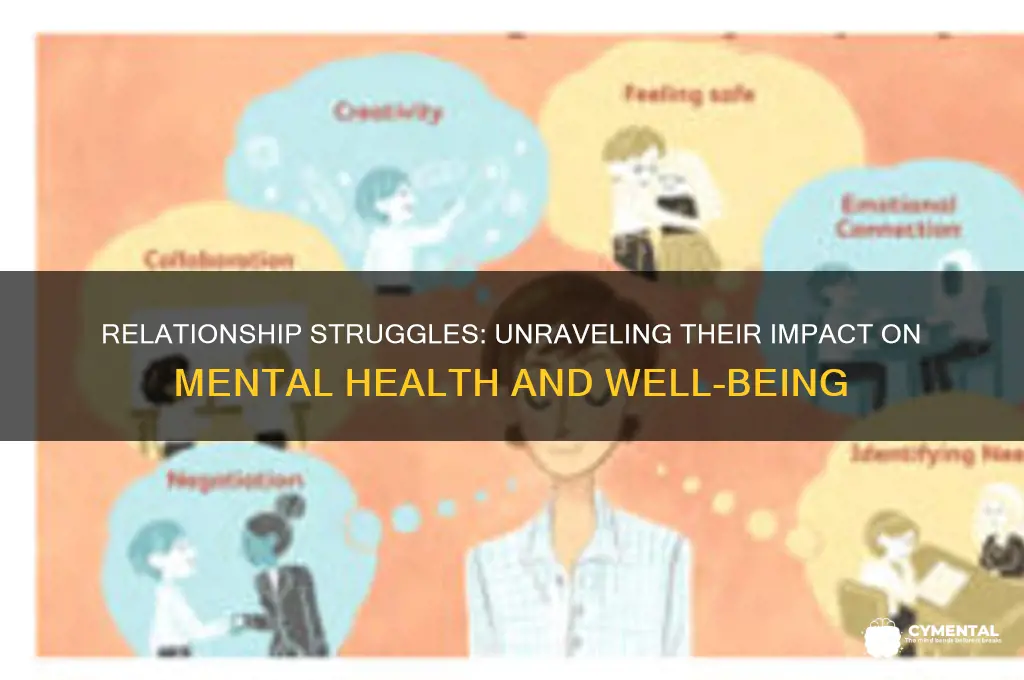
Relationship issues can significantly impact mental health, often leading to heightened stress, anxiety, and depression. Conflicts, unresolved tensions, or feelings of isolation within partnerships, friendships, or family dynamics can erode self-esteem, foster emotional instability, and contribute to chronic emotional distress. The constant strain of navigating unhealthy relationships may trigger or exacerbate conditions like insomnia, mood disorders, or even physical symptoms such as headaches or fatigue. Conversely, supportive and nurturing relationships can serve as a protective factor, promoting resilience and emotional well-being. Understanding the interplay between relationship challenges and mental health is crucial for developing strategies to mitigate negative effects and foster healthier connections.
Explore related products


What You'll Learn
- Chronic stress from conflict: Prolonged relationship tension elevates cortisol, increasing anxiety, depression, and physical health risks
- Emotional isolation: Feeling unheard or unsupported in relationships can lead to loneliness and low self-esteem
- Trauma from betrayal: Infidelity or trust breaches cause PTSD-like symptoms, including hypervigilance and emotional distress
- Codependency risks: Over-reliance on a partner can erode autonomy, fostering anxiety and identity loss
- Grief from loss: Breakups or divorces trigger grief, depression, and disrupted sleep patterns

Chronic stress from conflict: Prolonged relationship tension elevates cortisol, increasing anxiety, depression, and physical health risks
Prolonged relationship tension acts as a slow-burning fuse, igniting a cascade of physiological responses that undermine mental and physical well-being. At the heart of this process is cortisol, the body’s primary stress hormone. When conflict persists, cortisol levels remain chronically elevated, disrupting the body’s natural balance. Research shows that sustained cortisol spikes can lead to neuronal damage in the hippocampus, a brain region critical for memory and emotional regulation. This biological wear and tear translates into heightened anxiety, as the brain becomes hyper-responsive to perceived threats, and deepened depression, as cortisol interferes with serotonin production, a neurotransmitter linked to mood stability.
Consider the daily toll of unresolved arguments or emotional distance. A couple in their 30s, for instance, might experience frequent disagreements over finances or parenting styles. Over months, the stress of these interactions can push cortisol levels into the danger zone—above 20 ng/mL, a threshold associated with increased risk of mental health disorders. For context, healthy cortisol levels typically range between 6–18 ng/mL throughout the day. Without intervention, this couple faces not only emotional exhaustion but also a 40% higher likelihood of developing anxiety or depressive disorders, according to a study published in *Psychoneuroendocrinology*.
The physical health risks are equally alarming. Chronic cortisol elevation weakens the immune system, making individuals more susceptible to infections and inflammatory conditions. It also contributes to hypertension, as cortisol triggers vasoconstriction, and increases abdominal fat storage, a risk factor for diabetes and cardiovascular disease. A 50-year-old individual enduring years of marital stress, for example, might find themselves battling not just insomnia and irritability but also high blood pressure and weight gain. Practical steps to mitigate these effects include incorporating stress-reduction techniques like mindfulness meditation, which has been shown to lower cortisol levels by 15–20% in consistent practitioners.
To break the cycle, addressing the root cause—relationship conflict—is essential. Couples therapy, particularly approaches like the Gottman Method or Emotionally Focused Therapy, provides tools to de-escalate tension and rebuild emotional connection. Simultaneously, adopting lifestyle changes such as regular exercise, adequate sleep, and a balanced diet can help regulate cortisol. For instance, 30 minutes of moderate exercise daily reduces cortisol by up to 10%, while prioritizing 7–9 hours of sleep nightly stabilizes its circadian rhythm.
In conclusion, chronic stress from relationship conflict is not merely an emotional burden but a tangible threat to mental and physical health. By understanding the cortisol-driven mechanisms at play and taking proactive steps, individuals can protect themselves from the long-term consequences of prolonged tension. Whether through therapy, lifestyle adjustments, or both, the goal is clear: disrupt the stress cycle before it disrupts your health.
Understanding Mental Health Challenges in Tennessee: Prevalence and Insights
You may want to see also
Explore related products


$18.59 $19.95


Emotional isolation: Feeling unheard or unsupported in relationships can lead to loneliness and low self-esteem
Emotional isolation in relationships often begins subtly—a missed acknowledgment here, a lack of support there. Over time, these unmet needs accumulate, creating a void that fosters loneliness and erodes self-esteem. Consider a partner who consistently dismisses their significant other’s concerns during conversations. This pattern sends a silent message: "Your feelings don’t matter." Such dynamics, documented in studies on relational psychology, highlight how emotional neglect can spiral into deeper mental health challenges.
To address this, start by identifying specific instances where you feel unheard. Keep a journal for a week, noting moments of emotional disconnect. For example, if your partner interrupts you during discussions about your day, document how it makes you feel—ignored, frustrated, or insignificant. This practice not only clarifies the issue but also provides concrete examples to discuss during conflict resolution. Research shows that articulating emotions with precision can improve communication and reduce feelings of isolation.
Next, implement strategies to rebuild emotional connection. Schedule dedicated "listening sessions" where each partner has uninterrupted time to share their thoughts and feelings. Use active listening techniques: maintain eye contact, nod in acknowledgment, and paraphrase what’s been said to confirm understanding. For instance, if your partner expresses stress about work, respond with, "It sounds like you’re feeling overwhelmed by your deadlines. Is that right?" Such validation fosters a sense of being heard and valued.
However, be cautious of falling into common traps. Avoid blaming your partner for your feelings of isolation, as this can escalate tension. Instead, frame concerns using "I" statements, such as, "I feel unsupported when my worries are brushed aside." Additionally, recognize that change takes time. If efforts to improve communication fail, consider seeking couples therapy. Professionals can provide tools tailored to your relationship dynamics, helping both parties feel understood and supported.
In conclusion, emotional isolation is not an irreversible condition. By recognizing its signs, documenting specific instances, and actively working to improve communication, individuals can break the cycle of loneliness and rebuild self-esteem. Remember, relationships thrive on mutual understanding and effort—small, consistent steps can lead to significant emotional reconnection.
Healing Minds, Bodies: Recovery Centers Tackle Mental Health & Addiction
You may want to see also
Explore related products


Trauma from betrayal: Infidelity or trust breaches cause PTSD-like symptoms, including hypervigilance and emotional distress
Betrayal in a relationship, whether through infidelity or a breach of trust, can leave emotional scars that mimic the symptoms of post-traumatic stress disorder (PTSD). The mind, once wounded by deceit, often struggles to regain equilibrium, manifesting in hypervigilance, flashbacks, and profound emotional distress. These symptoms are not merely reactions but survival mechanisms gone awry, as the brain attempts to protect itself from future harm. For instance, a person might obsessively check their partner’s messages or scrutinize their behavior, not out of malice but out of a primal fear of being hurt again. This hypervigilance, while understandable, can become exhausting, eroding self-esteem and fostering a sense of constant insecurity.
Consider the case of someone who discovers their partner’s infidelity. The initial shock triggers a cascade of emotions—anger, sadness, and disbelief—but the long-term effects are often more insidious. They might develop intrusive thoughts, replaying the betrayal in their mind like a looped video, or experience nightmares that disrupt sleep. These symptoms are not unlike those of PTSD, where the brain struggles to process trauma. Therapists often recommend grounding techniques, such as deep breathing or mindfulness, to help individuals manage these moments of distress. For example, focusing on the sensation of feet touching the floor or naming five objects in the room can pull someone back from the brink of an emotional spiral.
The emotional distress caused by betrayal is not just psychological; it has tangible physical effects. Studies show that chronic stress from relationship trauma can weaken the immune system, increase blood pressure, and even contribute to conditions like anxiety or depression. Practical steps to mitigate these effects include maintaining a routine, engaging in physical activity, and seeking support from trusted friends or a therapist. Writing in a journal can also be therapeutic, allowing individuals to process their emotions without judgment. It’s crucial, however, to avoid self-isolation, as this can exacerbate feelings of loneliness and despair.
Comparing the aftermath of betrayal to PTSD highlights the need for specialized care. Just as PTSD requires a tailored approach—often involving cognitive-behavioral therapy (CBT) or eye movement desensitization and reprocessing (EMDR)—so too does trauma from betrayal. A therapist can help individuals reframe their thoughts, challenging irrational beliefs like, “I’ll never trust anyone again.” Over time, this work can rebuild resilience and restore faith in oneself and others. It’s a process that demands patience, but with the right tools and support, healing is possible.
Finally, it’s essential to recognize that recovery is not linear. Setbacks are normal, and moments of doubt or fear are part of the journey. What matters is the commitment to moving forward, one step at a time. For those struggling, remember: acknowledging the pain is the first step toward healing. Whether through therapy, self-care, or leaning on a support system, there is a path out of the shadows cast by betrayal. The goal isn’t to erase the past but to reclaim the present and build a future unburdened by its weight.
Addiction and Mental Health: Understanding the Frequent Co-Occurrence
You may want to see also
Explore related products




Codependency risks: Over-reliance on a partner can erode autonomy, fostering anxiety and identity loss
Codependency, often characterized by an excessive reliance on a partner for emotional and psychological needs, can silently undermine an individual's sense of self. This dynamic, while seemingly rooted in love and care, can lead to a dangerous erosion of autonomy, leaving one vulnerable to heightened anxiety and a profound loss of identity. The risks are insidious, often going unnoticed until the effects on mental health become impossible to ignore.
Consider the case of Sarah, a 32-year-old graphic designer who found herself increasingly dependent on her partner, Mark, for validation and decision-making. Over time, Sarah stopped pursuing her own hobbies, like painting and hiking, because Mark wasn’t interested. She began mirroring his preferences, from music to career choices, until her own desires became indistinguishable from his. This over-reliance created a fragile sense of self, where Sarah’s worth was tied exclusively to her relationship. When Mark suggested they move across the country for his job, Sarah felt paralyzed. The thought of leaving her support network triggered severe anxiety, yet she couldn’t articulate her own desires because she no longer knew what they were. This is a classic example of how codependency can strip away autonomy, leaving one’s mental health at the mercy of another’s decisions.
To break this cycle, it’s essential to recognize the early signs of codependency. These include feeling responsible for a partner’s emotions, neglecting personal interests, and avoiding conflict to maintain peace. Practical steps to reclaim autonomy include setting boundaries, such as dedicating time each week to solo activities or therapy. For instance, Sarah could start by allocating two hours every Saturday to painting, a hobby she once loved. Additionally, journaling can help individuals reconnect with their thoughts and desires, fostering a clearer sense of self. Couples therapy, particularly modalities like the Gottman Method, can also address codependent patterns by strengthening communication and individual identity within the relationship.
However, reclaiming autonomy isn’t without challenges. Fear of abandonment or conflict can make it difficult to assert independence. It’s crucial to approach this process gradually, celebrating small victories along the way. For example, Sarah might begin by expressing a preference for a restaurant without apologizing or justifying her choice. Over time, these small acts of self-assertion can rebuild confidence and reduce anxiety. The takeaway is clear: while relationships thrive on interdependence, codependency can suffocate individuality. By fostering autonomy, individuals can protect their mental health and cultivate a healthier, more balanced partnership.
Are Mental Health Issues Hereditary? Unraveling the Genetic Link
You may want to see also
Explore related products


$12.77 $16.99


Grief from loss: Breakups or divorces trigger grief, depression, and disrupted sleep patterns
The end of a significant relationship plunges individuals into a grief process akin to mourning a death. Unlike bereavement, however, this loss is often accompanied by a barrage of conflicting emotions: relief mingled with sorrow, anger intertwined with longing. This complex emotional landscape can overwhelm even the most resilient, triggering a cascade of mental health challenges.
Studies show that breakups and divorces are significant predictors of depression, with symptoms like persistent sadness, loss of interest, and feelings of worthlessness emerging in the aftermath. The brain, accustomed to the presence and attachment to a partner, experiences a form of withdrawal, leading to heightened anxiety and a sense of emotional emptiness.
Sleep, a cornerstone of mental well-being, often becomes a casualty in this scenario. The stress hormones cortisol and adrenaline surge, disrupting the body's natural sleep-wake cycle. Individuals may experience difficulty falling asleep, frequent awakenings, or vivid, distressing dreams related to the lost relationship. This sleep deprivation further exacerbates feelings of fatigue, irritability, and difficulty concentrating, creating a vicious cycle that hinders healing.
Recognizing these symptoms is crucial. If you're experiencing persistent sadness, changes in appetite or sleep patterns, or feelings of hopelessness lasting more than two weeks, seeking professional help is essential. Therapists can provide tools to navigate the grief process, develop healthy coping mechanisms, and rebuild self-esteem.
While the pain of a breakup or divorce feels insurmountable, it's important to remember that healing is possible. Prioritizing self-care through regular exercise, healthy eating, and social connection is vital. Engaging in activities that bring joy and a sense of accomplishment can help rebuild a sense of purpose. Remember, grief is a process, not a destination. Be patient with yourself, allow yourself to feel the pain, and trust that, with time and support, you will emerge stronger and more resilient.
Opiates and the Mind: Unraveling the Link to Mental Health Struggles
You may want to see also
Frequently asked questions
Relationship issues often lead to chronic stress and anxiety due to unresolved conflicts, lack of emotional support, or fear of abandonment. Prolonged exposure to such stressors can trigger the body’s fight-or-flight response, increasing cortisol levels and negatively impacting mental well-being.
Yes, persistent relationship problems, such as emotional neglect, betrayal, or constant criticism, can contribute to feelings of hopelessness, low self-esteem, and isolation, which are key factors in developing depression. Over time, these issues can erode one’s sense of worth and happiness.
Unhealthy relationships often involve criticism, manipulation, or emotional abuse, which can erode self-esteem and self-worth. Constant negative feedback or gaslighting can make individuals doubt their own perceptions and abilities, leading to long-term damage to their mental health and self-confidence.