Harper Lewis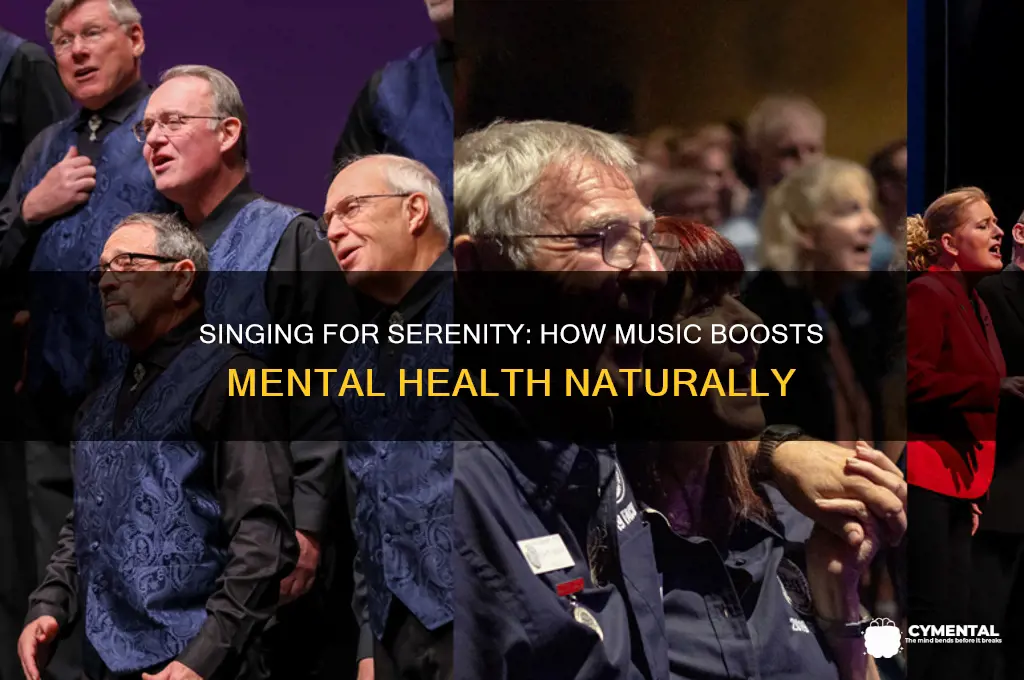
Singing has long been recognized as a powerful tool for enhancing mental health, offering a unique blend of emotional, psychological, and physiological benefits. Engaging in singing, whether solo or in a group, stimulates the release of endorphins, often referred to as feel-good hormones, which can reduce stress and anxiety. Additionally, the rhythmic and repetitive nature of singing promotes mindfulness, helping individuals focus on the present moment and alleviate symptoms of depression. Group singing, in particular, fosters a sense of community and belonging, combating feelings of loneliness and isolation. Moreover, the act of singing improves breathing patterns, which can calm the nervous system and enhance overall well-being. By combining creativity, social connection, and physical activity, singing serves as a holistic practice that supports mental health in profound and accessible ways.
Explore related products


$19.95 $14.95


What You'll Learn
- Stress Reduction: Singing lowers cortisol, promoting relaxation and reducing anxiety levels effectively
- Emotional Release: Expressing emotions through song helps process and manage feelings healthily
- Social Connection: Group singing fosters community, reducing loneliness and enhancing social bonds
- Cognitive Boost: Improves focus, memory, and mental clarity through rhythmic and lyrical engagement
- Mood Enhancement: Releases endorphins, boosting happiness and alleviating symptoms of depression naturally

Stress Reduction: Singing lowers cortisol, promoting relaxation and reducing anxiety levels effectively
Cortisol, often dubbed the "stress hormone," spikes in response to pressure, triggering a cascade of physiological reactions. Singing, however, acts as a natural antagonist to this process. Studies have shown that engaging in singing, whether solo or in a group, significantly lowers cortisol levels in the body. This biochemical shift is not merely a coincidence; it’s a measurable effect of the rhythmic breathing and vocalization involved in singing. For instance, a 2013 study published in the *Journal of Music Therapy* found that participants who sang in a choir exhibited lower cortisol levels compared to those who passively listened to music. This evidence underscores the direct link between singing and stress reduction, making it a powerful tool for managing anxiety.
To harness singing’s stress-reducing benefits, consistency is key. Aim for at least 15–20 minutes of singing daily, whether it’s humming a tune, belting out a favorite song, or joining a choir. The act of deep, controlled breathing required in singing activates the parasympathetic nervous system, which counteracts the body’s stress response. For beginners, start with simple melodies or vocal warm-ups to build confidence. Apps like *SingTrue* or *Vanido* offer guided exercises to improve technique while reaping mental health benefits. Even if you’re not a trained singer, the focus on pitch and rhythm distracts the mind from stressors, creating a meditative effect.
Comparing singing to other stress-relief methods highlights its unique advantages. While activities like yoga or meditation require stillness and concentration, singing combines physical engagement with emotional expression. It’s particularly effective for individuals who find traditional mindfulness practices challenging. Group singing amplifies these benefits, fostering social connection and a sense of belonging, which further reduces anxiety. For example, community choirs or karaoke nights provide structured opportunities to sing, making it accessible and enjoyable for all ages. Unlike solitary activities, singing in a group creates a shared experience that enhances emotional release and relaxation.
Practical tips can maximize singing’s stress-reducing potential. Choose songs that resonate emotionally, as familiarity and personal connection deepen the therapeutic impact. Incorporate singing into daily routines, such as during commutes or household chores, to make it a seamless part of your lifestyle. For those with busy schedules, even a few minutes of humming or vocalizing can yield immediate calming effects. Parents can encourage children to sing, as it not only reduces stress but also improves emotional regulation in younger age groups. Remember, the goal isn’t perfection but participation—letting go of self-judgment allows the full benefits of singing to unfold.
In conclusion, singing’s ability to lower cortisol levels offers a scientifically backed, accessible method for stress reduction. By integrating this practice into daily life, individuals can effectively manage anxiety while enjoying a creative outlet. Whether solo or in a group, singing provides a unique blend of physiological and emotional benefits, making it a valuable tool for mental well-being. Start small, stay consistent, and let the power of song transform your stress into serenity.
Supporting Teens: Practical Strategies for Navigating Mental Health Challenges
You may want to see also
Explore related products


Emotional Release: Expressing emotions through song helps process and manage feelings healthily
Singing has long been recognized as a powerful tool for emotional release, allowing individuals to express complex feelings that words alone often fail to capture. When we sing, whether in a structured melody or a spontaneous hum, we engage both the logical and emotional centers of the brain, creating a unique pathway for processing emotions. This act of vocalization can serve as a cathartic release, helping to reduce stress and anxiety by externalizing internal turmoil. For instance, a study published in the *Journal of Music Therapy* found that participants who engaged in singing reported lower levels of cortisol, the stress hormone, compared to those who simply listened to music.
Consider the act of singing as a form of emotional alchemy. Just as a chemist transforms base metals into something more valuable, singing transforms raw, often overwhelming emotions into something structured and manageable. This process is particularly evident in genres like the blues or gospel, where pain and joy are woven together in a way that acknowledges suffering while also offering hope. Practically speaking, dedicating 15–20 minutes daily to singing—whether in the shower, during a commute, or in a choir—can provide a consistent outlet for emotional expression. For those new to this practice, starting with simple melodies or songs that resonate emotionally can make the experience more accessible.
One of the most compelling aspects of singing for emotional release is its accessibility. Unlike other forms of therapy, singing requires no special equipment or training to begin. Even individuals who don’t consider themselves “good” singers can benefit from the act of vocalizing their emotions. For children and adolescents, singing can be particularly effective in helping them articulate feelings they may not yet have the vocabulary to express. Parents and educators can encourage this by incorporating sing-alongs or creating safe spaces for spontaneous vocal expression, fostering emotional literacy from a young age.
However, it’s important to approach singing for emotional release with mindfulness. While it can be a powerful tool, it’s not a substitute for professional mental health support when needed. For those dealing with severe emotional distress, combining singing with therapy or counseling can provide a more comprehensive approach. Additionally, choosing the right songs matters—lyrics and melodies that align with one’s emotional state can enhance the therapeutic effect, while discordant choices may exacerbate feelings of unease. Experimenting with different genres and styles can help individuals find what works best for them.
In conclusion, singing offers a unique and accessible way to process and manage emotions healthily. By engaging the mind and body in a structured yet expressive activity, it provides a safe outlet for emotional release. Whether practiced alone or in a group, singing can transform the way we experience and cope with our feelings, turning them into something beautiful and manageable. For anyone looking to explore this practice, starting small and being consistent can yield significant emotional benefits over time.
Horror Movies: Unexpected Therapy for Mental Health and Resilience
You may want to see also
Explore related products





Social Connection: Group singing fosters community, reducing loneliness and enhancing social bonds
Human beings are inherently social creatures, yet modern life often leaves us isolated. Group singing offers a powerful antidote to this loneliness, weaving individuals into a shared experience that transcends words. Consider the communal harmony of a choir, the rhythmic unity of a drum circle, or the spontaneous bonding at a karaoke night. These settings create a sense of belonging, where voices blend not just in pitch but in purpose. Research shows that synchronized activities like group singing release oxytocin, the "bonding hormone," fostering trust and connection among participants.
To harness this benefit, aim for at least one group singing session per week. Start small—join a local choir, attend a community sing-along, or organize a casual sing-with-friends night. Even those who feel self-conscious about their voice can benefit; the focus is on connection, not perfection. For older adults, intergenerational singing groups can bridge age gaps, while workplace choirs can improve team dynamics. Pro tip: Choose songs with simple melodies and repetitive lyrics to encourage participation and reduce performance anxiety.
Contrast group singing with solitary activities like listening to music or singing alone. While these can be therapeutic, they lack the interactive element that strengthens social bonds. Group singing requires active engagement, listening, and responding to others—skills that translate into better relationships outside the singing circle. Studies have shown that regular participation in group singing can reduce symptoms of depression and anxiety, partly due to the social support it provides.
Finally, consider the accessibility of this practice. Unlike expensive therapies or time-consuming hobbies, group singing is inclusive and affordable. It requires no special equipment, just a willingness to join in. For those struggling with loneliness or social anxiety, it’s a low-stakes way to reconnect with others. Start today—find a group, raise your voice, and let the harmony heal not just your mind, but your sense of belonging.
Hockey's Mental Edge: Boosting Resilience, Focus, and Well-Being
You may want to see also
Explore related products

$18.93 $24.95


Cognitive Boost: Improves focus, memory, and mental clarity through rhythmic and lyrical engagement
Singing isn't just an artistic expression—it's a cognitive workout. The act of following a melody while recalling lyrics activates multiple brain regions simultaneously, enhancing neural connectivity. Studies show that engaging in rhythmic and lyrical tasks improves executive function, the set of mental skills that include focus, memory, and problem-solving. For instance, a 2017 study published in *Frontiers in Human Neuroscience* found that participants who sang regularly demonstrated better working memory and attention control compared to non-singers. This suggests that singing isn’t merely enjoyable; it’s a practical tool for sharpening mental acuity.
To harness this cognitive boost, consider incorporating singing into your daily routine. Start with 15–20 minutes of singing each day, focusing on songs with complex rhythms or lyrics. For beginners, nursery rhymes or simple folk songs work well, while advanced singers might tackle classical pieces or multilingual tracks. The key is to challenge your brain by alternating between familiar and new material. Pairing singing with physical movement, such as walking or gentle stretching, can further amplify its cognitive benefits by increasing blood flow to the brain.
Children and older adults stand to gain significantly from this practice. For kids aged 5–12, singing improves phonological awareness, a critical skill for reading and language development. In seniors, it combats age-related cognitive decline by stimulating memory recall and attention. A study in the *Journal of Music Therapy* revealed that older adults who participated in group singing sessions showed measurable improvements in verbal memory and processing speed. Parents and caregivers can encourage this by integrating sing-alongs into family activities or community gatherings.
However, it’s essential to approach singing as a mindful activity rather than a passive one. Focus on the rhythm, pitch, and meaning of the lyrics to maximize cognitive engagement. Avoid multitasking—singing while scrolling through your phone, for example, dilutes its mental benefits. Instead, create a dedicated space free from distractions, whether it’s a quiet room or a peaceful outdoor setting. Consistency is key; aim to sing at the same time each day to establish a habit that reinforces cognitive gains over time.
Incorporating singing into therapeutic settings can also yield profound results. Music therapists often use lyrical improvisation or structured songs to help patients with conditions like ADHD or mild cognitive impairment. For instance, a therapist might ask a client to create a song about their daily routine, combining memory recall with creative expression. This not only sharpens focus but also fosters emotional clarity. Whether as a personal practice or a therapeutic tool, singing’s rhythmic and lyrical demands make it a powerful ally in enhancing mental clarity and cognitive function.
Daily Phone Conversations: A Mental Health Boost or Bust?
You may want to see also
Explore related products


Mood Enhancement: Releases endorphins, boosting happiness and alleviating symptoms of depression naturally
Singing isn’t just an artistic expression—it’s a biochemical catalyst for joy. When you belt out a tune, your brain releases endorphins, often called "feel-good" hormones, which act as natural painkillers and mood elevators. This process mimics the effects of exercise, creating a sense of euphoria without the physical exertion. Studies show that group singing, in particular, amplifies this effect, as synchronized activity enhances endorphin release. Think of it as a happiness hack: a few minutes of singing daily can rewire your brain to default to a more positive state.
To harness this benefit, start small. Dedicate 10–15 minutes each day to singing your favorite songs, whether in the shower, car, or during a walk. Choose upbeat melodies with positive lyrics to maximize the emotional lift. For those struggling with depression, consistency is key. Pair singing with deep breathing to oxygenate your body further, enhancing the endorphin rush. While it’s not a replacement for therapy or medication, this practice can complement traditional treatments, offering a natural and accessible way to lighten your mood.
Comparing singing to other mood-boosting activities reveals its unique advantages. Unlike meditation, which requires stillness, singing engages both body and mind, making it more dynamic. Unlike exercise, it’s low-impact and inclusive, suitable for all ages and fitness levels. Even humming or vocalizing without words triggers endorphin release, making it a versatile tool. For older adults, singing can combat loneliness and cognitive decline, while children benefit from improved emotional regulation. It’s a universal activity with no barriers to entry, only benefits.
A cautionary note: while singing is powerful, it’s not a cure-all. Overdoing it—especially without proper vocal technique—can strain your voice, turning a positive practice into a painful one. Start with shorter sessions and gradually increase duration. If you’re new to singing, consider vocal warm-ups or guided tutorials to protect your vocal cords. For those with severe depression, combine singing with professional support for a holistic approach. The goal is to use singing as a tool, not a crutch, in your mental health toolkit.
Incorporating singing into your routine is simpler than you think. Join a choir, take a karaoke night, or simply sing along to playlists curated for positivity. Apps like Smule or YouTube tutorials can guide beginners. Track your mood over time to notice the cumulative effects—many report feeling lighter after just a week of consistent practice. Singing isn’t just about hitting the right notes; it’s about hitting the reset button on your mood, one endorphin-fueled melody at a time.
Data-Driven Insights: Enhancing School Mental Health Support Strategies
You may want to see also
Frequently asked questions
Singing releases endorphins, often referred to as "feel-good" hormones, which reduce stress and boost mood. It also promotes relaxation by lowering cortisol levels, the hormone associated with stress.
Yes, singing has been shown to reduce symptoms of anxiety and depression by increasing serotonin and oxytocin levels, which enhance feelings of happiness and connection. Group singing, in particular, fosters a sense of community and belonging.
Singing engages multiple areas of the brain, improving focus, memory, and cognitive function. It can also be a form of mindfulness, helping individuals stay present and reduce overthinking.
Group singing strengthens social bonds, reduces feelings of loneliness, and enhances emotional well-being. The shared experience of creating music together fosters a sense of unity and support.
Yes, singing is often used in music therapy to address mental health issues like PTSD, depression, and anxiety. It provides a creative outlet for emotional expression and can complement traditional therapeutic approaches.