Caleb Wright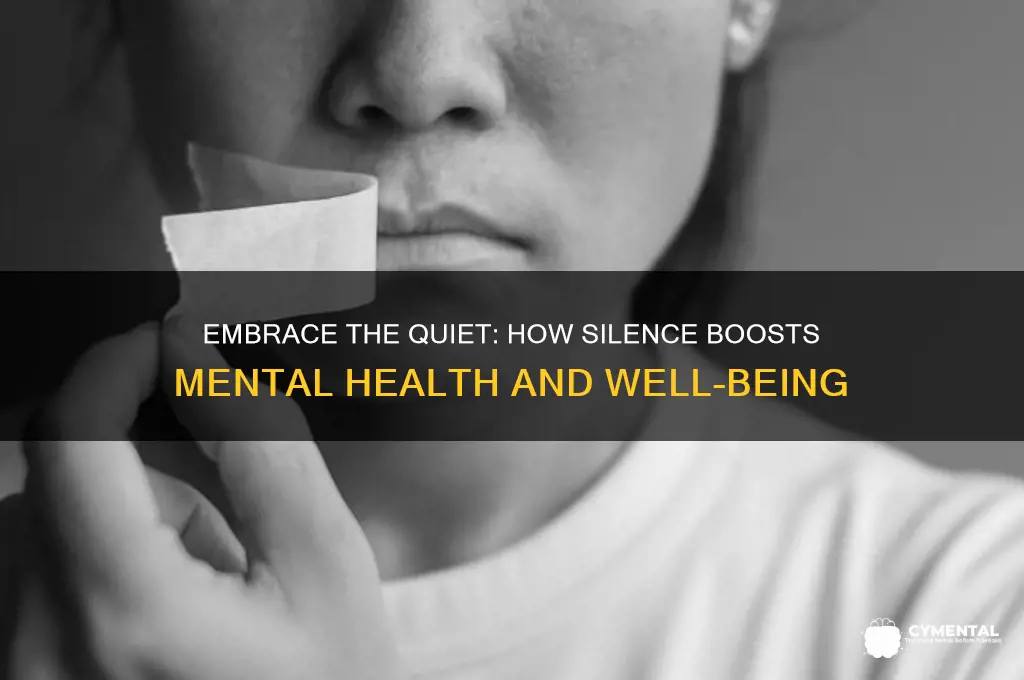
Silence plays a pivotal role in nurturing mental health by offering a respite from the constant noise and stimulation of modern life. In a world dominated by technology, social media, and endless distractions, moments of quiet allow the mind to reset and recharge. Research suggests that silence can reduce stress, lower cortisol levels, and promote relaxation, creating a conducive environment for emotional healing. It also enhances self-awareness, enabling individuals to reflect on their thoughts and feelings without external interference. Furthermore, silence fosters creativity and clarity, as it allows the brain to process information more effectively. By incorporating periods of stillness into daily routines, individuals can cultivate a sense of inner peace, improve focus, and build resilience against mental health challenges.
| Characteristics | Values |
|---|---|
| Stress Reduction | Silence activates the parasympathetic nervous system, reducing cortisol levels and promoting relaxation. |
| Improved Focus | Quiet environments enhance concentration and cognitive performance by minimizing distractions. |
| Emotional Regulation | Silence allows for introspection, helping process emotions and reducing anxiety or overwhelm. |
| Enhanced Creativity | Quiet moments foster divergent thinking and problem-solving abilities. |
| Better Sleep Quality | Reduced noise levels improve sleep patterns and overall restfulness. |
| Lower Blood Pressure | Silent environments contribute to decreased heart rate and blood pressure, benefiting cardiovascular health. |
| Increased Self-Awareness | Solitude in silence encourages mindfulness and a deeper understanding of one’s thoughts and feelings. |
| Reduced Mental Fatigue | Silence provides a break from constant stimulation, preventing cognitive overload. |
| Strengthened Memory | Quiet settings improve memory consolidation and information retention. |
| Promotes Mindfulness | Silence facilitates present-moment awareness, a key component of mindfulness practices. |
Explore related products


What You'll Learn
- Stress Reduction: Silence lowers cortisol, reducing stress and promoting relaxation in the mind and body
- Improved Focus: Quiet environments enhance concentration, clarity, and cognitive performance significantly
- Emotional Healing: Silence allows processing emotions, fostering self-awareness and inner peace effectively
- Enhanced Sleep Quality: Calm, silent spaces improve sleep patterns and overall restfulness
- Mindfulness Practice: Silence aids meditation, grounding thoughts and reducing mental clutter

Stress Reduction: Silence lowers cortisol, reducing stress and promoting relaxation in the mind and body
Silence, often overlooked in our noisy world, is a powerful tool for stress reduction. Research shows that spending time in silence can significantly lower cortisol levels, the hormone associated with stress. A study published in the *Journal of Cognitive Neuroscience* found that just two minutes of silence can be more relaxing than listening to music, offering a quick and accessible way to calm the mind and body. This simple practice can be particularly beneficial for individuals experiencing chronic stress or anxiety, providing a natural and cost-effective remedy.
To harness the stress-reducing benefits of silence, consider incorporating it into your daily routine. Start with short intervals—perhaps 5 to 10 minutes of silent sitting or walking in a quiet space. Gradually increase the duration as you become more comfortable. For optimal results, aim for at least 30 minutes of silence daily, as this allows the body to fully engage its relaxation response. Pairing silence with deep breathing exercises can enhance its effects, further lowering cortisol levels and promoting a sense of calm.
While silence is universally beneficial, its impact can vary depending on age and lifestyle. Younger adults, often exposed to high levels of environmental noise, may find silence particularly rejuvenating. Older adults, on the other hand, might use silence to enhance mindfulness practices or meditation. For busy professionals, taking short silent breaks during the workday can improve focus and reduce stress. The key is consistency—making silence a regular part of your routine maximizes its stress-reducing potential.
A cautionary note: silence should complement, not replace, professional mental health treatment. While it is a valuable tool for stress management, individuals with severe anxiety or depression should consult a healthcare provider for a comprehensive treatment plan. Additionally, silence may feel uncomfortable at first, especially for those unaccustomed to quiet environments. Patience is essential—allow yourself time to adjust and discover the profound benefits of stillness.
In conclusion, silence is a simple yet effective way to reduce stress by lowering cortisol levels and promoting relaxation. By integrating silence into daily life, individuals can cultivate a calmer mind and body, improving overall mental well-being. Whether through silent meditation, quiet walks, or moments of stillness, this practice offers a natural antidote to the pressures of modern life. Embrace silence, and let it become your sanctuary in a noisy world.
Sleep's Role in Boosting Mental Health and Emotional Well-Being
You may want to see also
Explore related products


Improved Focus: Quiet environments enhance concentration, clarity, and cognitive performance significantly
Silence isn't merely the absence of noise; it's a catalyst for cognitive excellence. Studies show that even brief periods of quiet—as little as 10 minutes daily—can measurably improve focus by reducing the brain’s cognitive load. When the auditory cortex isn’t bombarded with stimuli, it frees up mental bandwidth, allowing for sharper concentration on tasks. For instance, students who study in quiet environments retain information 20-30% better than those in noisy settings, according to research from the University of Chicago. This isn’t just about avoiding distraction; it’s about creating a mental space where clarity thrives.
To harness silence for improved focus, start with small, intentional practices. Designate a "quiet hour" each day, ideally in the morning when cognitive energy is highest. During this time, eliminate all auditory distractions—no music, notifications, or background chatter. Use this period for tasks requiring deep concentration, such as problem-solving or creative work. For those in noisy environments, noise-canceling headphones or white noise machines can simulate quiet. Pair this practice with mindfulness techniques, like deep breathing, to amplify its effects. Consistency is key; over time, the brain adapts, making it easier to enter a focused state even in less-than-ideal conditions.
A comparative analysis reveals the stark difference between noisy and quiet environments on cognitive performance. In open-plan offices, employees experience a 66% drop in productivity due to constant interruptions and background noise, as reported by a Harvard study. Conversely, workers in quiet spaces complete tasks 25% faster and with fewer errors. This isn’t limited to adults; children aged 8-12 show a 40% improvement in problem-solving skills after just 30 minutes of silent reading or reflection. The takeaway? Silence isn’t a luxury; it’s a necessity for optimal cognitive function across all age groups.
Finally, consider silence as a form of mental hygiene, akin to sleep or exercise. Just as the body requires rest to repair, the brain needs quiet to consolidate information and recharge. Incorporate "silent breaks" into your routine—short, 5-minute pauses where you sit in stillness without engaging in mental tasks. For parents, encourage silent playtime for children, where they engage in activities like drawing or building without background noise. Over time, these practices rewire the brain to prioritize focus, making it a natural default rather than a forced effort. In a world that glorifies busyness, silence is the antidote to cognitive overload.
Decorating Cookies: A Sweet Therapy for Mental Well-Being
You may want to see also
Explore related products


Emotional Healing: Silence allows processing emotions, fostering self-awareness and inner peace effectively
Silence is a powerful tool for emotional healing, offering a sanctuary where the mind can untangle complex feelings without the interference of external noise. In a world that often equates productivity with constant activity, stepping into silence can feel counterintuitive. Yet, research shows that dedicating as little as 10–15 minutes daily to silent reflection can significantly reduce stress hormones like cortisol, creating a physiological environment conducive to emotional processing. This practice isn’t about suppressing emotions but about creating space to observe them without judgment, allowing for deeper understanding and release.
Consider the act of journaling in silence. When you sit with a blank page and no distractions, you’re forced to confront the thoughts and feelings that linger beneath the surface. This process, known as "emotional unpacking," is akin to sorting through a cluttered drawer—each emotion is acknowledged, examined, and either discarded or refiled with clarity. For instance, a study published in *Psychological Science* found that participants who engaged in silent reflection after a stressful event reported greater emotional resilience compared to those who immediately sought social interaction or distraction. The takeaway? Silence isn’t passive; it’s an active participant in the healing process.
To harness silence effectively, start small. Designate a "silent hour" each day, during which you disconnect from devices and external stimuli. Use this time to practice mindfulness techniques, such as deep breathing or body scanning, which anchor you in the present moment. For those new to this practice, guided silent meditations (available on apps like Calm or Headspace) can provide structure without breaking the quiet. Over time, aim to increase the duration of your silent periods, gradually building your emotional endurance.
A cautionary note: silence can sometimes amplify feelings of loneliness or anxiety, particularly for individuals with a history of trauma. If this occurs, it’s crucial to pair silent practices with professional support, such as therapy, to ensure a safe and constructive healing process. Silence is not a replacement for mental health treatment but a complementary tool that enhances self-awareness and emotional clarity.
In essence, silence is a mirror—it reflects your inner world without distortion, allowing you to see yourself with unprecedented honesty. By embracing it, you create a pathway to emotional healing that is both profound and sustainable. Whether you’re 18 or 80, the practice of silence adapts to your needs, offering a timeless method for fostering inner peace and self-discovery.
Niacin and Mental Health: Exploring Its Potential Benefits and Limitations
You may want to see also
Explore related products


Enhanced Sleep Quality: Calm, silent spaces improve sleep patterns and overall restfulness
Silence is a powerful tool for enhancing sleep quality, and its impact on our restfulness is both profound and measurable. Studies show that exposure to noise during sleep can increase stress hormones like cortisol, disrupt REM cycles, and reduce overall sleep efficiency. Conversely, a calm, silent environment promotes deeper sleep stages, allowing the body to repair tissues, consolidate memories, and regulate emotions more effectively. For instance, research published in the *Journal of Sleep Research* found that participants in quieter rooms experienced a 20% increase in slow-wave sleep, the restorative phase crucial for physical and mental recovery.
Creating a silent sleep sanctuary doesn’t require elaborate setups. Start by identifying and mitigating common noise sources: use blackout curtains to block outside sounds, invest in a white noise machine to mask residual disturbances, and establish a "no electronics" rule an hour before bed to avoid artificial light and mental stimulation. For those in noisy environments, earplugs with a noise reduction rating (NRR) of 25–33 decibels can be a game-changer, particularly for light sleepers or individuals living in urban areas. Even small adjustments, like moving your bed away from a shared wall or using sound-absorbing rugs, can significantly enhance sleep quality.
The benefits of silent sleep extend beyond the night itself. Improved sleep patterns contribute to better cognitive function, mood regulation, and immune system strength. For example, a study in *Sleep Medicine Reviews* highlighted that individuals who consistently slept in quiet environments reported lower levels of anxiety and depression. This is because uninterrupted sleep allows the brain to process emotions and reduce amygdala activity, the region responsible for stress responses. For parents, ensuring children’s bedrooms are silent can improve their attention span and academic performance, as adequate sleep is critical for brain development in younger age groups.
However, silence isn’t a one-size-fits-all solution. Some individuals may find complete quietness unsettling, especially if they’re accustomed to background noise. In such cases, incorporating low-level, consistent sounds like a fan or soft instrumental music can provide a middle ground. The key is consistency—aim for at least 7–9 hours of undisturbed sleep in a silent or minimally noisy environment, as recommended by the National Sleep Foundation. Pairing silence with other sleep hygiene practices, such as maintaining a cool room temperature (60–67°F) and avoiding caffeine after 2 p.m., maximizes its benefits.
Incorporating silence into your sleep routine is a practical, evidence-based strategy for improving mental health. It’s not about achieving absolute quiet but creating an environment that supports restful sleep. By prioritizing silence, you’re not just enhancing sleep quality—you’re investing in your overall well-being, one quiet night at a time.
Self-Improvement Practices: A Mental Health Game-Changer or Myth?
You may want to see also
Explore related products




$8.49 $11.99


Mindfulness Practice: Silence aids meditation, grounding thoughts and reducing mental clutter
Silence is a powerful tool in mindfulness practice, serving as the foundation for meditation and mental clarity. When you sit in stillness, free from external noise, your mind begins to settle, allowing you to observe thoughts without attachment. This practice isn’t about emptying the mind but creating space between thoughts, reducing the mental clutter that often leads to stress and anxiety. Research suggests that even 10 minutes of silent mindfulness daily can improve focus and emotional regulation, making it an accessible habit for all ages.
To incorporate silence into mindfulness, start by finding a quiet space where interruptions are minimal. Set a timer for 5–10 minutes initially, gradually increasing the duration as you build stamina. Close your eyes and focus on your breath, noticing its rhythm without trying to control it. When thoughts arise—and they will—acknowledge them without judgment and gently return to your breath. This process grounds you in the present moment, fostering a sense of calm. For beginners, guided silent meditation apps can provide structure, but the goal is to eventually practice unassisted.
A comparative analysis reveals that silent mindfulness differs from active meditation techniques, such as chanting or movement-based practices. While both have benefits, silence uniquely allows for deeper introspection and detachment from mental noise. Studies show that individuals who practice silent mindfulness report lower levels of cortisol, the stress hormone, compared to those who engage in more active forms of meditation. This makes silence particularly effective for managing anxiety and improving sleep quality, especially in adults over 30 who often face heightened stressors.
Practical tips can enhance the effectiveness of silent mindfulness. Incorporate sensory elements like soft lighting or a comfortable cushion to create a soothing environment. For those with busy minds, pairing silence with a simple mantra or focusing on a physical sensation, like the weight of your hands, can help anchor attention. Consistency is key; practicing at the same time daily, such as first thing in the morning or before bed, reinforces the habit. Remember, silence isn’t about achieving perfection but embracing the process of being present.
In conclusion, silence in mindfulness practice is a transformative tool for grounding thoughts and reducing mental clutter. By dedicating even a few minutes daily to silent meditation, you can cultivate a clearer mind and greater emotional resilience. Whether you’re a beginner or an experienced practitioner, the simplicity of silence makes it a versatile and powerful technique for improving mental health. Start small, stay consistent, and let the stillness guide you toward inner peace.
Tutoring's Impact: Boosting Mental Health and Academic Confidence
You may want to see also
Frequently asked questions
Silence activates the body's relaxation response, lowering cortisol levels and reducing the physical effects of stress. It allows the brain to recover from constant stimulation, promoting a sense of calm.
Yes, silence enhances focus by reducing distractions and allowing the brain to process information more efficiently. Studies show it boosts memory retention and problem-solving abilities.
Silence provides space for introspection, helping individuals process emotions without external interference. This self-reflection can lead to better emotional clarity and reduced anxiety.
Silence can alleviate symptoms of depression by lowering mental overload and fostering a sense of peace. It encourages mindfulness, which is linked to improved mood and reduced depressive thoughts.
Silence promotes better sleep by calming the nervous system and reducing mental chatter. A quiet environment signals the brain to prepare for rest, enhancing both the quality and duration of sleep.