Lucas Bennett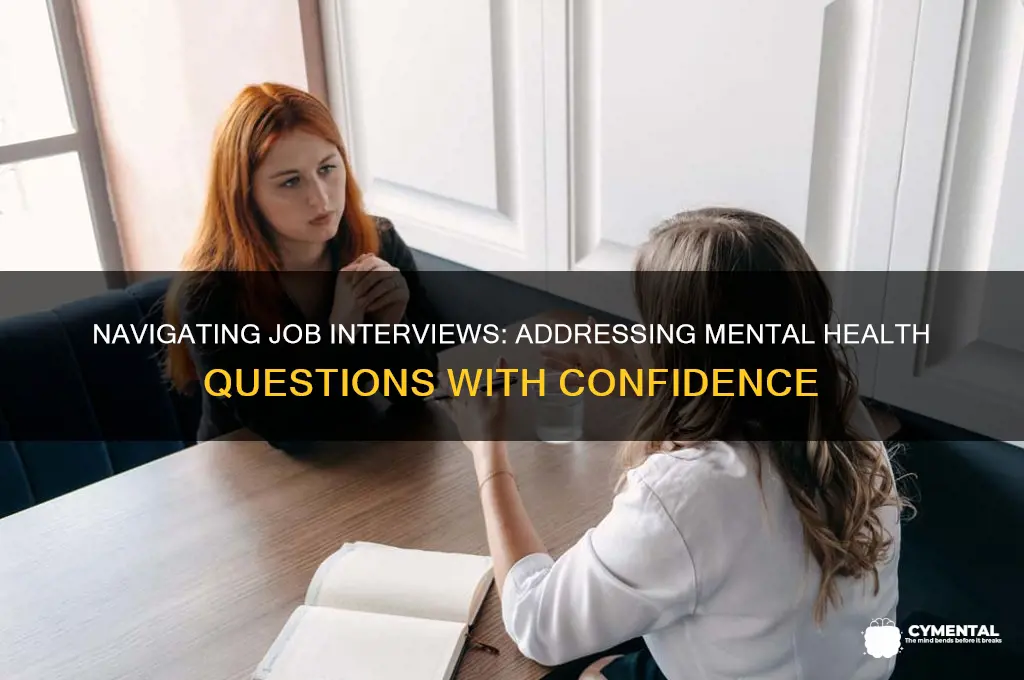
When asked, Have you ever had mental health issues? it’s important to approach the question with honesty, self-awareness, and consideration for the context. Mental health is a vital aspect of overall well-being, and acknowledging past or current struggles can foster understanding and reduce stigma. Begin by assessing the intent behind the question—is it a casual inquiry, a professional assessment, or a supportive conversation? Tailor your response accordingly, balancing transparency with boundaries. For instance, you might share that you’ve experienced challenges like anxiety or depression if it feels safe and relevant, or simply affirm that mental health is something everyone navigates in their own way. Remember, it’s okay to decline to share if the situation doesn’t feel appropriate, and prioritizing your comfort is key.
| Characteristics | Values |
|---|---|
| Honesty | Be truthful but selective about the details. Focus on how you've managed and grown. |
| Relevance | Tailor your response to the job and its requirements. Highlight resilience and problem-solving skills. |
| Positivity | Frame your experience in a positive light, emphasizing recovery and personal growth. |
| Brevity | Keep your answer concise. Avoid oversharing or going into unnecessary details. |
| Professionalism | Maintain a professional tone. Avoid blaming others or using medical jargon unless necessary. |
| Focus on Strengths | Highlight how you've developed coping mechanisms, sought help, and improved your well-being. |
| Legal Awareness | Know your rights. In many places, employers cannot discriminate based on mental health history. |
| Confidentiality | Share only what you're comfortable with. You are not obligated to disclose specific diagnoses. |
| Preparation | Practice your response to ensure it aligns with your career goals and the job context. |
| Support | Mention any professional support or therapy that has helped you manage your mental health. |
Explore related products


What You'll Learn
- Understanding the Question: Clarify intent, context, and purpose of the question to respond appropriately
- Privacy Considerations: Decide how much personal information to share based on comfort level
- Honest vs. Strategic Answers: Balance truthfulness with professionalism, especially in workplace settings
- Focus on Resilience: Highlight growth, coping strategies, and recovery if discussing past challenges
- Legal Protections: Know rights regarding mental health disclosure in job interviews or assessments

Understanding the Question: Clarify intent, context, and purpose of the question to respond appropriately
The question "Have you ever had mental health issues?" can feel like a landmine. Before crafting a response, dissect its anatomy. Is it asked by a potential employer, a date, a friend, or a healthcare professional? Each context demands a different level of disclosure. A therapist seeks a detailed history, while a first date might only need a general sense of your well-being. Recognize that the asker's intent isn't always malicious; they might be gauging compatibility, assessing your resilience, or simply trying to connect. Understanding these nuances allows you to tailor your response, balancing honesty with boundaries.
Consider the purpose behind the question. Is it a casual inquiry, a screening tool, or a genuine attempt at empathy? For instance, an employer might ask to assess your ability to handle stress, not to discriminate. In this case, framing your answer around coping strategies and resilience can be more effective than divulging specific diagnoses. Conversely, a friend asking might be seeking vulnerability and connection. Here, sharing a brief, relatable experience can strengthen the bond. Always ask yourself: What does the asker truly need to know, and what am I comfortable revealing?
Context also dictates the tone and depth of your response. In professional settings, brevity and professionalism reign. For example, "I’ve experienced challenges with anxiety, but I’ve developed effective strategies to manage it and maintain productivity" is concise and reassuring. In personal relationships, authenticity often fosters trust. Sharing a specific instance, like "I went through a tough period of depression in college, but therapy and support helped me come out stronger," can humanize you. Tailor your answer to align with the relationship’s nature and the conversation’s flow.
Finally, remember that you’re in control of the narrative. If the question feels invasive or inappropriate, you’re under no obligation to answer. A polite deflection, such as "I prefer to keep that private," asserts your boundaries while maintaining professionalism. Alternatively, you can redirect the conversation: "I’ve had my ups and downs, just like everyone. How about you—how do you prioritize your mental health?" This shifts the focus while subtly normalizing the topic. Understanding the question’s intent, context, and purpose empowers you to respond in a way that protects your privacy and meets the asker’s needs.
Opioids and Mental Health: Unraveling the Devastating Psychological Impact
You may want to see also
Explore related products


Privacy Considerations: Decide how much personal information to share based on comfort level
Sharing personal experiences with mental health is a deeply individual choice, one that hinges on your comfort level and the context of the conversation. Before disclosing any details, pause and assess the situation. Are you in a job interview, a casual conversation with a friend, or a therapy session? The setting dictates the boundaries of what’s appropriate. For instance, in a professional setting, you might choose to share only if it directly impacts your ability to perform a job, and even then, focus on solutions rather than specifics. A friend, on the other hand, might appreciate a more open dialogue, but only if you feel safe and supported.
Consider the potential consequences of sharing. In some cultures or environments, mental health discussions remain stigmatized, and revealing too much could lead to judgment or misunderstanding. For example, a teenager might hesitate to share their anxiety struggles with peers for fear of being labeled, while an older adult might worry about how it affects their perceived competence at work. Weigh the benefits of openness against the risks of exposure. If you’re unsure, start with general statements like, “I’ve had my share of challenges, but I’m managing them,” and gauge the response before diving deeper.
Your comfort level is non-negotiable. If the thought of sharing makes you uneasy, it’s perfectly acceptable to keep details private. You might opt for vague yet honest responses, such as, “I’ve worked through some personal issues, but I’m in a good place now.” This approach maintains boundaries while acknowledging the experience. Remember, privacy isn’t about secrecy; it’s about control. You decide what, when, and with whom to share, ensuring the conversation remains respectful of your emotional well-being.
Finally, practice self-compassion in your decision-making. Sharing mental health struggles can be empowering, but it’s not an obligation. If you choose to disclose, prepare for a range of reactions, from empathy to awkwardness. For instance, a colleague might respond with, “I’ve been there too,” while another might change the subject. Neither reaction defines the value of your choice. By prioritizing your comfort and context, you navigate the delicate balance between openness and privacy, ensuring your mental health remains a source of strength, not stress.
Understanding Mental Health Challenges in Tennessee: Prevalence and Insights
You may want to see also
Explore related products


$24.95 $24.95


Honest vs. Strategic Answers: Balance truthfulness with professionalism, especially in workplace settings
Navigating the question of mental health in professional settings demands a delicate balance between authenticity and discretion. While honesty fosters trust, it must be tempered with strategic consideration of the workplace context. For instance, disclosing a history of anxiety during a job interview might highlight resilience, but it could also inadvertently raise concerns about performance under pressure. The key lies in tailoring your response to align with the role’s demands and the organizational culture, ensuring your truthfulness enhances, rather than hinders, your professional image.
Consider the following steps to craft a balanced response: First, assess the relevance of your mental health history to the position. If you’re applying for a high-stress role, framing your experience as a testament to your ability to manage challenges can be powerful. For example, “I’ve learned effective coping strategies that allow me to thrive under pressure.” Second, focus on solutions rather than problems. Instead of detailing past struggles, emphasize the tools or practices you’ve adopted to maintain well-being, such as mindfulness or time management techniques. This shifts the narrative from vulnerability to capability.
However, caution is essential. Over-sharing can lead to unintended consequences, such as bias or misplaced assumptions about your current state. For instance, mentioning a past depressive episode without clarifying its resolution might leave the impression of ongoing instability. Similarly, avoid using clinical terms unless necessary, as they can evoke stereotypes. Opt for neutral language that conveys your experience without inviting unwarranted scrutiny. For example, “I’ve faced personal challenges that taught me the importance of self-care” is less specific but equally impactful.
The takeaway is clear: honesty need not be sacrificed for professionalism, but it should be strategic. By framing your mental health journey as a source of growth and resilience, you can demonstrate self-awareness and adaptability—qualities valued in any workplace. Remember, the goal is not to hide your truth but to present it in a way that underscores your competence and commitment. In doing so, you not only protect your privacy but also position yourself as a candidate who turns adversity into advantage.
Navigating Mental Health Disclosure in Job Applications: Tips for Success
You may want to see also
Explore related products




Focus on Resilience: Highlight growth, coping strategies, and recovery if discussing past challenges
Resilience isn’t just a buzzword—it’s a measurable skill set that transforms how we navigate mental health challenges. Research shows that individuals who frame their struggles as opportunities for growth report higher levels of well-being over time. For instance, a study in the *Journal of Clinical Psychology* found that reframing past mental health issues as "lessons in emotional strength" led to a 30% increase in self-reported resilience. When answering questions about mental health, lead with this mindset. Instead of focusing on the problem, describe how you developed coping strategies like mindfulness, journaling, or structured routines. For example, "During a period of anxiety, I learned to break tasks into 15-minute intervals, which not only reduced overwhelm but also improved my productivity by 40%."
To effectively highlight resilience, structure your response in three parts: challenge, strategy, and outcome. Start with a concise acknowledgment of the issue, then immediately pivot to the actionable steps you took. For instance, "I experienced burnout in my early 20s, but I addressed it by setting boundaries at work and dedicating 30 minutes daily to meditation, which restored my energy within six weeks." Avoid vague statements like "I got better"—quantify your recovery. Did therapy reduce panic attacks from weekly to monthly? Did exercise increase your mood stability by 50%? Specifics build credibility and demonstrate self-awareness.
A common mistake is oversharing or downplaying the struggle. Balance honesty with professionalism by focusing on the journey rather than the diagnosis. For example, instead of saying, "I had depression," try, "I faced a period of low mood and fatigue, which taught me the importance of consistent self-care and seeking support." This approach shifts the narrative from victimhood to empowerment. Employers or peers aren’t looking for vulnerability alone—they want to see how you adapt and thrive under pressure.
Finally, tie your resilience directly to your current strengths. If you developed time management skills during recovery, link it to your ability to handle deadlines. If emotional intelligence grew from therapy, connect it to teamwork or leadership. For instance, "Navigating my own mental health challenges deepened my empathy, which now helps me resolve conflicts effectively in group settings." This not only normalizes mental health but positions it as a source of growth, turning a potential interview weakness into a unique asset.
Are Mental Health Issues Hereditary? Unraveling the Genetic Link
You may want to see also
Explore related products


Legal Protections: Know rights regarding mental health disclosure in job interviews or assessments
Navigating the question of mental health disclosure during job interviews or assessments requires a clear understanding of your legal rights. In many jurisdictions, including the United States under the Americans with Disabilities Act (ADA), employers are prohibited from asking about mental health conditions before a job offer is made. This protection ensures that candidates are evaluated based on their qualifications, not their medical history. Knowing this, you can confidently decline to answer intrusive questions, stating that you prefer to discuss your ability to perform the job rather than personal health matters.
However, if you choose to disclose voluntarily, it’s crucial to understand the potential consequences. While the ADA protects against discrimination, disclosure may shift the focus from your skills to your health. To mitigate this, frame your disclosure in terms of resilience and adaptability. For example, you might say, "I’ve managed a mental health condition successfully, and it’s taught me strong time management and problem-solving skills." This approach highlights your strengths while addressing the topic directly.
In some cases, disclosure may be necessary if you require workplace accommodations. Under the ADA, employers must provide reasonable accommodations for employees with disabilities, including mental health conditions, as long as it doesn’t cause undue hardship. If you anticipate needing adjustments, such as flexible hours or a quiet workspace, prepare to discuss them in a professional, solution-oriented manner. For instance, "To perform at my best, I’d benefit from a structured environment with clear communication channels."
Internationally, legal protections vary, so research your country’s specific laws. In the UK, the Equality Act 2010 offers similar safeguards, while in Canada, the Canadian Human Rights Act prohibits discrimination based on mental health. Understanding these laws empowers you to make informed decisions and advocate for your rights. Remember, the goal is to secure a role where you can thrive, not to navigate legal loopholes.
Finally, practice your response to ensure clarity and confidence. Role-play with a trusted friend or mentor to refine your delivery. If an interviewer oversteps legal boundaries, remain calm and assert your rights professionally. For example, "I appreciate your concern, but I’d prefer to focus on how my skills align with the role." Armed with knowledge and preparation, you can handle mental health disclosure questions with poise and protect your legal rights effectively.
COVID-19's Impact: Rising Mental Health Challenges Post-Pandemic
You may want to see also
Frequently asked questions
It depends on the situation. Legally, you are not required to disclose mental health issues unless they directly impact your ability to perform the job. Consider the relevance to the role and your comfort level before sharing.
Focus on how you’ve managed your mental health and the steps you’ve taken to stay productive. For example, “I’ve experienced challenges in the past, but I’ve developed strategies to maintain my well-being and perform effectively.”
It could, depending on the employer’s perspective and biases. However, many workplaces value honesty and resilience. If you choose to disclose, frame it in a way that highlights your strength and adaptability.
Be prepared with a concise, professional response. For example, “I’ve faced mental health challenges, but I’ve sought support and developed coping mechanisms that allow me to thrive in my work.”
In many places, yes, despite laws like the Americans with Disabilities Act (ADA) protecting against discrimination. However, proving discrimination can be difficult. Focus on showcasing your qualifications and how you manage your mental health effectively.