Caleb Wright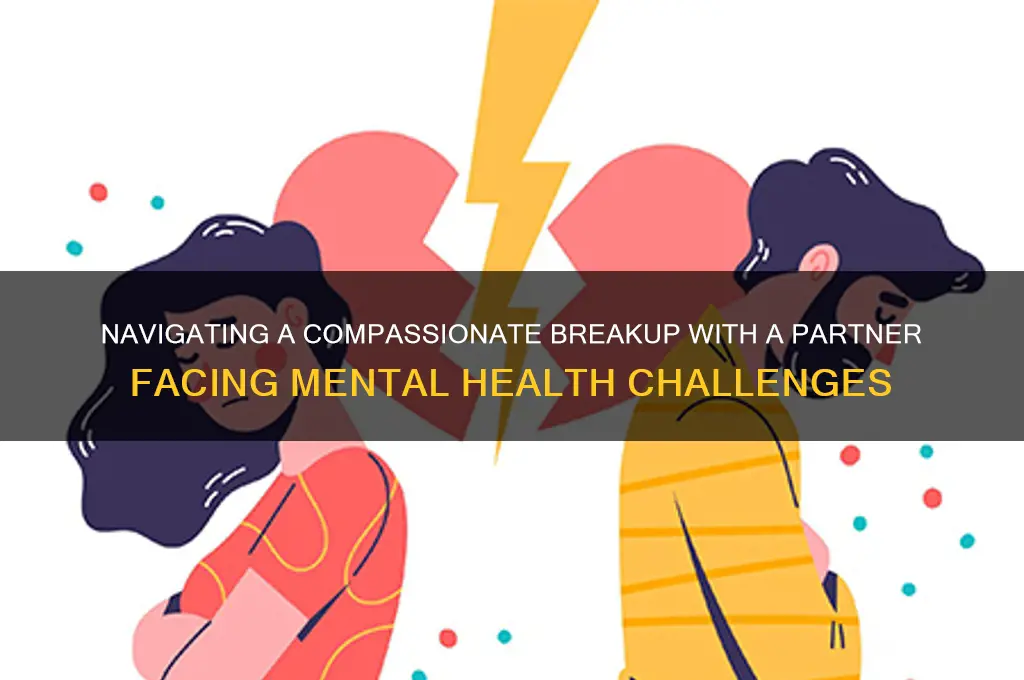
Breaking up with someone who struggles with mental health issues requires a delicate balance of compassion, clarity, and self-awareness. It’s essential to approach the conversation with empathy, acknowledging their emotional vulnerability while also prioritizing your own well-being. Be honest but gentle, choosing a calm and private moment to express your feelings and reasons for ending the relationship. Avoid blaming their mental health as the sole reason for the breakup, as this can deepen their pain and self-doubt. Offer support in a way that feels appropriate, such as suggesting they seek professional help or leaning on their support network, but set clear boundaries to ensure the separation is understood. Remember, it’s possible to end a relationship while still showing kindness and respect for their struggles.
| Characteristics | Values |
|---|---|
| Choose the Right Time and Place | Select a private, calm, and neutral location where the person feels safe. Avoid public spaces or places with emotional significance. |
| Be Honest and Compassionate | Communicate your decision clearly and kindly, avoiding blame or criticism. Use "I" statements to express your feelings without attacking them. |
| Validate Their Feelings | Acknowledge their emotions and struggles, showing empathy and understanding for their mental health challenges. |
| Avoid Sudden Breakups | If possible, prepare them for the conversation by hinting at the need to talk about the relationship, reducing the shock. |
| Offer Support (if appropriate) | Suggest resources like therapy, helplines, or support groups, but only if it’s safe and relevant to your relationship. |
| Set Clear Boundaries | Be firm about your decision while remaining respectful. Avoid giving false hope or mixed signals. |
| Be Prepared for Reactions | Anticipate emotional responses, including anger, sadness, or withdrawal, and remain calm and composed. |
| Avoid Ghosting | Do not disappear without explanation, as it can exacerbate mental health issues and leave them confused or hurt. |
| Follow Up (if safe) | Check in briefly after the breakup to ensure they are coping, but only if it won’t cause further harm or confusion. |
| Prioritize Safety | If you feel threatened or unsafe, prioritize your well-being and seek help from a trusted friend or professional. |
| Seek Support for Yourself | Breaking up with someone with mental health issues can be emotionally taxing; consider talking to a therapist or support system. |
Explore related products


What You'll Learn
- Understand Their Struggles: Learn about their mental health condition to approach the breakup with empathy and care
- Choose the Right Time: Pick a calm, private moment to minimize emotional distress during the conversation
- Be Honest and Kind: Communicate clearly and gently, avoiding blame while expressing your decision firmly
- Offer Support Limits: Suggest resources or help without promising ongoing involvement beyond the relationship
- Prioritize Self-Care: Ensure your emotional well-being while navigating the breakup with compassion

Understand Their Struggles: Learn about their mental health condition to approach the breakup with empathy and care
Breaking up is never easy, but when your partner struggles with mental health issues, the process demands a deeper layer of understanding and sensitivity. Before initiating the conversation, take time to educate yourself about their specific condition. Whether it’s depression, anxiety, bipolar disorder, or another diagnosis, knowing the symptoms, triggers, and common challenges can help you approach the breakup with empathy. For instance, someone with borderline personality disorder may fear abandonment intensely, while someone with PTSD might react unpredictably to stress. This knowledge isn’t about excusing your decision but about ensuring you communicate in a way that minimizes harm.
Start by consulting reputable sources like the National Alliance on Mental Illness (NAMI) or the American Psychological Association (APA) to gain insights into their condition. If you’ve been involved in their treatment, consider reviewing any shared resources or notes from therapy sessions. Avoid making assumptions or relying on stereotypes; mental health experiences are deeply personal and vary widely. For example, not everyone with depression expresses it through sadness—some may show irritability or emotional numbness. Understanding these nuances can help you tailor your approach, ensuring you don’t inadvertently trigger a crisis.
Once you’ve gathered information, reflect on how their condition might influence their reaction to the breakup. Someone with anxiety may need clear, concise communication to avoid spiraling into worst-case scenarios, while someone with schizophrenia might struggle with reality distortion during stress. Use this awareness to plan your conversation. For instance, choose a calm, private setting and avoid ambiguous language. Be direct but gentle, and acknowledge their feelings without invalidating your own needs. Phrases like, “I understand this is hard for you, and I want to handle this with care,” can convey empathy while maintaining boundaries.
However, educating yourself about their struggles doesn’t mean you’re responsible for their emotional well-being during the breakup. It’s a delicate balance between compassion and self-preservation. If you’re unsure how to proceed, consider consulting a therapist or counselor for guidance. They can help you craft a plan that respects both your partner’s mental health and your right to end the relationship. Remember, empathy doesn’t require you to sacrifice your own emotional health—it simply asks that you approach the situation with kindness and awareness.
Finally, prepare for the possibility that your partner may react in ways you didn’t anticipate, despite your efforts. Mental health conditions can amplify emotions and cloud judgment, so have a support system in place for yourself. Let trusted friends or family members know about the situation, and keep emergency contacts (like their therapist or a crisis hotline) handy if needed. By understanding their struggles and planning thoughtfully, you can navigate the breakup in a way that honors both their humanity and your own needs.
Understanding Mental Health Challenges in Tennessee: Prevalence and Insights
You may want to see also
Explore related products


$19.99 $14.95

Choose the Right Time: Pick a calm, private moment to minimize emotional distress during the conversation
Timing is a delicate art when navigating the challenging task of ending a relationship, especially with someone facing mental health struggles. The choice of when to have this conversation can significantly impact the emotional well-being of both parties involved. Imagine a scenario where a person with anxiety disorder is already experiencing a heightened sense of worry and vulnerability. Initiating a breakup during a moment of crisis or when they are already overwhelmed could exacerbate their distress, making it harder for them to process and cope with the news.
Step-by-Step Approach:
- Identify Calm Periods: Aim for a time when your partner seems relatively at ease and their mental health symptoms are well-managed. For instance, if they have depression, consider a day when their energy levels are higher, and they've expressed feeling more optimistic. This strategic timing can help ensure they are in a better position to handle the emotional weight of the conversation.
- Avoid Triggers: Be mindful of potential triggers that could intensify their mental health challenges. For someone with PTSD, certain dates or events might evoke traumatic memories. Steer clear of these periods to prevent adding to their emotional burden. Similarly, if your partner experiences social anxiety, a private setting, free from the pressure of public spaces, would be more suitable.
- Create a Safe Space: Choose a location that offers privacy and a sense of security. A quiet café during off-peak hours or a peaceful walk in a park can provide a more relaxed atmosphere compared to a crowded, noisy environment. This setting allows for a more intimate conversation, minimizing the risk of public embarrassment or additional stress.
Cautions and Considerations:
While creating the right environment is crucial, it's essential to remember that there might never be a 'perfect' time. Mental health issues can be unpredictable, and waiting for an ideal moment may lead to unnecessary delays. The goal is to find a balance between sensitivity and timely action. If you've identified a relatively stable period, it's advisable to proceed, ensuring you have the necessary support systems in place for both yourself and your partner.
Practical Tip: Consider having a trusted friend or family member on standby, someone who can provide immediate support to your partner after the conversation. This could be a phone call away, ready to offer a listening ear or accompany them if needed. This additional layer of support can be particularly beneficial in managing the potential emotional fallout.
In the context of breaking up with someone with mental health issues, the timing is a critical factor in demonstrating empathy and care. By choosing a calm, private moment, you create a safe space for an incredibly difficult conversation, allowing for a more compassionate and supportive transition. This approach not only minimizes immediate distress but also fosters a sense of respect and understanding during a vulnerable time.
Supporting Family Mental Health: Effective Advocacy Strategies for Lasting Change
You may want to see also
Explore related products


Be Honest and Kind: Communicate clearly and gently, avoiding blame while expressing your decision firmly
Breaking up is never easy, but when your partner struggles with mental health issues, the stakes feel higher. Every word carries weight, and the potential for harm feels more acute. In this delicate situation, honesty and kindness aren’t just virtues—they’re essential tools for minimizing pain and preserving dignity.
Consider this: vague or sugarcoated language, though well-intentioned, often backfires. Phrases like “It’s not you, it’s me” or “Maybe we need a break” leave room for misinterpretation, prolonging confusion and hope where clarity is needed. Instead, use simple, direct language. For example, “I’ve realized our paths are moving in different directions, and I need to end our relationship” is firm yet neutral. Pair this with gentle reassurance: “This decision doesn’t diminish how much I care about you or your well-being.”
Blame, even subtle, can exacerbate feelings of inadequacy or self-doubt common in mental health struggles. Avoid phrases like “You’re too much to handle” or “I can’t deal with your issues anymore.” Instead, focus on your own perspective and feelings. For instance, “I’ve come to understand that I’m not able to give you the support you deserve in a partner” shifts the narrative away from their perceived shortcomings.
Timing and setting matter too. Choose a private, calm environment where distractions are minimal. If possible, avoid late nights or moments when their symptoms might be heightened. Keep the conversation concise but allow space for questions. If they ask why, respond with empathy but maintain boundaries. For example, “I’ve been reflecting on what’s best for both of us, and I believe this is the right decision for my own mental health.”
Finally, prepare for emotional fallout without taking responsibility for it. You can’t control their reaction, but you can control your response. Have resources ready—a trusted friend they can call, a helpline number, or a reminder of their coping strategies. End with a compassionate but firm statement: “I’ll always care about you, but this is where our journey together ends.” Honesty and kindness, when balanced, create a breakup that respects both their vulnerability and your need for closure.
Silent Struggles: Mental Health Challenges in America's Shadow
You may want to see also
Explore related products


Offer Support Limits: Suggest resources or help without promising ongoing involvement beyond the relationship
Breaking up with someone who struggles with mental health issues requires a delicate balance between compassion and clarity. One of the most challenging aspects is offering support without inadvertently creating dependency or false hope. To navigate this, it’s essential to suggest resources or help while explicitly defining the limits of your involvement beyond the relationship. This approach ensures you provide constructive assistance without overcommitting or blurring boundaries.
Consider this scenario: during the breakup conversation, you might say, “I’ve found that the Crisis Text Line (text HOME to 741741) has been helpful for many people in similar situations. I encourage you to reach out to them.” This statement offers a concrete resource while avoiding phrases like “I’ll always be here for you,” which could be misinterpreted. By directing them to professional or community-based support, you empower them to take steps toward self-care without implying ongoing personal involvement.
Analyzing the effectiveness of this approach reveals its dual benefits. First, it demonstrates genuine care by addressing their immediate needs. Second, it reinforces the finality of the relationship, preventing confusion or emotional entanglement. For instance, suggesting a local therapist or support group provides actionable steps they can take independently, fostering resilience rather than reliance on you. Be specific—mention affordable options like sliding-scale therapy clinics or free peer support groups, ensuring accessibility.
However, caution is necessary. Avoid offering help that requires your direct participation, such as accompanying them to appointments or checking in regularly. Such actions can send mixed signals, delaying their healing process. Instead, frame your suggestions as tools for their autonomy. For example, “I’ve heard great things about the app Calm for managing anxiety—it might be worth trying.” This shifts the focus from your role to their ability to utilize available resources.
In conclusion, offering support limits is a thoughtful way to prioritize both parties’ well-being during a difficult breakup. By providing actionable resources and avoiding open-ended commitments, you create a compassionate yet clear path forward. Remember, the goal is to encourage self-sufficiency, not to prolong emotional ties. Done thoughtfully, this approach honors their struggles while respecting your decision to part ways.
Navigating Mental Health: Strategies for Resilience and Healing in Daily Life
You may want to see also
Explore related products


Prioritize Self-Care: Ensure your emotional well-being while navigating the breakup with compassion
Breaking up is inherently stressful, and when your partner struggles with mental health issues, the emotional toll can be exponentially higher. Prioritizing your own well-being isn't selfish—it's essential for navigating this delicate situation with clarity and compassion.
Recognize the Emotional Drain: Supporting a partner with mental health challenges often involves absorbing their emotional distress, which can lead to compassion fatigue. This isn't a failure of empathy; it's a natural consequence of prolonged exposure to another's pain. Acknowledge this reality and actively counterbalance it. Schedule regular "me time" for activities that replenish your emotional reserves: meditation, exercise, journaling, or connecting with supportive friends.
Set Firm Boundaries: Compassion doesn't require sacrificing your own mental health. Establish clear boundaries around communication during the breakup process. For example, limit discussions to specific times of day, avoid engaging in heated conversations when you're emotionally depleted, and communicate your needs assertively but kindly. Phrases like, "I care about you, but I need to take a break from this conversation right now," can help convey empathy while protecting your own space.
Seek External Support: You don’t have to shoulder this burden alone. Lean on trusted friends, family, or a therapist who can provide perspective and emotional grounding. Consider joining support groups for individuals in similar situations—sharing experiences can reduce feelings of isolation and provide practical strategies for self-care.
Practice Self-Compassion: Guilt is a common companion during breakups, especially when mental health is involved. Remind yourself that prioritizing your well-being is not a betrayal but a necessary act of self-preservation. Treat yourself with the same kindness and understanding you’d offer a friend in your position. This might mean allowing yourself to grieve, celebrating small victories, or simply granting yourself permission to feel conflicted.
Ultimately, self-care isn’t just about surviving the breakup—it’s about emerging from it with your own emotional integrity intact. By safeguarding your well-being, you create the mental and emotional space needed to approach the situation with the compassion it demands, both for yourself and for your partner.
COVID-19's Impact: Rising Mental Health Challenges Post-Pandemic
You may want to see also
Frequently asked questions
Approach the conversation with empathy and clarity. Choose a calm, private moment, express your feelings honestly but gently, and avoid blaming their mental health as the reason for the breakup. Offer support if appropriate, but set boundaries to ensure your own well-being.
Staying in a relationship out of guilt or fear can be unhealthy for both parties. Prioritize your own mental health while being compassionate. Encourage them to seek professional support and let them know you care, but don’t take responsibility for their emotional well-being.
Be direct but kind. Avoid mixed messages or false hope. Acknowledge their feelings, but remain firm in your decision. Suggest they reach out to a trusted friend, therapist, or support system to help them cope.
It’s appropriate to suggest professional help if you genuinely believe it could benefit them, but phrase it as a supportive recommendation rather than a criticism. For example, “I know this is hard, and I think talking to a therapist might help you through this.”
Guilt is normal, but remind yourself that you’re not responsible for their mental health. Focus on self-care, reflect on your decision, and seek support from friends or a therapist if needed. Validate your feelings while also setting boundaries to move forward.