Lucas Bennett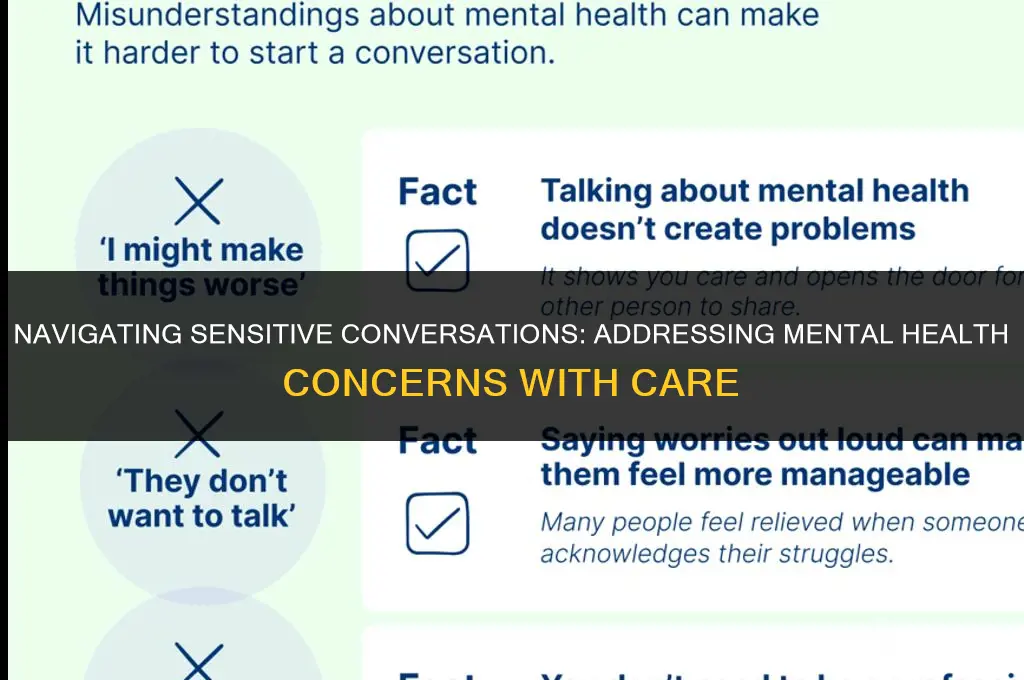
Approaching someone about concerns regarding their mental health can be a delicate and challenging task. It's important to approach the conversation with empathy, understanding, and a genuine desire to support the individual. Begin by expressing your observations in a non-judgmental way, focusing on specific behaviors or changes you've noticed that have led to your concern. It's crucial to listen actively and validate their feelings, avoiding any dismissive or minimizing statements. Offer your support and encourage them to seek professional help, providing resources such as mental health hotlines or suggesting they speak with a trusted healthcare provider. Remember to respect their autonomy and boundaries, and be prepared to offer ongoing support as they navigate their mental health journey.
| Characteristics | Values |
|---|---|
| Empathy | Show genuine concern and understanding |
| Privacy | Ensure a private and comfortable setting |
| Clarity | Be clear and specific about your concerns |
| Respect | Approach the person with respect and without judgment |
| Active Listening | Listen attentively to their response and feelings |
| Support | Offer your support and willingness to help |
| Patience | Be patient and allow them to process their emotions |
| Knowledge | Educate yourself about mental health issues beforehand |
| Sensitivity | Be sensitive to cultural and personal differences |
| Follow-up | Check in with them periodically after the initial conversation |
| Resources | Provide information about professional resources and support |
| Boundaries | Respect their boundaries and personal space |
| Non-confrontational | Avoid a confrontational or accusatory tone |
| Encouragement | Encourage them to seek help and support |
| Confidentiality | Maintain confidentiality and discretion |
Explore related products


What You'll Learn
- Choose the Right Time and Place: Find a private, comfortable setting where the person feels safe and won't be interrupted
- Start with Empathy and Support: Express genuine concern and let them know you're there to support them without judgment
- Use I Statements: Share your observations and feelings using I statements to avoid sounding accusatory or making them defensive
- Listen Actively: Give them your full attention, and avoid interrupting or offering unsolicited advice
- Encourage Professional Help: Gently suggest seeking professional help and offer to assist in finding resources or making an appointment

Choose the Right Time and Place: Find a private, comfortable setting where the person feels safe and won't be interrupted
Creating a safe and private environment is crucial when approaching someone about mental health concerns. This setting allows the individual to feel secure and minimizes the risk of interruptions that could disrupt the conversation. Consider the following strategies to ensure you choose the right time and place:
First, identify a location where the person feels comfortable and at ease. This could be their home, a quiet café, or a private office. Avoid public spaces where the individual might feel self-conscious or exposed. If possible, ask the person where they would prefer to have the conversation, as this gives them a sense of control and agency.
Next, choose a time when the person is likely to be available and not rushed. Avoid approaching them during stressful periods, such as work deadlines or family emergencies. Instead, opt for a time when they can fully engage in the conversation without feeling pressured or distracted.
It's also important to consider the potential for interruptions. Turn off your phone and other devices to avoid distractions, and inform others in the vicinity that you need uninterrupted time for a serious conversation. If you're in a shared space, such as an office or a home with other occupants, find a quiet corner or a separate room to ensure privacy.
Additionally, be mindful of the person's body language and verbal cues during the conversation. If they appear uncomfortable or agitated, it may be necessary to adjust the setting or postpone the discussion. Remember that the goal is to create an environment where the individual feels safe and supported, so be flexible and responsive to their needs.
In summary, choosing the right time and place is essential when approaching someone about mental health concerns. By prioritizing privacy, comfort, and minimizing interruptions, you can create a safe space for open and honest dialogue. This thoughtful approach can help the individual feel more at ease and receptive to discussing their mental health, ultimately fostering a more positive and supportive interaction.
Serving with Strength: Mental Illness and Military Service Explored
You may want to see also
Explore related products


Start with Empathy and Support: Express genuine concern and let them know you're there to support them without judgment
Approaching someone about concerns of a mental health issue can be a delicate and challenging task. It's crucial to start with empathy and support, expressing genuine concern and letting them know you're there to support them without judgment. This approach helps to create a safe and non-threatening environment, which is essential for open and honest communication.
When initiating the conversation, it's important to choose the right time and place. Find a private and comfortable setting where the person feels secure and won't be distracted or interrupted. Begin by acknowledging your concern and expressing your support. For example, you could say, "I've noticed that you seem to be struggling lately, and I want you to know that I'm here for you. I care about your well-being and am willing to listen and help in any way I can."
Listen actively and attentively to what the person has to say. Avoid interrupting or offering unsolicited advice. Instead, focus on understanding their perspective and validating their feelings. Show that you're engaged in the conversation by maintaining eye contact, nodding, and using open-ended questions to encourage them to share more.
It's also important to be aware of your own biases and assumptions. Approach the conversation with an open mind and avoid making judgments or assumptions about the person's mental health. Remember that everyone's experiences are unique, and it's essential to respect and honor their individual journey.
In addition to providing emotional support, it's helpful to offer practical assistance. Ask if there's anything you can do to help, such as accompanying them to appointments, helping with daily tasks, or simply being there to talk. Providing concrete support can help the person feel less overwhelmed and more capable of managing their mental health.
Finally, remember to take care of yourself as well. Supporting someone with mental health concerns can be emotionally draining, so it's important to prioritize your own well-being. Seek support from friends, family, or a mental health professional if needed, and remember that you can't pour from an empty cup. By taking care of yourself, you'll be better equipped to provide meaningful support to others.
Unraveling the Myths: Recording Conversations and Mental Health
You may want to see also
Explore related products

$27.85 $40.95


Use I Statements: Share your observations and feelings using I statements to avoid sounding accusatory or making them defensive
When approaching someone about concerns related to their mental health, it's crucial to use "I" statements to express your observations and feelings. This approach helps to avoid sounding accusatory or making the person defensive, which can be counterproductive to the conversation's goal. By focusing on your own experiences and emotions, you create a safe space for open dialogue.
For instance, instead of saying, "You seem depressed lately," you could say, "I've noticed that you haven't been as active in our group chats, and I'm worried about you." This phrasing shifts the focus from the person's behavior to your own feelings and observations, making it less likely for them to feel attacked or judged.
Using "I" statements also encourages the person to reflect on their own feelings and experiences. It opens the door for them to share their perspective, which is essential for understanding the full scope of their mental health concerns. By actively listening to their response, you demonstrate empathy and support, which can help build trust and strengthen your relationship.
Remember, the goal of using "I" statements is not to fix the person's problems but to express your concern and offer support. It's important to avoid giving unsolicited advice or trying to diagnose their condition. Instead, focus on being a compassionate listener and helping them feel heard and understood.
In summary, using "I" statements when approaching someone about mental health concerns is a powerful way to foster open communication and provide support. By sharing your observations and feelings in a non-accusatory manner, you can help create a safe and empathetic environment for the person to express themselves and seek help if needed.
Advocating for Mental Health Support in Eaton County Jail
You may want to see also
Explore related products


Listen Actively: Give them your full attention, and avoid interrupting or offering unsolicited advice
When approaching someone with concerns about a mental health issue, it's crucial to listen actively. This means giving them your full attention and avoiding interruptions or unsolicited advice. Active listening is a powerful tool that can help the individual feel heard, validated, and understood. It's important to create a safe and non-judgmental space where they can express themselves freely.
To listen actively, make sure to maintain eye contact, nod your head, and use verbal cues like "I understand" or "I'm here for you." Avoid distractions like checking your phone or looking around the room. Instead, focus on the person and what they're saying. It's also important to avoid offering advice or solutions unless they specifically ask for it. Sometimes, people just need to be heard and not necessarily given a solution.
Active listening can help build trust and rapport with the individual, which is essential when discussing sensitive topics like mental health. By giving them your full attention, you're showing that you care and that their feelings and experiences are important to you. This can help them feel more comfortable opening up and discussing their concerns.
Remember that active listening is not about fixing the problem or offering a solution. It's about being present and supportive. By doing so, you can help the individual feel less alone and more understood. This can be a powerful first step in helping them address their mental health concerns.
Exploring the Link Between OCD and Mental Stability
You may want to see also
Explore related products




Encourage Professional Help: Gently suggest seeking professional help and offer to assist in finding resources or making an appointment
It's crucial to recognize when someone may need professional help for a mental health issue. If you've noticed changes in behavior, mood, or functioning that seem concerning, it's important to approach the person gently and express your support. One effective way to do this is by using the "Encourage Professional Help" approach.
This approach involves gently suggesting that the person seek professional help and offering to assist them in finding resources or making an appointment. It's important to be sensitive and non-judgmental when discussing mental health issues, as people may feel defensive or embarrassed about their struggles. By offering support and assistance, you can help the person feel more comfortable seeking help.
When encouraging professional help, it's important to be specific about the resources available. For example, you could offer to help the person find a therapist, psychiatrist, or support group in their area. You could also provide information about online resources, such as mental health websites or telehealth services. By offering concrete options, you can help the person feel more empowered to take action.
It's also important to be patient and understanding when encouraging professional help. The person may be hesitant to seek help, and it may take time for them to come around to the idea. By being supportive and non-pressuring, you can help the person feel more comfortable exploring their options.
In addition to offering support, it's important to educate yourself about mental health issues and the resources available. This can help you provide more informed guidance and support to the person. You could also consider attending a mental health first aid training, which can provide you with the skills and knowledge to effectively support someone experiencing a mental health issue.
Remember, the goal of the "Encourage Professional Help" approach is to support the person in seeking help, not to diagnose or treat them yourself. By being a supportive and informed ally, you can help the person take the first steps towards getting the help they need.
The Silent Impact: Understanding the Effects of Ignoring Someone
You may want to see also
Frequently asked questions
When approaching someone about their mental health, it's important to do so with empathy and sensitivity. Choose a private, comfortable setting and express your concerns using "I" statements to avoid sounding accusatory. For example, you could say, "I've noticed you seem to be struggling lately, and I wanted to check in with you." Listen actively to their response and offer support without judgment.
If someone confides in you about their mental health struggles, acknowledge their feelings and offer your support. You could say something like, "Thank you for sharing that with me. I'm here for you and want to help in any way I can." Encourage them to seek professional help if they haven't already and offer to assist them in finding resources or making an appointment.
Supporting a friend or loved one with a mental health issue involves being a good listener, offering encouragement, and helping them feel understood and valued. Educate yourself about their condition to better understand what they're going through. Be patient and avoid minimizing their feelings or experiences. Encourage them to maintain a healthy lifestyle, including regular exercise, balanced diet, and sufficient sleep. Most importantly, remind them that they're not alone and that you're there to support them every step of the way.